Preferences
Privacy is important to us, so you have the option of disabling certain types of storage that may not be necessary for the basic functioning of the website. Blocking categories may impact your experience on the website. More information

Privacy is important to us, so you have the option of disabling certain types of storage that may not be necessary for the basic functioning of the website. Blocking categories may impact your experience on the website. More information

Synthetic data is artificially generated information that mimics real data to train AI models, protect privacy, and fill coverage gaps at scale.








Sources
Synthetic data is artificial information created to replicate the features, structures, and statistical patterns of real data, while avoiding the privacy and availability problems that come with the original. Instead of collecting and labeling real records, a model or rule engine generates new records that behave like the real thing. The output can be tabular data, text, images, audio, or a mix of all of them.
This has moved from a niche technique to a mainstream practice. Gartner has predicted that by 2026 a majority of businesses will use generative AI to create synthetic customer data, and frontier labs now train models on hundreds of billions of synthetic tokens. For anyone working in AI search and content, understanding synthetic data explains both how modern models are built and why their quality varies so much.
Synthetic data is data that was generated rather than measured or collected. A good synthetic dataset preserves the relationships and distributions of a real one, so a model trained on it learns the same patterns, but the individual records are invented. This is what lets teams work with realistic data without touching sensitive originals.
It is useful to separate synthetic data from related ideas. It is not the same as anonymized data, which starts from real records and masks them. It is also distinct from AI training data in general, which can be real or synthetic. Synthetic data is specifically the artificial subset, produced on purpose to fill a gap that real data cannot.
Several techniques produce synthetic data, each suited to different needs. Generative models such as generative adversarial networks, variational autoencoders, and large language models learn the distribution of real data and sample new examples from it. Generative adversarial networks excel at realistic images, video, and audio, while variational autoencoders offer controlled generation with interpretable structure.
Beyond neural methods, rule engines generate records from business policies without ever touching production data, entity cloning copies and masks real entities with new identifiers, and data masking swaps personal fields for fictitious values while keeping the statistics intact. Simpler approaches like copula models and adding noise to sampled data also have their place. The choice depends on whether the priority is realism, privacy, or speed. Many of these methods rely on the same machine learning foundations that power the models being trained.
Synthetic data falls along a spectrum. Fully synthetic data contains no real records at all, which minimizes privacy exposure and is ideal when the original data is highly sensitive. Hybrid or partially synthetic data mixes real and generated records, which helps preserve complex relationships that a purely artificial set might miss.
The format also varies widely. Structured synthetic data fills database tables for software testing, text generation produces instruction and response pairs for language models, and multimodal generation combines text, images, and audio in one pipeline. Real-time generation can even produce synthetic records on demand for streaming systems, which matters for live testing and simulation.
Synthetic data has four main roles in LLM development. It provides fine-tuning data as instruction and response pairs from a teacher model. It builds evaluation sets for adversarial and edge-case testing. It augments edge cases that real data underrepresents. And it substitutes for sensitive data when privacy rules apply. Each role has its own failure modes and quality checks.
The clearest evidence comes from Microsoft's Phi series. Phi-1, with 1.3 billion parameters, reached 50.6 percent pass at one on the HumanEval coding benchmark using one billion synthetic tokens alongside curated web text, matching models roughly ten times larger. The lesson was not raw volume but curation discipline: topic and prompt diversity, explicit audience targeting, and aggressive quality filtering. This connects directly to broader AI fine-tuning practice.
The biggest danger with synthetic data is model collapse. Research published in Nature in 2024 by Shumailov and colleagues showed that the indiscriminate use of model generated content in training causes irreversible defects, as the model progressively forgets the rare patterns in the original distribution. In plain terms, a model trained on its own output gets worse with each generation.
The nuance matters. Later work proved that test error stays bounded when synthetic data accumulates alongside real data, but grows without bound when synthetic data replaces real data. The operational rule that follows is simple: retain real data in every training cycle. Even ten percent real-data retention dramatically reduces quality degradation, which is why responsible teams never train on synthetic data alone. This is closely related to AI hallucination, since degraded distributions produce less reliable outputs.
Synthetic data shapes the AI systems that now decide visibility. The assistants that cite content, like ChatGPT, Perplexity, and Gemini, are trained and fine-tuned partly on synthetic data, and the quality of that data influences how well they understand and represent your topic. Knowing this helps marketers reason about why models sometimes get facts right and sometimes do not.
There is a content angle too. Because model collapse rewards original, human-grounded information, genuinely novel and well-sourced content becomes more valuable to these systems, not less. Producing LLM ready content with clear facts and real expertise is a hedge against a web that is increasingly diluted by generic generated text, and it supports a stronger AI content strategy. Disciplined keyword research and content planning helps you find the questions where original data wins.
The headline benefits are privacy, speed, scale, and coverage. Synthetic data lets teams analyze and test without exposing real personal information, provision data faster than pulling from many production systems, generate large volumes on demand, and create edge cases that rarely appear in real data. In one industry survey, fifty three percent of companies named edge-case testing as their top use case.
Common applications include software testing with compliant data, training machine learning models on balanced or augmented datasets, privacy-compliant data sharing, and behavioral simulation. Financial services has been an early leader, where regulation makes real customer data hard to use freely. Across industries, the appeal is the same: realistic data without the legal and logistical drag of the real thing.
Synthetic data is only as good as the process that makes it. Generative methods are limited by the diversity and size of the data they learn from, so a narrow source produces narrow synthetic output. Rule-based generation is labor intensive and demands deep domain knowledge, while entity cloning cannot invent genuinely new scenarios.
Privacy is not guaranteed either. Re-identification is possible if cloned data is not properly masked, and synthetic data can leak information about its training data. Regulatory treatment is still evolving, so legal teams should stay involved. The recurring theme is that synthetic data requires verification, deduplication, and quality filtering to be trustworthy, rather than being safe by default.
Synthetic data is artificial information engineered to mimic real data, and it has become essential to building modern AI while protecting privacy and filling coverage gaps. Used well, as a curated supplement to real data, it can make small models punch far above their weight. Used carelessly, as a replacement for real data, it triggers model collapse and degrades quality irreversibly.
For marketers, the takeaway is that original, well-sourced content grows more valuable as synthetic text floods the web. Pair that with strong LLM ready content and a clear AI content strategy, and use Sorank's research and content planning tools to target the questions where real expertise stands out. Reference sources: K2view and Digital Applied.

It can be, when used carefully. Synthetic data works best as a supplement to real data, not a replacement. Microsoft's Phi models showed that small amounts of well curated synthetic data can match much larger models, but research published in Nature in 2024 found that training only on model generated data causes irreversible quality loss, a problem called model collapse. The practical rule is to keep real data in every training cycle.
Model collapse is the progressive degradation that happens when AI models are trained repeatedly on their own synthetic output, losing diversity and accuracy. Studies show test error stays bounded when synthetic data accumulates alongside real data, but grows without limit when it replaces real data. Retaining even ten percent real data in each training run dramatically reduces the damage.
It can, but not automatically. Fully synthetic data that contains no real records reduces exposure of personal information, which is useful for sharing and testing. However, poorly generated synthetic data can still leak information about the original people, so true anonymization requires proof, often a Distance to Closest Record check, that the generation process breaks the statistical link to identifiable individuals. Pseudonymized data is still personal data.
THEY TRIED SORANK BEFORE YOU
 “I tested Sorank on a real client site and it's insane. It does everything an agency would bill you $1500 a month for. It's going into production on that client now.”
 Guillaume Guersanguersanguillaume.com“We are an Ads agency and we wanted to get our SEO back on track once and for all. Sorank gave us a clear view of our site, helped us prioritize optimizations, and properly structure our content. The tool is easy to use, well designed for a team, and very practical for centralizing tracking without having to juggle multiple platforms. A very solid foundation to start fresh with our SEO.”
 Gaspard MadouiAds Agency
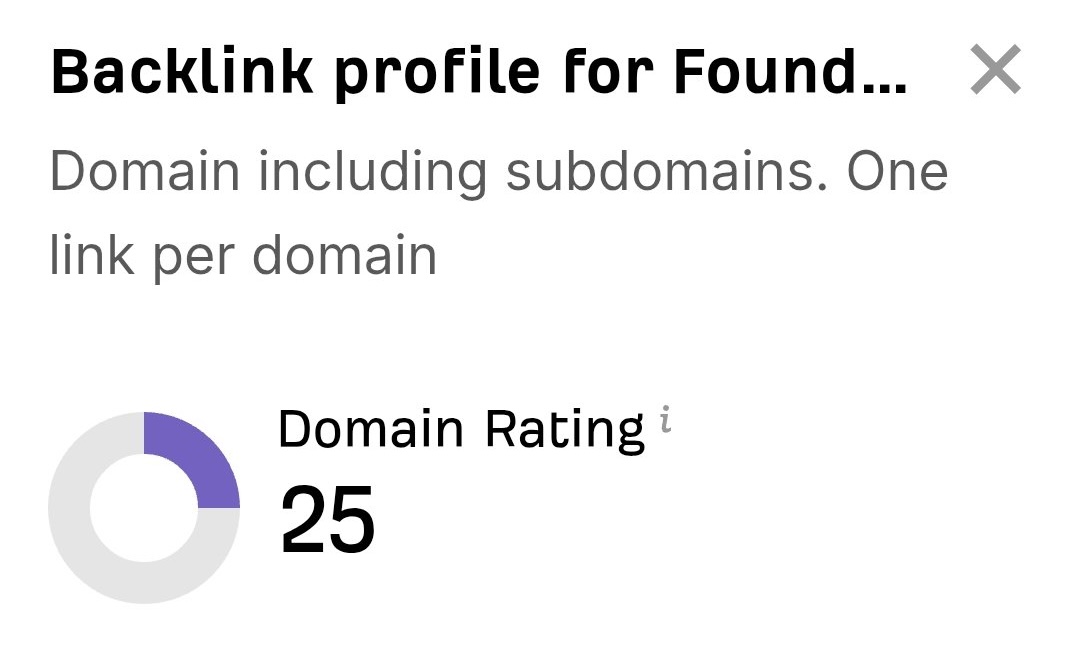 “I just let the Sorank software do its thing, and now my DR is 25 and my page is ranking higher.”
 Lucas FlandrePodcast Host“I specialized in GEO thanks to Sorank. The GEO Leaderboard allows me to show my clients their position vs competitors on ChatGPT. It’s a real commercial differentiator.”
 MélanieSEO Freelance“Great service, works well for our website and helps us understand how to improve it to rank better on Google and elsewhere. Congrats, keep going, I recommend it.”
 Hugo T.E-commerce merchant