Preferences
Privacy is important to us, so you have the option of disabling certain types of storage that may not be necessary for the basic functioning of the website. Blocking categories may impact your experience on the website. More information

Privacy is important to us, so you have the option of disabling certain types of storage that may not be necessary for the basic functioning of the website. Blocking categories may impact your experience on the website. More information
AI fine tuning adapts a pre-trained model to a specific domain by adjusting its weights. Learn how it works and when to choose it over RAG.







Sources
AI fine tuning is the process of taking a model that has already learned general patterns from vast data and continuing its training on a focused, domain specific dataset. Rather than building a model from scratch, you start with a capable base and nudge its internal parameters so it understands your terminology, follows your format, and responds with greater accuracy in your field. The result is a specialized model that outperforms the generic base on the tasks you care about.
This matters because off the shelf models are broad but shallow in any single niche. Fine tuning is one of the main ways to make a model genuinely useful for a specific business, alongside retrieval and prompt design, and understanding when to use it saves significant time and cost.
Fine tuning adapts a pre-trained model for a particular task or domain by adjusting its weights using a smaller, relevant dataset before deployment. You begin with a foundation model trained on general data, then expose it to curated examples from your domain so its outputs become more contextually relevant. The model keeps its general ability but gains depth in your area.
The key distinction is that fine tuning changes the model itself. It bakes new behavior and knowledge into the weights, so the specialization is permanent until you retrain. This is different from supplying information at query time, and that difference drives most of the decisions about when fine tuning is the right tool.
The process starts with a base model and a prepared dataset of domain specific examples. You clean and structure that data, configure training parameters, then run the training so the model's internal weights shift toward the patterns in your examples. Throughout, you monitor performance to make sure the model is learning the right behavior rather than memorizing noise.
Because you are adjusting a LLM at the parameter level, the work is computationally demanding, typically requiring high performance GPUs and a substantial, high quality dataset. Once trained, however, the model runs efficiently, since the specialized knowledge is already internal and no external lookup is needed at inference time.
There are several approaches that trade cost against thoroughness. Full fine tuning updates all of a model's parameters, which is powerful but expensive. Parameter efficient methods update only a small subset of weights or add lightweight adapters, dramatically reducing cost while retaining most of the benefit. Instruction tuning focuses the model on following directions in a consistent format.
A related but distinct technique is RLHF, reinforcement learning from human feedback, which shapes a model's behavior using human preference signals rather than labeled examples alone. In practice teams often combine methods, choosing the lightest approach that achieves the accuracy and behavior they need.
The most common comparison is fine tuning against retrieval augmented generation. Fine tuning adjusts the model's core skills and behavior, while RAG leaves the model unchanged and instead supplies relevant external information at query time. One changes what the model is; the other changes what the model sees when it answers.
The tradeoffs are clear. Fine tuning has a high upfront cost but cheap, fast inference, and it cannot easily absorb new facts without retraining, which makes it best for stable domains and well defined tasks. RAG has lower upfront cost but higher ongoing cost, updates instantly with new data, and grounds answers in retrieved sources to reduce hallucination. Many teams blend both, using fine tuning for behavior and RAG for fresh knowledge.
Fine tuning shines when your task is well defined, your data is relatively static, and you need fast, consistent outputs. Classic examples include spam classification, code generation in a specific style, and handling rare edge cases by training on labeled examples of unusual scenarios. If low latency matters and the knowledge does not change often, fine tuning is usually the better fit.
It is less suitable for rapidly evolving information, where retraining costs would pile up, and it favors organizations that have the resources for specialized deployment. Startups proving a concept on a tight budget often start with prompt design and RAG, then fine tune later once the use case and data are stable. Matching the method to the problem is the whole game.
For most publishers, fine tuning is not something you do to a public model like ChatGPT, but understanding it clarifies how AI systems acquire knowledge and behavior. A model's built-in knowledge comes from training and fine tuning, while its fresh, citable knowledge often comes from retrieval. That split explains why being crawlable and citable, the retrieval path, is how your content reaches answers even when you cannot influence the model's weights.
The practical takeaway for generative engine optimization is to focus on the retrieval surface you can affect. Clear, structured, authoritative content is what gets pulled into RAG style answers, and aligning it with disciplined keyword research and content planning ensures you cover the questions assistants actually field. Fine tuning shapes the model; your content shapes what it can cite.
The biggest risks are cost and overfitting. Adjusting model parameters demands serious compute and a large, diverse dataset, and if the data is small or narrow, the model can memorize noise and perform worse on new inputs. Careful dataset preparation and monitoring are essential to avoid this trap.
Maintenance is the other limitation. Because a fine tuned model is static, keeping it current means periodic retraining, which adds ongoing cost and effort. For domains where facts shift weekly, that burden often makes retrieval a better choice than repeated fine tuning, which is why the two are so frequently compared.
AI fine tuning specializes a pre-trained model by adjusting its weights on a focused dataset, producing fast, consistent, domain expert behavior. It carries a high upfront cost and cannot easily learn new facts, so it suits stable domains and well defined tasks, while retrieval handles fresh knowledge. The strongest systems often combine fine tuning for behavior with RAG for up to date information.
To go further, connect this with retrieval augmented generation and the role of AI training data, and use Sorank's research and content planning tools to strengthen the content AI systems can retrieve and cite. Reference sources: DataCamp and DigitalOcean.

Fine tuning adjusts a model's internal weights by training it on domain data, changing the model's core skills and behavior. RAG leaves the model unchanged and instead retrieves relevant external information at query time. Fine tuning suits stable domains and fast responses, while RAG suits frequently changing knowledge and grounds answers in sources to reduce hallucination.
It has a high upfront cost. Adjusting model parameters typically requires high performance GPUs and a substantial, high quality dataset, plus significant training time. Once deployed, however, a fine tuned model runs efficiently because the knowledge is internal and no external lookup is needed. The main ongoing cost is periodic retraining to keep the model current.
Fine tune when the task is well defined, the data is relatively static, and you need fast, consistent outputs, such as classification or domain specific generation. Use retrieval when information changes often and must stay fresh, and start with prompt design for quick experiments. Many teams blend approaches, fine tuning for behavior and retrieval for current facts.
THEY TRIED SORANK BEFORE YOU
 “I tested Sorank on a real client site and it's insane. It does everything an agency would bill you $1500 a month for. It's going into production on that client now.”
 Guillaume Guersanguersanguillaume.com“We are an Ads agency and we wanted to get our SEO back on track once and for all. Sorank gave us a clear view of our site, helped us prioritize optimizations, and properly structure our content. The tool is easy to use, well designed for a team, and very practical for centralizing tracking without having to juggle multiple platforms. A very solid foundation to start fresh with our SEO.”
 Gaspard MadouiAds Agency
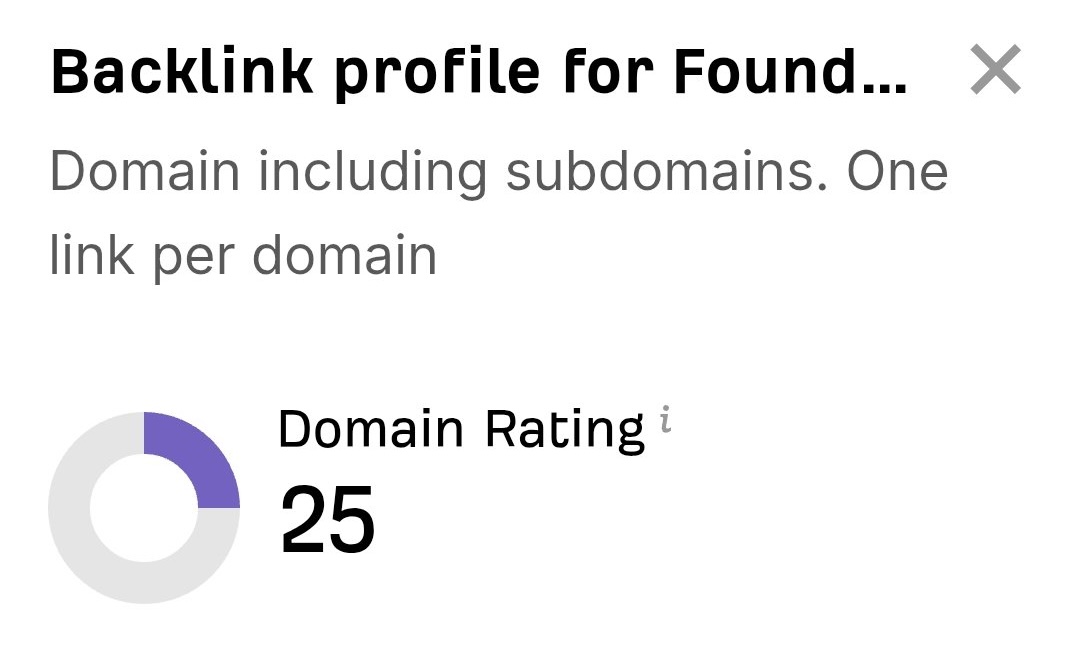 “I just let the Sorank software do its thing, and now my DR is 25 and my page is ranking higher.”
 Lucas FlandrePodcast Host“I specialized in GEO thanks to Sorank. The GEO Leaderboard allows me to show my clients their position vs competitors on ChatGPT. It’s a real commercial differentiator.”
 MélanieSEO Freelance“Great service, works well for our website and helps us understand how to improve it to rank better on Google and elsewhere. Congrats, keep going, I recommend it.”
 Hugo T.E-commerce merchant