Preferences
Privacy is important to us, so you have the option of disabling certain types of storage that may not be necessary for the basic functioning of the website. Blocking categories may impact your experience on the website. More information

Privacy is important to us, so you have the option of disabling certain types of storage that may not be necessary for the basic functioning of the website. Blocking categories may impact your experience on the website. More information

Retrieval evaluation measures how well a RAG system finds and uses the right context. Learn the metrics, the RAG triad, and best practices.








Sources
Retrieval evaluation is the discipline of measuring whether a retrieval system surfaces the right information and whether the generated answer actually uses it well. In a retrieval augmented generation pipeline, a good answer depends on two things going right: the retriever finding relevant context, and the model staying faithful to that context. Retrieval evaluation puts numbers on both so teams can diagnose failures and improve quality instead of guessing.
This matters because a RAG system can fail quietly. An answer can sound fluent yet rest on the wrong passages, or the retriever can miss key sources the model needed. For anyone building RAG systems, or trying to be the source they cite, understanding how these systems are graded reveals exactly what good, retrievable content looks like.
Retrieval evaluation assesses the two halves of a RAG pipeline separately and together. The retrieval half asks whether the system found semantically relevant information. The generation half asks whether the response is meaningful, grounded, and on topic. Evaluating them in isolation is what lets you tell a retrieval problem apart from a generation problem, which is the first step to fixing either.
It is a specialized branch of LLM evaluation. Where general model evaluation might judge fluency or reasoning, retrieval evaluation focuses on the evidence: did the right context get retrieved, and did the model honor it. Because RAG answers are only as good as the passages behind them, this evidence-centric view is essential to building systems people can trust.
Four metrics anchor the retrieval side. Recall at k is the proportion of all relevant documents present in the top k, with langcopilot suggesting a target of at least 80 percent on critical queries. Precision at k is the fraction of the top k that are actually relevant, where higher precision means less noise for the model. These two are the backbone of measuring retrieval coverage and quality.
Ranking position matters too. Mean Reciprocal Rank, or MRR, averages the reciprocal rank of the first relevant result, scoring 1.0 when it sits first, 0.5 when second, and near zero when buried, with question-answering targets above 0.7. Normalized Discounted Cumulative Gain, or NDCG, handles graded relevance and discounts results by rank so a relevant item at position one counts more than at position ten, with langcopilot citing targets above 0.85 for well-defined domains. NDCG is the natural fit when evaluating passage ranking with multiple relevant answers.
Good retrieval is wasted if the model misuses it, so the generation side has its own metrics. Faithfulness measures how well the answer sticks to the retrieved evidence without introducing unsupported claims, often computed as the proportion of statements that are backed by the context. In high-stakes domains like healthcare and legal, the target is near 100 percent, because an unsupported claim is a potential AI hallucination.
Answer relevance asks whether the response actually addresses the question and stays on topic, frequently measured through embedding similarity between the answer and the query or via a language model judge. Citation coverage, whether claims are backed by sources, rounds out the picture. Together these ensure the system is not just retrieving well but producing grounded, useful answers with proper source citation.
A practical way to start is the RAG triad, which Qdrant frames as retrieval effectiveness, response relevance, and coherence, and which other guides express as context relevance, faithfulness, and answer relevance. The idea is that these three checks catch the most common failure modes: bad retrieval, hallucinated generation, and off-topic answers.
Reading them together is diagnostic. If context relevance is low, the retriever is the problem. If context is good but faithfulness is low, the model is drifting from its evidence. If both are fine but answer relevance is low, the system is grounded yet missing the user's actual intent. This separation is what makes the triad such a useful first lens before adding more granular metrics.
There are two broad approaches. Ground-truth evaluation builds question and answer pairs from source documents, then compares generated responses against expected answers using similarity and correctness scores on a zero to one scale. This is rigorous but labor intensive, since someone has to label what counts as relevant and correct.
The alternative is using a language model as a judge. Frameworks score faithfulness, relevance, and context quality automatically, which scales far better than manual review. Qdrant describes LLM-as-a-judge methodologies for assessing response quality, and in practice teams often blend the two: a labeled core set for trustworthy benchmarks plus automated judging for broad, frequent coverage.
RAGAS is a popular open-source framework built specifically for RAG evaluation. It provides reference-free metrics including context precision, context recall, faithfulness, and answer relevancy, computed with language model judges, so you often do not need labeled ground truth. It works out of the box and can even generate synthetic test queries from your documents, lowering the barrier to systematic evaluation.
Its method is to break an answer into atomic statements and check each against the retrieved context, which is how it scores faithfulness so precisely. According to langcopilot, RAGAS metrics have correlated well with human judgment, outperforming naive zero-shot scoring from a general model. That reliability is why it has become a default starting point for many teams formalizing their evaluation.
The metrics that grade RAG systems also describe how your content gets discovered and used by AI. Faithfulness rewards sources an engine can confidently ground claims in, while ranking metrics like MRR and NDCG reward content that surfaces early and clearly. Understanding what these systems optimize for tells you what extractable, trustworthy content looks like from the inside.
That makes retrieval evaluation a quiet blueprint for generative engine optimization. If you want to be the cited passage, write content that scores well on the engine's implicit checks: accurate, self-contained, and easy to attribute. Pairing that mindset with disciplined keyword research and content planning helps you target the queries where strong evidence wins citations.
Evaluation is only as good as its data. Ground-truth labels are expensive and subjective, and a thin or biased test set can produce flattering scores that hide real problems. Language model judges reduce that cost but introduce their own biases, so their verdicts need periodic checking against human review.
No single number tells the whole story either. A system can post high recall yet low faithfulness, or strong faithfulness on an irrelevant answer, which is why these metrics are used as a panel rather than a scoreboard. The broader field of AI benchmarks faces the same caution: metrics guide improvement but must be interpreted together and kept honest with human oversight.
Retrieval evaluation measures both whether a RAG system finds the right context and whether it uses that context faithfully, combining retrieval metrics like recall, precision, MRR, and NDCG with generation metrics like faithfulness and answer relevance. The RAG triad offers a fast first diagnosis, and frameworks like RAGAS make systematic evaluation accessible.
To go further, connect this with retrieval coverage and the broader retrieval augmented generation architecture, and use Sorank's research and content planning tools to build content these systems retrieve and trust. Reference sources: Qdrant, LangCopilot, and Redis.

On the retrieval side, the core metrics are recall at k (did you find the relevant documents), precision at k (are the retrieved results relevant), MRR (is the first relevant result ranked early), and NDCG (graded relevance weighted by position). On the generation side, faithfulness and answer relevance matter most. Many teams start with the RAG triad: context relevance, faithfulness, and answer relevance.
RAGAS is an open-source framework built specifically for evaluating RAG systems. It provides reference-free metrics such as context precision, context recall, faithfulness, and answer relevancy, computed with language models acting as judges, so you often do not need labeled ground truth. It works out of the box and can generate synthetic test questions from your documents, and its scores have correlated well with human judgment.
The AIs retrieve and synthesize content, and the same metrics that grade their pipelines describe how your content gets found and used. Faithfulness rewards content an engine can ground claims in, and ranking metrics reward content that surfaces early and clearly. Understanding evaluation helps you write extractable, accurate, well-structured pages that are more likely to be retrieved and cited.
THEY TRIED SORANK BEFORE YOU
 “I tested Sorank on a real client site and it's insane. It does everything an agency would bill you $1500 a month for. It's going into production on that client now.”
 Guillaume Guersanguersanguillaume.com“We are an Ads agency and we wanted to get our SEO back on track once and for all. Sorank gave us a clear view of our site, helped us prioritize optimizations, and properly structure our content. The tool is easy to use, well designed for a team, and very practical for centralizing tracking without having to juggle multiple platforms. A very solid foundation to start fresh with our SEO.”
 Gaspard MadouiAds Agency
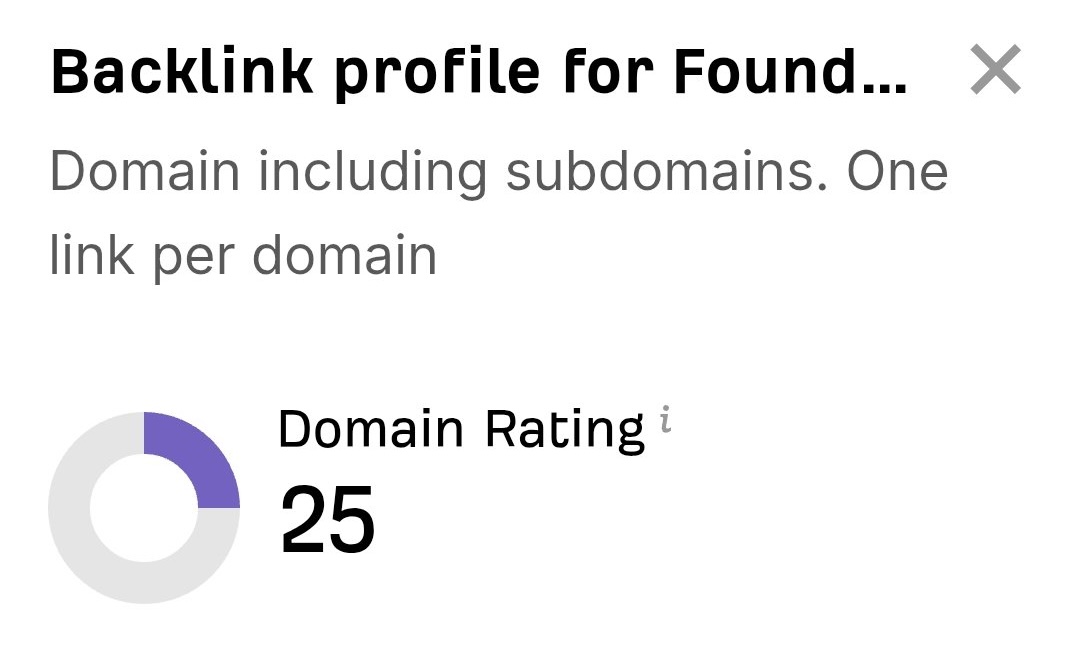 “I just let the Sorank software do its thing, and now my DR is 25 and my page is ranking higher.”
 Lucas FlandrePodcast Host“I specialized in GEO thanks to Sorank. The GEO Leaderboard allows me to show my clients their position vs competitors on ChatGPT. It’s a real commercial differentiator.”
 MélanieSEO Freelance“Great service, works well for our website and helps us understand how to improve it to rank better on Google and elsewhere. Congrats, keep going, I recommend it.”
 Hugo T.E-commerce merchant