Preferences
Privacy is important to us, so you have the option of disabling certain types of storage that may not be necessary for the basic functioning of the website. Blocking categories may impact your experience on the website. More information
Privacy is important to us, so you have the option of disabling certain types of storage that may not be necessary for the basic functioning of the website. Blocking categories may impact your experience on the website. More information

The dark funnel is the part of the buyer journey that analytics cannot see, like private chats and word of mouth. Learn how to spot it and act on it.







Founder Sorank, 7+ years in SEO.
Summary
The dark funnel is the part of the buyer journey that analytics tools cannot see. It happens in private messages, word of mouth, peer groups, reviews and podcasts, where a buyer shows interest but no source is recorded. Its effects often show up later as direct visits or branded searches.
Want to go further? Ask
The dark funnel is every step a buyer takes before a visit that your tools can label. A person hears about a product from a colleague, reads a thread in a private Slack group, then types the domain into the address bar. Analytics logs a direct visit. The recommendation that caused it never reaches the report.
A normal funnel is the path your tools can follow: an ad click, a search result, a link from another site, then a form fill. Each step leaves a source tag. The dark funnel is the part with no tag. The buyer still has intent, but the signal is lost on the way.
The idea is common in B2B marketing, where a purchase involves several people and many private conversations. It also applies to consumer brands, because many purchases start with a recommendation from someone the buyer trusts.
Five channels appear most often. Each one moves intent without leaving a clear source.
It depends on the network. In an April 2023 study by SparkToro, the study recorded 1113 visits over 10 days across 11 networks. Messaging apps lost the most referral data. Public posts kept most of it.
| Network | Visits counted as direct |
|---|---|
| TikTok, Slack, Discord, Mastodon, WhatsApp | 100% |
| Facebook Messenger | 75% |
| Instagram DMs | 30% |
| Public LinkedIn posts | 14% |
| Pinterest posts | 12% |
Treat these numbers as a sign of the problem, not as a rate for your site. The share depends on the apps your buyers use and on how each link was shared.
You cannot see every touchpoint, but you can see its effects. Read these signals together, not one at a time.
A tagged link looks like this. Change the values to match your campaign.
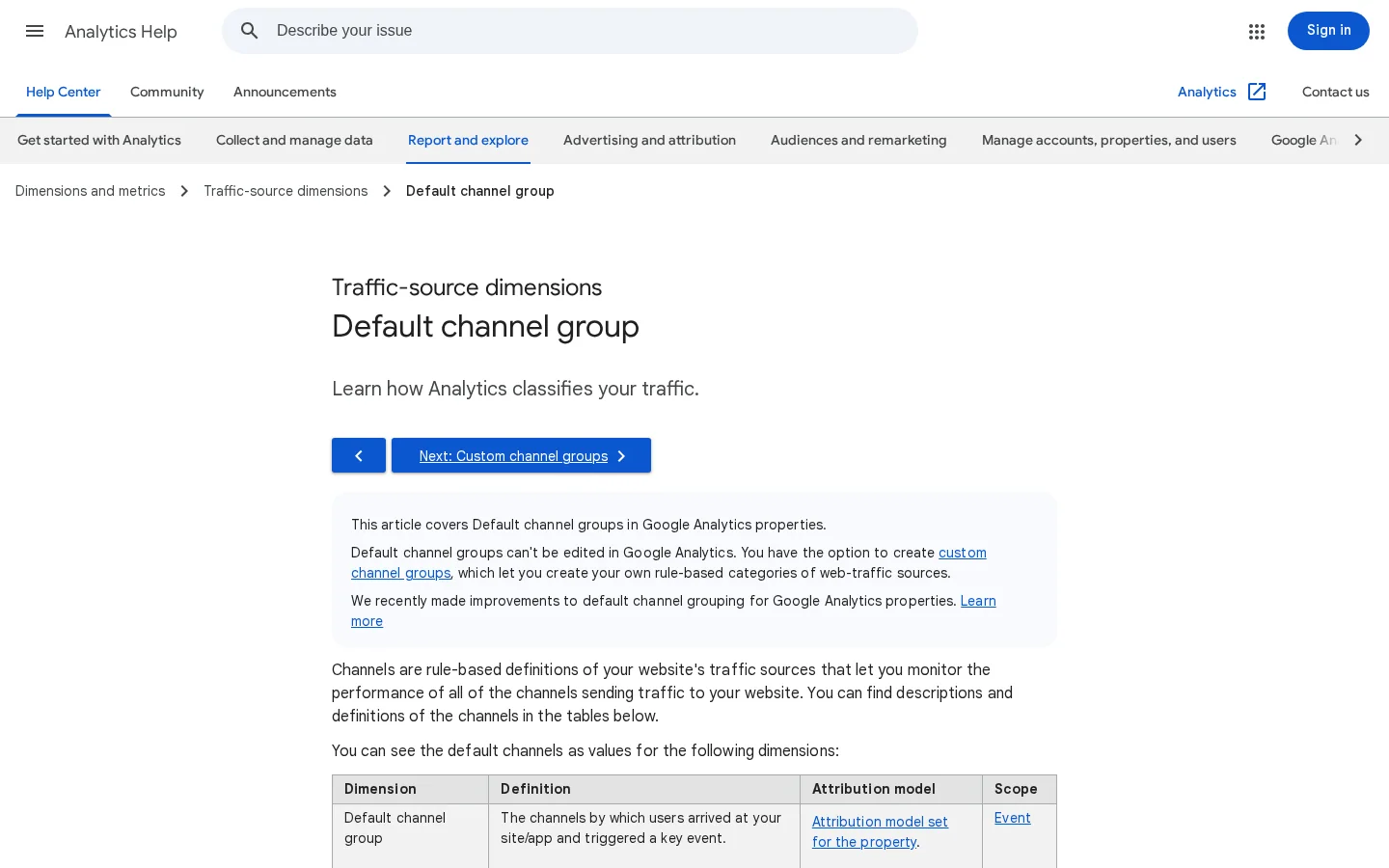
https://example.com/pricing?utm_source=podcast&utm_medium=audio&utm_campaign=episode-12The reason the dark funnel hides in the Direct bar is a rule in Google's default channel definitions: Direct is a visit where the source is exactly "(direct)" and the medium is "(none)" or "(not set)". In Google Analytics 4 (GA4), that rule covers every visit with no tag, whatever its real origin.
You can influence hidden channels before you can measure them. Three moves work well.
AI dark traffic is one slice of the dark funnel. It covers visits from AI models that arrive without a referrer, such as a link copied from a chat. The dark funnel is wider: it includes word of mouth, reviews, podcasts and private chats with no AI involved at all. The AI dark traffic entry explains how to group these visits in your reports.
Because both hide in Direct traffic, a rise in Direct is not proof of either. Compare it with branded searches, sign-up answers and the pages that AI models name. The AI search traffic study looks at how much of your traffic really comes from AI search.
The error: Direct traffic also includes typed URLs, bookmarks and some tools, so not every direct visit comes from a hidden source. How to spot it: Direct is your largest source, and it moves with no campaign behind it. How to fix it: Compare Direct with branded searches and sign-up answers before you draw a conclusion.
The error: Treating what you cannot track as if it does not matter. How to spot it: Sales reports show deals, but your channel report credits none of them to word of mouth or podcasts. How to fix it: Add the "How did you hear about us?" question and review the answers every week.
The error: Applying the percentages from a single test to your own site. How to spot it: A figure from a slide is treated as your fixed share of traffic. How to fix it: Run your own test with tagged links, shared through the apps your buyers actually use.
For SEO, the dark funnel explains why a page may earn sales it never gets credit for. A recommendation in a private chat can lead to a branded search, and that search lands on a page that ranks. Your reports show the search, not the chat. Read Search Console and analytics together to see the pattern.
For GEO, AI models answer from public pages, so public mentions matter as well as private ones. The GEO / SEO dashboard shows which pages get visits from AI models next to your Google traffic, so you can see where the two meet.
The dark funnel is the part of buying that analytics cannot record. You cannot track every step, but you can watch its signals: Direct traffic, branded searches, sign-up answers and tagged links. Use them together, and focus on the channels where your buyers talk.
Sources
No. Dark social is one part of the dark funnel, limited to private sharing in messaging apps and social platforms. The dark funnel also covers word of mouth, reviews, podcasts and offline events, where no referral data is passed on.
Not fully. You can measure its effects with Direct traffic trends, branded searches and a sign-up question about how people heard about you. Read these signals together, because none of them proves the source alone.
Yes. A buyer may hear about a brand in private, then search for its name later. The visit can land on a page that ranks, while the original recommendation stays out of your reports.
 “I tested Sorank on a real client site and it's insane. It does everything an agency would bill you $1500 a month for. It's going into production on that client now.”

 Guillaume Guersanguersanguillaume.com“We are an Ads agency and we wanted to get our SEO back on track once and for all. Sorank gave us a clear view of our site, helped us prioritize optimizations, and properly structure our content. The tool is easy to use, well designed for a team, and very practical for centralizing tracking without having to juggle multiple platforms. A very solid foundation to start fresh with our SEO.”
 Gaspard MadouiAds Agency
 “I just let the Sorank software do its thing, and now my DR is 25 and my page is ranking higher.”
 Lucas Flandrefoundertrace.fr“I specialized in GEO thanks to Sorank. The GEO Leaderboard allows me to show my clients their position vs competitors on ChatGPT. It’s a real commercial differentiator.”
 MélanieSEO Freelance“Great service, works well for our website and helps us understand how to improve it to rank better on Google and elsewhere. Congrats, keep going, I recommend it.”
 Hugo T.E-commerce merchant