Preferences
Privacy is important to us, so you have the option of disabling certain types of storage that may not be necessary for the basic functioning of the website. Blocking categories may impact your experience on the website. More information

Privacy is important to us, so you have the option of disabling certain types of storage that may not be necessary for the basic functioning of the website. Blocking categories may impact your experience on the website. More information

AMP (Accelerated Mobile Pages) is a framework for fast-loading mobile pages. Learn how it works, whether it helps SEO, and its place in 2026.








Sources
AMP stands for Accelerated Mobile Pages, an open-source framework introduced by Google in 2015 to make web pages load near-instantly on phones. It works by serving a simplified version of a page that strips out heavy code and can be cached for fast delivery. At its peak, AMP was a major focus for publishers chasing speed and prominent placement in mobile search.
For marketers, founders, and SEO and GEO practitioners, AMP is worth understanding mostly as context. Its influence has faded, and the priorities it pioneered, fast loading and good mobile experience, now live in broader performance standards. Knowing where AMP fits helps you avoid investing in a legacy approach when a more flexible path exists, and it connects directly to modern page experience.
AMP is an open-source HTML framework developed for creating fast-loading, mobile-optimized web pages. In practice, it delivers a leaner version of a page designed to render almost immediately. To achieve that, AMP imposes strict rules on how a page is built, trading some flexibility for guaranteed speed.
The framework was originally aimed at publishers, especially news sites that wanted their articles to appear instantly when tapped from search. Over time AMP expanded beyond news, but its core promise never changed: a constrained, predictable page that loads fast on any device and connection.
AMP relies on three mechanisms. First, HTML restrictions: it uses a stripped-down dialect called AMP-HTML, replacing some standard tags with optimized counterparts such as a special image tag, and heavily limiting custom JavaScript. Second, an AMP cache: once published, pages can be served through a cache delivered by a content delivery network, pre-fetched and stored so they load from a nearby server.
Third, a component library: AMP provides pre-built elements like accordions and sidebars that add interactivity without slowing the page. Together these constraints make performance the default rather than something you have to engineer, which is why AMP pages reliably feel instant even though they sacrifice some design freedom.
AMP launched to solve a real problem in the mid-2010s: mobile pages were often bloated and slow, and slow pages lost readers. By enforcing a lightweight structure and caching content, AMP gave publishers a dependable way to deliver fast mobile experiences, and Google surfaced AMP content prominently in mobile features like the Top Stories carousel.
That prominence created strong incentives to adopt it. For several years, having an AMP version was effectively a ticket into the most visible mobile placements, which is why so much publisher content was built or duplicated in AMP. The overwhelming majority of content featured in mobile news carousels still uses AMP today.
The honest answer is nuanced: AMP is not dead, but its SEO impact is now minimal, and it is widely considered a legacy technology. Critically, AMP is not a direct ranking factor. Google does not award extra points for installing the framework, so simply adding AMP will not lift your rankings on its own.
What benefits exist are indirect, flowing from speed and user experience rather than from AMP itself. Because Google's priorities shifted toward measurable performance, you can now reach the same outcomes without AMP, which is why most teams treat it as optional rather than essential. The decision often comes down to a technical SEO audit of whether your standard pages already perform well.
The shift from AMP tracks the rise of Core Web Vitals, Google's set of real-world performance metrics. AMP happens to optimize those metrics well: caching helps content paint quickly, restricted JavaScript keeps pages responsive, and required element sizing prevents layout jumps. But the key point is that AMP is one way to hit those targets, not the only way.
A perfectly optimized standard page can match AMP's performance while keeping full design and functionality. AMP mainly makes fast speeds easier for teams without dedicated performance resources. Modern best practice is a Core Web Vitals first approach: optimize the metrics directly, through any method, rather than adopting the AMP framework for its own sake. This is part of broader user experience work.
The benefits are real where they apply: dramatically faster mobile load times, lower bounce rates, and continued presence in mobile carousels. For content-heavy blogs, news sections, publishers in regions with slower networks, and businesses lacking a performance budget, AMP can deliver quick, dependable speed gains.
The limitations are why adoption has cooled. AMP restricts design flexibility and custom functionality, and it often requires maintaining a separate AMP version of each page alongside the canonical one, adding complexity. For many sites, that overhead is no longer justified when a single well-built page can perform just as well, sometimes alongside a progressive web apps approach to mobile.
AMP itself plays little role in AI search, but the lesson it embodies does. Fast, clean, well-structured pages are easier for both users and machines to consume, and the same lightweight, predictable structure that helped AMP load quickly also helps crawlers and AI systems parse content. Speed and clarity remain durable advantages regardless of the framework.
The practical takeaway for generative engine optimization is to invest in performance and clean structure as ends in themselves, not in any single legacy tool. Pairing fast, accessible pages with strong content and disciplined keyword research and content planning supports both traditional rankings and your AI search visibility.
AMP was an influential framework that taught the web to take mobile speed seriously, but in 2026 it is best understood as legacy technology. It is not a direct ranking factor, its benefits are indirect through speed and experience, and a Core Web Vitals first approach now delivers the same results with more flexibility and less overhead. It still has a place for publishers and resource-constrained teams, but it is no longer a default requirement.
The enduring principle is that fast, clean, well-structured pages win, however you build them. To go further, connect this with page experience and user experience, and use Sorank's research and content planning tools to focus effort where it counts. Reference sources: Nightwatch and 12AM Agency.

AMP stands for Accelerated Mobile Pages. It is an open-source HTML framework, originally backed by Google, for building stripped-down web pages that load almost instantly on mobile devices. AMP pages use a restricted form of HTML, limited JavaScript, and can be served from a cache for very fast delivery.
No, AMP is not a direct ranking factor, and Google gives no bonus simply for using it. Any benefit is indirect, through faster load times and better user experience, which feed into signals like Core Web Vitals that Google does reward. A well-optimized standard page can match AMP without using the framework.
It depends. For content-heavy publishers, sites on slow networks, or teams without development resources to optimize speed manually, AMP can still deliver quick gains and remains common in mobile news carousels. For most modern sites, a Core Web Vitals first approach achieves the same speed with more design freedom and no separate AMP version to maintain.
THEY TRIED SORANK BEFORE YOU
 “I tested Sorank on a real client site and it's insane. It does everything an agency would bill you $1500 a month for. It's going into production on that client now.”
 Guillaume Guersanguersanguillaume.com“We are an Ads agency and we wanted to get our SEO back on track once and for all. Sorank gave us a clear view of our site, helped us prioritize optimizations, and properly structure our content. The tool is easy to use, well designed for a team, and very practical for centralizing tracking without having to juggle multiple platforms. A very solid foundation to start fresh with our SEO.”
 Gaspard MadouiAds Agency
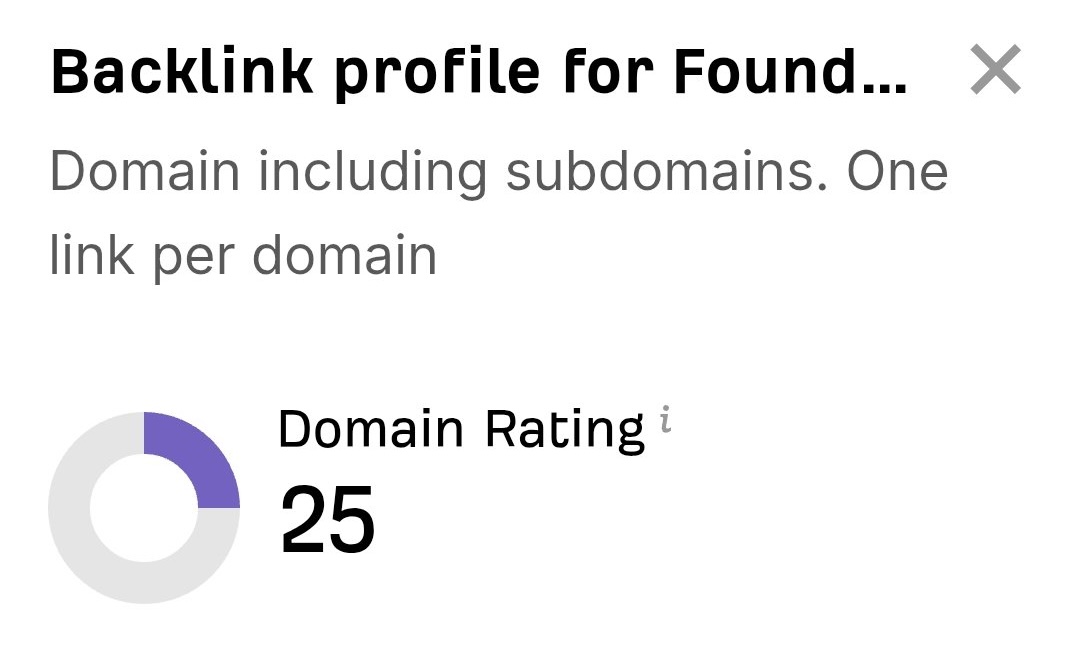 “I just let the Sorank software do its thing, and now my DR is 25 and my page is ranking higher.”
 Lucas FlandrePodcast Host“I specialized in GEO thanks to Sorank. The GEO Leaderboard allows me to show my clients their position vs competitors on ChatGPT. It’s a real commercial differentiator.”
 MélanieSEO Freelance“Great service, works well for our website and helps us understand how to improve it to rank better on Google and elsewhere. Congrats, keep going, I recommend it.”
 Hugo T.E-commerce merchant