Preferences
Privacy is important to us, so you have the option of disabling certain types of storage that may not be necessary for the basic functioning of the website. Blocking categories may impact your experience on the website. More information

Privacy is important to us, so you have the option of disabling certain types of storage that may not be necessary for the basic functioning of the website. Blocking categories may impact your experience on the website. More information

Page experience is Google's set of signals for how pleasant a page is to use. Learn the Core Web Vitals, the other factors, and how much it affects ranking.








Sources
Page experience describes how good it feels to use a web page, beyond the value of its content. Google's core ranking systems look to reward content that provides a good page experience, judged across factors like loading performance, responsiveness, visual stability, security, and mobile usability. It is less about what a page says and more about whether visitors can read and use it without friction.
This matters because frustration costs you. A page that loads slowly, jumps around as it renders, or buries content under pop-ups drives people away, which hurts both users and search performance. Page experience overlaps heavily with broader user experience, but it refers specifically to the signals search engines can measure.
Page experience is a set of signals that together reflect user satisfaction with a page. Google is explicit that there is no single page experience signal; instead its ranking systems look at a variety of signals that align with overall page experience. The aim is to surface content that is not only relevant but also comfortable to consume.
The factors Google names include Core Web Vitals, serving pages over HTTPS, displaying well on mobile devices, avoiding an excessive amount of ads that interfere with the main content, steering clear of intrusive interstitials, and making the main content easy to distinguish. No one of these is decisive, but collectively they describe a quality page.
At the heart of page experience sit the Core Web Vitals, a set of metrics that measure real-world experience across loading, interactivity, and visual stability. There are three. Largest Contentful Paint, which should occur within 2.5 seconds, measures loading. Interaction to Next Paint, which should be under 200 milliseconds, measures responsiveness. Cumulative Layout Shift, which should be below 0.1, measures visual stability.
One notable change: Interaction to Next Paint replaced First Input Delay as a Core Web Vital, giving a fuller picture of responsiveness across all interactions rather than just the first. Google Search Console includes a Core Web Vitals report so you can see how real visitors experience your pages, which feeds naturally into a wider technical SEO audit.
Beyond the Vitals, several qualitative factors matter. HTTPS ensures the page is served securely. Mobile friendliness ensures it renders and functions on small screens, which is essential given mobile-first indexing. Both are baseline expectations rather than competitive advantages, but failing them is a real liability.
The remaining signals concern layout honesty. Pages should not drown the main content in ads, should avoid intrusive interstitials that block what the user came for, and should make it easy to tell the main content apart from everything else. Older approaches to mobile speed like AMP and modern patterns such as progressive web apps are two ways teams have tried to deliver these qualities.
Page experience is a confirmed part of Google's core ranking systems, but its weight is modest. Google is clear that Search always seeks to show the most relevant content, even if the page experience is sub-par. In other words, a great experience will not rescue weak or irrelevant content.
Where it counts is at the margin. When multiple pages are similarly helpful, relevant, and authoritative, the one with the better page experience can win, acting as a tie-breaker. Having a great page experience can contribute to success in Search, but it complements strong content rather than replacing it, which is why it pairs with the goals of helpful content.
For SEO, page experience is the polish on top of substance. It protects the value of good content by ensuring people can actually use it, and it reduces the friction that pushes visitors back to the results page. Poor experience often shows up indirectly in metrics like a high bounce rate or low dwell time, signals that something is going wrong after the click.
For generative engine optimization, the connection is more indirect. AI crawlers need to access and parse your content, so a fast, technically clean, mobile-ready page that is easy to render also tends to be easier for machines to read and cite. Good page experience does not directly make an AI cite you, but the same technical hygiene supports both goals. Pair it with strong keyword research and content planning so your well-built pages also target the right questions.
Begin by measuring real-world data. Use the Core Web Vitals report in Search Console and field tools to see how actual visitors experience your pages, then prioritize the pages and metrics that are failing. Improving loading often means optimizing images and reducing render-blocking resources; improving responsiveness means trimming heavy scripts; improving stability means reserving space for images and embeds so the layout does not shift.
Then handle the qualitative signals: serve everything over HTTPS, confirm mobile usability, remove intrusive pop-ups, and keep ad density reasonable so the main content stays front and center. Google recommends holistic improvement over chasing a perfect score on any single metric, so aim for pages that are genuinely pleasant rather than narrowly optimized.
The main pitfall is overrating page experience. Because the metrics are concrete and easy to obsess over, teams sometimes pour effort into shaving milliseconds while neglecting content, which is the larger lever. Since page experience is mostly a tie-breaker, perfect Vitals on a thin page will not outrank a strong page with merely decent Vitals.
There are practical hurdles too. Field data fluctuates with real devices and networks, third-party scripts and ads can undermine your scores in ways that are hard to fully control, and improvements take engineering time. The sensible posture is to reach the good thresholds, remove obvious friction, and then return your focus to content quality and relevance.
Page experience is the bundle of signals, Core Web Vitals, HTTPS, mobile-friendliness, sane ad density, and no intrusive interstitials, that determine how pleasant a page is to use. It is a real ranking consideration, but a secondary one that mostly breaks ties between otherwise comparable pages, so it should complement great content rather than substitute for it.
To go further, connect this with broader user experience and the goals of helpful content, and use Sorank's research and planning tools to make well-built pages target the right queries. Reference sources: Google Search Central page experience, Google Core Web Vitals docs, and web.dev.

Page experience is the set of signals Google uses to judge how pleasant a page is to interact with, separate from the value of its content. It includes Core Web Vitals for loading, responsiveness, and stability, plus HTTPS security, mobile-friendliness, reasonable ad density, and the absence of intrusive interstitials. Google stresses there is no single signal; the systems weigh several together.
Largest Contentful Paint measures loading and should happen within 2.5 seconds. Interaction to Next Paint measures responsiveness and should be under 200 milliseconds. Cumulative Layout Shift measures visual stability and should be below 0.1. Interaction to Next Paint replaced First Input Delay as a Core Web Vital to give a fuller picture of how pages respond to all interactions.
Its impact is real but modest. Google says Search always tries to show the most relevant content even if the page experience is sub-par, so a great experience cannot rescue weak content. Page experience acts mainly as a tie-breaker: when pages are similarly helpful and authoritative, the one with the better experience can rank higher.
THEY TRIED SORANK BEFORE YOU
 “I tested Sorank on a real client site and it's insane. It does everything an agency would bill you $1500 a month for. It's going into production on that client now.”
 Guillaume Guersanguersanguillaume.com“We are an Ads agency and we wanted to get our SEO back on track once and for all. Sorank gave us a clear view of our site, helped us prioritize optimizations, and properly structure our content. The tool is easy to use, well designed for a team, and very practical for centralizing tracking without having to juggle multiple platforms. A very solid foundation to start fresh with our SEO.”
 Gaspard MadouiAds Agency
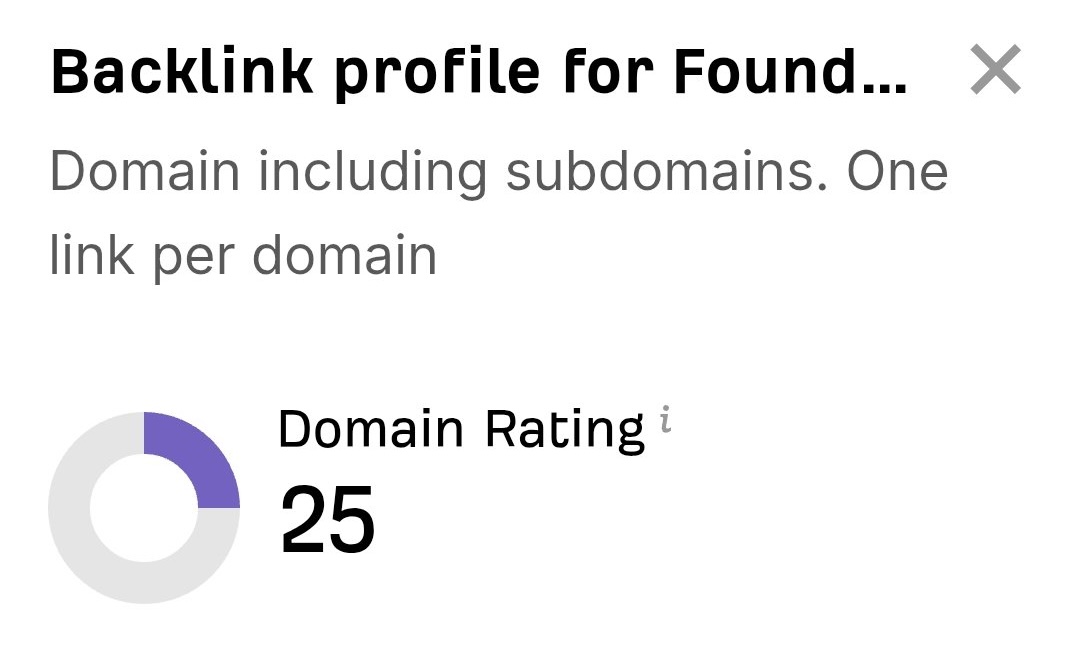 “I just let the Sorank software do its thing, and now my DR is 25 and my page is ranking higher.”
 Lucas FlandrePodcast Host“I specialized in GEO thanks to Sorank. The GEO Leaderboard allows me to show my clients their position vs competitors on ChatGPT. It’s a real commercial differentiator.”
 MélanieSEO Freelance“Great service, works well for our website and helps us understand how to improve it to rank better on Google and elsewhere. Congrats, keep going, I recommend it.”
 Hugo T.E-commerce merchant