Preferences
Privacy is important to us, so you have the option of disabling certain types of storage that may not be necessary for the basic functioning of the website. Blocking categories may impact your experience on the website. More information

Privacy is important to us, so you have the option of disabling certain types of storage that may not be necessary for the basic functioning of the website. Blocking categories may impact your experience on the website. More information

AI search performance measures how often and how credibly your brand is cited in AI answers. Learn the metrics and how to track them.







Sources
AI search performance is the discipline of measuring how well your brand shows up inside AI answers, and using that signal to improve. As more people get complete answers from assistants without clicking a link, the old scorecard of rankings and clicks no longer captures whether you are visible. Performance here means appearing in the answer, being cited as a source, and being framed favorably when an assistant discusses your category.
This matters because discovery is moving into generative AI faster than most measurement has kept up. Traditional metrics like keyword rankings and click-through rate were never built for a world where users get answers without visiting a website. AI search performance gives you a way to see, and steer, your presence in that new layer.
AI search performance is the combined view of how an AI assistant surfaces, cites, and characterizes your brand across many prompts. It answers three questions: do you appear at all, are you used as a source rather than just mentioned, and is the framing positive. Together these form a richer picture than a single ranking position ever could.
The shift is structural. Classic search returns roughly ten blue links, while assistants cite only a handful of sources, often between two and seven per response, then synthesize them into one answer. With fewer slots available, being one of the cited sources matters far more, which is why performance now centers on inclusion and credibility rather than position alone.
Adoption is the driver. One widely cited figure reports that 83 percent of people now prefer AI-powered searches, and analysts project AI search will surpass traditional search by 2028. When that much demand shifts into assistants, brands that cannot measure their presence there are flying blind on a growing share of discovery.
The stakes are sharpened by volatility. One analysis found that only about 30 percent of brands maintain visibility across consecutive AI runs, meaning your presence can vanish between answers without warning. Tracking performance is what surfaces these drops, often called citation cliffs, before they quietly erode your AI search visibility.
A practical scorecard starts with citation frequency, how often assistants reference your content, and brand mention visibility, the unlinked references to your company in an answer. One study found brands earning both citations and mentions are about 40 percent more likely to resurface across multiple AI answers than citation-only brands, so both signals count.
Beyond frequency, track impression share in AI Overviews relative to competitors, sentiment of how your brand is framed, and an overall AI visibility score that some tools express on a 0 to 100 scale. Rounding it out, watch downstream signals like AI referred traffic and assisted conversions, since assistants rarely act as the final touchpoint.
These three terms are related but not interchangeable. A mention is any reference to your brand. A citation is stronger: it means the assistant used your content as a source, which is a clearer authority signal. Share of voice compares your mentions against competitors for a category, calculated as your citations divided by total citations, times one hundred.
Authority also varies by framing. Being named as a definitive source, as in "according to your brand," carries more weight than being one option in a list. Tracking your AI share of voice alongside the strength of each citation gives a truer read than counting raw appearances.
The simplest method is snapshot tracking: define five to ten priority prompts, run them weekly or monthly across ChatGPT, Perplexity, Google AI Overviews, and Copilot, and record where you appear, how you are framed, and who is cited instead. Saving these responses over time reveals trends and sudden citation cliffs.
Teams that want more rigor automate the captures and layer in sentiment scoring and competitive comparison, which is the role of dedicated AI search analytics. Whichever route you choose, align the AI metrics with familiar SEO measures so the data sits next to your existing reporting rather than in a silo.
Content authority is the biggest lever. The same factors that earn trust in classic search, expert authorship, freshness, quality backlinks, and structured data, also drive citations. One analysis found pages with clean organization and schema earn about 2.8 times more AI citations than poorly formatted pages, so structure is not optional.
Just as important is being extractable. Answer questions directly, keep passages self-contained, and cover a topic in depth so an assistant can lift a clear statement for many related prompts. These habits sit at the heart of AI content strategy, and pairing them with disciplined keyword research and content planning focuses effort on the prompts that matter.
AI answers are non-deterministic, so the same prompt can return different sources from one run to the next. That makes a single check unreliable and pushes teams toward repeated sampling and averages rather than one-off snapshots. Platform differences add friction too, since some engines link sources while others mention brands without a link.
Attribution is the other hard part. Assistants often send visits that appear as direct traffic, a pattern sometimes called dark traffic, which obscures their real contribution. Estimating that impact requires behavioral signals like deep landing pages and longer research sessions, and an honest acknowledgment that some influence will stay approximate.
AI search performance reframes visibility around inclusion, citation, and sentiment inside AI answers rather than rankings and clicks. With adoption rising and presence proving volatile, the brands that measure citation frequency, share of voice, and framing across assistants can act before they disappear from the answer. Strong, well-structured, authoritative content remains the surest way to lift the numbers.
To go further, connect this with a disciplined AI content strategy and ongoing AI search analytics, and use Sorank's research and content planning tools to prioritize the prompts that drive citations. Reference sources: AirOps and Search Engine Land.

Visibility usually refers to whether and how often you appear in AI answers. Performance is the broader scorecard: it folds visibility together with citation strength, share of voice against competitors, sentiment, and downstream signals like referred traffic and assisted conversions. In short, visibility is one input, while performance is the full read on how well you do in AI search.
Start with citation frequency, brand mention visibility, and share of voice against your competitors. Add sentiment to see how you are framed, and an overall visibility score if your tool provides one. Once those are stable, layer in AI referred traffic and assisted conversions to connect presence in answers to real business outcomes.
AI answers are non-deterministic, so the same prompt can pull different sources on different runs. Platforms also differ, since some always link citations while others mention brands without a link. The fix is repeated sampling: run a fixed set of priority prompts on a schedule, average the results, and watch for sudden drops rather than trusting a single snapshot.
THEY TRIED SORANK BEFORE YOU
 “I tested Sorank on a real client site and it's insane. It does everything an agency would bill you $1500 a month for. It's going into production on that client now.”
 Guillaume Guersanguersanguillaume.com“We are an Ads agency and we wanted to get our SEO back on track once and for all. Sorank gave us a clear view of our site, helped us prioritize optimizations, and properly structure our content. The tool is easy to use, well designed for a team, and very practical for centralizing tracking without having to juggle multiple platforms. A very solid foundation to start fresh with our SEO.”
 Gaspard MadouiAds Agency
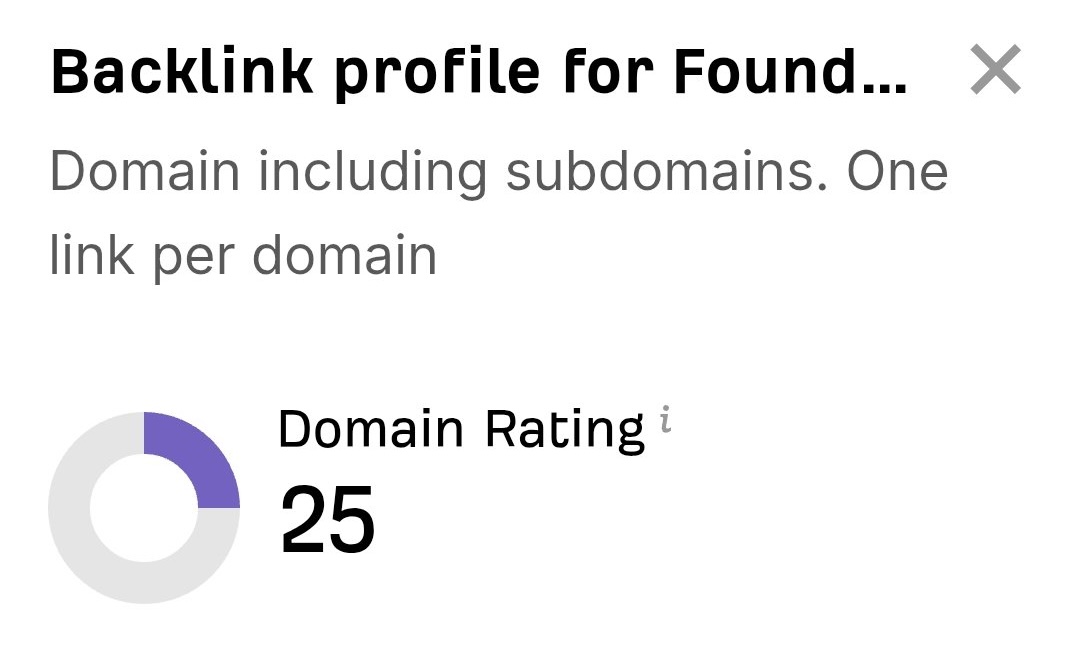 “I just let the Sorank software do its thing, and now my DR is 25 and my page is ranking higher.”
 Lucas FlandrePodcast Host“I specialized in GEO thanks to Sorank. The GEO Leaderboard allows me to show my clients their position vs competitors on ChatGPT. It’s a real commercial differentiator.”
 MélanieSEO Freelance“Great service, works well for our website and helps us understand how to improve it to rank better on Google and elsewhere. Congrats, keep going, I recommend it.”
 Hugo T.E-commerce merchant