Preferences
Privacy is important to us, so you have the option of disabling certain types of storage that may not be necessary for the basic functioning of the website. Blocking categories may impact your experience on the website. More information

Privacy is important to us, so you have the option of disabling certain types of storage that may not be necessary for the basic functioning of the website. Blocking categories may impact your experience on the website. More information

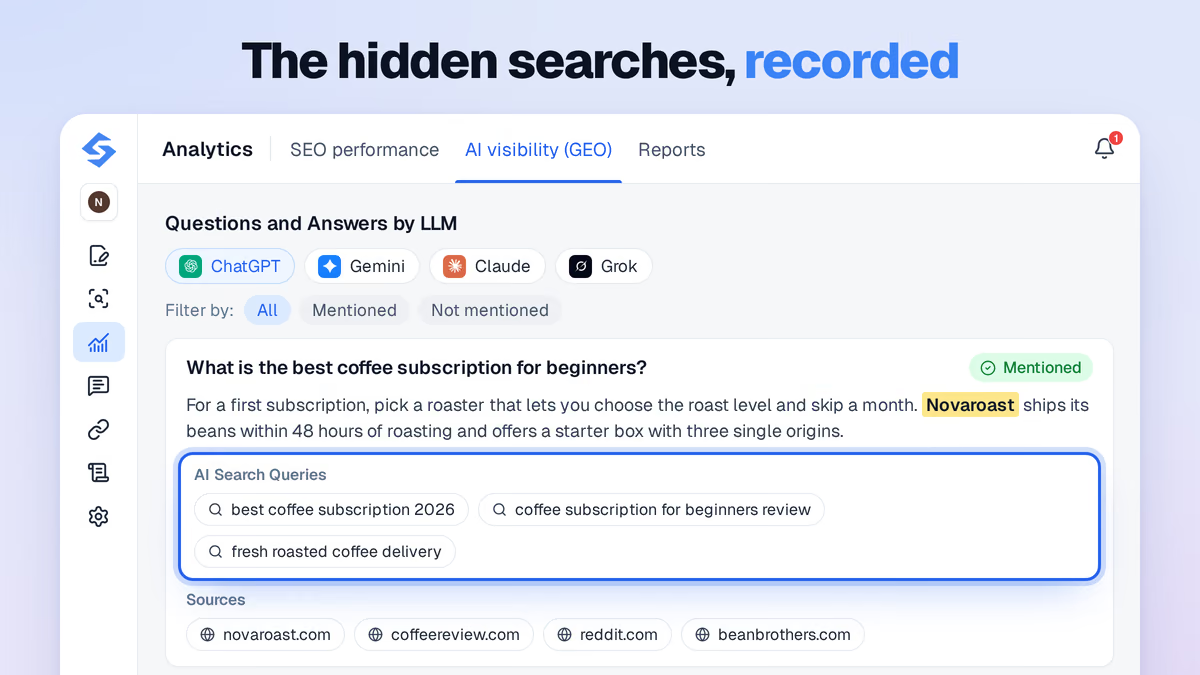
SEO for fine dining restaurants starts from how a special evening gets planned: weeks ahead, by someone who reads everything. "Tasting menu for an anniversary in Chicago", "private dining room for 12", "how long does a tasting menu take", "what to wear to a Michelin star restaurant". Sorank publishes the answers on your site, in your voice, and tracks which tables ChatGPT, Claude and Gemini suggest when a guest asks where to book.
Your kitchen and your floor team stay on the service. A chef or sommelier can read each article as a draft before it goes live.
















































27,120
Articles created
11,059,528
Visits from Google
18,371
Visits from AI
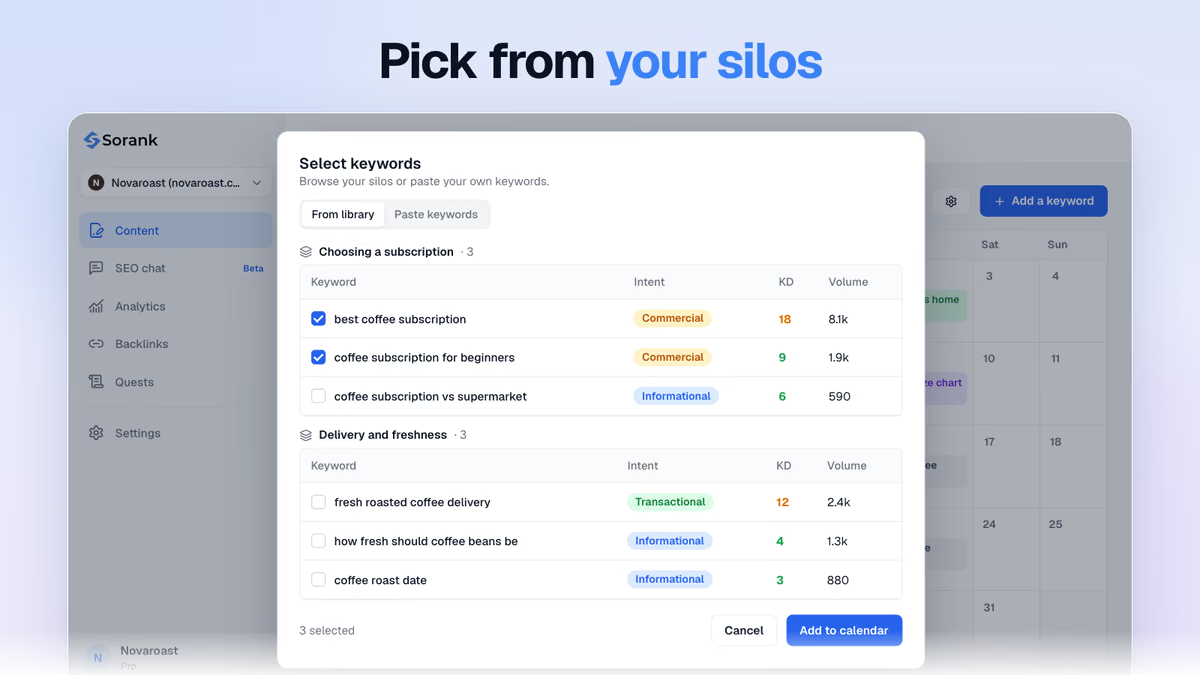
A dinner at this price comes with doubts that a booking widget never settles. "Is the wine pairing worth it?", "vegetarian tasting menu near me", "do you tip at a fine dining restaurant?". Sorank collects those questions by occasion, dietary need and experience, ranks them by intent and difficulty, and lets you pick the ones your house can answer honestly.
Choose what gets written from the content calendar; the list fills from your market and your rivals' pages.
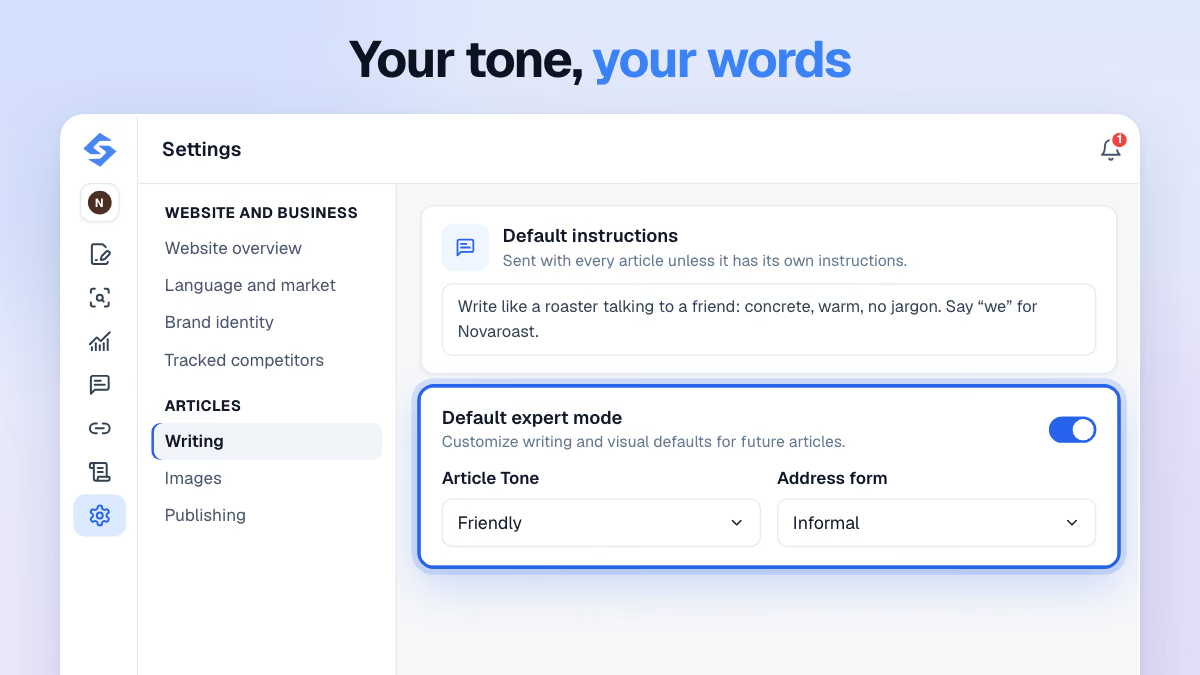
Generic copy about "an unforgettable culinary journey" is what a discerning guest skips. Tell Sorank how your restaurant speaks and what it never says: no invented dishes, no prices beyond those you supply, the chef's name spelled the right way. Those instructions then travel with every article, on the wine list, the sourcing or the private room.
Set them once in brand voice, and hold the first pieces as drafts for the chef.
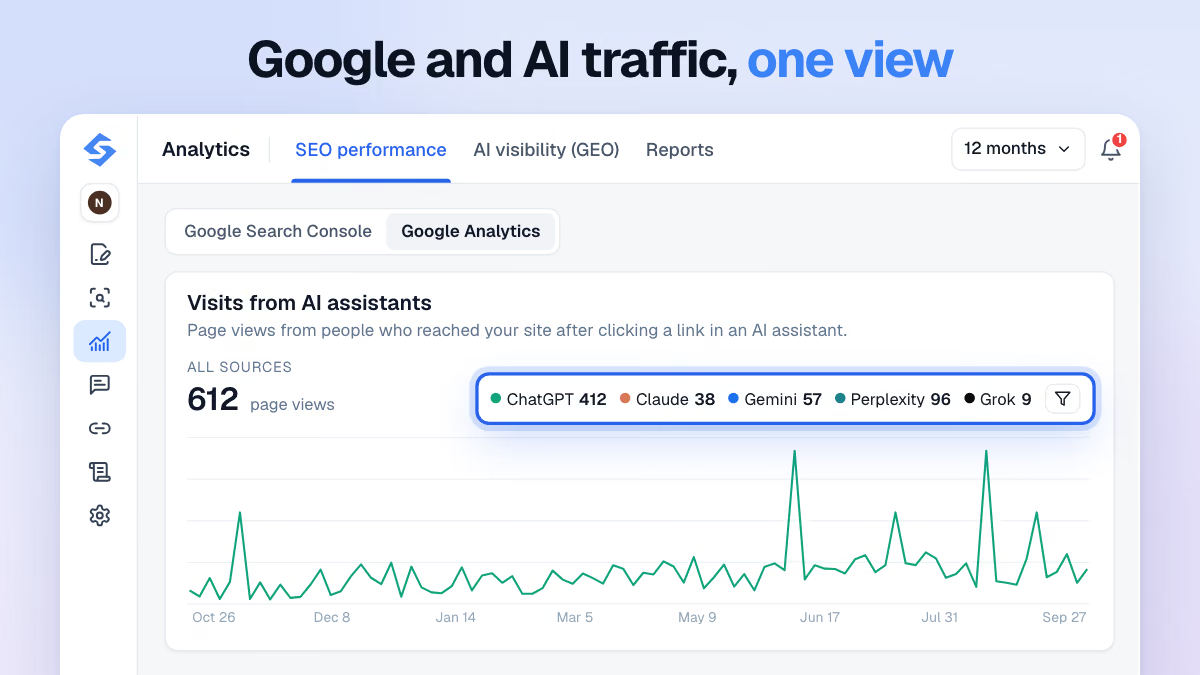
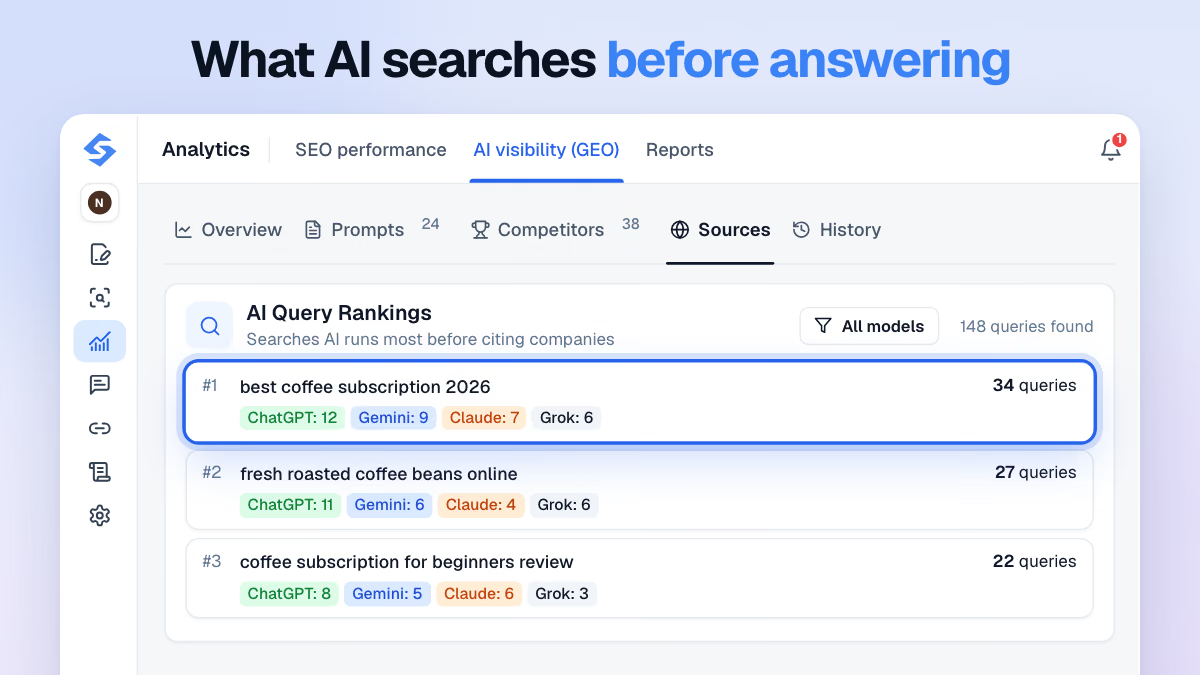
"Best restaurant for a proposal in Boston" or "where should I take clients for dinner in Geneva" is a question people now also put to ChatGPT. Sorank checks the answers to the questions you track, and its Analytics view counts the people who clicked through from each assistant, month by month.
Follow both in the dashboard. Covers and deposits stay in the reports of your reservation system.

WordPress, Webflow, Wix, Shopify or a webhook for a custom build. Sorank reads Search Console and Analytics to see whether your menu, private dining and reservation pages are found at all.
Give the menu format, price, seating times, dress code, dietary policy, private room capacity and the story of the kitchen. Sorank builds its plan and its writing on those facts, not on assumptions about your cuisine.

Schedule articles ahead of the moments guests start looking: Valentine's Day, the holidays, the change of season on your menu. Each one leads to the reservation or private dining page, and the chef can sign off before it is published.
THEY TRIED SORANK BEFORE YOU
 “I tested Sorank on a real client site and it's insane. It does everything an agency would bill you $1500 a month for. It's going into production on that client now.”

 Guillaume Guersanguersanguillaume.com
 “I just let the Sorank software do its thing, and now my DR is 25 and my page is ranking higher.”
 Lucas Flandrefoundertrace.fr“Great service, works well for our website and helps us understand how to improve it to rank better on Google and elsewhere. Congrats, keep going, I recommend it.”
 Hugo T.E-commerce merchant“For 2 years, 100% of my clients came from LinkedIn. Posting daily, commenting, DM follow-ups… totally dependent on the algorithm. I knew I needed to work on SEO but always postponed it: too long, too technical, not my job. With Sorank, I finally took the step. In 4 months, I generate 15 organic leads per month without posting anything. It’s not 50/50 with LinkedIn yet, but I sleep better knowing I now have a second lead source growing on autopilot.”
 Valentin ThomyColdMailing Agency
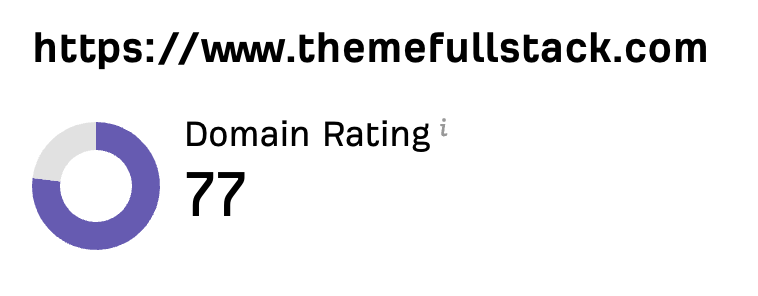 “I’m a developer, not a marketer. My Shopify theme was selling only through word-of-mouth and ads. With Sorank I finally understood how to structure my SEO and write articles to rank. The audit showed my product page was too slow. In 2 months, my organic traffic doubled and I’m starting to appear in ChatGPT answers when people search for Shopify themes. All of that with about 2 hours per week.”
 Thème FullStackgo.themefullstack.com“Great solution to manage SEO without headaches. Audits are fast, the interface is clear, and you quickly see which actions to implement. It has become an essential tool to track and improve the SEO of my sites. I highly recommend it.”
 XavEntrepreneur“I used Sorank for a client who needed SEO and it clearly made my life easier. I can quickly audit a site, track my projects, and keep a clear overview without multiplying tools. The onboarding is fast and the interface is great.”
 Céline MaurinFreelance CM
 “Blown away by Sorank’s performance. After testing many solutions on the market, I was amazed by how quickly our articles started ranking in the SERP. The results are concrete and much faster than anything we’ve experienced so far. It has been an excellent surprise for our team. We are confidently renewing our trust and highly recommend Sorank to agencies that demand fast and measurable results.”
 Patrick PerretFreelance Webdesign SEO“We’re a development agency and we use Sorank to run on-page audits on our clients’ Shopify stores. It helps us quickly identify optimization opportunities, structure fixes, and collaborate more easily with clients on the SEO side. Very useful to complement our technical support 🔥”

 Younes Yahyaluvaika.com“We are an Ads agency and we wanted to get our SEO back on track once and for all. Sorank gave us a clear view of our site, helped us prioritize optimizations, and properly structure our content. The tool is easy to use, well designed for a team, and very practical for centralizing tracking without having to juggle multiple platforms. A very solid foundation to start fresh with our SEO.”
 Gaspard MadouiAds Agency“I specialized in GEO thanks to Sorank. The GEO Leaderboard allows me to show my clients their position vs competitors on ChatGPT. It’s a real commercial differentiator.”
 MélanieSEO Freelance“I manage our dealership’s website and it had dozens of issues: slow pages, 404 errors, missing tags. We were losing rankings every month without understanding why. The Sorank audit detected everything in 5 minutes. I sent the report to our web provider with the priority fixes. We regained our rankings and traffic picked back up. Perfect for someone non-technical like me!”
 Xavier BreullMarketing Manager“I’m a CMO for a SaaS and I manage acquisition in a very competitive market. We were investing heavily in our product but not working on our SEO. No visibility on our real competitors, no tracking of our presence in AI. Sorank showed us our positioning vs competitors, which keywords to target, and GEO opportunities we had completely ignored!”
 Louis RAPPCMO SaaS
 “Very good version 2, I recommend it.”

 Antoine Verhillethenewblack.ai“I was skeptical at first, but this is the best SEO tool I’ve ever used. The interface is clear, audits are fast, and the recommendations are easy to implement. I’ve saved hours and hours managing SEO and tracking performance. I recommend it to all my entrepreneur friends who run an agency or work independently.”
 NoahEntrepreneur
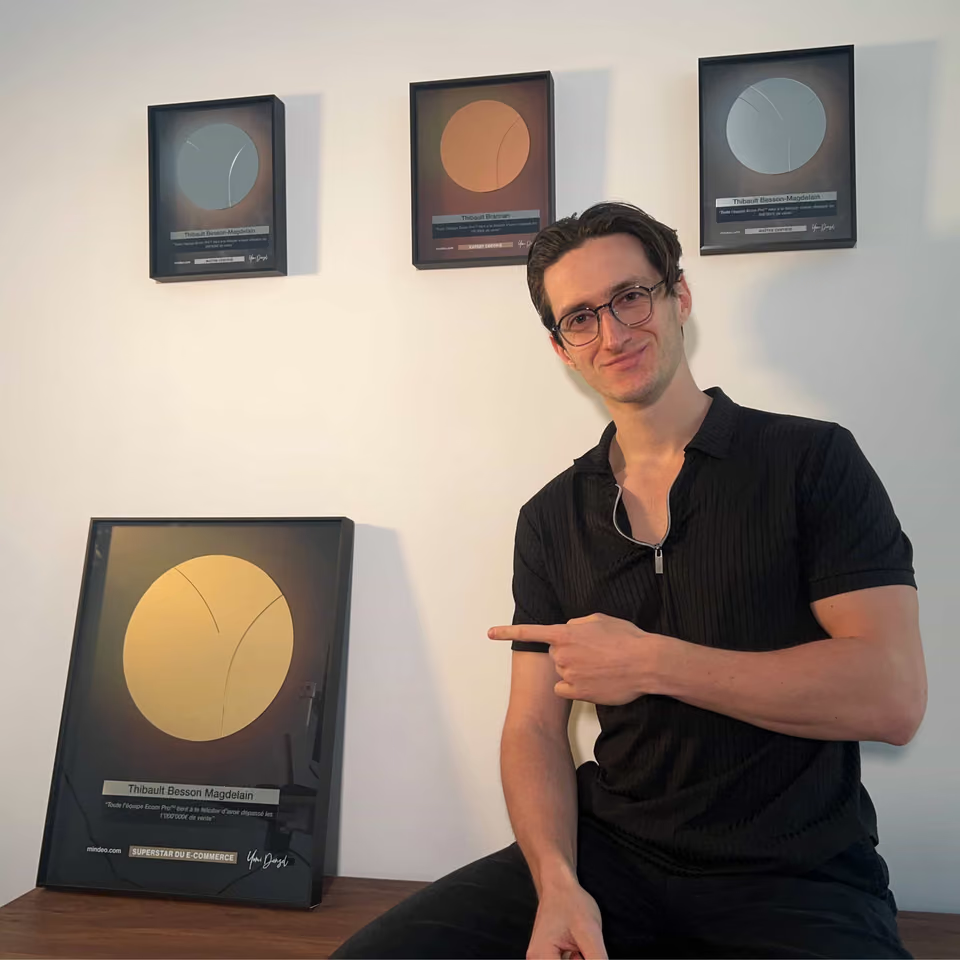
Founder’s Note.
I ran my own SEO agency for years. I built Sorank to deliver the same results to every business, at scale.
Everything I know about Google rankings and Generative Engine Optimization (GEO) is coded into this software, and it runs on autopilot for you.
Try for Free
SEO for fine dining restaurants is the work of making a high-end table easy to find, understand and trust on Google and in AI assistants. It differs from everyday restaurant marketing because the choice is rare and considered. Someone paying for a tasting menu reads about the chef, the format, the price and the room, and often compares three houses over several evenings.
Most advice for restaurants stops at "near me" searches, a good fit for a neighborhood restaurant. A destination table has other work to do: answer the doubts of a first-time guest, serve the planner of a company dinner, and give the guides and assistants exact facts to repeat.
No, and no article or link can buy one. The MICHELIN Guide awards zero to three stars on five criteria: ingredients, mastery of flavor and cooking techniques, the chef's personality in the cuisine, value for money and consistency across visits. Its inspectors dine in complete anonymity and always pay in full. The voting for The World's 50 Best is also out of reach: more than 1100 industry experts, anonymous apart from the panel chairs, each vote for 10 restaurants where they have eaten in the last 18 months.
Search has a different job. When a guest reads that you hold a star or a place on a list, they look you up next, and your site should confirm it in plain text, with the year, then answer what comes after: what is on the menu, what it costs, how to book. A distinction shown only as a logo gives Google and the assistants little to read.
They start from the occasion or the guide, then check details. In our food and beverage citation study of 4050 answers, Instagram appears in 2.2% of answers, 5.2 times its general rate, and Facebook in 2.35%. The same study warns that a menu published as an image or a PDF is much harder to quote than one written as text, and that the models answer dietary and price questions from text.
So write it out. A seasonal PDF may be beautiful, yet a web page with the format, price, sample courses and dietary policy is what gets read and repeated. On the code side, Google lists menu, servesCuisine and priceRange among its recommended properties for restaurants; our guide to structured data for AI answers shows how to apply it. Your web developer keeps that part.
Group them with question keywords and local keyword research. Private dining often deserves first place: the buyer plans ahead, reads closely and has a budget. If you sit inside a property, see also our page for hotels; for tastings at the estate, the one for wineries.
The first lines answer the question, and the rest sound like your dining room. An article on a first tasting menu states the number of courses and the length of the evening at your house, how to flag an allergy and when, what happens with the wine, and what to wear. Use facts only you hold: your supplier, your cellar, your seating times. Give prices if you publish them, and date anything seasonal, so an old menu never misleads a guest.
Sorank is software. It finds the searches, writes and publishes articles with sources, images and internal links, on WordPress, Webflow or Wix, tracks the AI answers each month and reports Search Console and AI visits together.
Your team keeps the Google Business Profile, where you can mark one reservation link as "Business preferred" if third-party ones appear, along with reviews, photos, the menu itself, the reservation system, press relations and contact with the guides. Sorank does not reply to reviews or take bookings. Our guide on review sites in AI recommendations explains why those profiles deserve care.
One website costs $49 a month on the Essential plan billed yearly, or $99 month to month, for 20 articles a month; a single restaurant rarely needs more. A group with several houses, each on its own site, pays per site. Details and the higher Pro and Business plans sit on the pricing page, with 3 days free and a 90-day results-or-refund guarantee.
Timing depends on your name and your city, and nobody can promise a date. Articles first collect impressions, then clicks, usually over months. Publish occasion pieces well before the date, because guests planning a holiday dinner begin looking long before the first snow.
By being clear about what a guest wants to know before booking: format, price, length of the evening, dietary policy, private rooms. Articles on those questions bring in people still deciding, and each one should lead to your reservation page.
No. Inspectors decide anonymously, on what they eat. Sorank works on the moment after: when a guest hears your name, your site explains the kitchen and the experience, and the AI assistants have accurate pages to quote.
No. Your profile, photos, review replies and reservation system stay with your team. Sorank publishes articles on your website, tracks AI answers and reports search traffic, and it never takes a booking or answers a guest.
They will if nobody guides them, so give Sorank your facts, tone and forbidden phrases, then keep articles as drafts until the chef or sommelier approves. Corrections to the standing instructions apply to later articles.
Give it sources to read: text menus, clear pages on the occasions you serve, accurate listings and mentions in guides. Sorank asks your chosen questions monthly, such as "best tasting menu in [city]", and shows who is named and which pages are quoted.
Sorank starts at $49 a month per website billed yearly, or $99 without commitment, with 20 articles a month and 3 days free. That covers the articles and AI tracking; photography, the profile and press remain separate.
We don't. Sorank isn't trying to be another Semrush or Ahrefs. Those tools are built for data, Sorank is built to do the work. Instead of more dashboards to check, it turns SEO and GEO insights into actions: articles written and published, backlinks earned, technical fixes and AI visibility tracking. Less complexity, more results.
From $49/month per website on a yearly plan, with a 3-day free trial and a 90-day money-back guarantee (conditions apply). Every plan includes articles, AI visibility tracking and access to natural backlink acquisition; higher plans add more articles, more AI prompts tracked and more backlinks. No setup fees, no paying for seats you don't use.
You shouldn't need a full marketing team or expensive tools to grow. Sorank handles your entire SEO and AI visibility, so you save time and money.