Preferences
Privacy is important to us, so you have the option of disabling certain types of storage that may not be necessary for the basic functioning of the website. Blocking categories may impact your experience on the website. More information

Privacy is important to us, so you have the option of disabling certain types of storage that may not be necessary for the basic functioning of the website. Blocking categories may impact your experience on the website. More information

Microsoft Copilot is Microsoft's AI assistant built on GPT and Bing. Learn how it works, where it lives, and how to appear in its cited answers.








Microsoft Copilot is a generative artificial intelligence chatbot developed by Microsoft that combines large language models with live web search. It generates conversational answers with source citations, summarizes pages, creates content, and helps with productivity tasks across Microsoft's products.
For anyone working on AI visibility, Copilot matters because it reaches an enormous audience through Bing, Edge, Windows, and Microsoft 365. Understanding how it retrieves and cites content shows how to position your pages to be referenced when its hundreds of millions of users ask questions.
Microsoft Copilot is Microsoft's main AI assistant and the replacement for Cortana. It launched in February 2023 as Bing Chat, built into Bing and Edge, and was rebranded to the unified Microsoft Copilot name in September 2023. It runs on a freemium model, with free access plus paid tiers for more capabilities.
At its core, Copilot is a conversational layer over search and productivity. Rather than returning a list of links, it answers in natural language and points to the sources it used, placing it in the same category of assistants as ChatGPT, Perplexity, and Gemini for the purposes of AI visibility.
Copilot uses Microsoft's Prometheus approach, which combines three parts. An Orchestrator iteratively generates search queries, the Bing search index supplies fresh web results, and OpenAI's GPT-4 family of models, fine-tuned with supervised and reinforcement learning, produces the language. Together they let Copilot give current answers grounded in real pages.
When a user asks something, Copilot evaluates intent and decides whether a web search is needed. For factual or timely questions it triggers a Bing search across billions of indexed pages, runs multiple related searches, then synthesizes the findings into one answer. This loop is a form of retrieval augmented generation, pairing a model with live retrieval.
A defining feature is that Copilot grounds its answers. It synthesizes information from multiple retrieved pages and includes numbered citations that link back to the original sources. This makes its answers traceable and gives publishers a concrete way to earn referral visibility.
Those citations are the prize for content owners. Being one of the linked sources means appearing directly inside the answer a user reads, which is the heart of AI citation optimization. Because the citations come from indexed pages, your presence in Bing's index is the precondition for being cited at all.
Copilot is woven through Microsoft's ecosystem. It appears in Bing and as a sidebar assistant in Microsoft Edge, where it can summarize pages and analyze web content. In Windows 11, and on supported Windows 10 devices, it is reachable from the taskbar, and Microsoft even added a dedicated Copilot key to keyboards in 2024.
It also runs inside Microsoft 365 apps like Word, Excel, PowerPoint, Outlook, and Teams, helping draft documents, analyze data, write email, and summarize meetings. This breadth, across a base of hundreds of millions of users, is what makes Copilot a meaningful surface for AI search visibility.
There are several tiers. Free Copilot offers core conversational AI. Copilot Pro, around 20 dollars per month, adds priority access to newer models, custom assistants, and higher-resolution image generation. Microsoft 365 Copilot, around 30 dollars per user per month, embeds the assistant across the productivity suite for businesses.
For developers and organizations, Copilot Studio is a low-code platform for building custom AI assistants on top of the same technology. Knowing which tier a user is on matters less for visibility than understanding that all of them draw on the same Bing-grounded retrieval and citation model.
Traditional Bing returns a ranked list of keyword-matched results that the user must sift through. Copilot replaces that with a synthesized, conversational answer that extracts and combines information from several sources and shows explicit citations. It functions much like a chat assistant layered onto Bing's infrastructure.
It also supports multi-turn conversations, where follow-up questions build on earlier context. This is part of the broader move from search as a list of links toward conversational search, where the engine does the reading and synthesizing for the user.
Because Copilot draws on Bing, start by making sure Bing can find and index you. Submit your sitemap to Bing Webmaster Tools and implement schema.org structured data so machines can parse your facts. Then apply generative AI principles: lead with a clear, definition-first answer and use question-based headings so your content is easy to extract.
Optimizing for Bing ranking factors, including relevant keywords, multimedia, and credible signals, raises the odds of being one of Copilot's cited sources. Grounding this in disciplined keyword research and content planning helps you target the questions Copilot users actually ask, and a strong AI content strategy ties it all together.
Microsoft Copilot is Microsoft's GPT-powered, Bing-grounded AI assistant that answers conversationally with citations across Bing, Edge, Windows, and Microsoft 365. Its reach makes it a key surface for AI visibility, and its reliance on the Bing index makes Bing indexing and clear, extractable content the foundation for getting cited.
To go further, treat Copilot alongside other assistants in your AI citation optimization work and broader AI search visibility strategy. Reference sources: Wikipedia and Conbersa.

Copilot combines OpenAI's GPT-4 family of models with Microsoft's Bing search index, coordinated by a component called the Orchestrator that generates search queries. The models are fine-tuned with supervised and reinforcement learning. This pairing lets Copilot produce fluent, conversational answers while grounding them in current web results retrieved from Bing.
Regular Bing returns a list of keyword-matched links you sift through yourself. Copilot instead reads across multiple pages and gives a synthesized, conversational answer with numbered citations to the sources it used. It also supports follow-up questions that build on context, behaving more like a chat assistant layered on top of Bing.
Because Copilot relies on the Bing index, first ensure Bing can crawl and index you by submitting a sitemap to Bing Webmaster Tools and adding schema.org structured data. Then write clear, definition-first content with question-based headings so it is easy to extract. Optimizing for Bing ranking factors raises your chances of being one of Copilot's cited sources.
THEY TRIED SORANK BEFORE YOU
 “I tested Sorank on a real client site and it's insane. It does everything an agency would bill you $1500 a month for. It's going into production on that client now.”
 Guillaume Guersanguersanguillaume.com“We are an Ads agency and we wanted to get our SEO back on track once and for all. Sorank gave us a clear view of our site, helped us prioritize optimizations, and properly structure our content. The tool is easy to use, well designed for a team, and very practical for centralizing tracking without having to juggle multiple platforms. A very solid foundation to start fresh with our SEO.”
 Gaspard MadouiAds Agency
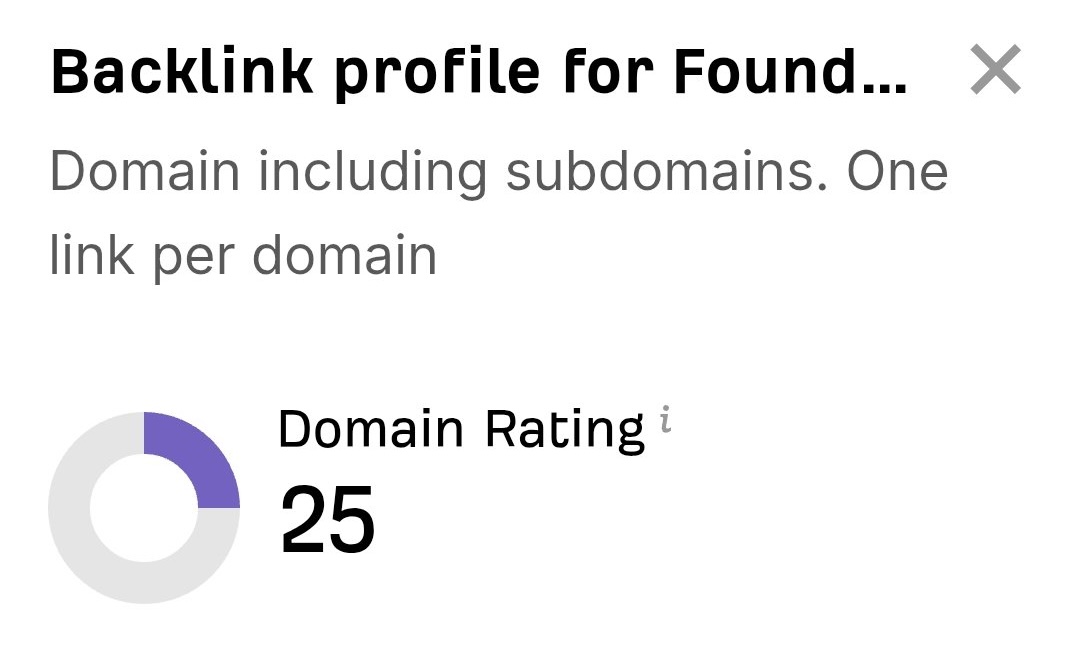 “I just let the Sorank software do its thing, and now my DR is 25 and my page is ranking higher.”
 Lucas FlandrePodcast Host“I specialized in GEO thanks to Sorank. The GEO Leaderboard allows me to show my clients their position vs competitors on ChatGPT. It’s a real commercial differentiator.”
 MélanieSEO Freelance“Great service, works well for our website and helps us understand how to improve it to rank better on Google and elsewhere. Congrats, keep going, I recommend it.”
 Hugo T.E-commerce merchant