Preferences
Privacy is important to us, so you have the option of disabling certain types of storage that may not be necessary for the basic functioning of the website. Blocking categories may impact your experience on the website. More information

Privacy is important to us, so you have the option of disabling certain types of storage that may not be necessary for the basic functioning of the website. Blocking categories may impact your experience on the website. More information

What is a content gap? Spot the topics competitors rank for that you don't, tell real gaps from false ones, and fill only the ones worth it.







Tools


Summary
Content gap analysis identifies keywords your competitors rank for that you don't, surfacing opportunities to win traffic by building targeted content.
Want to go further? Ask
Your competitors have already done months of keyword research and content creation. Instead of starting from scratch, analyze their strategy. Which keywords do they rank for? Which keywords drive their traffic? Where are the gaps where they rank but you don't? Content gap analysis lets you see exactly which keywords you're missing and which competitor traffic you can steal. It's one of the highest-ROI SEO exercises you can run.
This guide walks you through running a content gap analysis, identifying your biggest competitive gaps, and prioritizing which gaps to fill first. Combined with strong execution, content gap analysis can accelerate your growth by 3-6 months compared to pure keyword research.
A content gap is a keyword your competitors rank for that you don't. When a competitor ranks #1 for "best CRM software for nonprofits" and you don't have any page targeting that keyword, you have a content gap. That keyword represents real monthly search traffic flowing to your competitor instead of you.
Content gaps exist for three reasons. First, you may have missed the keyword during research. Second, you may have researched it but decided not to target it (wrong audience, low volume, too competitive). Third, you may have intended to build content but never made the time. Whatever the reason, competitors are capturing traffic you could be capturing.
Google's SEO Starter Guide emphasizes understanding what users are searching for, and content gap analysis forces you to do exactly that. You identify what real users search for (proven by competitors who rank), and you build content to serve those searches.
Step 1: Identify your competitors. List 3-5 of your top organic competitors. These are the sites that rank in positions 1-10 for your target keywords. Search your top keywords on Google and note which domains appear repeatedly. Use your keyword tracking tool to see which sites rank most often for your target keywords.
Step 2: Pull competitor keywords. Pull the keywords each competitor ranks for. Use your keyword tool to analyze every competitor domain. Most tools have a "competitor keywords" or "domain keywords" feature that shows every keyword a domain ranks for, its ranking position, search volume, and traffic estimate. Export that data for every competitor and consolidate it into a master list.
Step 3: Identify your keywords. Use your keyword tracking tool to pull the full list of keywords you currently rank for. Include keywords ranking in positions 1-100. Export that list and compare it to the competitor list.
Step 4: Find the gaps. Build a spreadsheet with columns: keyword, you rank (yes/no), competitors rank (yes/no). Filter to show gaps where competitors rank but you don't. Those are your content gaps. Alternatively, use your keyword tool's built-in gap analysis feature, which automatically shows the keywords your competitors rank for that you don't.
Step 5: Prioritize the gaps. Not every gap is equal. Prioritize based on: search volume (gaps with 100+ monthly searches are more valuable), relevance to your business, competitive difficulty (gaps you can rank for in weeks beat gaps that take months), and conversion intent (high-intent keywords are more valuable).
Topic gaps: Your competitors cover entire topics you don't. For example, they have detailed content on "social media marketing for ecommerce," and you don't. The gap may include 5-10 related keywords. Solution: build a pillar page and supporting cluster pages around that topic.
Keyword variant gaps: You rank for "project management software" but competitors also rank for "best project management software," "project management software comparison," "cheap project management software," and other variants you don't have. Solution: build pages targeting the variants you're missing.
Format gaps: Competitors have videos, infographics, or comparison tables for keywords where you only have blog posts. Solution: build content in different formats to capture users who prefer those formats.
Depth gaps: You have basic content on a topic, but competitors have full guides, case studies, and resources. Solution: expand your content or build new, more in-depth pages.
Use your keyword research tool to run gap analysis. Our keyword research tool has built-in competitor comparison and gap analysis features that make this analysis fast and visual.
Google Search Console can help identify keywords competitors rank for. Search your target keywords on Google and check which competitor domains rank. Use the URL Inspection tool to analyze their top pages.
Web.dev provides guidance on content quality, helping you understand what makes competitor content rank. Analyze competitor pages in your gaps to understand their content depth, structure, and quality. That informs your content creation strategy.
Don't simply build pages to fill gaps. Build better pages. If a competitor ranks #1 for a keyword but their content is thin (800 words), build 2,000-word content with better structure, more examples, and more depth. Your goal isn't just to rank, it's to outrank competitors.
Make sure your content is original and adds value. Simply copying a competitor's structure and changing a few words won't work. Google rewards original research, unique examples, real-world data, and genuine insight. Spend time understanding what makes the top-ranking content strong, then build content that beats it on quality.
Use internal linking to support your new content. Link from related pages on your site to the new gap-filling pages. That accelerates their rankings by consolidating topical authority. If you build five gap-filling pages around the same topic, link them together and from your home page. That signals to Google that you're an authority on that topic.
Real-world gap analysis often surfaces specific opportunities across industries. In the solar panel installation market, competitors rank for keywords like "solar panel installation cost in California," "best solar companies in Los Angeles," "solar panel ROI calculator," and "government solar incentives 2026." If you rank for the generic term "solar installation" but miss those specific keywords, every gap represents 50-300 monthly searches of qualified traffic. A small solar company might rank for the broad term but lose market share to competitors with specialized pages for specific cities or specific questions.
Similarly, in software marketing, competitors cover "project management software for small teams," "best project management tools for nonprofits," "affordable project management alternatives," and "project management software integration guide." Missing even 3-5 of these long-tail variants means losing 500-2,000 monthly search visits. Gap analysis reveals these patterns quickly.
The most profitable gaps are those where competitors rank but your site has no relevant page. These represent pure opportunity: the keyword has demand (competitors prove it), the market exists (competitors capture it), and you have no obstacle preventing you from competing. Targeting these gaps can add 20-50% to organic traffic within 3-6 months.
Google's keyword insights in Search Console reveal the keywords your site ranks for. Correlating that with competitor keywords in your keyword tool surfaces the gaps automatically. Modern keyword tools include gap analysis features that run this comparison for you. Instead of manually comparing spreadsheets, set your site as domain A, select 3-5 competitors as domains B, C, D, E, and the tool shows: keywords every competitor ranks for that you miss, keywords only competitors rank for (niche opportunities), and keywords unique to your strategy.
Following Google's keyword research guide, focus on filling gaps for keywords with realistic conversion potential. Not every gap is worth filling. A gap for a long-tail keyword with 5 monthly searches isn't worth the content creation effort, even if you can rank quickly. Prioritize gaps with 30+ monthly searches where you have a reasonable ranking chance (gap keywords with lower difficulty). Start with 5-10 highest-ROI gaps, fill them within 6-12 weeks, then expand to the next tier.
A practical gap analysis framework for competitive niches involves specific steps and measurable results. For a SaaS company competing in "project management software," the process includes identifying your top 10 organic competitors using Search Console performance data, pulling their top 100 keywords each, and consolidating into a master list of 500+ competitor keywords. Segment by search volume: head terms (1,000+ searches), mid-terms (100-1,000 searches), long-tail (10-100 searches). Your 50 current keywords are subtracted from this master list, revealing 450+ gaps.
Prioritize gaps using a scoring matrix: search volume multiplied by conversion likelihood. A gap for "project management software for nonprofits" (200 searches, high-intent users) scores higher than "best team collaboration tools" (5,000 searches, lower commercial intent). Build 20 gap-filling articles targeting the highest-scoring gaps, with each article targeting one long-tail variant while clustering related keywords. Following Google's content quality guidance, ensure each article surpasses competitors' content depth and usefulness.
After six months, run gap analysis again. Your site now ranks for 150 keywords; 350 gaps remain, surfacing second-tier opportunities. This iterative approach compounds: each gap-filling cycle strengthens your domain authority and topical authority, making subsequent gap-filling cycles faster and more effective.
A content gap is worth filling only when three conditions meet: the search matches something you sell or know, no page of yours already targets it, and you can give an answer at least as good as the pages that rank. Many gaps in a raw export fail one of these tests and would only add pages nobody needs.
| What you see in the export | Likely a real gap | Likely a false gap |
|---|---|---|
| Who ranks | Several competitors rank with dedicated pages | One competitor ranks with an unrelated page, by accident |
| The query | A need your offer covers | A competitor's brand name, or a topic outside your offer |
| Your own site | No page covers the subject | A page of yours covers it but ranks poorly |
| Expected format | A format you can produce, such as a guide or a comparison | A format you cannot provide, such as a calculator or a marketplace listing |
The third row deserves attention. When an existing page already covers the subject, the problem is weak optimization, and the fix is to improve that page. Publishing a second page on the same query creates keyword cannibalization, where your own pages compete with each other. Check your own URLs before adding anything to the plan; the method for scoring and ordering the gaps that pass these tests is covered in content gap analysis.
The same logic now applies to AI assistants. When ChatGPT or Perplexity cites competitors on a question your business can answer and never cites you, that is a gap too, often called a citation gap. It is filled the same way: a page that answers the exact question clearly, with facts the assistant can verify. To see which pages and keywords bring traffic to your competitors, Sorank's SEO competitor spy lists them, and its anti-cannibalization check flags gaps that an existing page already covers.
Content gap analysis reveals the keywords your competitors rank for that you don't, showing you exactly where you can win traffic. Identify your top competitors, pull their keywords, compare to yours, and prioritize the biggest gaps based on volume and relevance. Build better content than competitors for those gaps, use internal linking to accelerate rankings, and focus on quick wins first. Content gap analysis is one of the fastest ways to find high-impact SEO opportunities. Run a detailed gap analysis with our SEO competitor spy tool to see exactly which keywords your competitors rank for and which gaps represent your biggest traffic opportunities.
Sources

Keyword research identifies every relevant keyword in your niche and its search volume. Content gap analysis specifically compares your content coverage to your competitors', surfacing the keywords they rank for that you don't. Content gap analysis is a subset of keyword research focused on competitive analysis. You may know a keyword exists, but content gap analysis tells you a competitor owns it and you should fight for it.
Start with your top 3-5 organic search competitors. These are the sites that rank in positions 1-3 for your target keywords. Check Google rankings for your target keywords and note which domains appear repeatedly. Those are your organic competitors. You can also analyze PPC competitors (those bidding on your keywords on Google Ads), but start with organic competitors since they reflect what Google sees as relevant content.
It depends on how big the gap is and how well you execute. If a competitor ranks #1 for a keyword you don't rank for at all, capturing that keyword could deliver all the traffic from that ranking position. However, if the competitor ranks #2 and you rank #4, the gap is smaller. Typically, targeting gaps with 10-50 monthly searches each, when you have 5-10 gaps, can add hundreds of monthly organic visits when executed well.
THEY TRIED SORANK BEFORE YOU
 “I tested Sorank on a real client site and it's insane. It does everything an agency would bill you $1500 a month for. It's going into production on that client now.”
 Guillaume Guersanguersanguillaume.com“We are an Ads agency and we wanted to get our SEO back on track once and for all. Sorank gave us a clear view of our site, helped us prioritize optimizations, and properly structure our content. The tool is easy to use, well designed for a team, and very practical for centralizing tracking without having to juggle multiple platforms. A very solid foundation to start fresh with our SEO.”
 Gaspard MadouiAds Agency
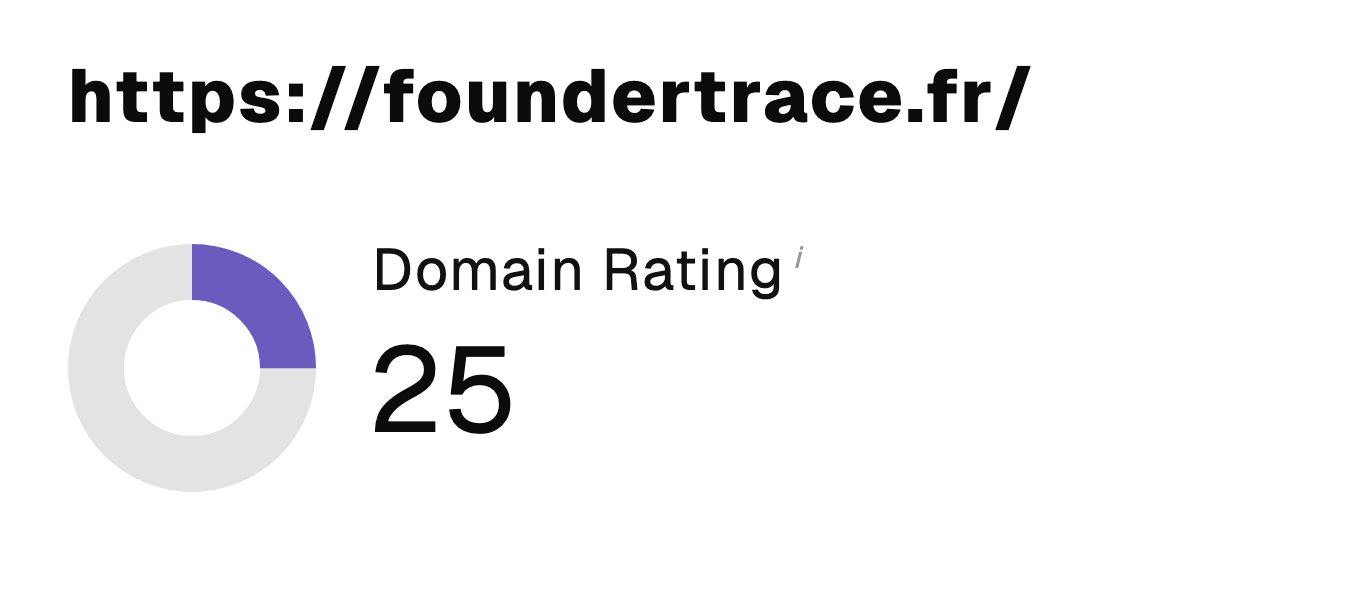 “I just let the Sorank software do its thing, and now my DR is 25 and my page is ranking higher.”
 Lucas Flandrefoundertrace.fr“I specialized in GEO thanks to Sorank. The GEO Leaderboard allows me to show my clients their position vs competitors on ChatGPT. It’s a real commercial differentiator.”
 MélanieSEO Freelance“Great service, works well for our website and helps us understand how to improve it to rank better on Google and elsewhere. Congrats, keep going, I recommend it.”
 Hugo T.E-commerce merchant