
Preferences
Privacy is important to us, so you have the option of disabling certain types of storage that may not be necessary for the basic functioning of the website. Blocking categories may impact your experience on the website. More information

Privacy is important to us, so you have the option of disabling certain types of storage that may not be necessary for the basic functioning of the website. Blocking categories may impact your experience on the website. More information

Apple Intelligence is Apple's privacy-focused AI built into iPhone, iPad, and Mac. Learn its features, how it works, and why it matters for GEO.







Tools


Summary
Apple Intelligence is Apple's privacy-focused artificial intelligence system, built into iPhone, iPad, Mac, and Apple Vision Pro, that powers writing tools, image generation, an enhanced Siri, and visual intelligence, using on-device processing and selective handoff to external models like ChatGPT.
Want to go further? Ask
Apple Intelligence is the artificial intelligence system Apple has woven into its devices, including iPhone, iPad, Mac, and Apple Vision Pro. Apple positions it as AI for everyday users, helping people write, create images, get things done, and find information, while keeping a strong emphasis on privacy. Rather than a single chatbot, it is a set of capabilities embedded across the operating system.
For marketers, founders, and SEO and GEO practitioners, Apple Intelligence matters because it places AI assistance and AI-powered search on an enormous installed base of devices. As Apple expands Siri into a conversational assistant and adds AI to search surfaces, how your brand is represented inside these experiences becomes part of your AI search visibility.
Apple Intelligence is a system of AI features integrated into the core of Apple's devices rather than a standalone app. Apple describes it as aware of your personal context without collecting your personal information, a framing that signals its privacy-first design. It spans text, images, and on-screen understanding, and it draws on a mix of on-device models and Apple's cloud when more capability is needed.
It was introduced as part of Apple's operating systems and has expanded since, with deeper model integrations rolling out alongside new iOS, iPadOS, and macOS releases. The defining idea is ambient assistance: AI that shows up where you already work, in Mail, Notes, Photos, and Messages, instead of requiring you to visit a separate tool.
Several capabilities anchor the system. Writing tools let users proofread, rewrite in different tones, and summarize text across Apple and third-party apps. Image Playground generates images in styles like illustration, sketch, and animation, and creates custom emoji-style images. Visual intelligence lets users learn about objects and places around them, turn a poster into a calendar event, or find a product by pointing their iPhone at it.
The biggest change is to Siri, which gains product knowledge about Apple devices, more natural handling of requests, the ability to type rather than speak, and awareness of on-screen content. These capabilities make Siri a more capable assistant and tie into broader multimodal AI, since the system works across text, images, and the screen at once.
Privacy is Apple Intelligence's central differentiator. Many requests are handled by on-device models, so personal data never leaves the device. When a task needs more computing power, Apple routes it to Private Cloud Compute, server-based models running on Apple silicon that, per Apple, never store user data and are designed for verifiable privacy.
This design contrasts with assistants that send most queries to the cloud by default. For users, it means more AI features can run without handing data to a third party, and for the industry it is a notable stance on data privacy AI. Apple frames privacy not as a limitation but as a core feature of how the system is built.
Apple does not build every capability alone. It integrates OpenAI's ChatGPT into Siri, writing tools, visual intelligence, Image Playground, and Shortcuts, so users can tap deeper expertise when helpful, with explicit permission before any information is shared. This gives Apple access to a powerful general model without owning it outright, complementing coverage of OpenAI and ChatGPT.
Reports in 2026 indicate Apple is going further, rebuilding Siri partly on Google's Gemini technology under the hood while continuing to develop its own on-device models. That mirrors Apple's longstanding strategy of partnering for core technology when building it alone would be too costly, and it brings Gemini into the picture alongside ChatGPT.
Apple's roadmap points toward a far more capable, conversational Siri. Reporting suggests a redesigned Siri experience and a standalone Siri app that competes directly with chatbots, complete with chat history and the ability to upload documents and photos. The swipe-down Spotlight search is also expected to gain AI-powered results presented in a card-style interface.
This is significant for discovery. As Siri becomes a place to ask open-ended questions and as Spotlight blends in AI answers, Apple devices turn into another surface for AI search. Combined with Apple's roughly 2.5 billion device install base, even incremental AI search adoption represents a large new audience for answer-style results.
When users get answers from Siri or AI-enhanced search rather than browsing a results page, visibility shifts from rankings to representation inside these systems. Whether Apple's assistant draws on ChatGPT, Gemini, or its own models, your brand benefits when those models and their sources describe you accurately and surface your content. That makes presence across the major AI assistants a strategic priority.
The practical playbook is consistent with the rest of generative engine optimization: publish clear, accurate, well-structured content that any model can read and trust, and monitor how assistants represent your brand. Because Apple leans on partner models, optimizing for ChatGPT and Gemini also improves your odds inside Apple experiences, an effort supported by disciplined keyword research and content planning.
Apple Intelligence is still maturing. Some features have rolled out gradually, certain Siri capabilities have been delayed, and the most ambitious conversational and search features are expected in future releases rather than available today. Availability also varies by device, region, and language, so user experiences differ widely.
For publishers, there is added uncertainty about attribution. It is not always clear which model answered a query or whether sources are cited, and Apple's privacy design can limit the visibility businesses have into these interactions. Treat Apple Intelligence as an evolving channel to watch, optimize for the underlying models, and keep expectations grounded as the features ship.
Apple Intelligence is Apple's privacy-focused AI built across its devices, combining on-device models, Private Cloud Compute, and partner models like ChatGPT and Gemini to power writing tools, image creation, visual intelligence, and a steadily more capable Siri. Its importance for marketers lies in scale: it brings AI answers and AI search to billions of devices, turning model representation into a real visibility channel.
The way to prepare is familiar: clear, trustworthy, well-structured content that the major models can read and cite. To go further, connect this with AI search and broader AI search visibility, and use Sorank's research and content planning tools. Reference sources: Apple and TechCrunch.
Sources

Apple Intelligence is Apple's artificial intelligence system built into iPhone, iPad, Mac, and Apple Vision Pro. It powers features like writing tools, image generation, an enhanced Siri, and visual intelligence, with a strong emphasis on privacy through on-device processing. For tasks that need more power, it uses Private Cloud Compute or hands off to ChatGPT with your permission.
Yes. Apple integrates OpenAI's ChatGPT into Siri, writing tools, visual intelligence, and more, and you control when it is used. Reports in 2026 also indicate Apple is rebuilding Siri partly on Google's Gemini technology while continuing to run its own on-device models, combining Apple's privacy approach with external model power.
Because it puts AI answers and AI-powered search on billions of Apple devices, including a planned conversational Siri and AI-enhanced Spotlight. As users ask these assistants questions instead of browsing, being represented in the underlying models and sources becomes a visibility channel. Clear, trustworthy, well-structured content is the way to stay surfaced.
THEY TRIED SORANK BEFORE YOU
 “I tested Sorank on a real client site and it's insane. It does everything an agency would bill you $1500 a month for. It's going into production on that client now.”
 Guillaume Guersanguersanguillaume.com“We are an Ads agency and we wanted to get our SEO back on track once and for all. Sorank gave us a clear view of our site, helped us prioritize optimizations, and properly structure our content. The tool is easy to use, well designed for a team, and very practical for centralizing tracking without having to juggle multiple platforms. A very solid foundation to start fresh with our SEO.”
 Gaspard MadouiAds Agency
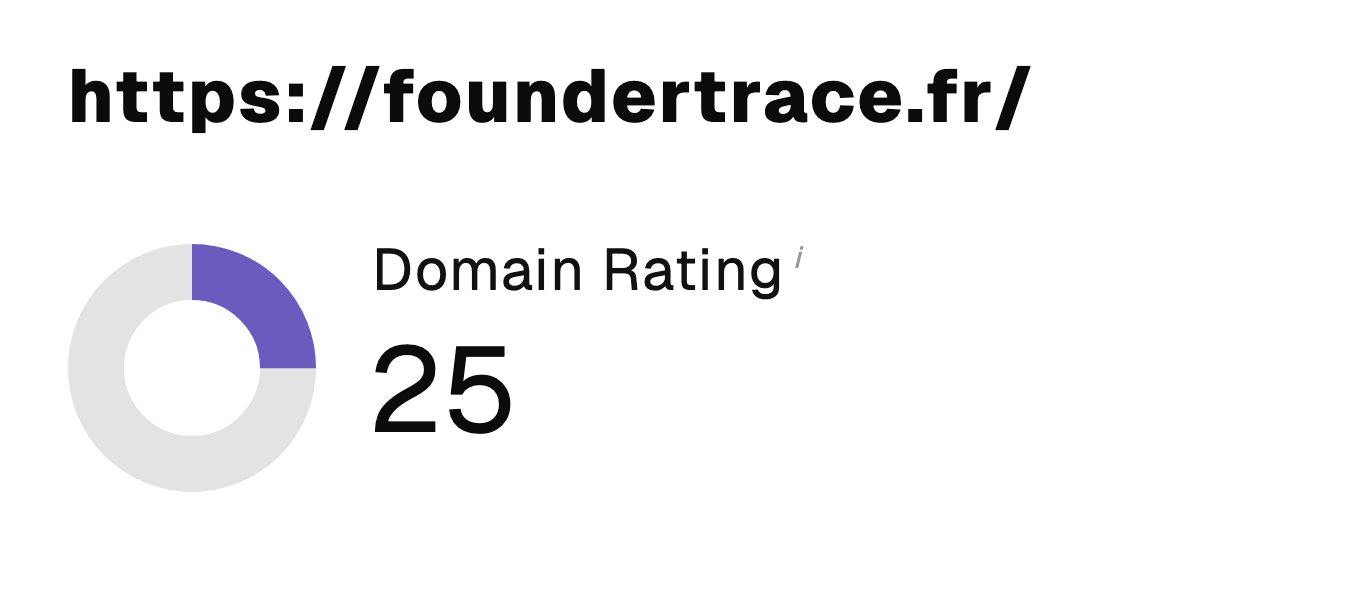 “I just let the Sorank software do its thing, and now my DR is 25 and my page is ranking higher.”
 Lucas Flandrefoundertrace.fr“I specialized in GEO thanks to Sorank. The GEO Leaderboard allows me to show my clients their position vs competitors on ChatGPT. It’s a real commercial differentiator.”
 MélanieSEO Freelance“Great service, works well for our website and helps us understand how to improve it to rank better on Google and elsewhere. Congrats, keep going, I recommend it.”
 Hugo T.E-commerce merchant