Preferences
Privacy is important to us, so you have the option of disabling certain types of storage that may not be necessary for the basic functioning of the website. Blocking categories may impact your experience on the website. More information

Privacy is important to us, so you have the option of disabling certain types of storage that may not be necessary for the basic functioning of the website. Blocking categories may impact your experience on the website. More information
OpenAI is the AI lab behind ChatGPT and the GPT models. Learn its history, products, and how to make your content visible in OpenAI's AI search.






Sources
OpenAI is the research and deployment company behind ChatGPT, the GPT language models, and tools like DALL-E and Whisper. Founded in December 2015 as a nonprofit with the mission of ensuring that artificial general intelligence benefits all of humanity, it has grown into one of the most influential technology companies in the world. For marketers, OpenAI matters because ChatGPT has become a major place people go to ask questions instead of using a traditional search engine.
Understanding OpenAI is therefore not just background knowledge. The way its models retrieve, read, and cite content shapes whether your brand appears when someone asks ChatGPT about your category. That makes it a core consideration for generative engine optimization and broader AI search strategy.
OpenAI is an AI company that conducts research and ships consumer and developer products. It was established in December 2015 by a group including Sam Altman, Greg Brockman, Ilya Sutskever, and Elon Musk, originally as a nonprofit research lab. Its founding charter committed it to building artificial general intelligence that benefits all of humanity.
Today OpenAI is best known for the products built on its GPT models, the generative pre-trained transformers that power text generation, reasoning, and more. Those models are a leading example of a large LLM, and they sit at the center of the current wave of generative AI.
OpenAI began operating modestly, reportedly out of Greg Brockman's apartment before moving to San Francisco. In 2019 it created a capped-profit subsidiary to attract investment and pay employees in equity, and Microsoft invested 1 billion dollars and became its primary cloud partner through Azure. Larger Microsoft commitments followed in later years.
The structure evolved again in 2025, when OpenAI converted to a Delaware public benefit corporation and removed the profit cap, with the nonprofit, renamed the OpenAI Foundation, retaining a significant stake alongside Microsoft and investors. By 2026 the company was operating like a mature technology firm rather than the small lab it once was, backed by some of the largest private funding rounds in history.
The product that changed everything was ChatGPT, launched in November 2022, which reached roughly 100 million users within two months and continued to grow to hundreds of millions of weekly users. The deeper story of ChatGPT is the reason most marketers encounter OpenAI at all.
Beyond ChatGPT, OpenAI ships a broad lineup: the GPT series of language models released and refined across several years, DALL-E for generating images from text, Whisper for speech recognition and transcription, and Codex for code generation. Together these cover text, image, and audio, reflecting OpenAI's push toward multimodal capabilities.
For visibility, the important detail is that OpenAI uses distinct web crawlers for distinct jobs. GPTBot gathers data that may be used to train foundation models, ChatGPT-User fetches pages in response to a user's request, and OAI-SearchBot indexes pages for retrieval at answer time inside ChatGPT search. If you block these crawlers in robots.txt, ChatGPT cannot read your site to cite it. The full mechanics live under OpenAI crawlers.
ChatGPT's web search has also leaned on the Bing index, which is one of the few cases where optimizing for Bing pays off directly. When a user asks a question, the system can retrieve fresh pages, read the ones it can parse cleanly, synthesize an answer, and sometimes link the sources. Being readable and citable to these systems is what determines whether you appear.
Because so many people now ask ChatGPT instead of a search box, appearing in its answers has become a distinct visibility channel. This is the heart of generative engine optimization: earning mentions and citations inside AI responses rather than only ranking on a results page. A brand absent from ChatGPT answers is invisible to a growing share of its audience.
OpenAI is not the only player, of course. Anthropic with Claude, Google with Gemini, and Perplexity all matter too, which is why GEO is usually approached across engines. Still, given ChatGPT's scale, OpenAI's products are often the first place teams check their AI visibility.
Start with access and parseability. Allow OpenAI's search crawler in robots.txt unless you have a firm reason not to, avoid hiding key content behind client-side JavaScript, and put important facts like pricing in plain text rather than images, because the crawler cannot read what it cannot see. Clean, semantic HTML with clear headings, lists, and tables helps models parse meaning.
Then optimize the content itself. Answer the question fully and early, ideally within the first few hundred words, and add schema markup such as article, FAQ, and HowTo to raise citation odds. A widely cited Princeton study on generative engine optimization found that adding statistics and source citations each improved AI visibility by roughly 30 to 40 percent. Pair these tactics with focused keyword research and content planning to target the questions users ask ChatGPT.
OpenAI's rapid rise comes with open questions. The company has faced copyright litigation from authors, publishers, and media companies over training data, and its move away from a pure nonprofit structure has drawn scrutiny. For publishers, the tension between having content used in answers and receiving traffic or attribution is real and unresolved.
There is also volatility to plan around. Models, crawlers, and policies change frequently, and a tactic that works in ChatGPT today may shift with the next release. The durable response is to focus on being a clear, accurate, well-structured source, which tends to help across every engine rather than betting on one provider's current behavior.
OpenAI is the company behind ChatGPT and the GPT models, and it has moved from a 2015 nonprofit research lab to one of the most consequential firms in technology. For marketers, it represents a major new surface for visibility: being read and cited inside ChatGPT now matters alongside ranking in classic search.
To act on that, make sure OpenAI's crawlers can reach you, structure content for extraction, and connect this with ChatGPT and OpenAI crawlers. Use Sorank's research and planning tools to target the questions people ask. Reference sources: Wikipedia, Britannica, and OpenAI.

OpenAI is an American artificial intelligence company founded in December 2015. It builds the GPT family of large language models and ships products including ChatGPT, the DALL-E image generator, the Whisper speech recognition model, and the Codex coding tool. Its stated mission is to ensure that artificial general intelligence benefits all of humanity.
Because ChatGPT has become a major place people ask questions instead of using a search engine, appearing in its answers is now its own visibility channel. OpenAI's crawlers read the web to retrieve and cite content, so being accessible and well-structured determines whether your brand shows up. This is the core of generative engine optimization.
Allow OpenAI's search crawler in robots.txt, avoid hiding key content behind JavaScript, and keep important facts in plain text rather than images. Use clean semantic HTML, answer questions fully within the first few hundred words, and add schema markup. Research suggests adding statistics and source citations can each improve AI visibility by roughly 30 to 40 percent.
THEY TRIED SORANK BEFORE YOU
 “I tested Sorank on a real client site and it's insane. It does everything an agency would bill you $1500 a month for. It's going into production on that client now.”
 Guillaume Guersanguersanguillaume.com“We are an Ads agency and we wanted to get our SEO back on track once and for all. Sorank gave us a clear view of our site, helped us prioritize optimizations, and properly structure our content. The tool is easy to use, well designed for a team, and very practical for centralizing tracking without having to juggle multiple platforms. A very solid foundation to start fresh with our SEO.”
 Gaspard MadouiAds Agency
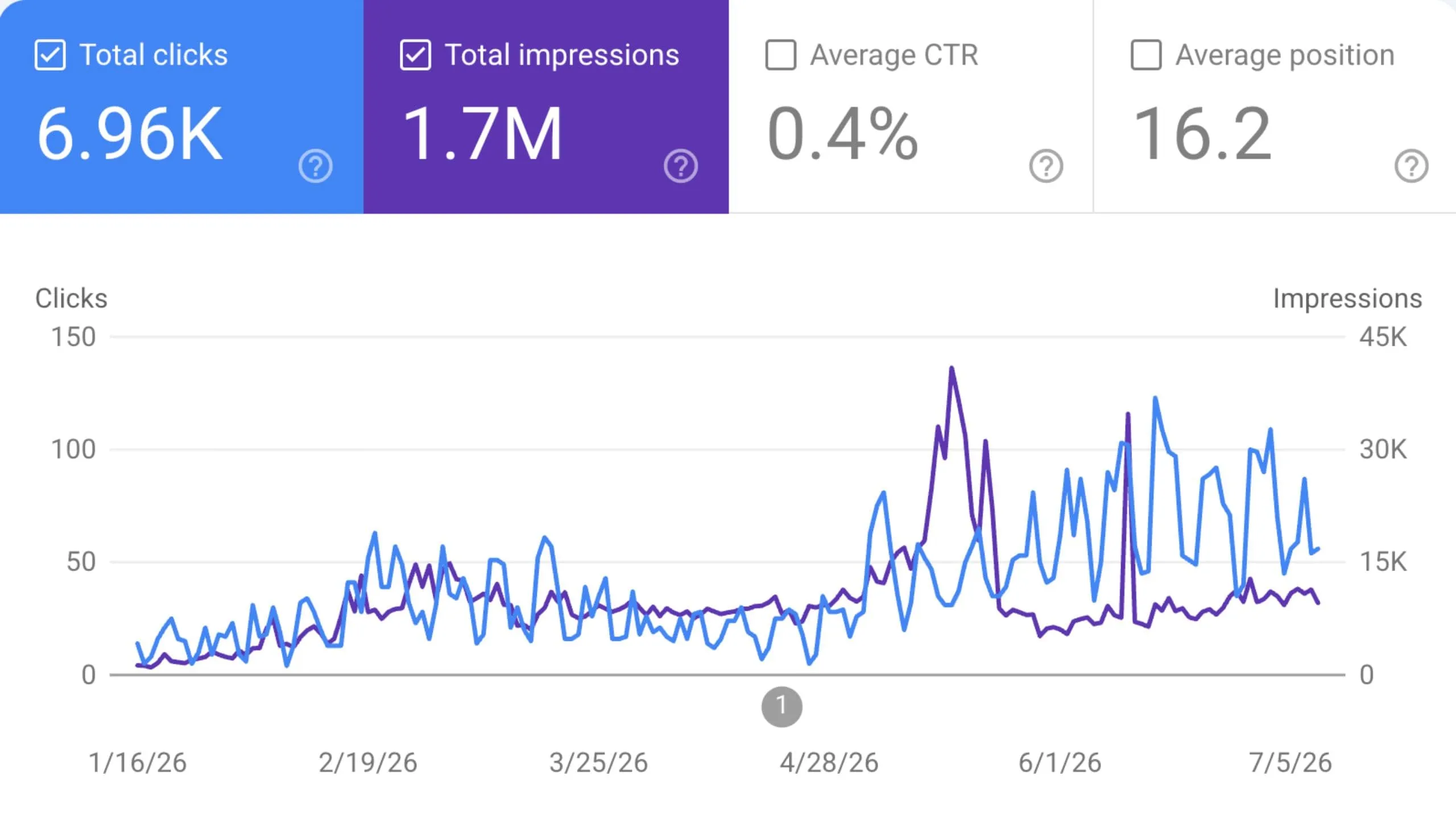
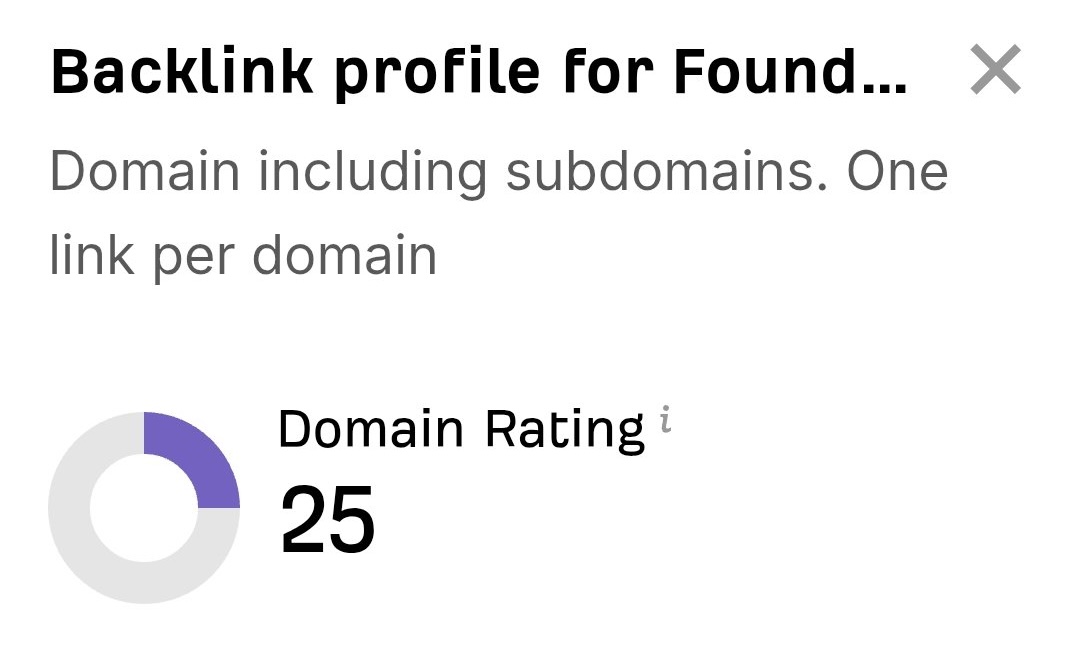 “I just let the Sorank software do its thing, and now my DR is 25 and my page is ranking higher.”
 Lucas FlandrePodcast Host“I specialized in GEO thanks to Sorank. The GEO Leaderboard allows me to show my clients their position vs competitors on ChatGPT. It’s a real commercial differentiator.”
 MélanieSEO Freelance“Great service, works well for our website and helps us understand how to improve it to rank better on Google and elsewhere. Congrats, keep going, I recommend it.”
 Hugo T.E-commerce merchant