Preferences
Privacy is important to us, so you have the option of disabling certain types of storage that may not be necessary for the basic functioning of the website. Blocking categories may impact your experience on the website. More information

Privacy is important to us, so you have the option of disabling certain types of storage that may not be necessary for the basic functioning of the website. Blocking categories may impact your experience on the website. More information

Edtech SEO is how a learning platform, a study app or a software company that sells to schools gets found by two very different searchers: the learner who types "learn SQL in 30 days" or asks ChatGPT for the best app to practice spoken Spanish, and the teacher or IT lead who searches "quiz tool that works with Google Classroom" before a purchase. Sorank builds a keyword plan for each audience, publishes the articles on your site, links them to your course or product pages, and tracks which platforms the AI assistants recommend.
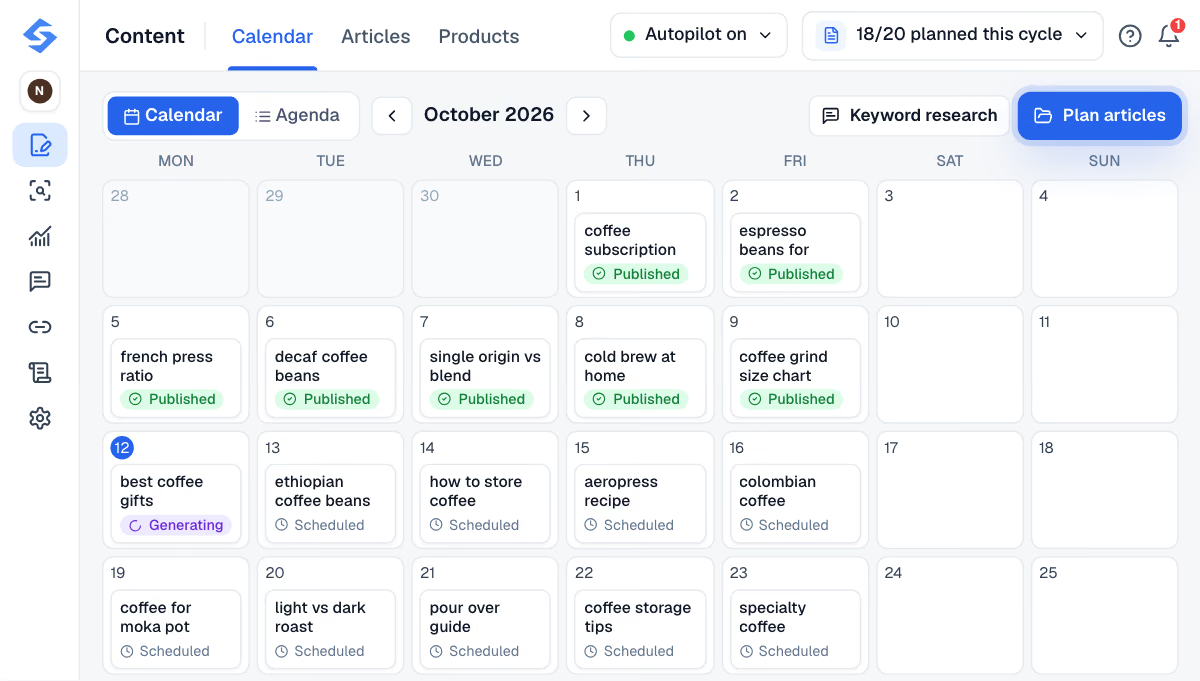
It suits product teams with many subjects and few writers: the publishing calendar fills itself, and your subject experts approve what goes out.
















































27,199
Articles created
11,080,733
Visits from Google
18,446
Visits from AI
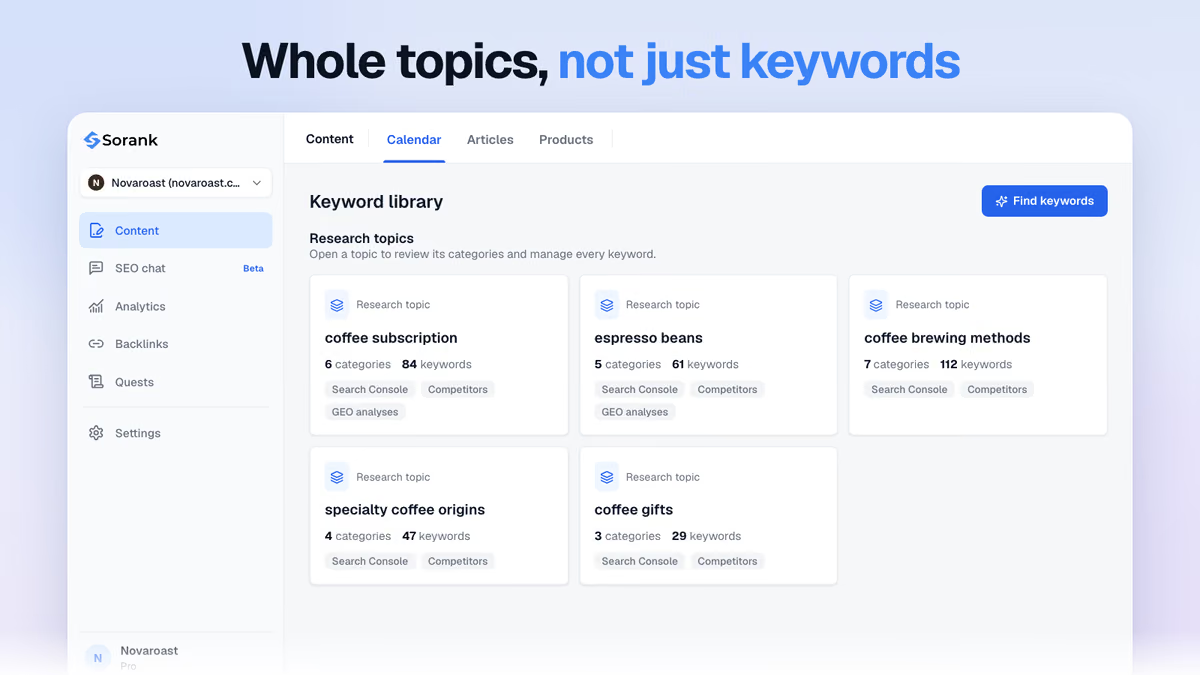
Learners search a skill or an outcome: "learn Python for data analysis", "how long does it take to learn touch typing", "free typing practice for kids". Buyers search a category, an integration or a requirement: "learning management system for small schools", "quiz app for Google Classroom", "reading app with an accessibility conformance report". Sorank keeps these audiences in separate research topics, each built from your Search Console data, your competitors and the AI answers, so a learner tutorial never competes with a buyer guide.
Each topic is organized by the topical cluster generator.
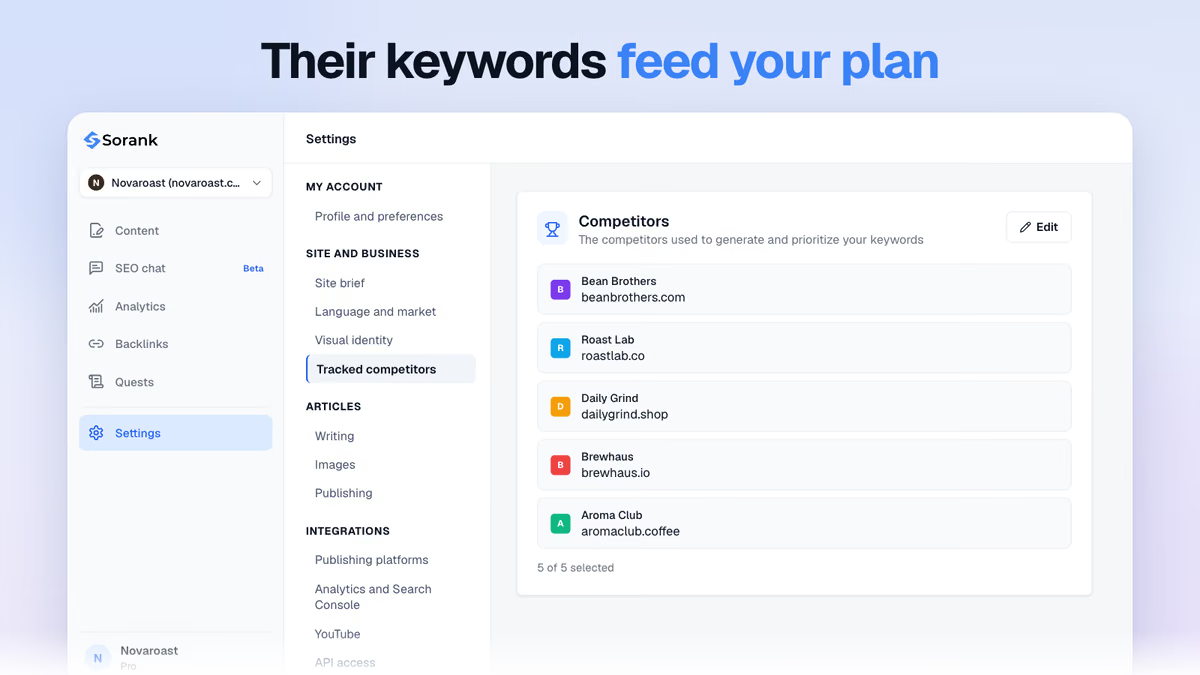
"Moodle vs Canvas for a small college", "Quizlet alternatives for teachers", "language app or private tutor for business English": comparison searches come right before a trial or a purchase, and they often land on review sites rather than on the products themselves. Add the platforms you compete with to Sorank: their pages feed your next keyword ideas, so you publish fair comparisons and use-case pages on your own site.
List them in SEO competitor spy.
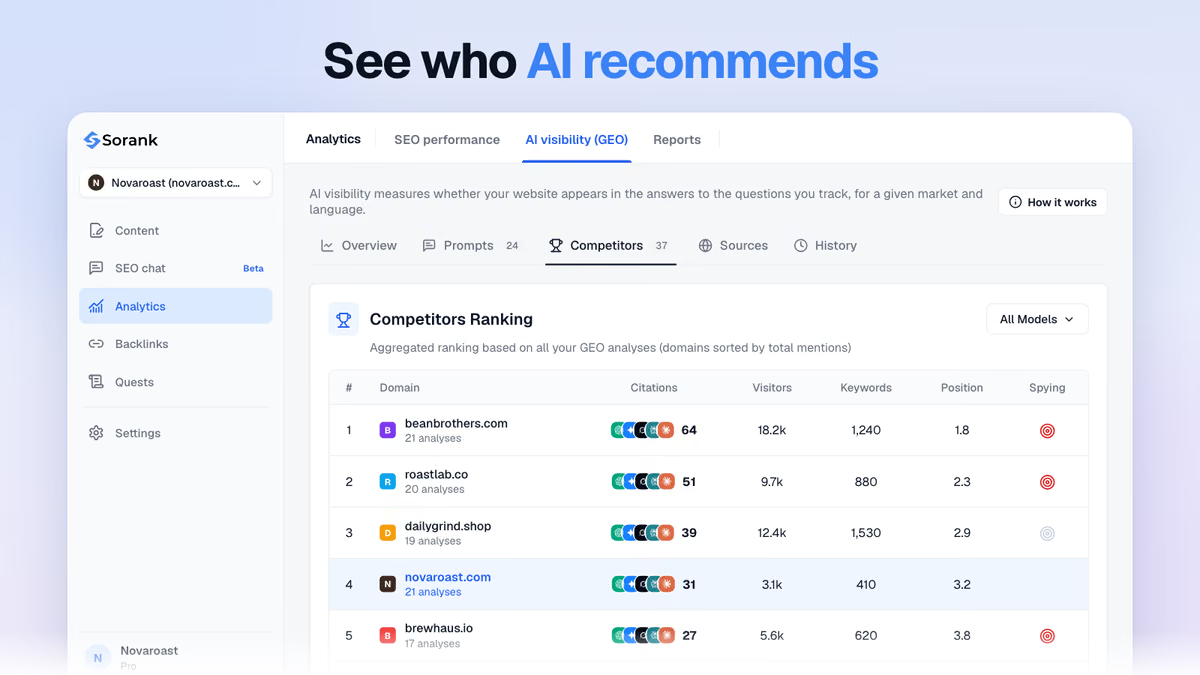
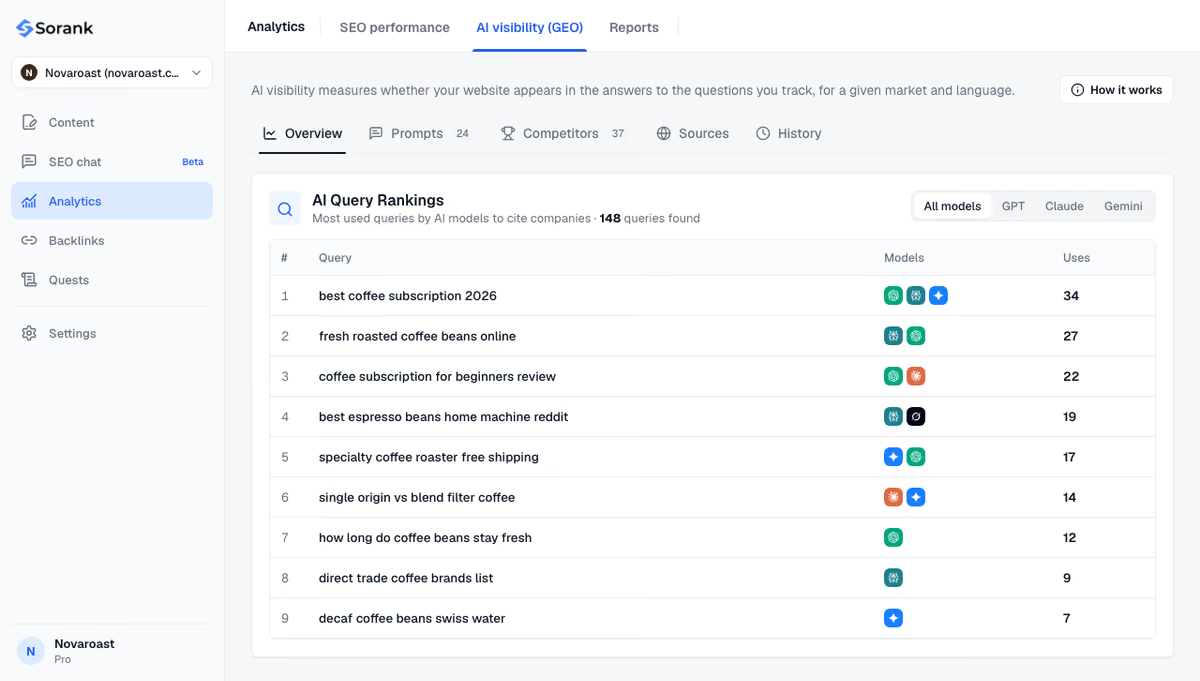
Asked "best free app to learn statistics" or "which platform should a school use for online homework", ChatGPT, Claude and Gemini name a handful of products and leave the rest out. Sorank asks the questions you track every month and ranks the domains cited across the models, with your own position, so you see which competitor wins each subject and which pages earn it.
Open it in the GEO leaderboard.

WordPress, Webflow, Wix, Shopify, or a headless setup through a webhook. Sorank reads your Search Console data and sees which courses, features and help articles already bring visits.
Learners by subject and level, teachers by age group, institutional buyers by role (IT, curriculum, purchasing). Sorank proposes the questions of each audience and the order to publish them, closest to a sign-up or a demo request first.

Articles go out on the days you choose, live or as drafts for your subject experts. Learner tutorials link to the right course, buyer guides to your demo or pricing page.
THEY TRIED SORANK BEFORE YOU
 “I tested Sorank on a real client site and it's insane. It does everything an agency would bill you $1500 a month for. It's going into production on that client now.”

 Guillaume Guersanguersanguillaume.com
 “I just let the Sorank software do its thing, and now my DR is 25 and my page is ranking higher.”
 Lucas Flandrefoundertrace.fr“Great service, works well for our website and helps us understand how to improve it to rank better on Google and elsewhere. Congrats, keep going, I recommend it.”
 Hugo T.E-commerce merchant“For 2 years, 100% of my clients came from LinkedIn. Posting daily, commenting, DM follow-ups… totally dependent on the algorithm. I knew I needed to work on SEO but always postponed it: too long, too technical, not my job. With Sorank, I finally took the step. In 4 months, I generate 15 organic leads per month without posting anything. It’s not 50/50 with LinkedIn yet, but I sleep better knowing I now have a second lead source growing on autopilot.”
 Valentin ThomyColdMailing Agency
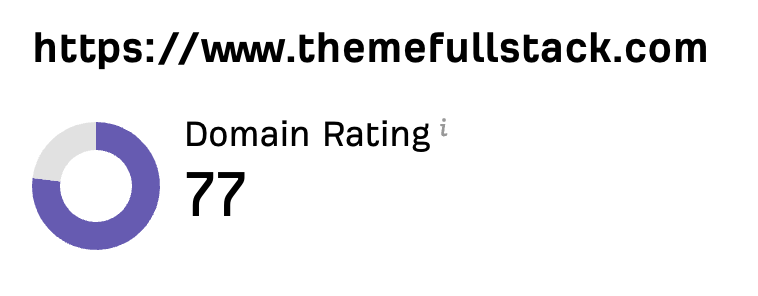 “I’m a developer, not a marketer. My Shopify theme was selling only through word-of-mouth and ads. With Sorank I finally understood how to structure my SEO and write articles to rank. The audit showed my product page was too slow. In 2 months, my organic traffic doubled and I’m starting to appear in ChatGPT answers when people search for Shopify themes. All of that with about 2 hours per week.”
 Thème FullStackgo.themefullstack.com“Great solution to manage SEO without headaches. Audits are fast, the interface is clear, and you quickly see which actions to implement. It has become an essential tool to track and improve the SEO of my sites. I highly recommend it.”
 XavEntrepreneur“I used Sorank for a client who needed SEO and it clearly made my life easier. I can quickly audit a site, track my projects, and keep a clear overview without multiplying tools. The onboarding is fast and the interface is great.”
 Céline MaurinFreelance CM
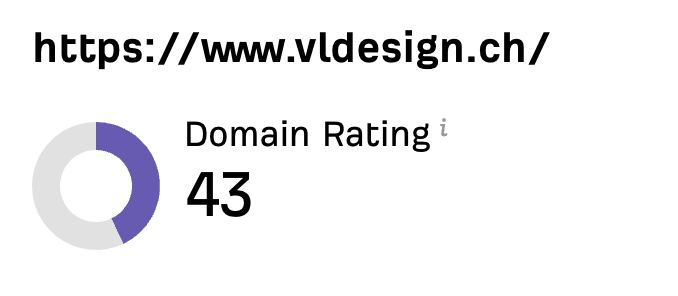 “Blown away by Sorank’s performance. After testing many solutions on the market, I was amazed by how quickly our articles started ranking in the SERP. The results are concrete and much faster than anything we’ve experienced so far. It has been an excellent surprise for our team. We are confidently renewing our trust and highly recommend Sorank to agencies that demand fast and measurable results.”
 Patrick PerretFreelance Webdesign SEO“We’re a development agency and we use Sorank to run on-page audits on our clients’ Shopify stores. It helps us quickly identify optimization opportunities, structure fixes, and collaborate more easily with clients on the SEO side. Very useful to complement our technical support 🔥”

 Younes Yahyaluvaika.com“We are an Ads agency and we wanted to get our SEO back on track once and for all. Sorank gave us a clear view of our site, helped us prioritize optimizations, and properly structure our content. The tool is easy to use, well designed for a team, and very practical for centralizing tracking without having to juggle multiple platforms. A very solid foundation to start fresh with our SEO.”
 Gaspard MadouiAds Agency“I specialized in GEO thanks to Sorank. The GEO Leaderboard allows me to show my clients their position vs competitors on ChatGPT. It’s a real commercial differentiator.”
 MélanieSEO Freelance“I manage our dealership’s website and it had dozens of issues: slow pages, 404 errors, missing tags. We were losing rankings every month without understanding why. The Sorank audit detected everything in 5 minutes. I sent the report to our web provider with the priority fixes. We regained our rankings and traffic picked back up. Perfect for someone non-technical like me!”
 Xavier BreullMarketing Manager“I’m a CMO for a SaaS and I manage acquisition in a very competitive market. We were investing heavily in our product but not working on our SEO. No visibility on our real competitors, no tracking of our presence in AI. Sorank showed us our positioning vs competitors, which keywords to target, and GEO opportunities we had completely ignored!”
 Louis RAPPCMO SaaS
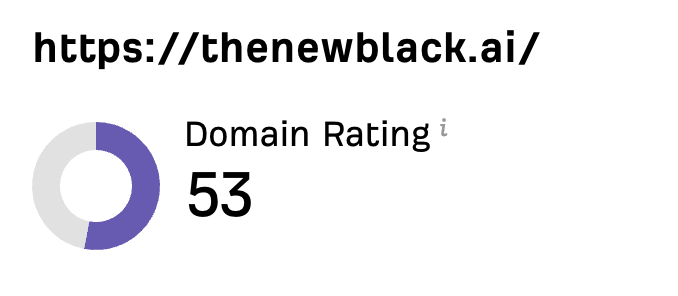 “Very good version 2, I recommend it.”

 Antoine Verhillethenewblack.ai“I was skeptical at first, but this is the best SEO tool I’ve ever used. The interface is clear, audits are fast, and the recommendations are easy to implement. I’ve saved hours and hours managing SEO and tracking performance. I recommend it to all my entrepreneur friends who run an agency or work independently.”
 NoahEntrepreneur
Founder’s Note.
I ran my own SEO agency for years. I built Sorank to deliver the same results to every business, at scale.
Everything I know about Google rankings and Generative Engine Optimization (GEO) is coded into this software, and it runs on autopilot for you.
Try for Free
Edtech SEO is the work that makes an education technology company visible in Google results and in the answers of AI assistants: learning platforms and course marketplaces, study and language apps, and software sold to schools and universities, from learning management systems to assessment and classroom tools. Its particularity is the double audience. The same company may need to reach a teenager revising for an exam and a purchasing committee comparing vendors, with different words, different pages and different proof.
Independent teachers will find a closer page in SEO for course creators, tutoring businesses in SEO for tutors, and institutions that recruit students in higher education SEO or the page for language schools. This page is for the companies that build and sell the product.
Many learners now start with an assistant rather than a search bar. In a Pew Research Center survey of 1391 US teenagers aged 13 to 17, run from September 18 to October 10, 2024, 26% said they had used ChatGPT for schoolwork, twice the 13% of 2023. Adults learning a skill ask the same assistants which course or app to choose, and the answer names only a few products.
The sources behind those answers are not the usual ones. In our education AI citation study, Apple is cited in 1.33% of answers, 2.9 times its weight in the general ranking, LinkedIn in 2% (2.8 times) and Microsoft in 1.51%: app store listings, integration directories and the professional profiles of your team are part of what the assistants read. School buyers search Google by category and integration, then read documentation, comparisons and references before they ask for a demo.
Our guide to B2B SEO covers the buyer side; the one on app store optimization covers the listings where many learners find a study app.
Because buyers have to check them, and they search for them by name. In the United States, FERPA, the federal law that protects the privacy of student education records, applies to schools funded by the Department of Education (see the Student Privacy Policy Office), so vendors are asked how they handle those records. The Federal Trade Commission also tightened its rule on children's online privacy on January 16, 2025: services aimed at children under 13 need separate parental consent before disclosing a child's personal information to third parties, including for targeted advertising.
Accessibility follows the same path. Under the Justice Department rule on web accessibility, public schools, community colleges and public universities must bring their web content and mobile apps to WCAG 2.1 Level AA, the international accessibility standard; after an extension published in April 2026, the deadlines are April 26, 2027 for entities serving 50000 people or more and April 26, 2028 for the others. In the European Union, the AI Act classes AI used by education institutions that may determine access to education, such as exam scoring, as high risk, with those rules applying from December 2, 2027.
A trust center that states your privacy practices, your accessibility conformance and the way your AI features work answers these searches in your own words. Sorank writes the explainers around it; the legal documents stay with your counsel.
As pages that must stand on their own. Worksheets, generators, practice tests and help articles are often the first page a teacher or a learner lands on, and they are easy to multiply into hundreds of near-identical variants. Pages that add little are what our glossary calls thin content, and the entry on programmatic SEO explains where generated variants stop being useful. Keep fewer pages, each with a real explanation, an example and a next step toward the product. Sorank's articles then link these resources to the right course or feature instead of letting them compete with each other.
It depends on the reader, so plan two outlines. For a learner: the outcome in the first lines, the time it takes, the prerequisites, a worked example or an exercise, the common mistakes and the lesson that comes next. For a buyer: the classroom or campus problem, how the tool fits a lesson or a workflow, the integrations, the answers on data and accessibility, the pricing model for schools, and a short case the school has agreed to share. Both name the subject expert who checked them. Sorank writes on these outlines, and our guide to SaaS content marketing covers the product-led side.
Sorank handles keyword research per audience, the learner and buyer articles with their sources and internal links, the publishing calendar, the monthly tracking of AI answers, links from other Sorank users' websites, and your Search Console, Analytics and AI visits in one dashboard.
Your team keeps the product and everything contractual: course and lesson content, app store listings, integration directory pages, the privacy policy, data processing agreements and accessibility conformance reports, and customer references. Sorank does not touch your app or your course player, and it does not manage review profiles.
Sorank is billed per website. Essential is $49 a month on yearly billing or $99 month to month and publishes 20 articles; Pro, at $129 yearly or $249 monthly, publishes 60 and adds Grok to the tracked assistants; Business, at $249 or $499, publishes 120 (plan details). The first 3 days are free, enough to read a first learner tutorial and a first buyer guide before you decide.
Several months, paced by the school year. Learner tutorials often show impressions before buyer guides do, because school purchases follow budget and planning cycles. Publish setup guides and comparisons ahead of the period when schools choose their tools, and revision content ahead of exam sessions. Follow each audience separately in Search Console and judge it after a quarter.
Several months. Learner tutorials usually show impressions first; buyer guides take longer because school purchases follow budget cycles. Judge each audience after a quarter of regular publishing.
From $49 a month per website on the yearly Essential plan, or $99 month to month, with 20 articles a month and a free 3-day trial. Pro publishes 60 articles a month, Business 120.
Yes. Each audience gets its own research topic and keyword plan, so tutorials for learners and guides for teachers or IT leads are written in their own words and never target the same search.
Give the assistants material to quote: clear tutorials, fair comparisons, complete app store and integration listings, and team profiles that match your site. Then check every month in Sorank which questions name you and which platforms are cited instead.
Sorank publishes to WordPress, Webflow, Wix and Shopify, and to headless or custom stacks through a webhook. Articles go live or wait as drafts, on the blog or section you choose.
No. Privacy policies, data processing agreements and accessibility conformance reports are legal documents that stay with your team. Sorank writes the articles that explain your practices to buyers and links them to those documents.
We don't. Sorank isn't trying to be another Semrush or Ahrefs. Those tools are built for data, Sorank is built to do the work. Instead of more dashboards to check, it turns SEO and GEO insights into actions: articles written and published, backlinks earned, technical fixes and AI visibility tracking. Less complexity, more results.
From $49/month per website on a yearly plan, with a 3-day free trial and a 90-day money-back guarantee (conditions apply). Every plan includes articles, AI visibility tracking and access to natural backlink acquisition; higher plans add more articles, more AI prompts tracked and more backlinks. No setup fees, no paying for seats you don't use.
You shouldn't need a full marketing team or expensive tools to grow. Sorank handles your entire SEO and AI visibility, so you save time and money.