






What Is Quora SEO and Why Does It Matter?
Quora SEO is the practice of optimizing your answers, questions, and profile on Quora to rank higher in both Google's organic search results and AI-powered assistants. Unlike traditional websites, Quora operates as a question-and-answer platform where millions of users ask real questions daily. This makes it an incredibly valuable source of long-tail keywords and user intent data that search engines prioritize.
Quora has a domain authority score of 87 on Moz, placing it among the top websites worldwide. When you publish optimized answers on Quora, you're essentially leveraging this authority to rank your content quickly in Google. The platform attracts over 100 million monthly visitors, making it a goldmine for SEO professionals and business owners looking to increase visibility and capture high-intent traffic.
Why should you care about Quora SEO? Because 57% of search queries are questions, and Quora is where people ask those questions. Search engines like Google recognize Quora as a trusted source of expertise, meaning your well-crafted answers can drive significant traffic to your website through backlinks and click-throughs.
How Quora Impacts Your Search Rankings
Direct SEO Benefits
Every answer you publish on Quora can rank independently in Google search results. This means you have multiple opportunities to capture search traffic for the same keyword. A single high-quality answer can generate hundreds of clicks from organic search, especially for long-tail variations that are less competitive than traditional blog ranking targets.
Quora answers often rank for transactional and informational queries because they provide genuine user perspectives. Search engines favor this type of content because it answers the actual questions people are asking. When you optimize your Quora answers with proper formatting, keyword placement, and value-driven content, you create additional ranking opportunities across your keyword universe.
The platform's link structure also benefits your SEO. When you include a link to your website in your Quora answer (in your credentials or within the answer itself), Google counts it as a backlink to your domain. Multiple backlinks from a high-authority domain like Quora significantly improve your domain authority and help all your pages rank better.
Social Signals and Authority
Quora's social signals act as ranking factors for both Quora answers and your own website. When your answer receives upvotes, follows, and shares on Quora, these engagement metrics signal to Google that your content is valuable and trustworthy. High-engagement answers are more likely to appear at the top of Quora's search results, which increases visibility to potential backlinkers and searchers.
Additionally, building your profile as a recognized expert on Quora creates topical authority. When you consistently provide high-quality answers in a specific niche, Quora and search engines recognize you as an authority figure. This authority transfers to your website and helps all your content rank better, not just the pages linked from Quora.
Quora and GEO: Boosting Your AI Search Visibility
Why AI Models Cite Quora Content
Generative AI models like ChatGPT, Perplexity, Gemini, and Claude are trained on vast amounts of internet data, including Quora content. These AI systems use Quora as a training data source because it contains real user questions and verified expert answers. When your answer appears on Quora and is highly engaging, there's a significant probability that AI models have learned from it during their training phase.
This is crucial for GEO (Generative Engine Optimization). If your answer on Quora addresses a commonly asked question in your industry, AI models may cite it or use it as source material when generating responses to user queries. This increases your brand's visibility in AI-generated outputs, driving traffic from AI search tools back to your website.
The difference between SEO and GEO is important to understand. While SEO focuses on ranking in traditional search engines like Google, GEO focuses on visibility in AI-powered search tools. Quora excels at both because its content is optimized for human readers and AI training systems.
Optimizing for generative AI
To optimize your Quora answers for AI visibility, focus on comprehensiveness and accuracy. AI models learn from detailed, well-researched answers that provide complete information. Rather than giving a brief response, structure your answer with multiple sections, examples, and actionable insights. This makes it more likely to be cited by AI systems.
Use AI Mention Tracking to monitor where your brand and content are mentioned across AI platforms and search results. This helps you identify which Quora answers are generating the most AI visibility and guides your content strategy moving forward. You can also use Keyword Research tools to identify questions on Quora that AI models are likely to reference when answering user queries.
Step-by-Step Quora SEO Strategy
Profile Optimization
Your Quora profile is the foundation of your authority. Start by claiming your profile and adding a professional photo. Write a compelling bio that includes your primary keyword and expertise area. For example, instead of "I work in digital marketing," write "I help B2B SaaS companies improve their SEO rankings and capture high-intent keywords using proven strategies."
Add your website URL to your profile credentials. This is one of the most valuable placements because every answer you give will display your profile with your website link. Ensure your credentials clearly establish your expertise in the topics you're answering. Quora users are more likely to upvote answers from users with strong credentials, which boosts your visibility.
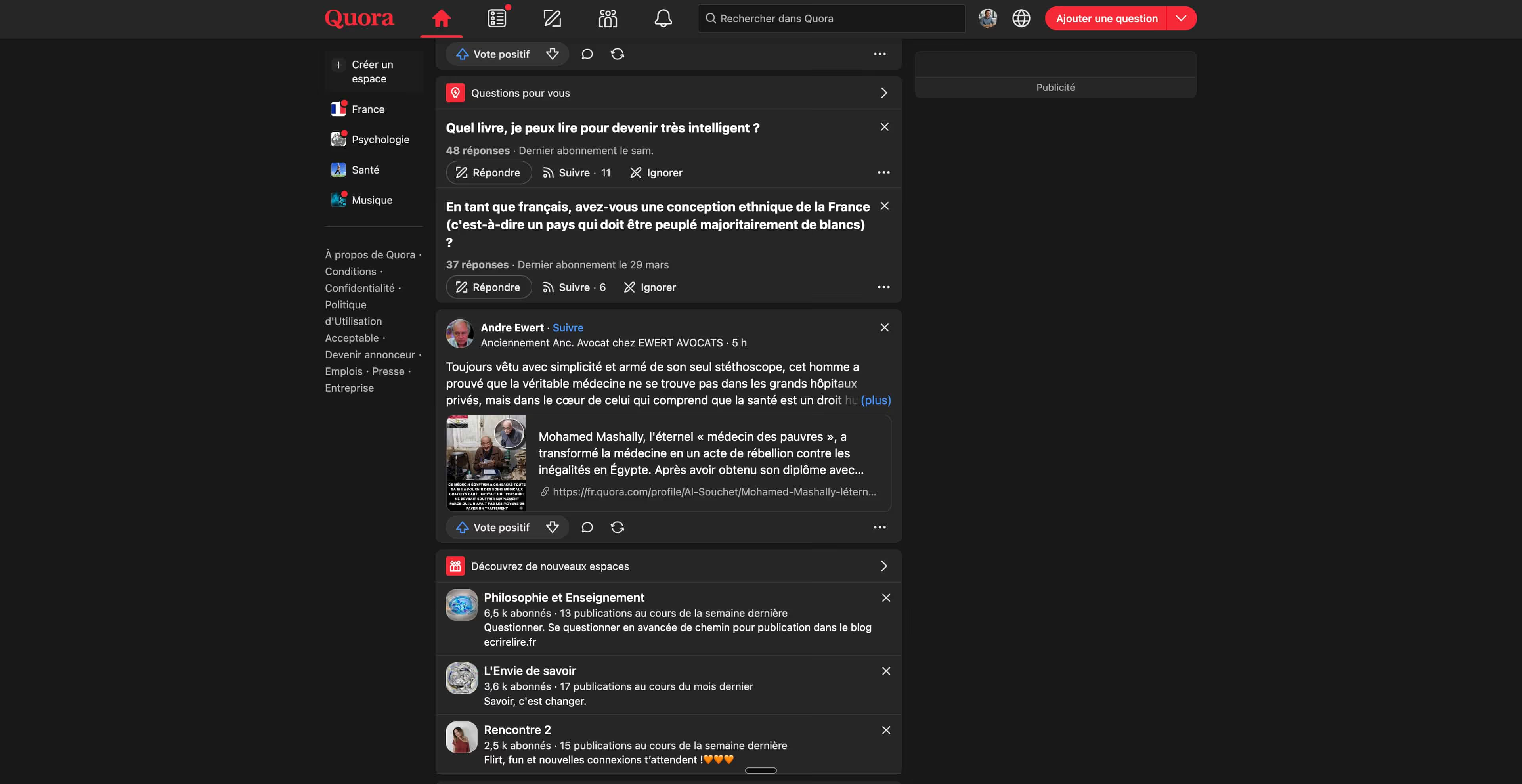
Join relevant Quora Spaces that align with your industry. These are communities within Quora focused on specific topics. By being active in these spaces, you increase your visibility to people interested in your niche, and your answers appear more prominently in space searches.
Content Strategy for Maximum Visibility
Identify high-volume questions on Quora that relate to your expertise. Use Quora's search bar to find questions with high follower counts, as these typically indicate popular topics with strong search demand. Prioritize questions that already rank in Google but have weak existing answers on the platform. This gives you an opportunity to rank your answer above existing ones.
Structure your answer for both readability and SEO. Start with a concise, keyword-rich opening sentence that directly answers the question. Use H3 subheadings to break up your response into logical sections. This formatting helps both human readers and AI models understand the structure of your answer and extract key information more easily.
Include your target keywords naturally throughout your answer. If you're answering a question about "best SEO tools," mention those tools by name, describe their features, and include relevant long-tail variations like "best SEO tools for small businesses" or "free SEO audit tools." This helps your answer rank for multiple keyword variations.
Always include a call-to-action that drives traffic to your website. This can be as simple as "For a detailed audit of your site's technical SEO, use the OnPage Audit tool" or "Learn more about building topical authority in our Topical Cluster Generator guide." Make sure your CTA is relevant to the answer and provides genuine value to readers.
Building Backlinks and Authority from Quora
Every time someone shares your Quora answer, they create an opportunity for backlinks. Write answers that are so valuable that readers naturally want to share them with their networks. This multiplies your backlink profile organically. When your answer gets shared on social media or cited on other websites, you gain authority signals that help all your pages rank.
Pair this with Sorank's Backlink Network, and identify complementary websites in your industry that might link to your Quora answer. If another website answers a similar question, they might link to your Quora answer as a source. Monitor your Backlink Analysis regularly to see which Quora answers are generating the most link referrals.
Build relationships with other Quora experts in your niche. Upvote their answers, follow them, and engage with their content. This encourages them to do the same for you, increasing your answer visibility and creating a network of authority that benefits everyone.
Best Practices and Common Mistakes
Do's
Always fact-check before publishing. Quora users can spot inaccurate information quickly, and downvotes tank your answer's ranking. Include sources and citations where appropriate, especially for statistics and data.
Be conversational but professional. Use "you" and "we" language to create connection with the reader, but maintain credibility through proper grammar and spelling. Avoid salesy or promotional language that sounds insincere.
Update your answers regularly. If new information emerges or your industry changes, revisit your top-performing answers and refresh them with updated information. Quora algorithm favors recent updates, so this can improve your ranking.
Diversify your topics. Don't limit yourself to answering only questions about your main offering. Answer related questions that attract your target audience. This builds authority across your entire topic area and creates multiple entry points for traffic.
Don'ts
Never spam Quora with promotional content. The platform has strict community guidelines against self-promotion, and violation results in account suspension. Your value should come through in your answers naturally, not through forced marketing language.
Don't answer questions outside your expertise. Credibility is everything on Quora. If you don't have genuine knowledge about a topic, don't answer it. Stick to areas where you're genuinely qualified.
Avoid copying answers from other users. Plagiarism violates Quora's terms and destroys your reputation. Always write original answers that provide unique perspectives and insights.
Don't neglect engagement. Publishing an answer is just the beginning. Monitor comments, respond to follow-up questions, and engage with readers who upvote or share your answer. This engagement signals quality to Quora's algorithm and keeps your answer visible.
How Sorank Helps You Track Quora Performance
Managing your Quora SEO strategy requires tracking multiple metrics. Use Sorank Chrome Extension to monitor your Quora answer rankings in Google search results. You can see exactly which answers are driving traffic and which need optimization.
The GEO/SEO Audit tool helps you identify optimization opportunities across your Quora profile and answers. It analyzes your answers' on-page SEO, heading structure, keyword placement, and link strategy to recommend improvements.
Use SEO Competitor Spy to analyze what your competitors are doing on Quora. See which questions they're answering, how many views their answers receive, and what strategies are working in your industry. This competitive intelligence guides your own Quora content strategy.
Complement your Quora strategy with other social media platforms. Check out our guides on Pinterest SEO, LinkedIn SEO, YouTube SEO, and Reddit SEO for a comprehensive multi-platform approach.
Sources
1. Moz - Domain Authority Metrics and Search Ranking Factors (2024)
2. Backlinko - Google Ranking Factors: Correlation Analysis Report (2023)
3. Search Engine Journal - Question-Based SEO and Quora Optimization Strategies (2024)
4. HubSpot - The Role of User-Generated Content in SEO Rankings (2024)
5. Ahrefs - Backlink Profile Analysis: High-Authority Websites (2024)