Preferences
Privacy is important to us, so you have the option of disabling certain types of storage that may not be necessary for the basic functioning of the website. Blocking categories may impact your experience on the website. More information

Privacy is important to us, so you have the option of disabling certain types of storage that may not be necessary for the basic functioning of the website. Blocking categories may impact your experience on the website. More information

Author authority is the credibility a writer earns in a field. Learn how it shapes E-E-A-T, SEO rankings, and AI search citations.








Sources
Author authority is the level of trust and credibility a content creator commands within a specific field. It captures whether a person has genuinely done the work, knows the subject deeply, and is recognized by others as a reliable voice. A search engine, and a reader, will trust an article written by a proven expert more than one written by an anonymous stranger, which is why the identity behind a page increasingly shapes how that page performs.
This matters because discovery now spans classic search results and AI answers alike. Whether a human is scanning a results page or an assistant like ChatGPT, Perplexity, or Gemini is choosing which sources to cite, the credibility of the author behind the content has become a signal that helps machines separate genuine expertise from generic filler.
Author authority, sometimes called author rank, refers to the perceived expertise, credibility, and influence of an individual author within a topic. You can think of it as a creator quality score that sits alongside the authority of the website itself. Site authority reflects the reputation of a domain, while author authority focuses on the specific person who produced a piece of content.
The distinction matters because a single trusted expert can publish across many sites, and their reputation should travel with them. A cardiologist writing about heart health carries credibility into any publication, whereas a domain with strong overall metrics does not automatically make every anonymous article on it trustworthy. Author authority is the layer that ties content quality back to a real, identifiable person.
Author authority is a core component of E-E-A-T, Google's framework of Experience, Expertise, Authoritativeness, and Trustworthiness. Experience means the author has firsthand knowledge of the subject. Expertise reflects depth of knowledge and qualifications. Authoritativeness is recognition by others in the field. Trustworthiness covers accuracy, honesty, and transparency. Together these signals describe whether a creator deserves trust.
Experience was added to the framework in December 2022 to emphasize firsthand knowledge, a shift that rewards creators who have actually used a product, treated a patient, or run a campaign rather than those who only summarize what others wrote. Strong author authority is the most direct way to demonstrate all four pillars at once, because it ties a verifiable person to the content they produce. It also reinforces broader content authority across a site.
Search engines evaluate author authority through several mechanisms. Recognition in the knowledge graph signals that an entity is established enough to be cataloged. Search quality raters investigate author backgrounds through professional profiles, published work, and mentions in reputable outlets. Structured data and schema markup on author biographies help machines understand credentials, affiliations, and social presence.
Google also uses online personal profiles to contextualize authors and link them to social accounts and associated domains. It can compare content and author vectors in a shared space to estimate authorship probability, which helps connect a body of work to a consistent identity. These approaches all push toward the same goal: matching a piece of content to a real person with a traceable reputation.
No. Google has consistently stated that author identity is not a direct ranking signal. In 2024, Danny Sullivan clarified that a byline, even from a world-renowned expert, will not automatically boost rank. Instead, the search quality rater guidelines that reference authorship help calibrate the algorithms by assessing whether high-ranking results meet quality standards.
So author authority works indirectly. A clear author name, bio, and credentials are typical characteristics of the kinds of pages Google wants to rank, especially for sensitive topics. The presence of a credible author improves user trust and engagement, and those downstream signals do influence performance. The lesson is to build real authority rather than chase a single byline as a shortcut. These trust cues feed into the broader content quality signals Google weighs.
Author authority carries the most weight on Your Money or Your Life topics, the YMYL categories like health, finance, and legal advice where bad information can cause real harm. Google expects content in these areas to show clear evidence of expertise and reliable sourcing. When such pages lack strong E-E-A-T, they are penalized more heavily and can be excluded from top results entirely.
For these subjects, a named author with verifiable qualifications is close to a requirement, not a nice extra. A medical article attributed to a licensed physician, with a bio linking to their credentials, gives both readers and algorithms a reason to trust the guidance. Anonymous YMYL content faces a much steeper climb.
Author authority is becoming a meaningful signal in AI-driven discovery, the practice often called generative engine optimization. AI systems use author identity to evaluate whether information reflects genuine expertise, which makes it easier to decide which sources merit a citation in a generated answer. Content tied to a credible, identifiable author is a safer source for a model to quote than text with no clear origin.
A 2026 study referenced by seoClarity found that named authors with visible credentials and clear publication dates appeared to perform better in AI-driven discovery than anonymous content. This puts author authority at the center of AI citation optimization, where the goal is to become a source assistants return to. Pairing strong author signals with disciplined keyword research and content planning helps you target the questions these systems answer.
Start by giving every important article a real, named author with a detailed bio that states credentials, education, and professional affiliations. Add author schema markup so machines can parse those details. Build a consistent track record by publishing high-quality content regularly under the same identity, rather than rotating anonymous bylines.
Beyond your own site, earn recognition elsewhere. Contribute to reputable publications, gain relevant certifications, and publish scholarly work where it fits, since indexed research strengthens the entity. Maintain active, accurate profiles on the platforms where your audience and search engines look for context. Over time, these signals compound into a reputation that follows the author across the web.
The most common mistake is treating author authority as a checkbox: adding a generic byline with no real bio, credentials, or track record. A name alone does nothing if there is no verifiable expertise behind it. Another error is inconsistency, where the same person appears under slightly different names or with conflicting profiles, which makes it hard for machines to consolidate their reputation.
Avoid fabricating expertise or inventing authors, since search quality systems and savvy readers can often detect the gap between claimed and demonstrated knowledge. The safest path is to attribute content to people who genuinely have the experience, then make that experience easy to verify. Authority earned this way is durable, while shortcuts tend to collapse under scrutiny.
Author authority is the credibility a specific person earns within a field, and it has become a quiet but powerful force in both search and AI answers. It is not a direct ranking factor, yet it underpins E-E-A-T, strengthens trust signals, and increasingly influences which sources AI assistants choose to cite. The brands that win will attribute content to real experts, document their credentials clearly, and let that reputation compound.
To go further, connect this with E-E-A-T and broader content authority, and use Sorank's research and content planning tools to target the questions your audience asks. Reference sources: ClickRank, KeyContent, and seoClarity.

Not directly. Google has repeatedly said author identity is not a ranking signal, and a byline alone will not boost rankings. However, author authority underpins E-E-A-T and improves trust and engagement, which indirectly supports performance. It matters most on Your Money or Your Life topics like health and finance.
Attribute articles to real, named experts with detailed bios that list credentials and affiliations, and add author schema markup. Publish high-quality content consistently under the same identity, and earn recognition through reputable publications, certifications, and active professional profiles. Over time these signals build a reputation that machines can verify.
Yes. AI systems use author identity to judge whether content reflects genuine expertise, which influences whether they cite a source in generated answers. Research suggests named authors with visible credentials and clear dates perform better in AI-driven discovery than anonymous content, making author authority a key part of generative engine optimization.
THEY TRIED SORANK BEFORE YOU
 “I tested Sorank on a real client site and it's insane. It does everything an agency would bill you $1500 a month for. It's going into production on that client now.”
 Guillaume Guersanguersanguillaume.com“We are an Ads agency and we wanted to get our SEO back on track once and for all. Sorank gave us a clear view of our site, helped us prioritize optimizations, and properly structure our content. The tool is easy to use, well designed for a team, and very practical for centralizing tracking without having to juggle multiple platforms. A very solid foundation to start fresh with our SEO.”
 Gaspard MadouiAds Agency
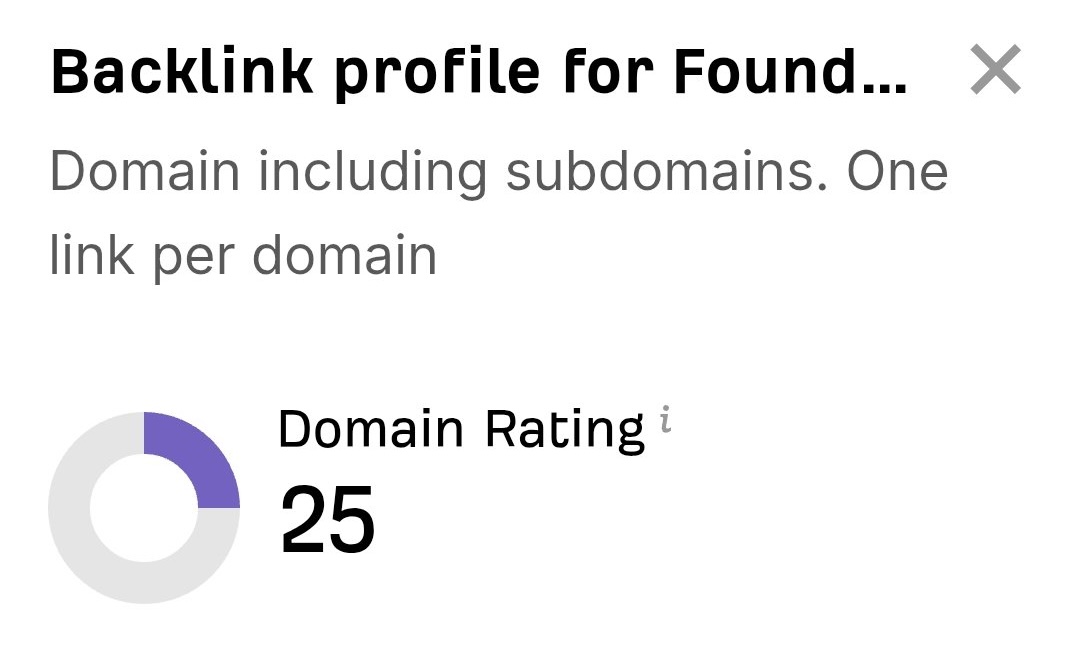 “I just let the Sorank software do its thing, and now my DR is 25 and my page is ranking higher.”
 Lucas FlandrePodcast Host“I specialized in GEO thanks to Sorank. The GEO Leaderboard allows me to show my clients their position vs competitors on ChatGPT. It’s a real commercial differentiator.”
 MélanieSEO Freelance“Great service, works well for our website and helps us understand how to improve it to rank better on Google and elsewhere. Congrats, keep going, I recommend it.”
 Hugo T.E-commerce merchant