Preferences
Privacy is important to us, so you have the option of disabling certain types of storage that may not be necessary for the basic functioning of the website. Blocking categories may impact your experience on the website. More information

Privacy is important to us, so you have the option of disabling certain types of storage that may not be necessary for the basic functioning of the website. Blocking categories may impact your experience on the website. More information

EV charging SEO is how a charging company gets on the list when a hotel owner searches "commercial EV charger installation cost" or a fleet manager asks ChatGPT which depot charging provider to call. Sorank covers the content side: it finds what site hosts, fleets and drivers ask, publishes sourced articles on your site, and shows which networks the AI assistants name.
Your station data, app listings and hardware pages stay in your hands, and the buyer education goes out on autopilot.
















































27,123
Articles created
11,060,193
Visits from Google
18,373
Visits from AI
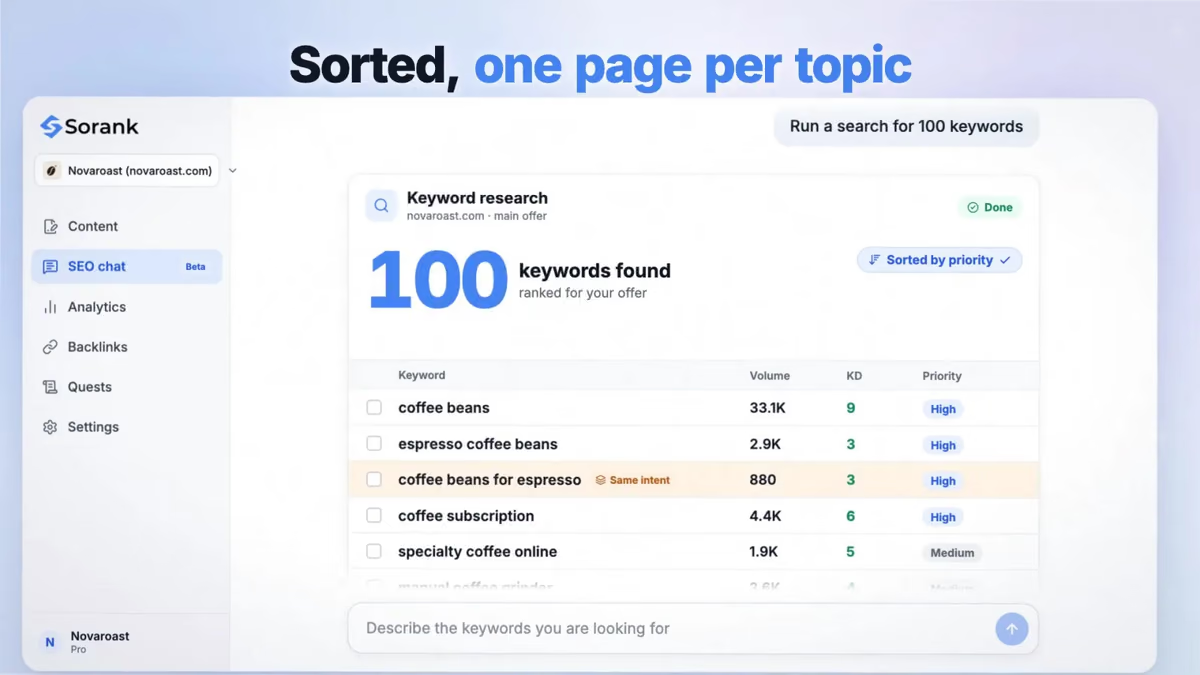
A driver needs a plug now, and usually opens an app. A property owner needs months of reading first: "how much does a level 2 charger cost for an apartment building", "do EV chargers make money at a hotel", "workplace charging for 50 employees". Sorank sorts these searches by audience and by how close they sit to a signed contract.
The list comes from keyword research on your market and on the networks you compete with.
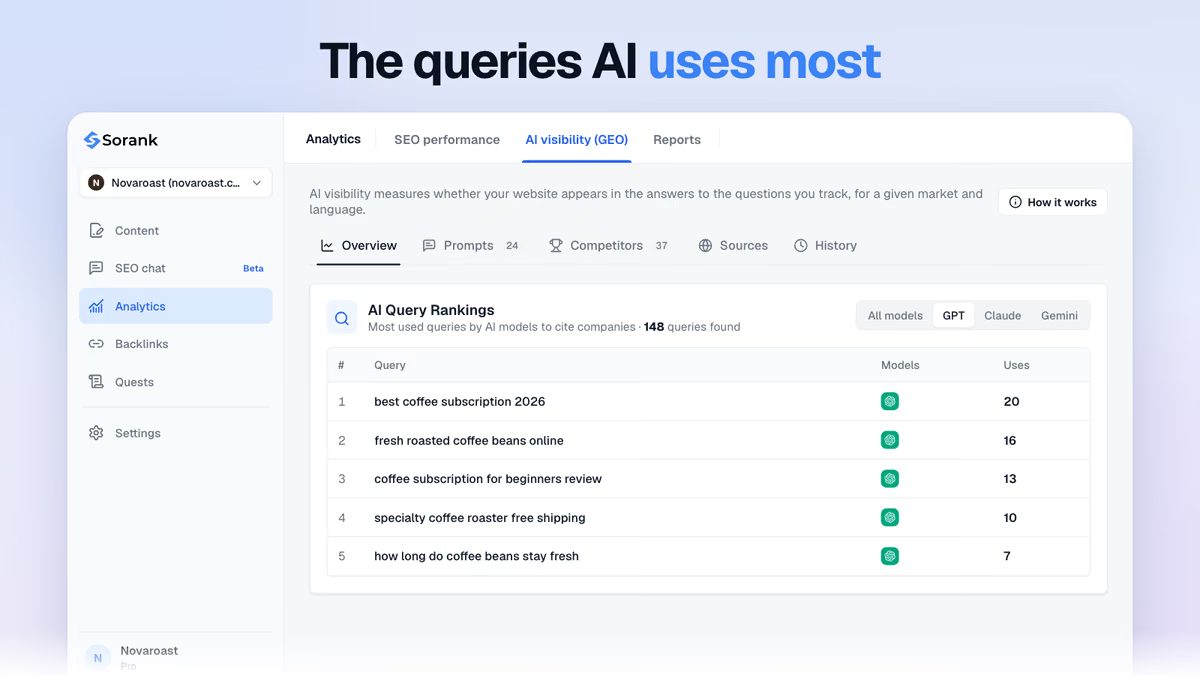
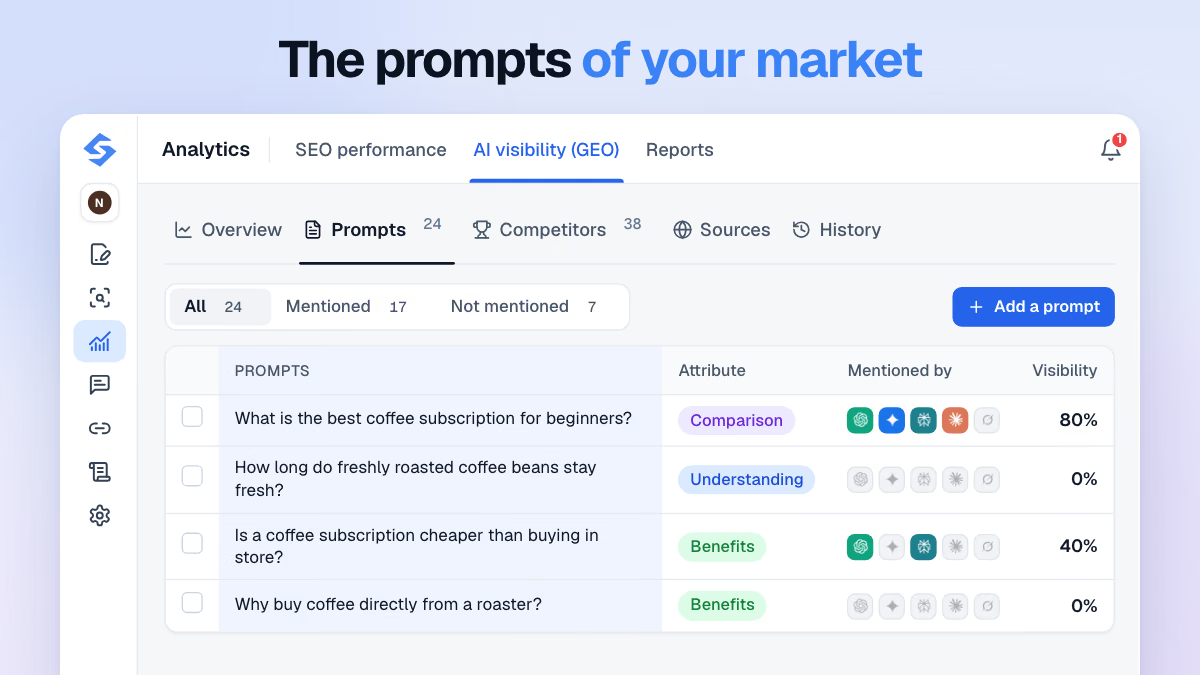
Ask an assistant for "the best EV charging company for a retail parking lot" and it returns a few brands with reasons. Each month, Sorank puts the questions you choose to ChatGPT, Claude and Gemini (Grok joins from the Pro plan), then records whether you appear and who appears in your place.
Wrong details matter here too: a retired connector or an old incentive repeated in an answer points to the page you need to fix. See AI mention tracking.
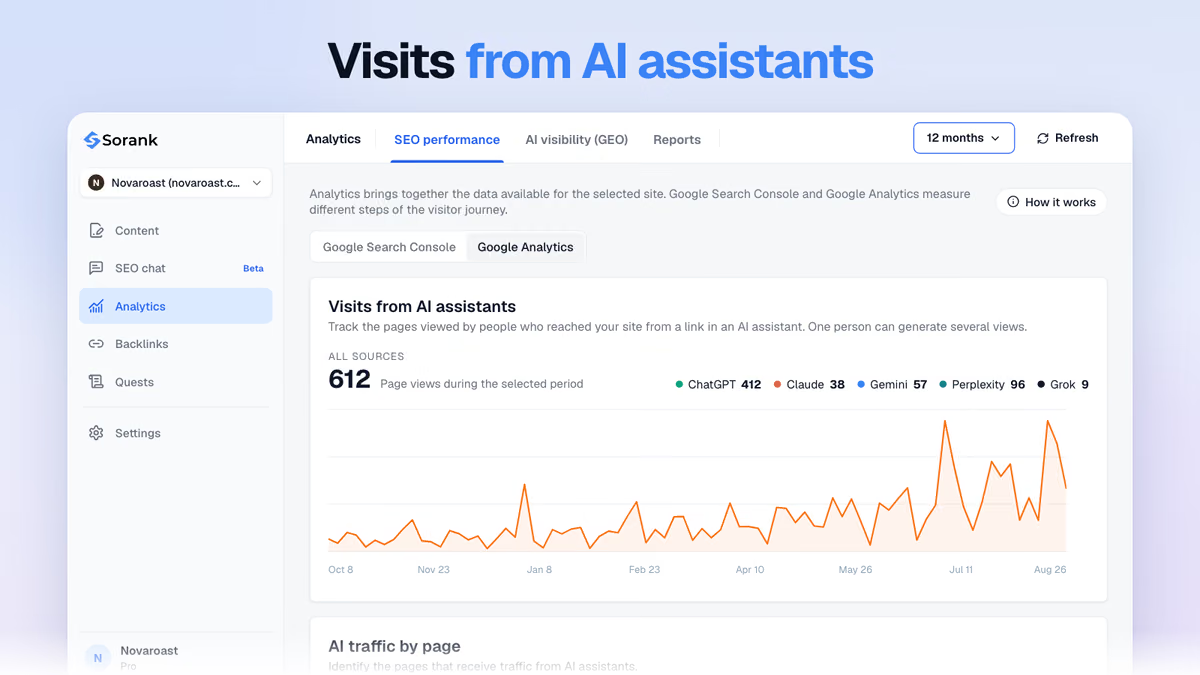
Long sales cycles hide what content does. Sorank puts your Search Console and Analytics data beside the visits sent by AI assistants, so you can see whether the site host guides or the fleet guides draw the traffic that reaches your quote form.
The SEO and GEO dashboard shows both on one screen.

Sorank plugs into the website that sells your service, on WordPress, Webflow, Wix, Shopify or through a webhook. It never touches your charging platform, driver app or station backend.
Multifamily, hospitality, retail, workplaces, depots: tell Sorank which hosts you target, plus your hardware and countries. It proposes topics for each segment, so a fleet guide and a condo guide never fight for one search.

Keep articles as drafts while your engineers check power figures and incentive wording, or let them go live on set days. Each one points to the right solution page and your quote form.
THEY TRIED SORANK BEFORE YOU
 “I tested Sorank on a real client site and it's insane. It does everything an agency would bill you $1500 a month for. It's going into production on that client now.”

 Guillaume Guersanguersanguillaume.com
 “I just let the Sorank software do its thing, and now my DR is 25 and my page is ranking higher.”
 Lucas Flandrefoundertrace.fr“Great service, works well for our website and helps us understand how to improve it to rank better on Google and elsewhere. Congrats, keep going, I recommend it.”
 Hugo T.E-commerce merchant“For 2 years, 100% of my clients came from LinkedIn. Posting daily, commenting, DM follow-ups… totally dependent on the algorithm. I knew I needed to work on SEO but always postponed it: too long, too technical, not my job. With Sorank, I finally took the step. In 4 months, I generate 15 organic leads per month without posting anything. It’s not 50/50 with LinkedIn yet, but I sleep better knowing I now have a second lead source growing on autopilot.”
 Valentin ThomyColdMailing Agency
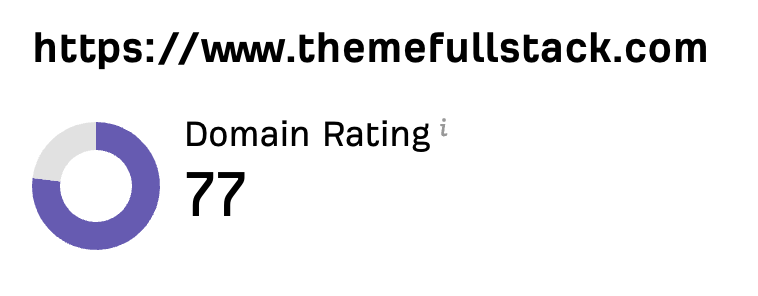 “I’m a developer, not a marketer. My Shopify theme was selling only through word-of-mouth and ads. With Sorank I finally understood how to structure my SEO and write articles to rank. The audit showed my product page was too slow. In 2 months, my organic traffic doubled and I’m starting to appear in ChatGPT answers when people search for Shopify themes. All of that with about 2 hours per week.”
 Thème FullStackgo.themefullstack.com“Great solution to manage SEO without headaches. Audits are fast, the interface is clear, and you quickly see which actions to implement. It has become an essential tool to track and improve the SEO of my sites. I highly recommend it.”
 XavEntrepreneur“I used Sorank for a client who needed SEO and it clearly made my life easier. I can quickly audit a site, track my projects, and keep a clear overview without multiplying tools. The onboarding is fast and the interface is great.”
 Céline MaurinFreelance CM
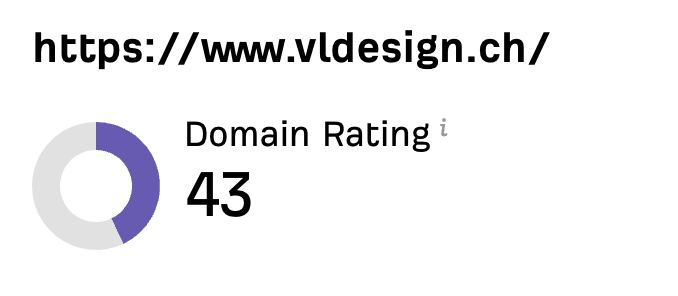 “Blown away by Sorank’s performance. After testing many solutions on the market, I was amazed by how quickly our articles started ranking in the SERP. The results are concrete and much faster than anything we’ve experienced so far. It has been an excellent surprise for our team. We are confidently renewing our trust and highly recommend Sorank to agencies that demand fast and measurable results.”
 Patrick PerretFreelance Webdesign SEO“We’re a development agency and we use Sorank to run on-page audits on our clients’ Shopify stores. It helps us quickly identify optimization opportunities, structure fixes, and collaborate more easily with clients on the SEO side. Very useful to complement our technical support 🔥”

 Younes Yahyaluvaika.com“We are an Ads agency and we wanted to get our SEO back on track once and for all. Sorank gave us a clear view of our site, helped us prioritize optimizations, and properly structure our content. The tool is easy to use, well designed for a team, and very practical for centralizing tracking without having to juggle multiple platforms. A very solid foundation to start fresh with our SEO.”
 Gaspard MadouiAds Agency“I specialized in GEO thanks to Sorank. The GEO Leaderboard allows me to show my clients their position vs competitors on ChatGPT. It’s a real commercial differentiator.”
 MélanieSEO Freelance“I manage our dealership’s website and it had dozens of issues: slow pages, 404 errors, missing tags. We were losing rankings every month without understanding why. The Sorank audit detected everything in 5 minutes. I sent the report to our web provider with the priority fixes. We regained our rankings and traffic picked back up. Perfect for someone non-technical like me!”
 Xavier BreullMarketing Manager“I’m a CMO for a SaaS and I manage acquisition in a very competitive market. We were investing heavily in our product but not working on our SEO. No visibility on our real competitors, no tracking of our presence in AI. Sorank showed us our positioning vs competitors, which keywords to target, and GEO opportunities we had completely ignored!”
 Louis RAPPCMO SaaS
 “Very good version 2, I recommend it.”

 Antoine Verhillethenewblack.ai“I was skeptical at first, but this is the best SEO tool I’ve ever used. The interface is clear, audits are fast, and the recommendations are easy to implement. I’ve saved hours and hours managing SEO and tracking performance. I recommend it to all my entrepreneur friends who run an agency or work independently.”
 NoahEntrepreneur
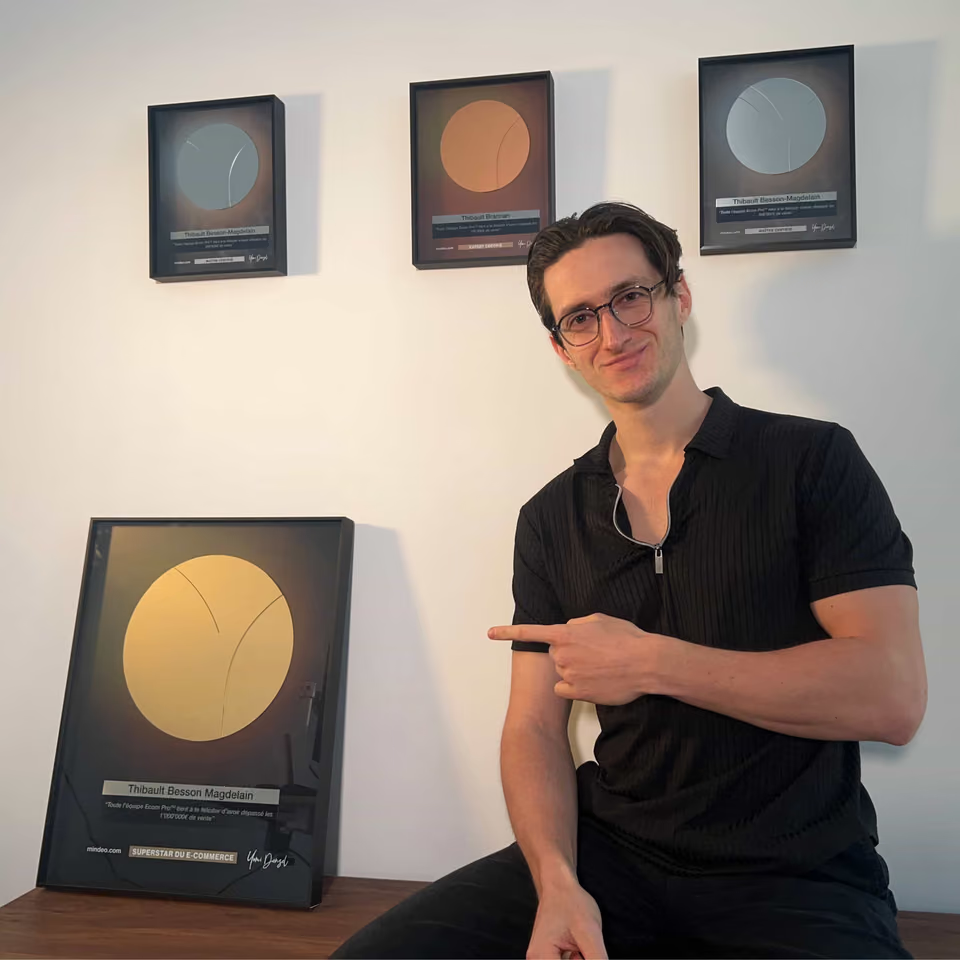
Founder’s Note.
I ran my own SEO agency for years. I built Sorank to deliver the same results to every business, at scale.
Everything I know about Google rankings and Generative Engine Optimization (GEO) is coded into this software, and it runs on autopilot for you.
Try for Free
EV charging SEO is the work that makes a charging company visible on Google and in AI assistants to the people who choose or use its chargers: charge point operators, hardware makers, installers and software platforms all need it. It differs from local trade marketing because the sale is usually B2B, the product is technical and the rules change by country.
If you mainly install home wallboxes as a local trade, our page on SEO for electricians fits better. Power suppliers will find theirs under SEO for utility companies, and companies pairing chargers with panels under SEO for solar installers.
Three groups search, and only two of them read your articles. Drivers look for a working plug nearby, and they mostly get it from a map or a charging app, fed by your station data rather than by your blog. Site hosts, such as hotels, landlords, retailers and employers, research costs, revenue and who runs the equipment. Fleet managers research depot design, energy loads and vehicle downtime.
That split decides your plan: keep station data clean for drivers, and aim editorial work at hosts and fleets, where a single contract can cover many ports.
They ask for a shortlist, then question it. A typical thread moves from "best EV charging companies for apartments" to "who owns the chargers" and "what happens when one breaks". The assistant answers from the pages it can read, so a provider that publishes ownership models, service terms and uptime in plain text gives it material to quote.
Sorank has no study on charging alone. The closest one, our automotive AI citation study, covers 1275 answers measured between May and August 2026, in a panel asked mostly in French: Wikipedia leads at 4.39%, ahead of YouTube at 1.25% and LinkedIn at 0.71%, and it reaches 12.71% on ChatGPT alone. Factual, encyclopedic sources win this sector, which favors clear definitions over slogans. Our guide on ranking in ChatGPT gives the method.
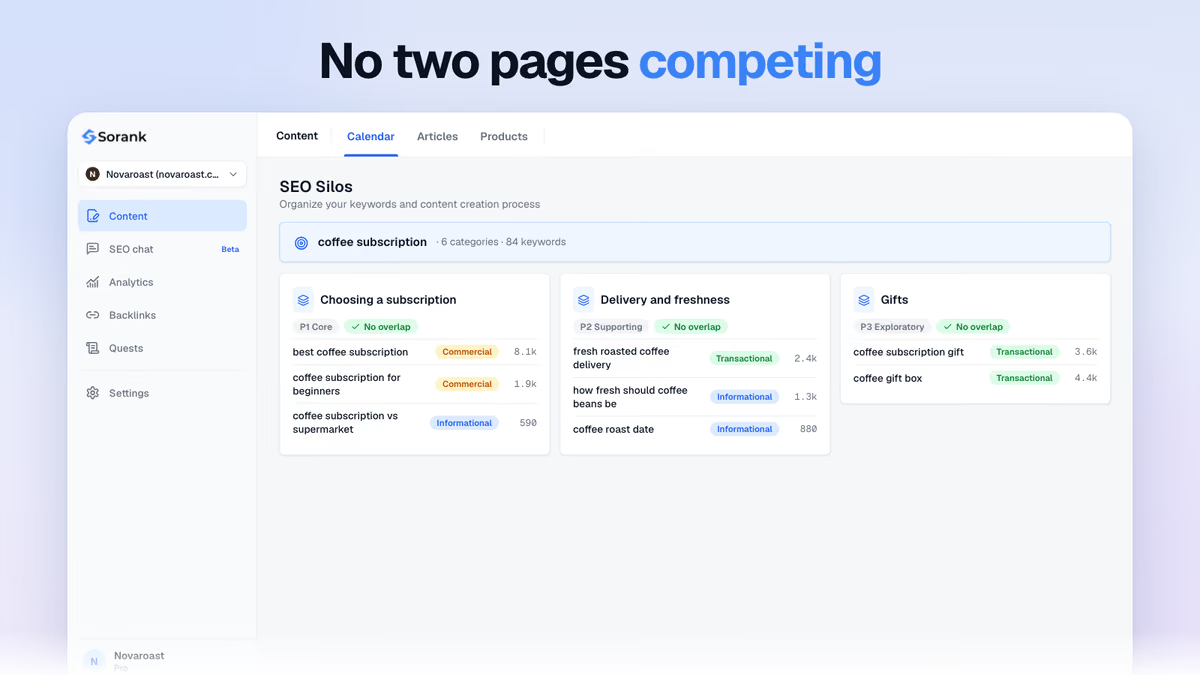
Sort them by who is asking, then give each group its own page type:
Our guide to keyword research for AI answers explains how to collect the longer questions, and B2B SEO covers long sales cycles.
Because incentives and operating rules keep moving. In the United States, the IRS states that the Section 30C tax break for charging equipment covers property placed in service through June 30, 2026, so any page still selling it for a new installation misleads the reader.
Federally funded NEVI stations must keep each port above 97% average annual uptime and share status, connector and pricing data with app developers. In the UK, official guidance on the Public Charge Point Regulations asks operators for a maximum price shown in pence per kWh, contactless payment on the covered chargers and 99% reliability across a rapid network. Hosts now ask about these numbers, so date every such article and name its source.
An answer first, then figures a reader can check. State the recommendation in two sentences, then give the numbers: the Alternative Fuels Data Center, run by the US Department of Energy, puts Level 2 at about 25 miles of range per hour of charging and DC fast at about 100 to 200+ miles in 30 minutes, and lists CCS, CHAdeMO and J3400 (also called NACS) as the fast connectors. Add dwell time, who pays for grid work, and which costs you cannot estimate without a site survey. Close with a dated source list. Sorank writes on this structure with FAQ blocks, and your engineers can correct any draft.
No, unless each page says something useful of its own. Google's spam policies describe doorway abuse as pages aimed at similar searches or at specific cities that add little of their own. Station details belong in your locator and data feeds. Sorank writes articles, not station or city pages; when a real local topic exists, such as a regional grid connection process, it can cover it as an article, and our guide to local landing pages helps with those you build yourself.
Sorank finds the topics, writes and publishes the articles with internal links, tracks AI answers each month, earns backlinks among Sorank customer sites through natural backlink acquisition and gathers your search data in one place. Your team keeps technical sign-off, solution pages, station data, listings in charging apps, your Google Business Profile, and driver reviews, none of which Sorank manages.
It starts at $49 a month per site, billed annually, or $99 without commitment, for 20 articles a month. Pro gives 60 articles for $129 ($249 monthly) and Business 120 for $249 ($499 monthly); the pricing page lists them with the 3-day trial. Google sets no timetable: expect impressions first, then clicks over several months. With B2B contracts, judge a segment on its Search Console trend and the quote requests it starts, after at least a full quarter.
Keep station data accurate for drivers, then publish for the buyers: cost guides for site hosts, depot planning for fleets, plain definitions of standards. Sorank plans, writes and publishes that editorial layer and tracks how assistants describe you.
No. Station data, charging app listings, Google Business Profile and driver reviews stay with your team. Sorank works on the articles published on your website and on tracking AI answers.
Publish checkable facts on ownership models, service terms, uptime and coverage, and earn mentions on the third-party pages assistants read. Then track each month whether ChatGPT names you and which sources it uses.
Yes. Set Sorank to publish as drafts, and your team can correct kW figures, connector details or incentive wording in your CMS before anything appears.
Sorank Essential is $49 per month per site on annual billing or $99 month to month, with 20 articles and a 3-day trial. Agencies usually bill a monthly retainer that also includes strategy and outreach.
Sorank publishes to WordPress, Webflow, Wix and Shopify, and elsewhere through a webhook. Incentives and rules differ by country, so each market needs its own articles and its own legal check.
We don't. Sorank isn't trying to be another Semrush or Ahrefs. Those tools are built for data, Sorank is built to do the work. Instead of more dashboards to check, it turns SEO and GEO insights into actions: articles written and published, backlinks earned, technical fixes and AI visibility tracking. Less complexity, more results.
From $49/month per website on a yearly plan, with a 3-day free trial and a 90-day money-back guarantee (conditions apply). Every plan includes articles, AI visibility tracking and access to natural backlink acquisition; higher plans add more articles, more AI prompts tracked and more backlinks. No setup fees, no paying for seats you don't use.
You shouldn't need a full marketing team or expensive tools to grow. Sorank handles your entire SEO and AI visibility, so you save time and money.