Preferences
Privacy is important to us, so you have the option of disabling certain types of storage that may not be necessary for the basic functioning of the website. Blocking categories may impact your experience on the website. More information

Privacy is important to us, so you have the option of disabling certain types of storage that may not be necessary for the basic functioning of the website. Blocking categories may impact your experience on the website. More information

Few shot learning teaches an LLM a task with a few in-prompt examples. Learn how it works, how it compares to zero-shot, and why it matters for GEO.








Sources
Few shot learning is the practice of teaching a language model a task by including a small number of examples, usually fewer than ten, directly in the prompt. Each example pairs an input with the output you want, and the model infers the pattern from those demonstrations before answering the real query. It is learning by showing rather than by retraining.
This approach is central to how people get reliable results from modern AI. Understanding few shot learning clarifies why well-crafted prompts produce far better answers, and it connects directly to how marketers and content teams use large language models to scale work without building custom models.
In few shot learning, you provide the model with a handful of labeled examples that illustrate the task, then pose your actual question. The examples act as a guide, showing the model the format, tone, and logic you expect. Crucially, this happens entirely within the prompt: the model's underlying parameters do not change, and no formal training run occurs.
This is a form of in-context learning, where the examples function like a miniature training set the model reads on the fly. When shown several input and output pairs, the model adjusts its response to match the demonstrated pattern, adapting its behavior to your task without any retraining. It is one of the most accessible tools in prompt engineering.
These approaches sit on a spectrum of how much you show the model. Zero-shot prompting gives no examples at all, relying entirely on the model's pre-trained knowledge and the instruction itself. One-shot prompting provides a single example, offering more guidance than zero-shot but less than few-shot. Few-shot prompting provides multiple examples, typically two to five and usually fewer than ten.
The right choice depends on the task. Zero-shot works well for broad, simple jobs like categorization, translation, or general question answering. Few-shot is better for specialized or nuanced work, such as summarization with a specific style, support replies with a consistent tone, or code that follows a particular pattern. The contrast with zero-shot learning is really a contrast in how much context the model needs to succeed.
The performance gains can be substantial. In one sentiment analysis test, an LLM reached 73 percent accuracy with zero examples, but climbed to 82.8 percent with just 20 examples, approaching a fine-tuned BERT model's 84 percent. That shows how a few well-chosen demonstrations can close much of the gap to a fully trained system.
There are limits, though. In the same test, improvements stagnated after about 20 examples, a common pattern of diminishing returns. Adding more demonstrations also consumes more of the model's context window and produces more tokens, so few-shot is more resource-intensive than zero-shot even when it is more accurate.
Few-shot learning and fine-tuning solve the same problem in different ways. Fine-tuning adjusts a model's weights using a large labeled dataset, often ten thousand examples or more, which requires real computational resources and engineering effort. Few-shot learning changes nothing about the model and lives entirely in the prompt, making it instant and cheap to try.
A practical rule of thumb: use zero-shot when you have no labeled data, few-shot when you have roughly ten to fifty good examples, and fine-tuning when you need maximum performance on a specialized domain and can invest in it. For most content and marketing tasks, few-shot is the sweet spot, delivering strong results without the cost of training a custom model.
For practitioners, few-shot learning is how you reliably steer LLM output at scale. Showing the model two or three examples of the exact format you want, a meta description, an FAQ answer, a product summary, produces far more consistent results than a bare instruction, which makes AI-assisted content production dependable rather than hit or miss.
It also shapes how you think about generative engine optimization. The same principle, that models learn patterns from clear examples, is why structured, consistent content helps AI systems understand and reuse your information. Building LLM-ready content with clean, repeatable formats makes your pages easier for models to parse and cite.
Example quality matters more than quantity. Choose demonstrations that are representative of the broader task, because poorly chosen examples can cause the model to overfit to them and miss the real pattern. Cover the variety you expect in production rather than three near-identical cases.
Keep the format consistent across every example, label inputs and outputs clearly, and order them logically. Include enough examples to establish the pattern but stop before diminishing returns and unnecessary token cost. When results drift, revising or rebalancing your examples is usually more effective than simply adding more.
Few-shot learning shines in text summarization with a specific style, customer support automation that needs a consistent voice, code generation following set patterns, and structured extraction where output must match a fixed schema. Anywhere you need a particular format or tone, a few examples teach it faster than a long instruction.
For marketing teams, that covers a huge range of work: drafting consistent meta tags, generating FAQ answers, classifying queries by intent, or reformatting data into clean tables. The technique turns a general-purpose model into a reliable, task-specific helper without any engineering overhead.
The main constraints are the context window and token cost: every example takes space and adds expense, and there is a point where more examples stop helping. Few-shot also depends heavily on example selection, so unrepresentative demonstrations can mislead the model rather than guide it.
Finally, few-shot learning does not permanently teach the model anything; the guidance lasts only for that prompt. For knowledge the model must apply consistently across many sessions, fine-tuning or retrieval-based approaches may be more appropriate, and few-shot is best seen as a fast, flexible tool rather than a substitute for them.
Few shot learning teaches a language model a task by example, embedding a few input and output pairs in the prompt so the model infers the pattern without any retraining. It sits between zero-shot simplicity and the cost of fine-tuning, and for most content and marketing work it offers the best balance of control and effort.
To go further, connect this with prompt engineering and zero-shot learning, and use Sorank's research and content planning tools to build the consistent formats that both readers and models reward. Reference sources: Shelf and Analytics Vidhya.

Few shot learning is teaching an AI model a task by giving it a few examples directly in the prompt, each showing an input and the output you want. The model reads those examples, infers the pattern, and applies it to your real question. Nothing about the model changes; the learning happens only within that prompt, which is why it is also called in-context learning.
Fine-tuning permanently adjusts a model's weights using a large labeled dataset, often ten thousand examples or more, which takes significant compute and engineering. Few shot learning changes nothing about the model and works entirely through a handful of examples in the prompt, so it is instant and cheap. Use few shot when you have roughly ten to fifty good examples, and fine-tuning for specialized, high-volume needs.
Usually fewer than ten, and often just two to five, is enough to establish a pattern. Research shows performance can rise sharply with the first examples but tends to stagnate after about twenty, so more is not always better. Quality matters most: choose representative examples that cover the variety you expect, since unrepresentative ones can make the model overfit and miss the real task.
THEY TRIED SORANK BEFORE YOU
 “I tested Sorank on a real client site and it's insane. It does everything an agency would bill you $1500 a month for. It's going into production on that client now.”
 Guillaume Guersanguersanguillaume.com“We are an Ads agency and we wanted to get our SEO back on track once and for all. Sorank gave us a clear view of our site, helped us prioritize optimizations, and properly structure our content. The tool is easy to use, well designed for a team, and very practical for centralizing tracking without having to juggle multiple platforms. A very solid foundation to start fresh with our SEO.”
 Gaspard MadouiAds Agency
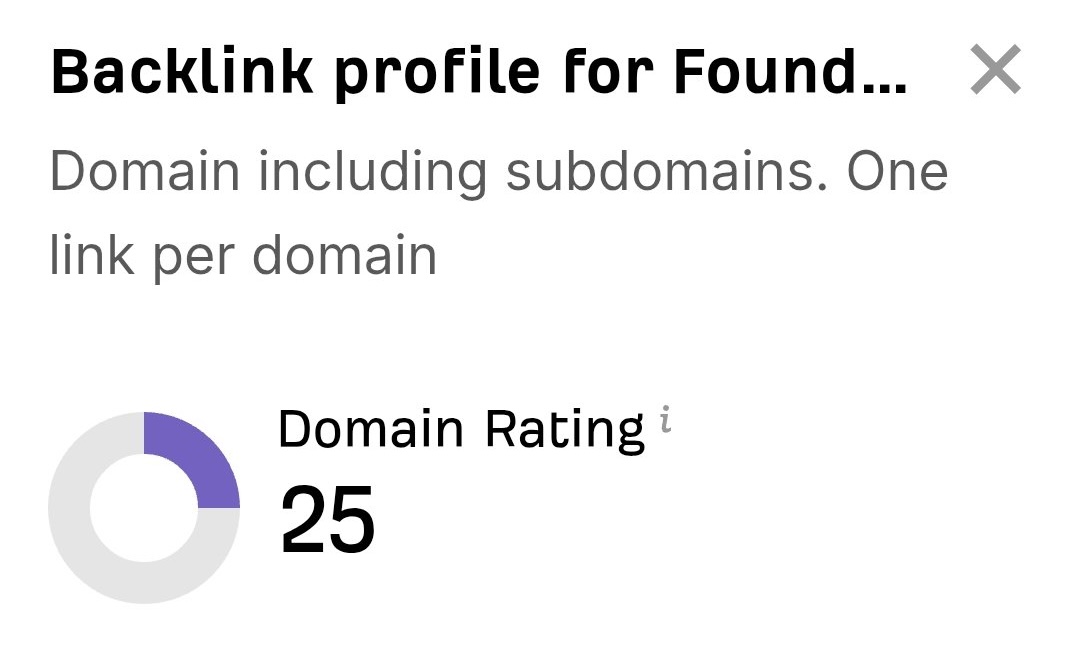 “I just let the Sorank software do its thing, and now my DR is 25 and my page is ranking higher.”
 Lucas FlandrePodcast Host“I specialized in GEO thanks to Sorank. The GEO Leaderboard allows me to show my clients their position vs competitors on ChatGPT. It’s a real commercial differentiator.”
 MélanieSEO Freelance“Great service, works well for our website and helps us understand how to improve it to rank better on Google and elsewhere. Congrats, keep going, I recommend it.”
 Hugo T.E-commerce merchant