Preferences
Privacy is important to us, so you have the option of disabling certain types of storage that may not be necessary for the basic functioning of the website. Blocking categories may impact your experience on the website. More information

Privacy is important to us, so you have the option of disabling certain types of storage that may not be necessary for the basic functioning of the website. Blocking categories may impact your experience on the website. More information

Aviation SEO is how a charter operator, a maintenance shop, an FBO or a flight school gets found by the people about to call one: an executive assistant who searches "private jet Teterboro to Palm Beach this Friday", an owner who needs a "Citation phase inspection" slot before winter, a crew planning a fuel stop, or a teenager asking ChatGPT how much a private pilot license costs. Each of them checks a certificate, a date and a price before picking up the phone. Sorank finds these searches for every service line you run, publishes the answers on your website and tracks which operators, shops and schools the AI assistants name.
Every article can wait as a draft until your chief pilot or your quality manager has read it.
















































27,131
Articles created
11,062,546
Visits from Google
18,381
Visits from AI
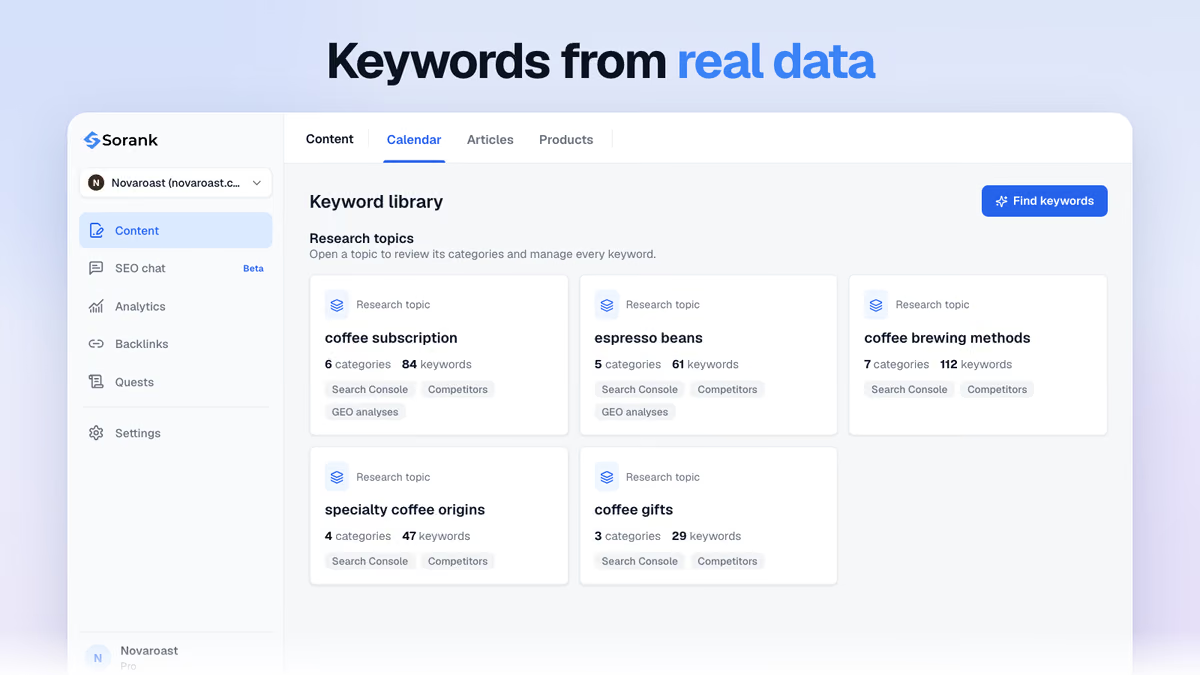
A charter client, an aircraft owner and a student pilot never type the same words. "Empty leg flights from Van Nuys", "King Air 350 phase inspection downtime" and "Part 61 or Part 141 flight school" each call for a different page. Sorank builds a research topic for each service you sell, fed by your Search Console data, your competitors and the AI answers, with the volume and difficulty of every keyword.
Open them in keyword research and send the best ones to your publishing calendar.
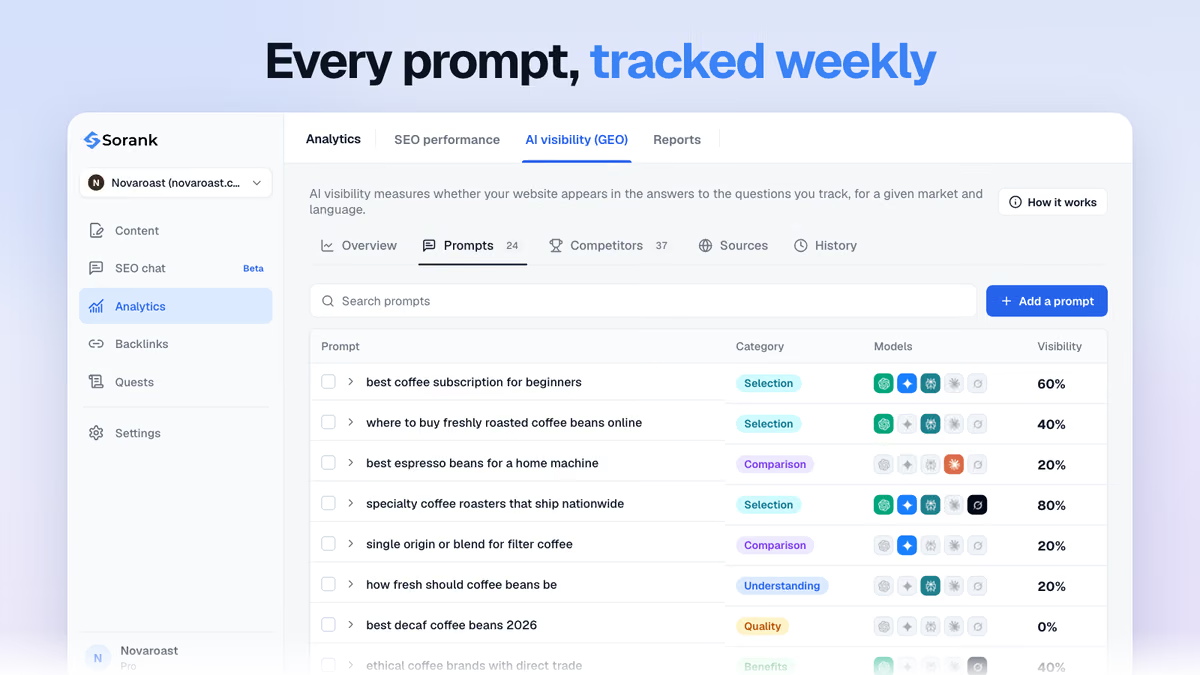
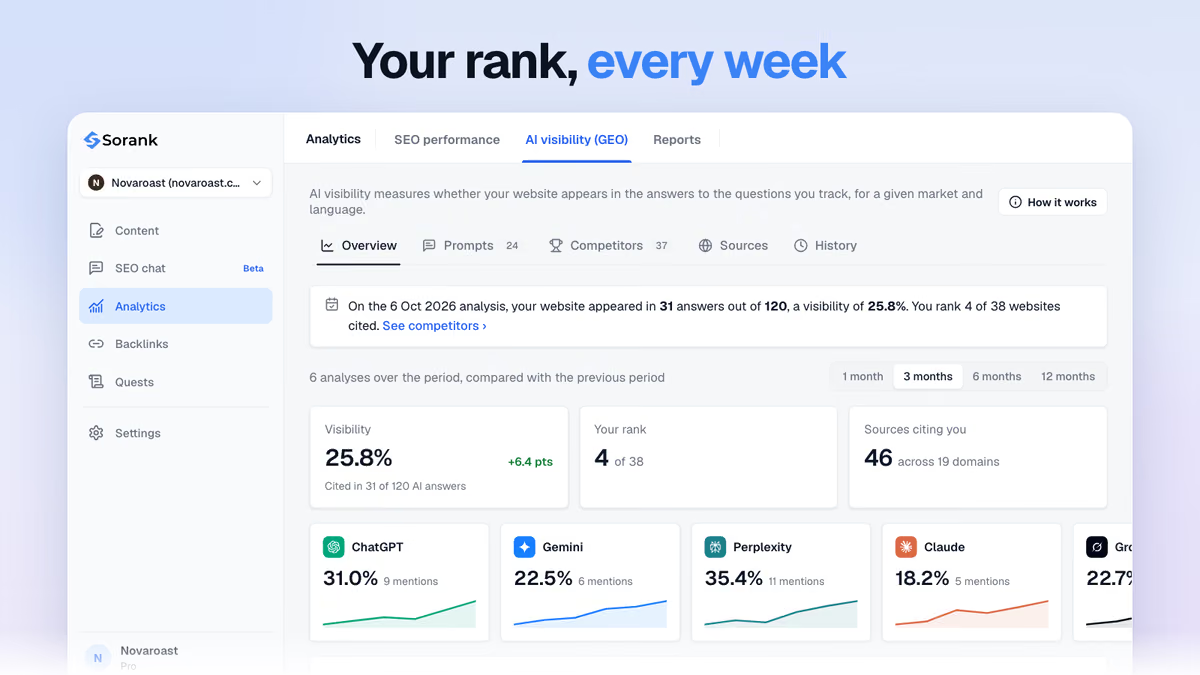
A travel manager asks ChatGPT for "a safe charter operator for a midsize jet out of Dallas"; a parent asks Gemini for "the best flight school in Florida for an airline career". The answer names a handful of companies. Sorank asks the questions you track every month, then gives your visibility and your rank among the cited sites, model by model, against the previous period.
Follow every answer in AI mention tracking.
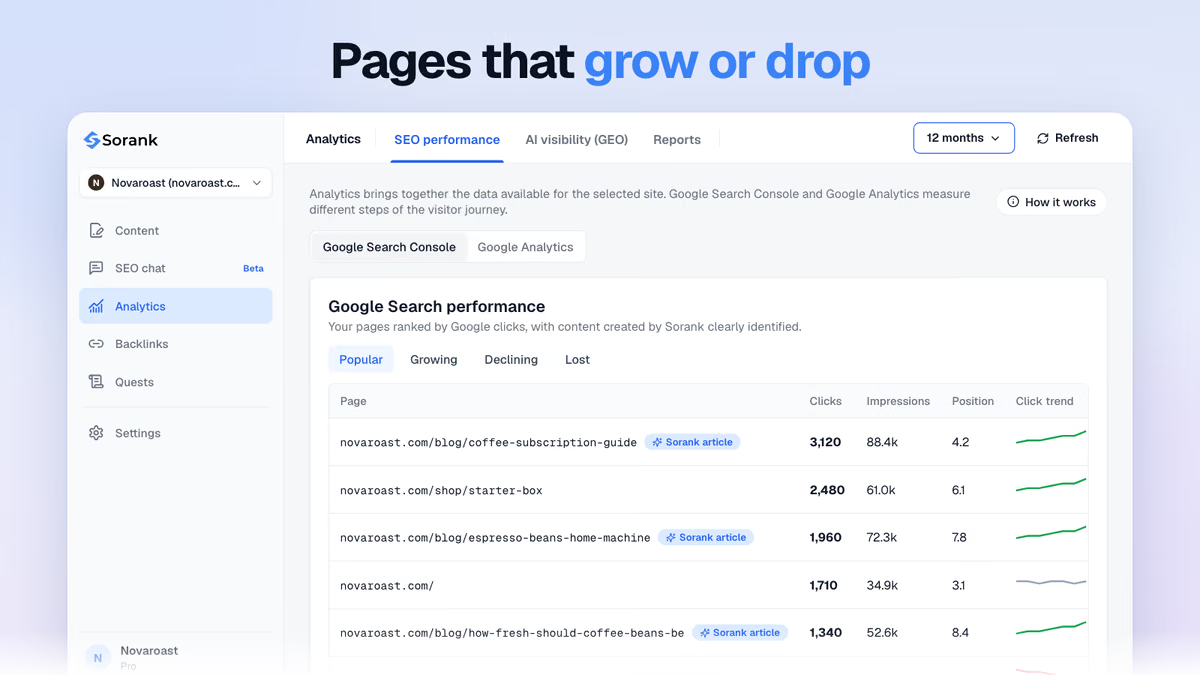
Your pages are ranked by Google clicks, with the articles written by Sorank flagged and the click trend of each one. You see whether route guides, inspection explainers or training cost pages draw the visits, and which ones are slipping.
It all sits in the GEO / SEO dashboard, next to the visits sent by AI assistants.

WordPress, Webflow, Wix, Shopify or a custom site through a webhook. Sorank reads your Search Console data to see which airports, aircraft types and services already bring impressions.

Home airports, the aircraft you fly or maintain, your certificates and approvals (Part 135, Part 145, Part 141, EASA Part-145) and the services each base offers. Sorank turns them into the questions clients ask, service line by service line.

Articles go live on the days you choose, or wait as drafts for operations or quality to check. Each one ends on the right action: a charter quote, a maintenance slot request or a discovery flight booking.
THEY TRIED SORANK BEFORE YOU
 “I tested Sorank on a real client site and it's insane. It does everything an agency would bill you $1500 a month for. It's going into production on that client now.”

 Guillaume Guersanguersanguillaume.com
 “I just let the Sorank software do its thing, and now my DR is 25 and my page is ranking higher.”
 Lucas Flandrefoundertrace.fr“Great service, works well for our website and helps us understand how to improve it to rank better on Google and elsewhere. Congrats, keep going, I recommend it.”
 Hugo T.E-commerce merchant“For 2 years, 100% of my clients came from LinkedIn. Posting daily, commenting, DM follow-ups… totally dependent on the algorithm. I knew I needed to work on SEO but always postponed it: too long, too technical, not my job. With Sorank, I finally took the step. In 4 months, I generate 15 organic leads per month without posting anything. It’s not 50/50 with LinkedIn yet, but I sleep better knowing I now have a second lead source growing on autopilot.”
 Valentin ThomyColdMailing Agency
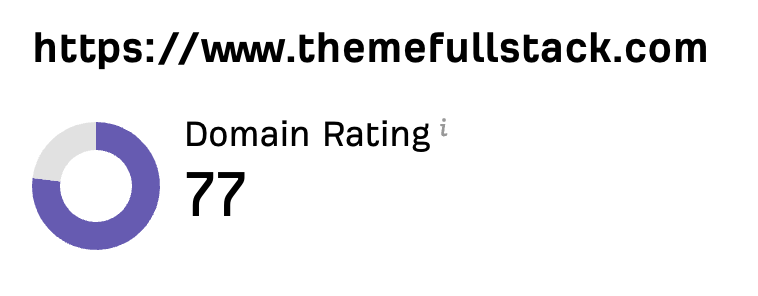 “I’m a developer, not a marketer. My Shopify theme was selling only through word-of-mouth and ads. With Sorank I finally understood how to structure my SEO and write articles to rank. The audit showed my product page was too slow. In 2 months, my organic traffic doubled and I’m starting to appear in ChatGPT answers when people search for Shopify themes. All of that with about 2 hours per week.”
 Thème FullStackgo.themefullstack.com“Great solution to manage SEO without headaches. Audits are fast, the interface is clear, and you quickly see which actions to implement. It has become an essential tool to track and improve the SEO of my sites. I highly recommend it.”
 XavEntrepreneur“I used Sorank for a client who needed SEO and it clearly made my life easier. I can quickly audit a site, track my projects, and keep a clear overview without multiplying tools. The onboarding is fast and the interface is great.”
 Céline MaurinFreelance CM
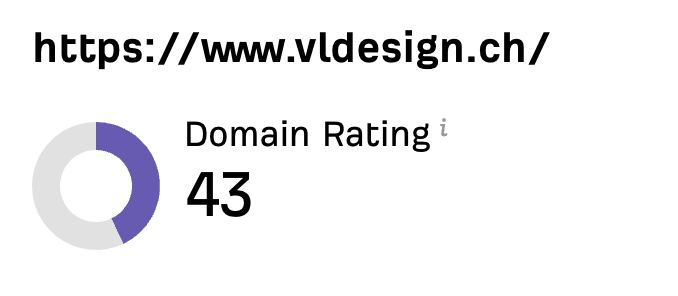 “Blown away by Sorank’s performance. After testing many solutions on the market, I was amazed by how quickly our articles started ranking in the SERP. The results are concrete and much faster than anything we’ve experienced so far. It has been an excellent surprise for our team. We are confidently renewing our trust and highly recommend Sorank to agencies that demand fast and measurable results.”
 Patrick PerretFreelance Webdesign SEO“We’re a development agency and we use Sorank to run on-page audits on our clients’ Shopify stores. It helps us quickly identify optimization opportunities, structure fixes, and collaborate more easily with clients on the SEO side. Very useful to complement our technical support 🔥”

 Younes Yahyaluvaika.com“We are an Ads agency and we wanted to get our SEO back on track once and for all. Sorank gave us a clear view of our site, helped us prioritize optimizations, and properly structure our content. The tool is easy to use, well designed for a team, and very practical for centralizing tracking without having to juggle multiple platforms. A very solid foundation to start fresh with our SEO.”
 Gaspard MadouiAds Agency“I specialized in GEO thanks to Sorank. The GEO Leaderboard allows me to show my clients their position vs competitors on ChatGPT. It’s a real commercial differentiator.”
 MélanieSEO Freelance“I manage our dealership’s website and it had dozens of issues: slow pages, 404 errors, missing tags. We were losing rankings every month without understanding why. The Sorank audit detected everything in 5 minutes. I sent the report to our web provider with the priority fixes. We regained our rankings and traffic picked back up. Perfect for someone non-technical like me!”
 Xavier BreullMarketing Manager“I’m a CMO for a SaaS and I manage acquisition in a very competitive market. We were investing heavily in our product but not working on our SEO. No visibility on our real competitors, no tracking of our presence in AI. Sorank showed us our positioning vs competitors, which keywords to target, and GEO opportunities we had completely ignored!”
 Louis RAPPCMO SaaS
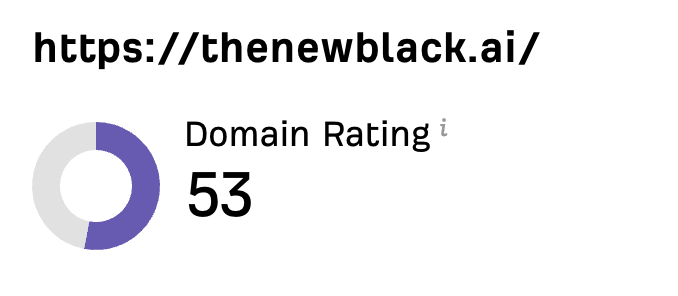 “Very good version 2, I recommend it.”

 Antoine Verhillethenewblack.ai“I was skeptical at first, but this is the best SEO tool I’ve ever used. The interface is clear, audits are fast, and the recommendations are easy to implement. I’ve saved hours and hours managing SEO and tracking performance. I recommend it to all my entrepreneur friends who run an agency or work independently.”
 NoahEntrepreneur

Founder’s Note.
I ran my own SEO agency for years. I built Sorank to deliver the same results to every business, at scale.
Everything I know about Google rankings and Generative Engine Optimization (GEO) is coded into this software, and it runs on autopilot for you.
Try for Free
Aviation SEO is the work that makes an aviation service company visible when a client looks for a flight, a repair, a fuel stop or a training course: in the local results of Google, in the regular results and in the answers of AI assistants. For a charter operator, an MRO shop, an FBO or a flight school, it rests on three things: a page per service and per base, clear proof of your certificates, and articles that answer what clients ask before they call.
The fleet these companies serve keeps growing. Manufacturers delivered 854 business jets in 2025, 11.8% more than in 2024, and 1782 piston airplanes, according to the General Aviation Manufacturers Association. Each of those aircraft will need hangar space, inspections and trained pilots for decades.
Four groups, four vocabularies. Charter clients and their assistants search city pairs and dates: "private jet New York to Aspen", "empty legs this weekend", "can my dog fly on a private jet". Aircraft owners and flight departments search by type and task: "Phenom 300 hot section inspection", "ADS-B upgrade for a Bonanza", "AOG mobile repair team". Crews and dispatchers search an airport: "FBO with customs at [airport]", "jet fuel price [airport code]", "overnight hangar for a Challenger". Future pilots and their parents search money and time: "how long to get a commercial pilot license", "flight school with housing", "Part 61 vs Part 141".
Most companies serve two or three of these groups. Give each group its own pages, written in its own words rather than in the shorthand of the hangar.
They ask who flies the aircraft. The National Business Aviation Association advises charter customers in the United States to ask for "a copy of its air carrier certificate, or at least its air carrier number", and to suspect illegal charter when the operator refuses (NBAA, 2019). Brokers carry a duty of their own: under the Department of Transportation rule 14 CFR 295.23, their advertising, web pages included, must state that they are air charter brokers, not the direct air carrier in operational control of the aircraft, and that a properly licensed carrier will operate the flight.
Turn these checks into content. An operator page that names its certificate and the aircraft it operates, and an article that explains how to verify a charter, answer the question a careful client asks ChatGPT first: "how do I know a private jet charter is legal?"
Everything an owner needs to plan downtime, as long as it matches your ratings. Say which types and tasks you are approved for, and by which authority. In the European Union, each national aviation authority approves the Part-145 maintenance organisations on its territory, while EASA is the competent authority for organisations outside the EU and publishes the list of foreign approvals, as its Part-145 FAQ explains. A repair station in the United States that works on European-registered aircraft should say so, with its approval reference, on the pages owners read.
Then publish the explainers owners search before booking: what a phase or annual inspection covers on each type you support, how long the aircraft stays in, what an avionics upgrade involves. Leave prices out unless you stand behind them, date every article and let your quality manager approve it.
Start from the regulation, then give your own numbers. In the United States, a private pilot applicant must log at least 40 hours of flight time, including 20 hours with an instructor and 10 hours of solo flight, under the FAA rule 14 CFR 61.109. That is a legal minimum, not a quote: the bill depends on the hours each student flies, the aircraft rate, instructor time and the checkride. A cost page that separates these items, and states the average your students fly if you track it, answers better than one headline price.
Students also compare schools on forums and in videos. In our Reddit AI citation study, Grok cites Reddit in 4.11% of answers and Gemini in 2.5%, while Claude does not cite it at all. Clear pages on your own site give every assistant something accurate to quote, and our guide to YouTube marketing covers the video side.
Our guides to question keywords and to local landing pages show how to build these pages without thin copies for every airport.
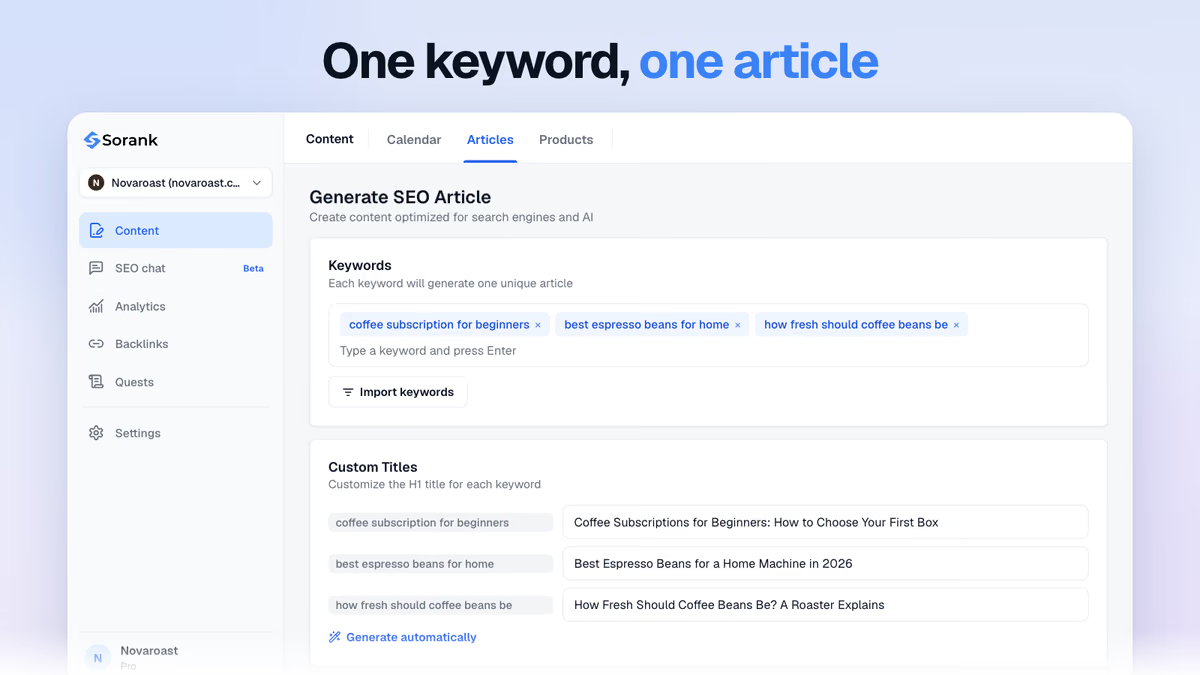
Sorank handles keyword research by service line and base, the writing and publication of the articles with their internal links, backlinks from other Sorank client sites, the monthly tracking of AI answers and your Search Console data in one place.
Your team keeps what only an operator can vouch for: certificates and operations specifications, the aircraft list, the quote engine and the empty-leg feed, live fuel prices, the Google Business Profile of each base, reviews, and the final read of every technical article. Several bases? Our guide to multi-location SEO applies. Companies on the airline and manufacturing side search differently: see our pages for airlines and for aerospace suppliers.
Sorank costs $49 a month per website on the yearly Essential plan, or $99 month to month, for 20 articles a month and 10 tracked AI prompts. A company with charter, maintenance and training under one domain fills a calendar quickly: Pro publishes 60 articles a month for $129 billed yearly and adds Grok to the tracking, and Business publishes 120 for $249. You start with a 3-day free trial, and the 90-day results-or-refund guarantee is detailed on the pricing page.
Count in months, not weeks. A corrected Business Profile for an FBO or a school can show in the local results fairly soon; articles need several months to collect impressions, then clicks. A charter client may book within days of reading a trip guide, while a future pilot can read your cost page in spring and enroll in the autumn. Judge each service line after three months on its Search Console impressions and clicks, then on quote requests and discovery flights booked.
Articles need several months; a corrected Google Business Profile for an FBO or a flight school can show sooner. Judge each service line on its Search Console impressions and clicks after three months, then on quotes and bookings.
$49 a month per website billed yearly, or $99 month to month, for 20 articles a month, with a 3-day free trial. Pro ($129 a month billed yearly) and Business ($249) publish 60 and 120 articles for companies running several service lines.
No. The Business Profile of each base, your listings in airport and FBO directories and your reviews stay with your team. Sorank publishes the articles that answer client questions, links them to your service pages and tracks what AI assistants say about you.
Sorank cannot decide what ChatGPT says. It asks your tracked questions every month, such as "best charter operator in [city]", shows who is named and which sources are quoted, and publishes precise pages on your aircraft, certificates and routes for the assistants to draw on.
Start where you already win business: the routes you fly most, the aircraft types you maintain, or your training programs with your town. Then add the trust questions clients ask before paying, such as how to verify a charter operator or what a private pilot license costs.
Yes. Sorank publishes to WordPress, Webflow, Wix and Shopify, and to any other site through a webhook, without touching your quote engine, scheduling system or empty-leg feed. Each article can wait as a draft until operations or quality has checked it.
We don't. Sorank isn't trying to be another Semrush or Ahrefs. Those tools are built for data, Sorank is built to do the work. Instead of more dashboards to check, it turns SEO and GEO insights into actions: articles written and published, backlinks earned, technical fixes and AI visibility tracking. Less complexity, more results.
From $49/month per website on a yearly plan, with a 3-day free trial and a 90-day money-back guarantee (conditions apply). Every plan includes articles, AI visibility tracking and access to natural backlink acquisition; higher plans add more articles, more AI prompts tracked and more backlinks. No setup fees, no paying for seats you don't use.
You shouldn't need a full marketing team or expensive tools to grow. Sorank handles your entire SEO and AI visibility, so you save time and money.