Preferences
Privacy is important to us, so you have the option of disabling certain types of storage that may not be necessary for the basic functioning of the website. Blocking categories may impact your experience on the website. More information

Privacy is important to us, so you have the option of disabling certain types of storage that may not be necessary for the basic functioning of the website. Blocking categories may impact your experience on the website. More information

Rich snippets use schema markup to display ratings, prices, and structured data on the SERPs. Learn how to implement schema and win rich results.







Tools


Founder of Sorank, 7+ years of experience in SEO, GEO enthusiast.
Summary
Rich snippets are enhanced search results that display structured data (ratings, prices, images, dates) extracted from schema markup, making listings more visually appealing and clickable on Google SERPs.
Want to go further? Ask
Rich snippets turn bland search results into rich, interactive, visually appealing listings. Instead of just a title, URL, and description, rich snippets display star ratings, product prices, recipe cook times, event dates, and more. This extra information appears directly on the SERP, giving users context before they click. Rich snippets increase click-through rate (CTR) by 20-40% because visual elements draw attention and provide instant value.
Rich snippets are powered by schema.org structured data, a standardized format for marking up content so search engines understand it. When you add schema markup to your HTML, you tell Google what your content is (a product, a recipe, an article, an event) and provide specific details (price, rating, ingredients). Google then renders that data as a rich snippet on the SERP.
A regular search result consists of a title, URL, and meta description. A rich snippet includes all of that plus additional data fields: star ratings, prices, images, dates, recipe details, availability status, and more. This extra information is extracted from the schema markup you embed in your page's HTML.
The CTR difference is dramatic. A product listing with a price, an image, and a 4.5-star rating gets significantly more clicks than the same product without visual elements. Users trust rich snippets more because they see proof of quality (ratings), price transparency, and a professional presentation. Rich snippets also make your listing stand out on the SERP, which naturally captures visual attention.
Google's structured data documentation lists every supported rich result type. Not every content type supports rich snippets. You cannot create a rich snippet for a generic blog post (unless it has structured ratings or reviews). But you can create rich snippets for products, recipes, events, FAQs, articles with author and publication date, local businesses, courses, and breadcrumb navigation.
Product rich snippets display the product name, image, star rating (aggregate rating), review count, price, and availability. These appear for ecommerce listings. To enable product rich snippets, add the Product or Offer schema to your product pages. Include aggregateRating if you have customer reviews.
Recipe rich snippets display the recipe name, image, cook time, prep time, yield, star rating, and calorie count. These are common in the food and cooking niche. Use Recipe schema with recipeIngredient and recipeInstructions properties. The image and cook time are particularly important for rich snippet inclusion.
Event rich snippets display the event name, date, location, and ticket availability. Concert listings, conference pages, and event calendars use Event schema. Include the startDate, location, and eventStatus properties.
Article rich snippets display the title, publication date, author, image, and sometimes the byline. News sites and publishers benefit most from article schema. Use NewsArticle or Article schema depending on your content type.
FAQ rich snippets display frequently asked questions in an expandable accordion format on the SERP. Users can click questions to reveal answers without leaving Google. Use FAQPage schema with multiple Question and Answer properties. This is highly effective for boosting CTR because users see your Q&A format directly on the SERP.
Breadcrumb rich snippets display your site's navigation hierarchy on the SERP. They help users understand where a page sits in your site structure and create a cleaner SERP appearance. Use BreadcrumbList schema.
Schema markup is written in JSON-LD format, an embedded JavaScript code block that provides structured data about your content. JSON-LD is Google's preferred format because it is easy to implement, does not interfere with page rendering, and is cleanly separated from HTML content.
To implement schema, identify your content type and then add the corresponding schema block to your page. For a product page, you would add Product schema with properties like name, description, image, aggregateRating, and offers. Here's the basic pattern: wrap your schema in `
Sources

No. Valid schema markup is necessary but not sufficient for rich snippets. Google must also determine that your content is high quality, trustworthy, and relevant. Invalid or spammy schema is ignored or penalized. Implement schema correctly and make sure your content quality meets the bar. Then rich snippets can appear within 2-8 weeks.
Rich snippets appear for products (price, ratings), recipes (ingredients, cook times, ratings), events (dates, venues), articles (publication date, author), FAQs, job postings, local businesses, courses, and breadcrumbs. Not every content type supports rich snippets.
Rich snippets improve SERP appearance and often increase click-through rate, but they do not directly improve rankings. A rich snippet can lift CTR by 20-30% because visual elements (ratings, images, prices) draw attention. A higher CTR can indirectly improve rankings over time as an engagement signal.
THEY TRIED SORANK BEFORE YOU
 “I tested Sorank on a real client site and it's insane. It does everything an agency would bill you $1500 a month for. It's going into production on that client now.”
 Guillaume Guersanguersanguillaume.com“We are an Ads agency and we wanted to get our SEO back on track once and for all. Sorank gave us a clear view of our site, helped us prioritize optimizations, and properly structure our content. The tool is easy to use, well designed for a team, and very practical for centralizing tracking without having to juggle multiple platforms. A very solid foundation to start fresh with our SEO.”
 Gaspard MadouiAds Agency
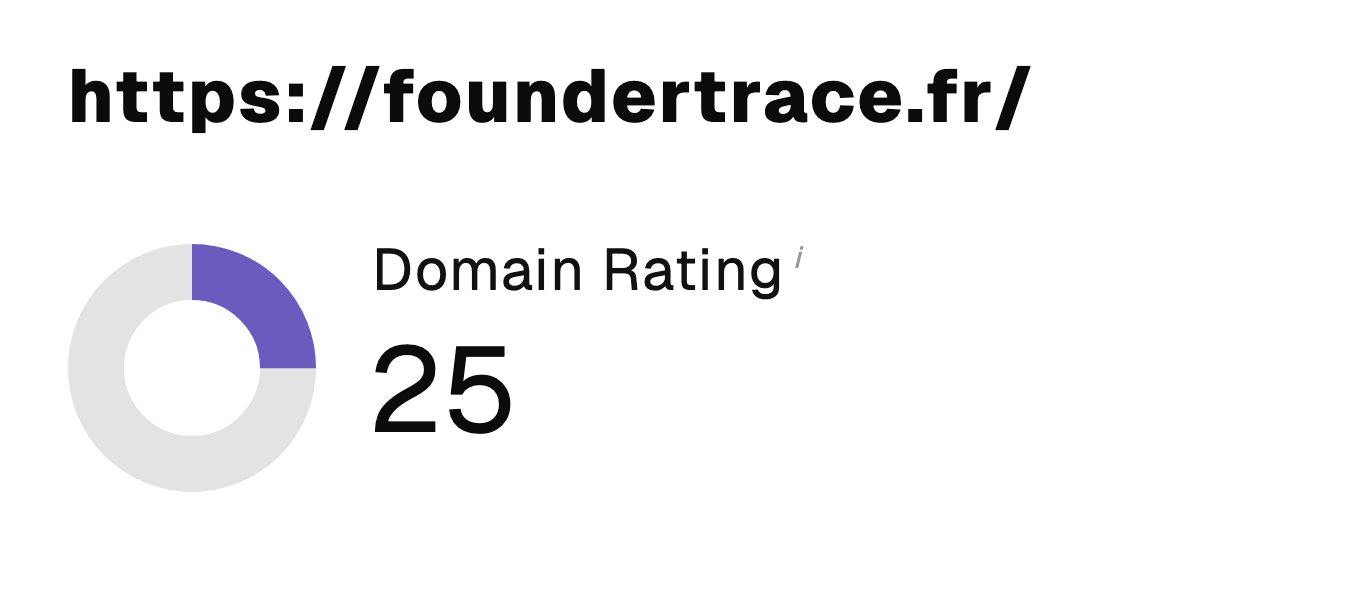 “I just let the Sorank software do its thing, and now my DR is 25 and my page is ranking higher.”
 Lucas Flandrefoundertrace.fr“I specialized in GEO thanks to Sorank. The GEO Leaderboard allows me to show my clients their position vs competitors on ChatGPT. It’s a real commercial differentiator.”
 MélanieSEO Freelance“Great service, works well for our website and helps us understand how to improve it to rank better on Google and elsewhere. Congrats, keep going, I recommend it.”
 Hugo T.E-commerce merchant