Preferences
Privacy is important to us, so you have the option of disabling certain types of storage that may not be necessary for the basic functioning of the website. Blocking categories may impact your experience on the website. More information

Privacy is important to us, so you have the option of disabling certain types of storage that may not be necessary for the basic functioning of the website. Blocking categories may impact your experience on the website. More information

Discover how to choose a vertical niche for your SEO agency, build authority in it, and use specialization to charge more and win better clients.







Tools


The SEO market has matured significantly since 2010, evolving from a generalist landscape where any agency could compete on broad keywords to a hyper-competitive environment where specialization has become essential. Vertical niche strategy, where an agency focuses exclusively on serving clients within a specific industry vertical, has emerged as one of the most powerful competitive advantages available to modern SEO agencies. This approach transforms agencies from interchangeable service providers into recognized industry experts commanding premium fees, building deeper client relationships, and achieving better results through specialized knowledge and refined methodologies.
Vertical specialization in the SEO industry means dedicating your entire agency, or a clearly defined business unit within your agency, to serving clients in one specific industry sector. Examples include agencies focused exclusively on SaaS companies, healthcare providers, legal services, e-commerce brands, real estate firms, or B2B manufacturers. The vertical can be defined narrowly (cosmetic dentists in metropolitan areas) or more broadly (all healthcare providers), depending on your market analysis and growth goals.
This specialization extends beyond simply having industry experience. Vertical agencies build deep expertise in industry-specific challenges, regulatory environments, customer journey patterns, competitive landscapes, conversion benchmarks, and content requirements. They develop proprietary methodologies refined through hundreds of campaigns within the same vertical, creating intellectual property that horizontal generalists cannot replicate quickly.
The transition from generalist to specialist agency offers compelling business advantages that compound over time. Specialized agencies command premium pricing because they deliver demonstrably superior results within their vertical. While generalist agencies might charge $3,000 to $8,000 per month for SEO services, vertical specialists routinely command $10,000 to $30,000 monthly retainers from sophisticated clients who understand the value of deep expertise.
Sales cycles compress dramatically for vertical specialists. When prospects search for specialized expertise ("SEO agency for SaaS companies" or "healthcare SEO specialist"), they self-select for your value proposition. This eliminates significant friction in the sales process, where generalist agencies must convince prospects why they should choose them over hundreds of competitors. Specialists arrive at sales conversations with credibility already established through industry knowledge demonstrated in their content, case studies, and conversations.
Service delivery becomes substantially more efficient through accumulated expertise. Vertical specialists develop frameworks, templates, content libraries, link-building relationships, and analytical models specific to their industry. What takes generalist agencies twenty hours of research and strategy can be completed by specialists in five hours through reusable assets and refined processes. This efficiency improves both profit margins and client satisfaction through faster execution.
Choosing the right vertical determines whether your specialization strategy succeeds or fails. The selection process requires systematic analysis across multiple dimensions, balancing market opportunity against competitive intensity and your agency's natural advantages. Random selection or following founder interests often produces poor results compared to data-driven vertical selection.
Market size analysis provides the foundation for vertical selection. The chosen vertical must contain enough companies to support the agency, typically 500-1,000 serviceable companies within reasonable geographic and budget parameters represent a viable market. Verticals with fewer than 200 potential clients limit growth potential, while verticals with 10,000+ companies often lack the cohesion necessary for specialization advantages to compound.
Average client value within the vertical significantly impacts agency economics. Industries where clients typically invest $5,000-$25,000 monthly in SEO support sustainable agency operations, while verticals where typical SEO budgets fall below $2,000 monthly create unsustainable economics regardless of operational efficiency. Research industry benchmarks for marketing spending percentages and SEO allocations within those budgets to evaluate vertical economics.
Achieving recognition as the leading SEO agency within your chosen vertical requires sustained, multi-channel authority building over 18-36 months. This long timeline often discourages agencies from committing fully to specialization, but those who persist build durable competitive moats that protect their position for years afterward.
Content marketing forms the foundation of vertical authority building. Publishing consistently valuable content addressing your vertical's specific SEO challenges demonstrates expertise while attracting organic traffic from your target audience. Effective vertical content goes beyond generic SEO advice to address industry-specific topics: "Schema markup for medical practices," "Local SEO for franchise businesses," or "Content strategy for B2B SaaS companies." This specialized content ranks more easily because competition is limited to other specialists rather than the entire SEO industry.
Vertical specialists develop service offerings tailored specifically to their industry's needs, going beyond standard SEO packages to address unique challenges. This differentiation creates clear value propositions that generic agencies cannot match while justifying premium pricing through specialized expertise.
Industry-specific keyword research methodologies leverage deep understanding of customer language, search behavior, and conversion patterns within the vertical. Healthcare SEO specialists understand that patients search differently than consumers in other industries, often using symptom-based queries that require specialized content strategies. SaaS specialists understand the lengthy buyer journey and need for content addressing multiple stakeholders in B2B purchase decisions.
Vertical specialization enables fundamental shifts in pricing strategy that dramatically improve agency economics. Rather than competing on price within crowded generalist markets, specialists can command premium pricing through demonstrated value and limited competition within their specific vertical.
Value-based pricing models work particularly well for vertical specialists who can document the specific business outcomes their work produces. Healthcare SEO specialists who can demonstrate average client increases of 200% in patient inquiries can price services based on the value of those inquiries (often $200-$500 per patient lifetime value) rather than time invested. This pricing approach can increase agency revenue by 200-400% compared to time-based billing while improving client satisfaction through alignment of incentives.
Vertical specialists develop operational efficiencies impossible for generalist agencies through repeated execution within familiar contexts. These efficiencies improve both profit margins and service quality, creating sustainable competitive advantages.
Standardized processes for common vertical tasks reduce execution time while improving consistency. Standard operating procedures for technical audits, content briefs, link building outreach, and client reporting can be refined through hundreds of implementations within the same industry. New team members can be trained more quickly because they only need to learn one industry's nuances rather than dozens.
Vertical specialization actually accelerates scaling potential rather than limiting it as some agency owners fear. The deep expertise and refined processes developed through specialization create scalable business models that horizontal agencies struggle to match.
Geographic expansion within the vertical offers significant growth opportunities. Healthcare SEO expertise developed serving Toronto medical practices applies equally to Vancouver, Calgary, or Montreal practices. The deep industry knowledge transfers across geographies, while local market knowledge can be developed through strategic hiring or partnerships.
Vertical specialization concentrates risk in ways that require careful management. Industry downturns, regulatory changes, or technological disruption can impact entire verticals simultaneously, threatening agency stability. Successful vertical specialists implement systematic risk management strategies to maintain stability through industry cycles.
Diversification within the vertical reduces client concentration risk while maintaining specialization advantages. Rather than serving 5 large clients in one industry, target 25-50 medium-sized clients within the same vertical. This distribution maintains the focus necessary for expertise development while protecting against individual client losses or industry-specific challenges affecting larger clients.
Vertical specialization requires continuous evolution to maintain competitive advantages as industries and SEO technologies change. Successful specialists invest in ongoing learning, technology adoption, and methodology refinement to stay ahead of both industry developments and competitive threats.
Industry trend monitoring goes beyond standard SEO industry news to encompass developments within the chosen vertical. Healthcare SEO specialists must understand changes in patient behavior, regulatory requirements, technology adoption, and competitive dynamics within healthcare. This broader industry awareness enables proactive service development and strategic guidance that generalist agencies cannot provide.
Transitioning to vertical specialization requires careful planning and execution to maintain business stability while building specialized capabilities. The transition typically takes 12-24 months for established agencies, with measurable benefits emerging in months 6-12 and full transformation completed within 18-30 months.
Phase one (months 1-6) focuses on vertical research, initial positioning, and capability development. Begin systematic learning about the chosen vertical while maintaining existing client relationships and revenue streams. Develop initial vertical-specific content, case studies, and methodologies. Start attending industry events and building relationships within the vertical community.
Vertical niche strategy represents one of the most significant opportunities for SEO agency growth and differentiation in 2025 and beyond. As the industry continues maturing and competition intensifies, agencies that maintain generalist positioning will increasingly compete on price while watching specialized competitors capture premium pricing and superior client relationships.

Narrow enough to be searchable and memorable by your target clients, broad enough to have 500 to 1,000 addressable companies in your target market. SEO for tech companies is too broad. SEO for HR tech SaaS companies is specifically appropriate. The test is whether a prospect can immediately recognize if they are your target client from your positioning statement.
Run the addressable market calculation before committing: how many companies exist in this niche, what is your realistic market share within three years, and does this support the agency size you want to build. If the math does not work, adjust the niche definition slightly or combine two adjacent niches that share the same SEO challenges.
Yes. Continue serving existing clients as they are, but direct all new business development toward your chosen niche. Within six to twelve months the mix will change naturally. Some generalist clients will not renew. Use this as an opportunity to replace them with niche-specific accounts at better rates rather than filling the gap with another generalist client.
THEY TRIED SORANK BEFORE YOU
 “I tested Sorank on a real client site and it's insane. It does everything an agency would bill you $1500 a month for. It's going into production on that client now.”
 Guillaume Guersanguersanguillaume.com“We are an Ads agency and we wanted to get our SEO back on track once and for all. Sorank gave us a clear view of our site, helped us prioritize optimizations, and properly structure our content. The tool is easy to use, well designed for a team, and very practical for centralizing tracking without having to juggle multiple platforms. A very solid foundation to start fresh with our SEO.”
 Gaspard MadouiAds Agency
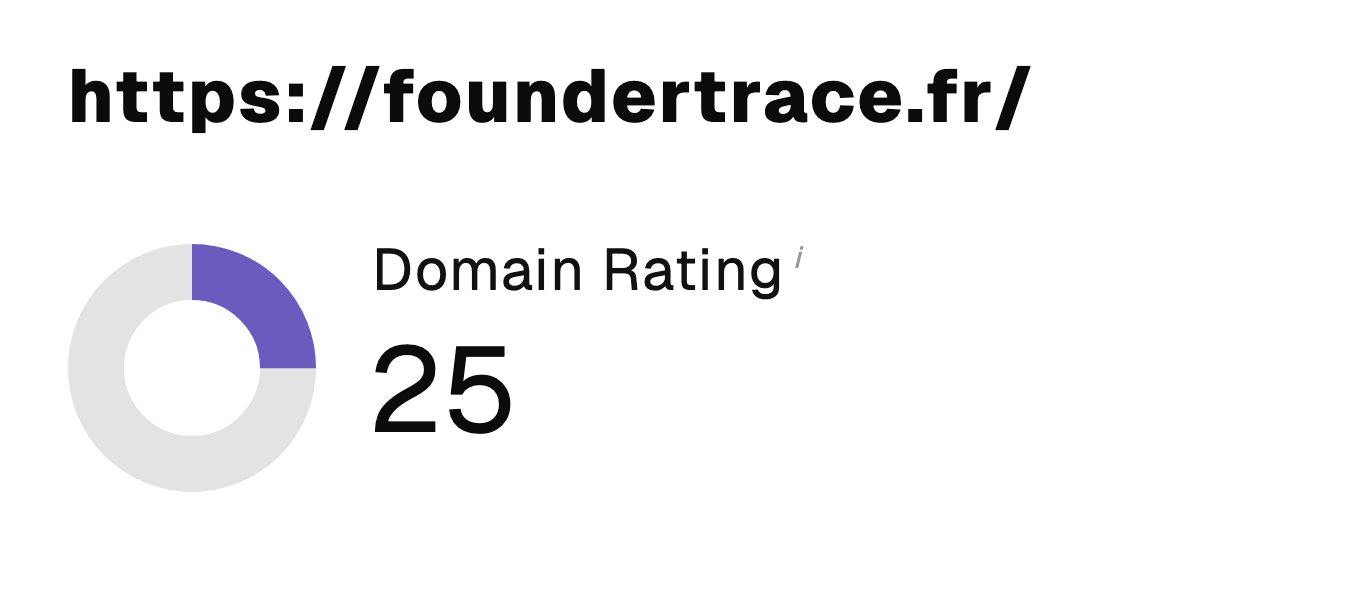 “I just let the Sorank software do its thing, and now my DR is 25 and my page is ranking higher.”
 Lucas Flandrefoundertrace.fr“I specialized in GEO thanks to Sorank. The GEO Leaderboard allows me to show my clients their position vs competitors on ChatGPT. It’s a real commercial differentiator.”
 MélanieSEO Freelance“Great service, works well for our website and helps us understand how to improve it to rank better on Google and elsewhere. Congrats, keep going, I recommend it.”
 Hugo T.E-commerce merchant