Preferences
Privacy is important to us, so you have the option of disabling certain types of storage that may not be necessary for the basic functioning of the website. Blocking categories may impact your experience on the website. More information

Privacy is important to us, so you have the option of disabling certain types of storage that may not be necessary for the basic functioning of the website. Blocking categories may impact your experience on the website. More information

AI safety is the field that prevents AI from causing harm. Learn its scope, risks, and why safer AI shapes how search tools cite content.








AI safety is the field dedicated to making sure artificial intelligence behaves reliably and does not cause harm. As AI systems power search engines, hiring tools, medical software, and the assistants people use every day, the stakes of getting their behavior right have grown. Safety work spans technical research, policy, and governance, all aimed at ensuring AI operates as intended rather than producing accidents, abuse, or loss of control.
For marketers and content creators, AI safety might sound like a purely technical concern, but it shapes the tools that now decide what users see. Efforts to make AI honest, grounded, and resistant to manipulation directly influence which sources get cited in AI answers. Understanding safety helps explain why trustworthy, well sourced content increasingly wins visibility in generative search.
AI safety is the practice of preventing harmful outcomes from AI systems, whether those outcomes come from honest mistakes, deliberate misuse, or systems behaving in unintended ways. It is interdisciplinary by nature, drawing on machine learning, cybersecurity, interpretability research, formal verification, and safety-critical engineering. The goal is AI that is dependable, transparent, and aligned with human intent.
The field treats safety as more than a feature bolted on at the end. It is a set of ongoing problems to be studied and managed across a system's whole lifecycle, from how a model is trained to how it is deployed and monitored. Because modern systems are built on complex machine learning, safety research has to grapple with behavior that is not always predictable from the code alone.
According to Wikipedia's overview, AI safety is usually organized into four areas. Alignment ensures a system behaves as intended and does not pursue harmful shortcuts. Robustness strengthens systems against failures and attacks, including adversarial inputs designed to fool them. Monitoring tracks behavior and risk in real time, calibrating confidence and detecting anomalies. Capability control manages how powerful systems are deployed and distributed.
These pillars work together. A system can be aligned in principle yet fail under unusual conditions, so robustness matters. It can be robust yet still need monitoring to catch misuse. AI alignment is the pillar most discussed in public, but safety only holds when all four are addressed, which is why the field is broader than alignment alone.
Safety researchers distinguish several kinds of risk. Accidents are unintended failures where a system does the wrong thing despite good intentions. Misuse is the deliberate use of AI for harm, such as generating disinformation or malicious code. Systemic risks arise from competitive pressures and organizational factors that push teams to cut corners. Existential risks concern the potential loss of human control over highly advanced systems.
Not all of these are equally likely or equally near. The existential category is heavily debated and speculative, while accidents and misuse are everyday realities. A balanced view treats present day harms as the priority while acknowledging that more capable future systems could raise the stakes, which is why the field studies both ends of the spectrum.
Many safety problems are immediate and familiar. Large language models can hallucinate, producing confident but false statements, which is a direct reliability problem for any AI that answers questions. Models can absorb and amplify bias from their training data. They can be manipulated through prompt injection, where crafted inputs trick a system into ignoring its instructions.
Other risks are more adversarial, like model stealing or hidden backdoors that activate only under specific conditions while evading standard checks. These concrete issues affect products in use right now, and they are why techniques like red teaming and continual oversight matter. Reducing AI hallucination in particular is central to making AI answers trustworthy.
Practitioners use several approaches to make systems safer. Reinforcement learning from human feedback, or RLHF, trains models on human judgments so their behavior better reflects what people actually want. Red teaming probes systems for vulnerabilities and unintended behavior before launch. Interpretability research tries to open the black box so humans can understand why a model decides what it does.
Governance complements the technical work. Embedding fairness, transparency, and oversight into development workflows, and keeping humans in the loop, helps catch problems that purely automated checks miss. Many safety principles, honesty, robustness, and continual oversight among them, overlap with the trust requirements now written into AI regulation.
Safety shapes the behavior of the AI tools that mediate discovery. As systems are tuned to reduce hallucination and ground their answers in real, verifiable sources, they increasingly prefer content that is accurate, transparent, and well attributed. That preference rewards exactly the kind of trustworthy material that safety conscious models are designed to favor.
This aligns the incentives of safety and generative engine optimization. Brands that publish honest, sourced, consistent content are more likely to be treated as reliable and cited by safer AI systems, which strengthens their AI search visibility. In a world where models try hard not to repeat falsehoods, credibility becomes a visibility asset.
Make accuracy and transparency the default. State facts you can verify, cite your sources, and avoid exaggerated or unsupported claims, since safety oriented models discount content they cannot trust. Keep your information consistent across pages so a model is not forced to choose between conflicting versions of your story.
Structure helps too. Clear, well organized content is easier for a system to parse and ground its answer in, which reduces the chance it misrepresents you. Pair this disciplined, trustworthy approach with focused keyword research and content planning so your credible content also targets the questions your audience asks AI tools.
AI safety is the interdisciplinary effort to keep artificial intelligence reliable and beneficial, spanning alignment, robustness, monitoring, and capability control, and addressing risks from everyday hallucinations to debated long term threats. For marketers and publishers, safety is not abstract: it shapes how AI tools choose sources, rewarding accurate, transparent, well sourced content. Building that kind of content is both responsible and strategically smart.
To go further, connect this with AI alignment and AI hallucination, and use Sorank's research and content planning tools to keep your trustworthy content aligned with demand. Reference sources: Wikipedia and WitnessAI.

AI safety is the broad field focused on preventing harm from AI through accidents, misuse, or loss of control. AI alignment is a subfield of AI safety that focuses specifically on making sure an AI system pursues the goals and values its designers intend. In short, alignment is one important part of the larger safety effort, alongside robustness, monitoring, and capability control.
Safety work directly shapes the AI tools that now mediate search. Efforts to reduce hallucination, ground answers in real sources, and prefer trustworthy content determine which pages get cited. Producing accurate, transparent, well sourced content aligns with what safety conscious AI systems reward, so understanding safety helps you stay visible and credible in AI answers.
No. While some of the field studies long term, large scale risks from advanced systems, most practical safety work addresses present day problems: hallucinations, bias, prompt injection, unreliable outputs, and misuse. These near term issues affect every AI product in use today, which is why safety matters now and not only in the future.
THEY TRIED SORANK BEFORE YOU
 “I tested Sorank on a real client site and it's insane. It does everything an agency would bill you $1500 a month for. It's going into production on that client now.”
 Guillaume Guersanguersanguillaume.com“We are an Ads agency and we wanted to get our SEO back on track once and for all. Sorank gave us a clear view of our site, helped us prioritize optimizations, and properly structure our content. The tool is easy to use, well designed for a team, and very practical for centralizing tracking without having to juggle multiple platforms. A very solid foundation to start fresh with our SEO.”
 Gaspard MadouiAds Agency
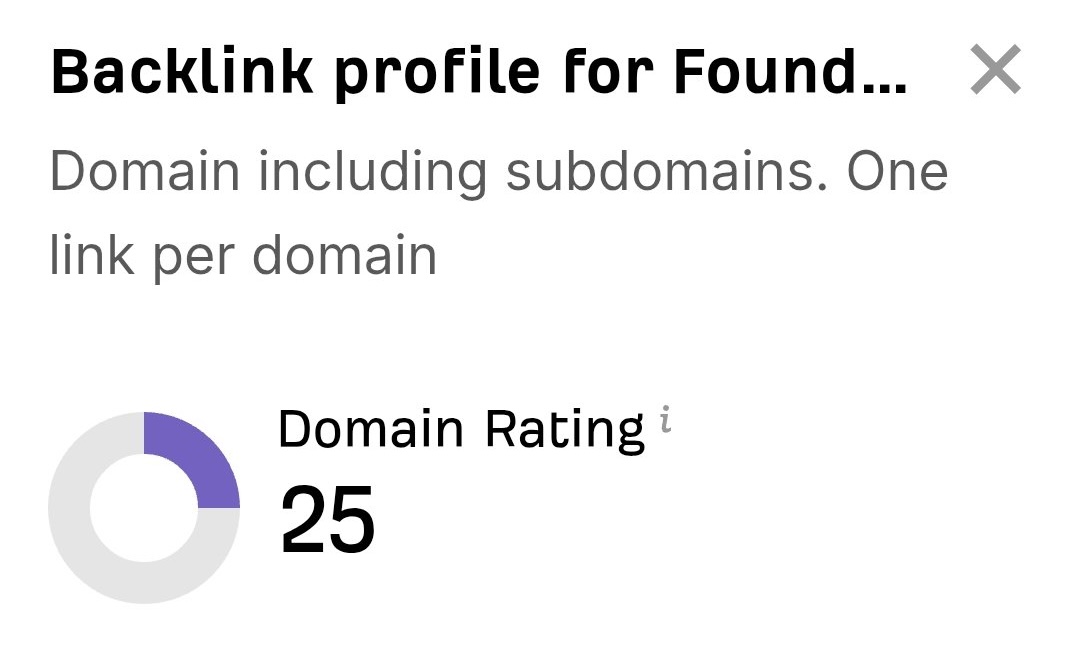 “I just let the Sorank software do its thing, and now my DR is 25 and my page is ranking higher.”
 Lucas FlandrePodcast Host“I specialized in GEO thanks to Sorank. The GEO Leaderboard allows me to show my clients their position vs competitors on ChatGPT. It’s a real commercial differentiator.”
 MélanieSEO Freelance“Great service, works well for our website and helps us understand how to improve it to rank better on Google and elsewhere. Congrats, keep going, I recommend it.”
 Hugo T.E-commerce merchant