Preferences
Privacy is important to us, so you have the option of disabling certain types of storage that may not be necessary for the basic functioning of the website. Blocking categories may impact your experience on the website. More information

Privacy is important to us, so you have the option of disabling certain types of storage that may not be necessary for the basic functioning of the website. Blocking categories may impact your experience on the website. More information

Commercial construction SEO puts your firm in front of the owners, developers and facility managers who are drawing up a list of builders, often months before a request for proposals (RFP) is issued. They research the building type first: "cold storage warehouse builder", "medical office build-out contractor", "how long does a tenant fit-out take". Sorank writes and publishes the articles that answer those searches, sector by sector, and tracks which firms ChatGPT, Claude and Gemini name for the same work.
Your estimators and project managers stay on the job. Your bonding, safety record and qualification documents stay with your office, and the site explains why you are worth inviting.
















































27,119
Articles created
11,059,325
Visits from Google
18,370
Visits from AI
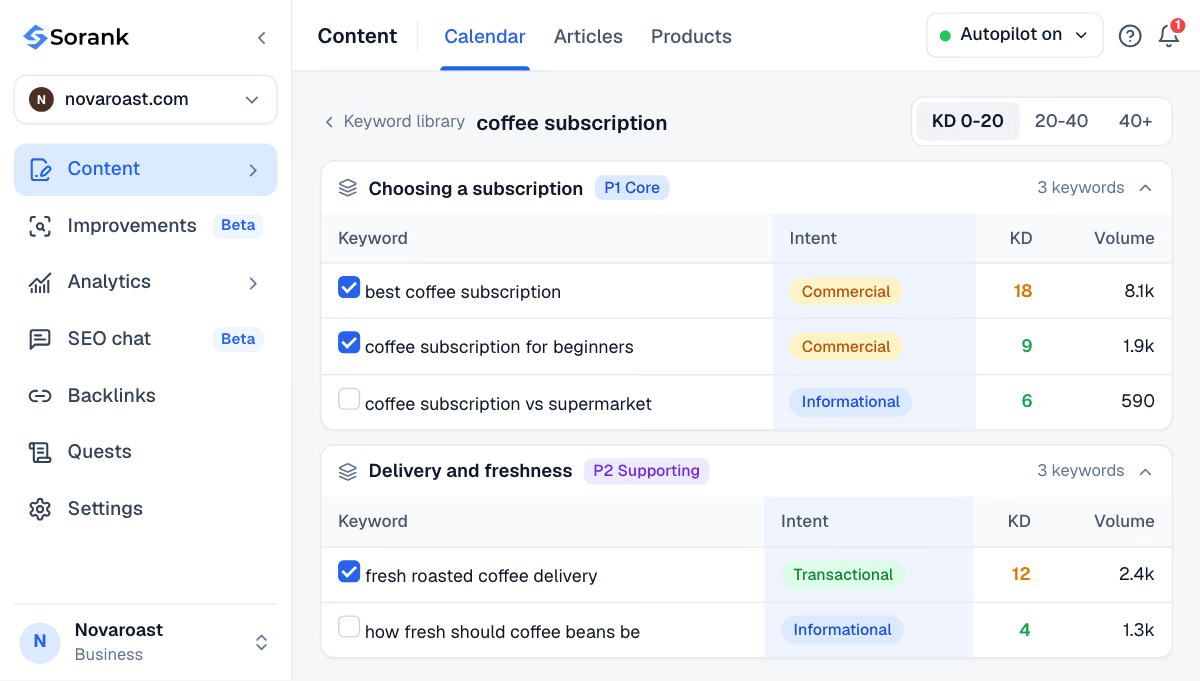
"Commercial contractor" is a crowded phrase that tells you little about the job. "Tilt-up warehouse contractor Dallas", "restaurant build-out contractor", "cleanroom construction company" come from a buyer who already knows the building. Sorank sorts these searches into one group per sector you serve, with intent, difficulty and monthly volume beside each, so a firm that does retail and light industrial never spends its articles on hospitals.
You choose the sectors; keyword research fills in the searches.
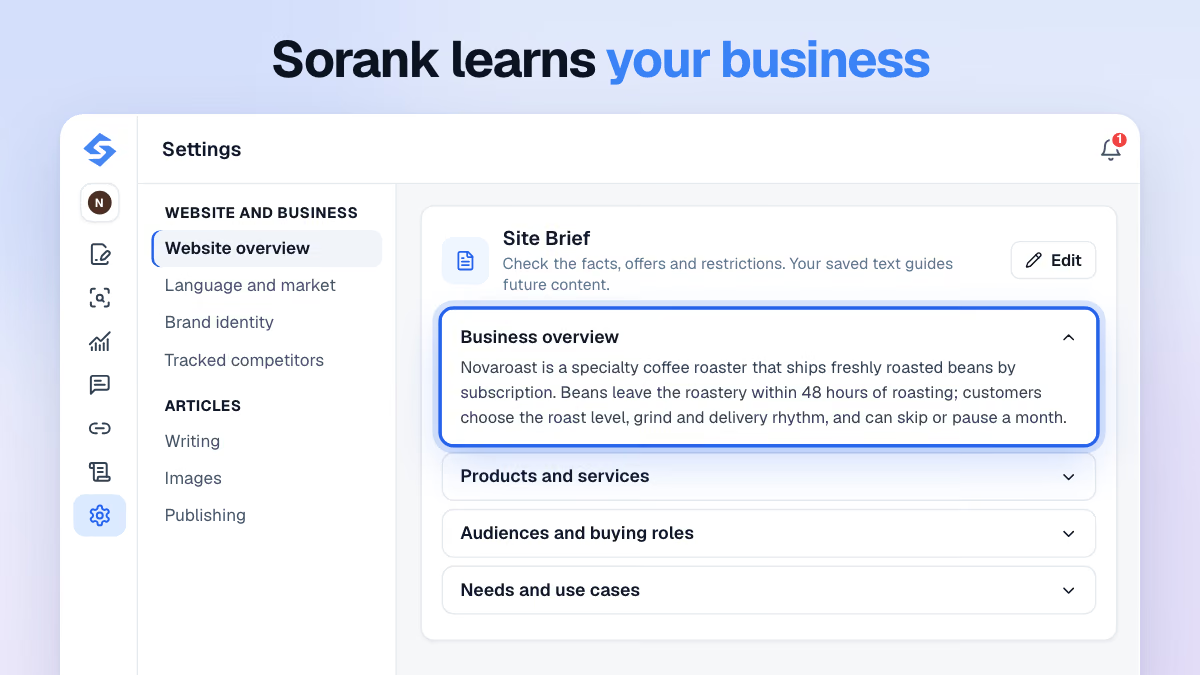
The owner asks about budget, the facility manager about keeping the building open, the architect about constructability, and the lender about schedule risk. One capabilities page cannot speak to all of them. Tell Sorank who buys from you and what you refuse to build, and every article starts from that brief: "phasing a renovation in an occupied office" for the facility manager, "what drives the cost per square foot of a distribution center" for the developer.
Set the brief and your house rules once in brand voice.
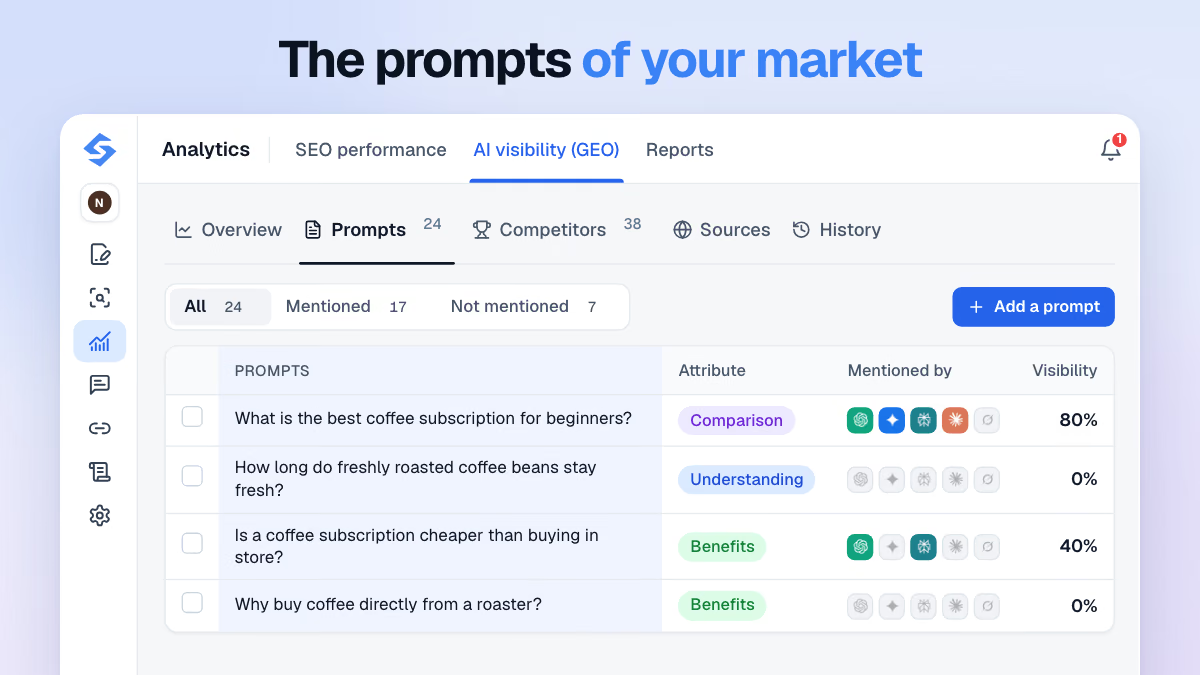
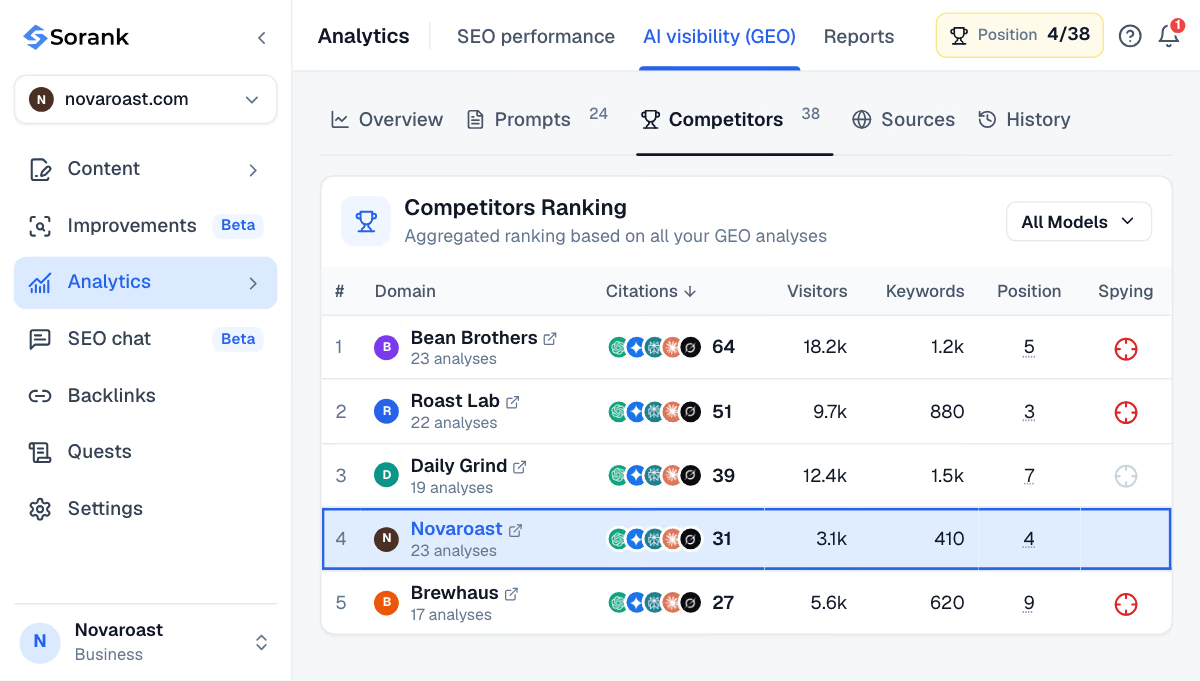
A developer asks ChatGPT "who builds cold storage facilities in the Southeast?" and receives a short list. A facility director asks Gemini "commercial contractors experienced in occupied hospital renovations". Sorank asks the questions you choose every month, marks the ones where your firm is missing, and shows the assistants that do name you.
Build that list of questions with AI prompt research, then start with the zeros.

WordPress, Webflow, Wix or any other site through a webhook. Sorank reads Search Console and Analytics to see which sectors already earn impressions and which capability pages nobody finds.
Note the building types you pursue, the states you are licensed in, the project sizes you take and the work you pass on. Sorank builds its keyword plan on those limits, and the prompts you track follow the same list.

Keep the first articles as drafts so someone who has run these jobs corrects sequence, durations and methods. Once the tone is right, Sorank publishes on the days you set and links each piece to its sector page.
THEY TRIED SORANK BEFORE YOU
 “I tested Sorank on a real client site and it's insane. It does everything an agency would bill you $1500 a month for. It's going into production on that client now.”

 Guillaume Guersanguersanguillaume.com
 “I just let the Sorank software do its thing, and now my DR is 25 and my page is ranking higher.”
 Lucas Flandrefoundertrace.fr“Great service, works well for our website and helps us understand how to improve it to rank better on Google and elsewhere. Congrats, keep going, I recommend it.”
 Hugo T.E-commerce merchant“For 2 years, 100% of my clients came from LinkedIn. Posting daily, commenting, DM follow-ups… totally dependent on the algorithm. I knew I needed to work on SEO but always postponed it: too long, too technical, not my job. With Sorank, I finally took the step. In 4 months, I generate 15 organic leads per month without posting anything. It’s not 50/50 with LinkedIn yet, but I sleep better knowing I now have a second lead source growing on autopilot.”
 Valentin ThomyColdMailing Agency
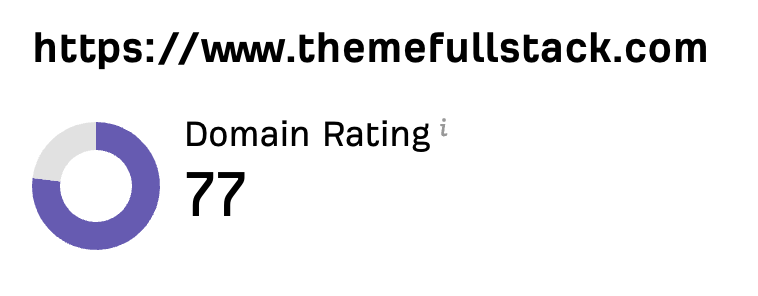 “I’m a developer, not a marketer. My Shopify theme was selling only through word-of-mouth and ads. With Sorank I finally understood how to structure my SEO and write articles to rank. The audit showed my product page was too slow. In 2 months, my organic traffic doubled and I’m starting to appear in ChatGPT answers when people search for Shopify themes. All of that with about 2 hours per week.”
 Thème FullStackgo.themefullstack.com“Great solution to manage SEO without headaches. Audits are fast, the interface is clear, and you quickly see which actions to implement. It has become an essential tool to track and improve the SEO of my sites. I highly recommend it.”
 XavEntrepreneur“I used Sorank for a client who needed SEO and it clearly made my life easier. I can quickly audit a site, track my projects, and keep a clear overview without multiplying tools. The onboarding is fast and the interface is great.”
 Céline MaurinFreelance CM
 “Blown away by Sorank’s performance. After testing many solutions on the market, I was amazed by how quickly our articles started ranking in the SERP. The results are concrete and much faster than anything we’ve experienced so far. It has been an excellent surprise for our team. We are confidently renewing our trust and highly recommend Sorank to agencies that demand fast and measurable results.”
 Patrick PerretFreelance Webdesign SEO“We’re a development agency and we use Sorank to run on-page audits on our clients’ Shopify stores. It helps us quickly identify optimization opportunities, structure fixes, and collaborate more easily with clients on the SEO side. Very useful to complement our technical support 🔥”

 Younes Yahyaluvaika.com“We are an Ads agency and we wanted to get our SEO back on track once and for all. Sorank gave us a clear view of our site, helped us prioritize optimizations, and properly structure our content. The tool is easy to use, well designed for a team, and very practical for centralizing tracking without having to juggle multiple platforms. A very solid foundation to start fresh with our SEO.”
 Gaspard MadouiAds Agency“I specialized in GEO thanks to Sorank. The GEO Leaderboard allows me to show my clients their position vs competitors on ChatGPT. It’s a real commercial differentiator.”
 MélanieSEO Freelance“I manage our dealership’s website and it had dozens of issues: slow pages, 404 errors, missing tags. We were losing rankings every month without understanding why. The Sorank audit detected everything in 5 minutes. I sent the report to our web provider with the priority fixes. We regained our rankings and traffic picked back up. Perfect for someone non-technical like me!”
 Xavier BreullMarketing Manager“I’m a CMO for a SaaS and I manage acquisition in a very competitive market. We were investing heavily in our product but not working on our SEO. No visibility on our real competitors, no tracking of our presence in AI. Sorank showed us our positioning vs competitors, which keywords to target, and GEO opportunities we had completely ignored!”
 Louis RAPPCMO SaaS
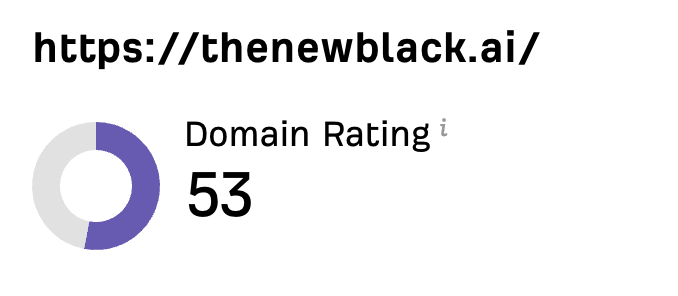 “Very good version 2, I recommend it.”

 Antoine Verhillethenewblack.ai“I was skeptical at first, but this is the best SEO tool I’ve ever used. The interface is clear, audits are fast, and the recommendations are easy to implement. I’ve saved hours and hours managing SEO and tracking performance. I recommend it to all my entrepreneur friends who run an agency or work independently.”
 NoahEntrepreneur
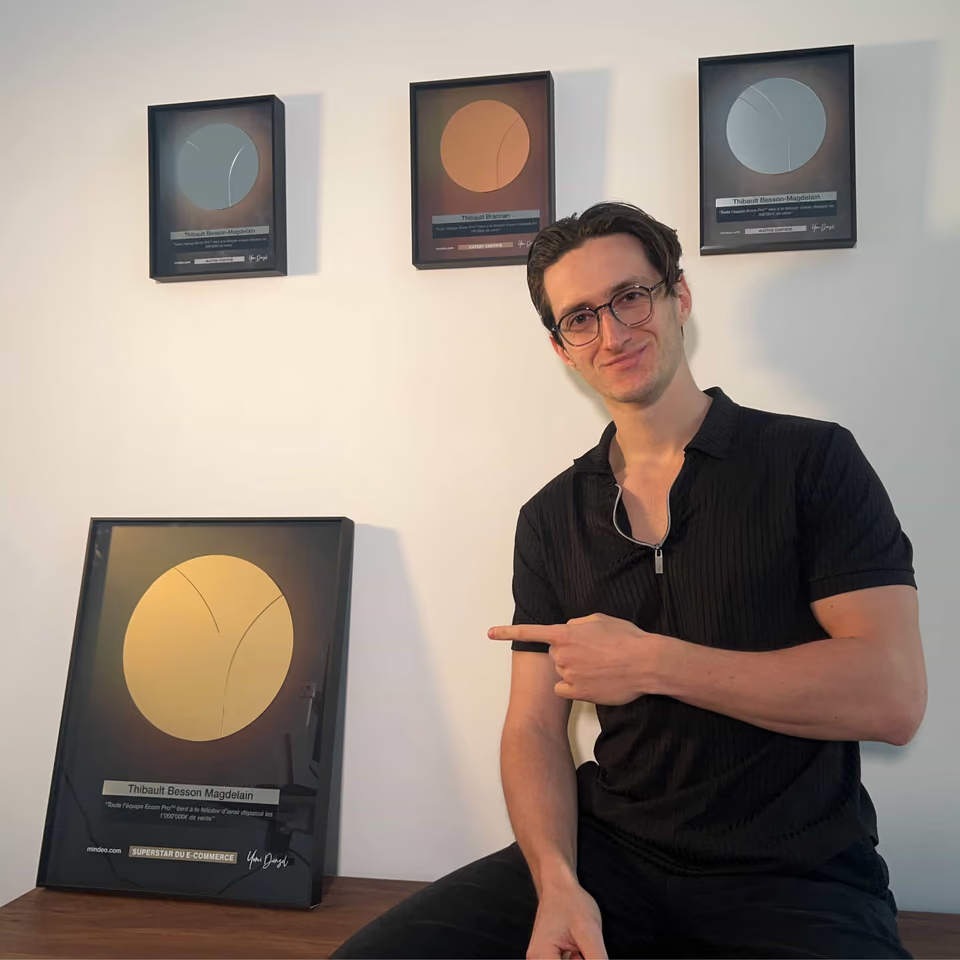
Founder’s Note.
I ran my own SEO agency for years. I built Sorank to deliver the same results to every business, at scale.
Everything I know about Google rankings and Generative Engine Optimization (GEO) is coded into this software, and it runs on autopilot for you.
Try for Free
Commercial construction SEO is the work of getting a builder of offices, warehouses, retail units, clinics and industrial buildings found by the people who commission them. The buyer is a professional, the sum is large and the decision is shared, so the goal is seldom a phone call on the same day. The goal is to be known, and judged credible, before anyone sends out invitations to bid.
That changes what the website must do. A homeowner wants a quote; an owner wants proof that you have built this type of building, at this size, in this region, without trouble. Your pages and articles carry that proof between the first search and the first meeting.
Because demand moves from sector to sector faster than a company brochure can follow. The U.S. Census Bureau release for August 2026 puts private office construction at a seasonally adjusted annual rate of $134.1 billion, up 29.8% in a year, private manufacturing at $168.2 billion, down 19.8%, and private commercial at $116.4 billion, down 5.4%. The labels matter: in the Census definitions, data centers sit under office, warehouses under commercial, and warehouses on a factory site under manufacturing.
A firm with a page for each building type it can deliver can lean toward the sector that is growing. A firm with a single "commercial services" page competes on the broadest words in its market, against everyone.
They narrow the field before they compare prices. Owners often ask for a contractor's qualification statement, and the American Institute of Architects publishes standard forms for it: A304, the request sets out the project, budget and schedule, and A305, the statement collects references, financial information, insurance, bonds, safety records, key personnel and past projects.
Read that list as a content plan. Every field is something a buyer wants to know before calling you. A site that shows similar past projects, names the people who ran them and explains how your firm handles safety and bonding makes the shortlist easier to defend inside the owner's organization. Keep the sworn figures in the form itself; the site gives the story around them.
Our guide to B2B SEO shows how to rank these groups. Other work has its own page: construction companies with a mixed book, home builders, public works contractors, demolition firms and the architects you often team with.
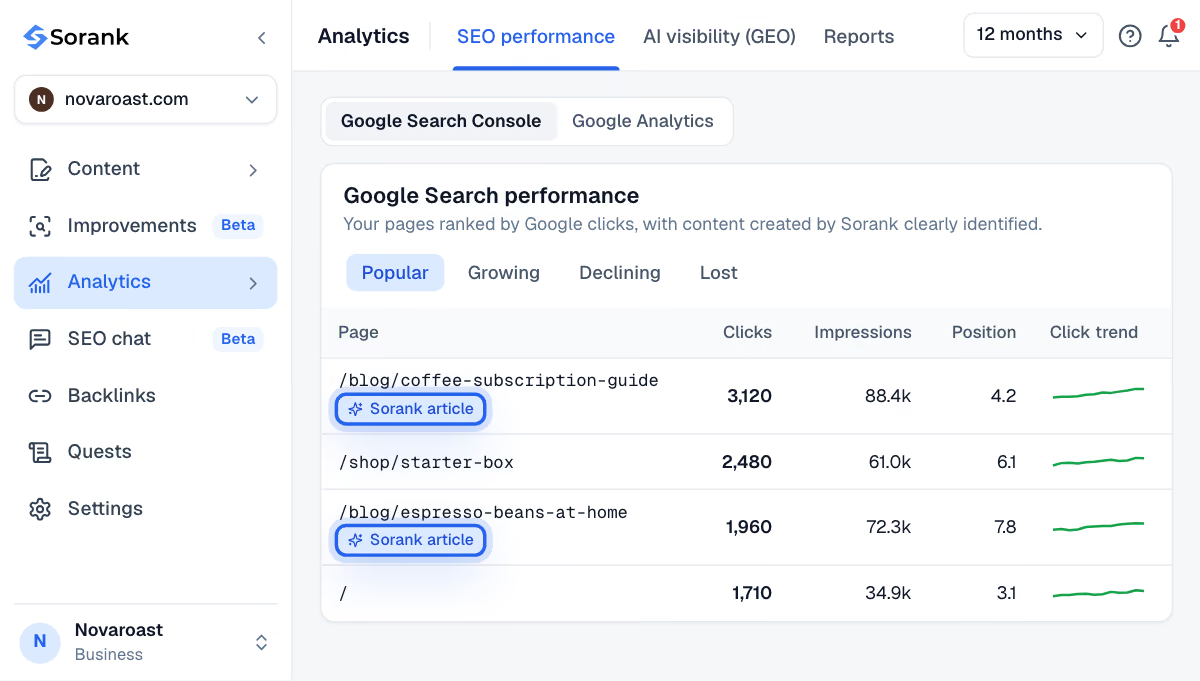
Open with the direct answer, then give the sequence of the job as it happens on site. An article on a cold storage build should reach the slab, the insulated panels, the refrigeration and the commissioning, and say what the owner must decide at each stage. Give ranges only when you can stand behind them, list what moves them, and describe the kind of project you have done, without naming a client who has not agreed.
For the bonding questions, an official source helps. The U.S. Small Business Administration explains bid, payment and performance bonds and guarantees them for eligible small firms, up to $9 million on non-federal contracts and $14 million on federal ones. Explaining this in plain words shows an owner you are ready for the paperwork. Sorank adds sources, links between pillar and supporting articles and images; your project manager adds what only a job site teaches.
They do, and they often rely on pages other than the builder's own posts. In our construction AI citation study, LinkedIn appears in only 0.4% of answers overall, far behind Wikipedia at 1.61% and Trustpilot at 1.53%. Our LinkedIn citation study draws the same lesson for business questions: posts rarely become the source an assistant names, so they should not replace publishing on your own site. Keep posting topping-out photos; put the full account of each project on your website too.
Sorank tracks each question every month in ChatGPT, Claude and Gemini, plus Grok from the Pro plan. The GEO leaderboard ranks the sites cited, so you can see what to write next.
Sorank is software, and it handles the recurring work on your website: keyword plan by sector, articles written and published on Webflow, WordPress or Wix, internal links, backlinks from other Sorank clients' sites and a dashboard for Search Console and AI visits.
Your firm keeps everything that needs a signature or a site visit: prequalification portals, bid responses, qualification statements, bonding, safety records, your Google Business Profile, client reviews, photographs and project case studies. Sorank will not contact owners or submit bids.
Plans run per website: Essential at $49 a month on annual billing ($99 without commitment) with 20 articles a month, Pro at $129 ($249) with 60, Business at $249 ($499) with 120, as shown on the pricing page. A 3-day free trial comes first, and a 90-day results-or-refund guarantee applies.
Expect a slow build. Articles tend to show impressions before clicks, and a commercial project takes far longer to come to contract than an article takes to rank. Judge a sector after a few months on impressions and sector-page visits, then on the invitations and enquiries that mention your site. Google promises no date, and neither do we.
It is the work of making a commercial builder visible for the searches of owners, developers and facility managers: sector pages, articles on budgets and schedules, and links from other sites. The aim is to be known before invitations to bid go out.
Plan on several months before sector articles earn steady impressions and clicks, and longer before they lead to a project, because commercial decisions are slow. Measure each sector separately rather than the site as a whole.
With Sorank, $49 a month per website billed yearly or $99 month to month, for 20 articles a month, after a 3-day free trial. Pro and Business raise that to 60 and 120 articles for firms covering many sectors.
No. It does not find tenders, submit bids or complete qualification statements. It builds the public record that owners check before and after those steps: sector pages, project-based articles and a visible presence on Google and in AI answers.
No, those stay with your firm, along with case-study photographs and client approvals. If you work from several offices, keep each profile up to date yourselves; Sorank works on your website articles and on measuring AI answers.
Yes, if the sources it reads mention you for that building type. Sorank asks the questions you track each month, shows whether you are named and which pages are cited, and publishes sector articles that give the assistants something precise to quote.
We don't. Sorank isn't trying to be another Semrush or Ahrefs. Those tools are built for data, Sorank is built to do the work. Instead of more dashboards to check, it turns SEO and GEO insights into actions: articles written and published, backlinks earned, technical fixes and AI visibility tracking. Less complexity, more results.
From $49/month per website on a yearly plan, with a 3-day free trial and a 90-day money-back guarantee (conditions apply). Every plan includes articles, AI visibility tracking and access to natural backlink acquisition; higher plans add more articles, more AI prompts tracked and more backlinks. No setup fees, no paying for seats you don't use.
You shouldn't need a full marketing team or expensive tools to grow. Sorank handles your entire SEO and AI visibility, so you save time and money.