Preferences
Privacy is important to us, so you have the option of disabling certain types of storage that may not be necessary for the basic functioning of the website. Blocking categories may impact your experience on the website. More information

Privacy is important to us, so you have the option of disabling certain types of storage that may not be necessary for the basic functioning of the website. Blocking categories may impact your experience on the website. More information
Discover how Ornikar used Webflow SEO PR and AI visibility to dominate search in France and learn step by step how to copy their strategy to grow your traffic.
Ornikar
Tools


Ornikar started as a simple idea in a dusty, overregulated market and turned into one of the most influential driving school brands in France, valued at more than 100 million euros. Instead of relying only on TV ads and big budgets, the company built a huge digital engine powered by SEO, a disciplined content strategy, strong PR and an increasingly visible presence in AI tools like ChatGPT, Gemini or Perplexity.
This article walks through that engine step by step. You will see how Ornikar's tech stack is built, how their traffic is generated and stabilised, how their pages are structured, how their SEO and PR are organised, how their founder uses personal branding, how their online reputation feeds AI systems, and finally how you can adapt the same logic for your own brand and for Generative Engine Optimization.
The first surprising fact is that Ornikar did not build a custom proprietary platform for their marketing site. The public part of the site runs on Webflow. All the main sales pages and the SEO pages are hosted there, which lets them ship new content fast while keeping visual consistency and good performance.
Video content is hosted on YouTube, then embedded into Webflow pages. This keeps the pages lighter, avoids slowing down the site with self-hosted video files, and helps with visibility on YouTube itself.
For tracking, Ornikar relies on Google Tag Manager, which centralises their pixels and scripts. From Tag Manager they connect to Google Analytics and other tools. The result is a site that is both visually clean and very well tracked, so every campaign and conversion can be measured.
To show social proof, they use the Trustpilot widget across key pages. New reviews appear dynamically, which means that visitors constantly see recent feedback from real students and customers without manual updates.
They also use a behaviour analysis and retargeting solution like Criteo to understand how people navigate on the site, identify drop off points and then retarget those visitors with dynamic ads.
Another interesting element is Workable. At first sight it is a recruiting platform, but its presence in their tech stack suggests that Ornikar uses private Webflow pages connected with Workable to onboard instructors, manage job applications and structure HR workflows inside the same ecosystem that powers the public site. This shows a strong desire to centralise information and communication around a single stack.
On the analytics side, the company does not stop at Google Analytics. They also use tools like Mixpanel and Hotjar. Mixpanel adds product and cohort analytics, while Hotjar gives them heatmaps and session recordings to see where users click, scroll and hesitate. Combined with the Facebook Pixel and other ad pixels, this creates a very rich tracking setup to support experimentation and optimisation.
Finally, instead of relying on the native Webflow A/B testing feature, they use AB Tasty. The principle is simple: duplicate a page, send equal shares of traffic to each variant, measure the conversion rate and keep the winner. Repeating this process many times on key pages slowly lifts the overall conversion rate. This is exactly the kind of discipline that turns traffic into revenue.
A strong stack is only useful if people actually visit the site. Ornikar attracts roughly 1.6 million visits per month and belongs to the top 700 most visited sites in France. For a brand focused on a single national market and a narrow topic like driving education and auto insurance, that is huge.
The bounce rate is around 41 percent. That is not perfect, but it is more than acceptable for a site with a large amount of information pages where users sometimes come for a quick answer and leave. What really stands out is the depth of sessions: on average, each visitor browses around ten pages before leaving. This level of engagement is rare and is largely driven by students who log in, revise the theory test and practice before the exam.
Traffic is also very stable. Month after month, Ornikar stays in a range of roughly 350,000 to 400,000 visitors, without violent peaks and drops. The only reason a chart may show a fall at the end of a period is simply that the month was not finished when the screenshot was taken. Stability at this scale is usually a sign of strong SEO foundations and high brand recognition.
Another crucial element is geography. Ornikar targets people in France who want to pass the theory test, get their driving licence or find an auto insurance. They are not playing a global game, they are hyper focused on France. Around 95 percent of their traffic comes from the French market. Very few visitors come from other French speaking countries with lower purchasing power. This protects their conversion rate and keeps their audience extremely qualified.
Channel mix is equally interesting. A very large portion of the traffic comes from direct visits, which means people either type the brand name directly or use bookmarks. These are mostly existing students returning to the platform to study or manage their account. Organic search represents close to half of their visits and is entirely driven by their SEO architecture, blog and long tail pages. Paid channels represent less than ten percent of the total traffic, despite a massive ad effort. Social media remains a minority source in absolute terms, and within that social traffic, LinkedIn and YouTube bring almost everything. Instagram barely appears on the radar.
Finally, one key insight for Generative Engine Optimization: when you look at referrers, one of the strongest sites sending visitors to Ornikar is ChatGPT, just after a major job platform like Welcome To The Jungle. In other words, AI tools are already one of their most powerful referrers.
Even though paid traffic is a smaller portion of the overall mix, Ornikar invests heavily in advertising and uses it to amplify what SEO and the brand are already doing.
The television campaigns tell a clear story of evolution. Around 2018, the first TV spot focused on the boring atmosphere of traditional driving schools: long queues, paper forms, dull classrooms. The ad contrasted this with the simplicity of their online platform. Three arguments dominated the message at that time: a low price, online simplicity and a success rate above 90 percent.
About three years later, the visual tone shifted. Instead of attacking the old world and showing pain, Ornikar chose to highlight positive emotions: smiling students, friendly instructors and a modern learning experience. The computer on a desk was replaced by the smartphone in the hand, which reflects the shift in usage. Once again the three main arguments changed order. Now the first message is about support and guidance, then about price, then about success rates.
A short, more humorous TV spot focused entirely on a flash offer and on price. And in 2024, the latest TV campaign reused the winning ingredients: modern cars, a student and an instructor in a positive relationship, mobile learning at home, and four principal arguments in the final frames: app first, strong support, speed and price.
The same arguments reappear in digital ads. On Meta, more than 620 creatives are active or archived. The team heavily uses calendar events such as Easter, Black Friday and end of year to launch aggressive promotions. User generated content plays a big role, with short testimonial style videos that look like Reels or Shorts. Some TV spots are also recycled into paid social, which keeps the branding consistent across channels. AI generated visuals start to appear in some creatives.
On Google Ads, the volume is even higher with more than 2,000 campaigns. Many ads are geolocated and target specific cities or regions, often combined with price arguments like partial refunds or instalment payment options. Some campaigns are focused on the core offer, such as driving schools nearby or passing the driving test, while others sell related products such as car rental or auto insurance on subdomains. Sometimes rich snippets with star ratings appear, sometimes ads are more generic.
On YouTube, more than 400 ads have been launched. Ornikar relies partly on a French agency specialised in short form video, and again reuses TV material. A notable angle on YouTube is that several campaigns are directed to parents, not only to students. The message is crafted for people who will actually pay for the licence.
What matters here is not the exact number of ads. What matters is the discipline: constant experimentation across formats and platforms, and a very clear repetition of the same core messages.
When you arrive on Ornikar’s homepage, you immediately notice how calm and simple the design is. There are no distracting animations, no visual noise, just a clear structure that repeats on most key pages.
The hero section contains everything that matters above the fold: a clear title that includes the main keyword for driving school, visible Trustpilot ratings, a breakdown of the core offers and a main call to action.
Below that, the page explains the mission and the advantages of the offer. Logos from well known media show authority and social proof. A visual explains the service in a very concrete way, often with a sticky image that changes as you scroll. Then comes a section focused on the main objection: price. This is where the CPF financing argument appears, which is so effective that it is reused on almost all important pages.
Trustpilot reviews appear again, this time in more detail. A section is dedicated to parents as decision makers, with specific messaging and contact options. A short gif or video shows how easy it is to get in touch. Frequently asked questions close the sale, while helping SEO at the same time, since FAQ blocks often get picked up by search engines. Finally, the page links to blog articles to keep the user in the ecosystem.
The footer is a masterpiece of SEO thinking. It contains social links, but more importantly, it lists links to the most strategic blog articles and competitive topics. This passes internal authority from the homepage to SEO pages that fight in very competitive SERPs, and strengthens the entire semantic structure of the site.
On other key pages, the structure is similar. For example, after Black Friday, Ornikar added a simple discount banner above the hero section on the main pages, with the same architecture below. Service pages for the theory test, for the driving course or for insurance reuse almost the same building blocks, with adjustments for the target audience.
The driving licence page, for instance, includes an interactive map that shows if there are instructors and driving points near the visitor. Some pages include a dedicated lead magnet for parents, such as a guide on how to support your child during the process. The visual elements change, but the skeleton remains identical: short strong sections, repeated arguments, clear calls to action.
This is important. Ornikar does not rely on super complex layouts to impress visitors. They rely on repetition of what works and on clarity. That is exactly what makes those pages efficient and easy to maintain at scale.
The real engine behind Ornikar’s traffic is their SEO architecture. The company has created several thousand pages. They rank on more than 100,000 keywords and dominate a very large share of positions in the top three results.
The blog is carefully siloed. There is a main blog page with featured articles, clear categories and a large paginated list of posts. Each category has its own URL structure. A typical path may look like blog slash driving licence slash procedures, with multiple sub sub topics under that. This deep categorisation avoids cannibalisation, keeps topics extremely focused and makes it easier to maintain the content base over time. When a new idea appears, it is obvious where it should live in the structure.
From a UX point of view, every blog category page includes a breadcrumb, a clear H1, an immediate call to action under the title that directs the user back toward the core offer, visible tags and simple visuals. The only real weakness is related to Webflow pagination, which sometimes generates duplicate or confusing URLs with parameters that are not ideal for Google. A smarter internal search could replace pagination in the future.
Individual blog posts follow a consistent template. They begin with a breadcrumb, a concise and descriptive title and a prominent call to action. The author is clearly identified, with a real name like Curtis Bassil and ideally a link to their LinkedIn profile or to an author page. The content itself is long form, responsive, easy to read, with headings, bold text and a lot of internal links. In the sidebar there is an additional call to action that stays visible while scrolling. At the end of the article, related posts are suggested.
Inside the article, call to actions are contextual and personalised. For example, a long guide about the theory test will contain a block explaining how to get the code on the first attempt for less than the cost of a monthly subscription, followed by a direct link to start. That way the article is not just informative, it is built to convert readers into students.
The company also uses high intent lead magnets. One of the best examples is their free series of mock theory tests. Queries like free theory test, mock exam or practice exam have huge search volumes. Ornikar captures that demand with a dedicated landing page that is extremely well optimised for mobile. Everything is centered, the form is simple, and the value is clear.
That page, again, repeats the same pattern. The offer is stated very clearly. The benefits of the learning platform are broken down into a few key ideas such as distraction free experience, always up to date content, personalised follow up and flexible online learning. Then comes a comparison with alternatives, a detailed explanation of the offers and finally the big blocks of trust: Trustpilot scores, testimonials, FAQs and blog links.
The result of this architecture is visible in numbers: more than 4,500 pages indexed, more than 100,000 keywords tracked, and a massive share of those in top positions.
Ornikar’s SEO strength is not only built on their own site. It is amplified by a very strong public relations strategy.
On their press review page, they list the main outlets where the company has been featured. The page itself is clean, with a breadcrumb, a category label, short descriptions and direct links that open the articles. From here you can jump to TV segments, podcasts, print articles or sponsored YouTube videos.
Early in the journey, the company probably had to invest money into paid press placements, sponsored articles and collaborations to break into mainstream media. Over time, as the brand grew and the valuation increased, journalists started to come by themselves. Today, their success story and the disruption of traditional driving schools attract press organically.
They have been featured on business TV channels, on marketing sites, in startup newspapers, in B2C media and in niche blogs. They appeared in podcasts focused on entrepreneurship, in shows about digital transformation and in formats for younger audiences such as Brut. They also sponsored content from big French YouTubers who talk about money, careers or lifestyle, sometimes in partnership with creative agencies.
Offline, Ornikar invested in large physical campaigns, for example in metro stations. They also built many partnerships with auto insurance companies and with large comparison sites that already dominate Google. These sites send both referral traffic and extremely powerful backlinks.
Some articles in important newspapers explicitly state that Ornikar inspired or was copied by new digital driving schools. Being framed as the pioneer and the one others copy is extremely valuable in terms of positioning. It also sends strong signals to AI systems that read those articles and try to understand who the leaders are in a category.
All of this PR work generates hundreds of high quality backlinks with branded anchors. From an SEO perspective, this consolidates the authority of the domain. From a GEO perspective, it feeds AI tools with references, quotes and stories that will later be summarised inside answers.
Behind Ornikar, there is a founder whose personal brand reinforces the company brand. Benjamin Gaignault studied at KEDGE Business School and worked for companies like SFR before launching Ornikar around 2013, in his mid twenties. The vision was clear: modernise and digitise the driving school market in France.
The journey was not smooth. Ornikar had to deal with strong resistance from traditional players, unions, regulators and competitors. Dozens of legal procedures are documented online. Instead of breaking the project, these obstacles turned into part of the narrative.
Over the years, Benjamin appeared in many podcasts and shows where he told the story: on large French entrepreneurial podcasts, on business talk shows, on BFM Business, in media related to BPI France and in independent formats such as Feuille Blanche Media. Some content is repurposed into shorts on YouTube, which multiplies impressions.
More recently, he also launched a new project, Scarlett, which targets seniors and their purchasing power, far from the original young driver audience. This positions him as a serial entrepreneur rather than the founder of a single company.
On LinkedIn, his presence is strong and consistent. On X, it is much weaker, with low engagement, but major media accounts still mention him and Ornikar. Once again, AI tools read all of this and map his name with his companies, his successes and the category he operates in.
A huge valuation and big traffic numbers do not automatically mean happy customers. In Ornikar’s case, the reputation is actually very strong.
On Trustpilot alone, they have more than 20,000 reviews with an average score around 4.3. That is exceptional because most satisfied customers never leave a review, especially when the service is considered normal. To reach such volume and rating, the company must push very hard for feedback and offer a solid experience.
However, when a company serves so many clients, there will always be a significant absolute number of negative reviews. Even if the percentage of unhappy customers is small, the raw number of one star comments can look big from the outside.
When Google summarises those reviews, it often concludes that opinions about Ornikar are mixed. It highlights positive points such as attractive prices and flexible online learning, but also emphasises problems like support delays or frustrations around exam dates.
AI systems read the same data. When ChatGPT or other tools are asked whether Ornikar is a good option, they will often mention both the strong points and the criticisms. The overall numeric rating is very good, but the existence of visible negative content influences how neutral or enthusiastic the AI tone will be.
This means that for GEO, it is not enough to have a good average rating. The distribution of reviews and the way they are summarised by search engines matters a lot. Ornikar’s team seems aware of this and replies to a very large number of reviews, which is also a positive signal.
Technically, Ornikar’s site performs well, even if it does not perfectly pass every Core Web Vitals metric. The pages load fast, the layout is stable enough and the mobile experience is very polished, especially on high intent pages like the free mock exams.
In terms of content, they went all in. They systematically covered every relevant keyword around the theory test, the driving licence, procedures, points recovery and auto insurance. Instead of relying on a few pillar pages, they built a complete content universe with thousands of detailed articles and landing pages.
On the authority side, they accumulated backlinks from large media, from comparison sites, from partners and from blogs. Some of their direct competitors are strong, such as En Voiture Simone, Le Permis Libre or codedelaroute subdomains, and even the official government site. Still, Ornikar maintains a clear lead in many commercial queries.
The most interesting part for the future is their presence in AI generated answers. By sending dozens of real world prompts to multiple AI tools, and then tracking which brands are mentioned in the answers, you can measure this presence.
For prompts like where to pass the theory test quickly, how to choose a reliable driving school, how to find an affordable solution, how to succeed first time or how to compare options, Ornikar appears extremely often. Across more than twenty five prompts, they arrive first in terms of total mentions, with a share of around forty percent.
In this analysis, some models like Gemini, Perplexity, Claude or Grok consistently recommend Ornikar, while ChatGPT is slightly less generous in some scenarios. The tools use search queries such as advantages of online driving schools, cost and flexibility related phrases, and many variations around affordable driving courses.
Each of those AI queries is an opportunity. A brand can create specific SEO pages and PR content around those topics in order to strengthen its chances of being selected as a source by AI tools.
Ornikar's results did not come from a single magic trick. They are the consequence of many aligned actions over several years. If you want to adapt their playbook to your own market and to future proof your brand for AI search, the path is clear.
First, you need to understand how AI tools build answers. They read millions of pages, identify brands that appear repeatedly with strong signals such as press coverage, positive reviews and structured content, then generate summaries. If your brand is absent from press, absent from long form guides and absent from comparison pages, it will rarely appear in recommendations.
Second, you must choose the right keywords. Ornikar did not just optimise for their brand name. They mapped every question a future student could ask: steps to get a licence, time needed, cost, funding options, practice tests, local driving schools, insurance details and more. On top of that, they identified the queries that AI tools actually use before answering.
Third, they combined three pillars: SEO, PR and reputation management. Strong on site content with internal linking, constant PR in large and niche media, and active management of reviews on platforms like Trustpilot and specialised review sites.
Fourth, they created and maintained a serious presence on social platforms that matter to their audience: especially YouTube and LinkedIn. Those platforms give visibility to the founder and to the brand, feed search engines with rich media content and build trust with both students and parents.
Fifth, they secured a large volume of quality backlinks. Some came from natural mentions, others from partnerships or PR outreach, but the result is the same. When search engines compare domains in this category, Ornikar appears as a reference.
Sixth, they industrialised content production. The blog is not a collection of random posts. It is a structured library organised in silos with clear URL patterns and consistent templates. Each article has a purpose, an internal place in the architecture and a call to action that connects it to the business.
Seventh, they did not forget analytics. With tools like Google Analytics, Mixpanel, Hotjar and Tag Manager, they can see what works, test variants with AB Tasty and continuously improve conversions.
Eighth, they turned adversity into narrative. The legal battles and resistance from traditional actors became part of the brand story. They positioned themselves as the player who forced the market to move, and media repeated that story.
Ninth, they already benefit from GEO even if they probably did not call it that at the beginning. Today, AI tools like ChatGPT, Gemini or Perplexity send them visitors, because the data those models consume is full of Ornikar.
The formula behind Generative Engine Optimization can be seen as classic SEO combined with PR and review management, while keeping an eye on the competition. You need a technically solid site, a deep and well structured content library, strong authority signals from other sites, a good reputation and founders or leaders who appear in the right conversations.
If you want to know where you stand today in AI results, you can use a dedicated GEO tool. In my own work I use Sorank.com, a software that sends structured prompts to multiple AI tools, detects which brands are mentioned in the answers, and shows which keywords triggered those mentions.
With this type of analysis, you can see how often your competitors appear in ChatGPT, Gemini, Claude, Perplexity and others, exactly like we saw for Ornikar. You can discover the phrases AI tools use in their hidden searches, then turn those phrases into new SEO and PR opportunities.
If you want to go further, you can:
Ornikar shows that in a regulated, boring and crowded market, it is still possible to build a 100M euro company with a smart mix of SEO, content, PR and now AI visibility. The same logic can be applied to your own brand, if you are ready to treat your website, your press coverage and your AI presence as a single, coherent growth engine.

Ornikar built one of the most advanced SEO architectures in the French education sector, with more than 4,500 indexed pages and a deep silo structure covering every possible query related to driving licences, procedures and auto insurance. By mapping thousands of long tail questions, the brand captured demand at every stage of the customer journey. Their category pages, internal linking, consistent blog templates and structured URL hierarchy created an extremely strong semantic foundation. Search engines view this depth as expertise, which boosts rankings across 100,000+ keywords. Combined with Trustpilot reviews and media backlinks, this SEO foundation helped Ornikar dominate the market.
AI tools rely on patterns from the web, PR coverage, structured content and repeated signals of authority. Ornikar benefits from thousands of media mentions, strong domain authority, a huge content library and thousands of public reviews. Because their brand appears in articles, guides, comparisons, press features and user feedback, AI models detect them as a reliable and frequently referenced source. Their clean site architecture, Webflow performance, internal linking and customer reviews help reinforce credibility. As a result, queries like “best online driving school” or “how to pass the theory test” often trigger Ornikar as a recommended option across multiple AI assistants.
Ornikar uses PR not as a branding accessory but as a core SEO and GEO strategy. Press articles from major French outlets send powerful backlinks that strengthen domain authority. Podcasts, TV segments, startup media and YouTube collaborations reinforce their reputation and add unique brand signals that AI systems pick up. This PR footprint is then connected to their SEO architecture through internal linking and well structured pages. As journalists repeatedly position Ornikar as the pioneer or the disruptor of traditional driving schools, both search engines and AI models interpret the brand as a leader. The combination of PR, authority backlinks and consistent storytelling drives long term visibility.
THEY TRIED SORANK BEFORE YOU
 “I tested Sorank on a real client site and it's insane. It does everything an agency would bill you $1500 a month for. It's going into production on that client now.”
 Guillaume Guersanguersanguillaume.com“We are an Ads agency and we wanted to get our SEO back on track once and for all. Sorank gave us a clear view of our site, helped us prioritize optimizations, and properly structure our content. The tool is easy to use, well designed for a team, and very practical for centralizing tracking without having to juggle multiple platforms. A very solid foundation to start fresh with our SEO.”
 Gaspard MadouiAds Agency
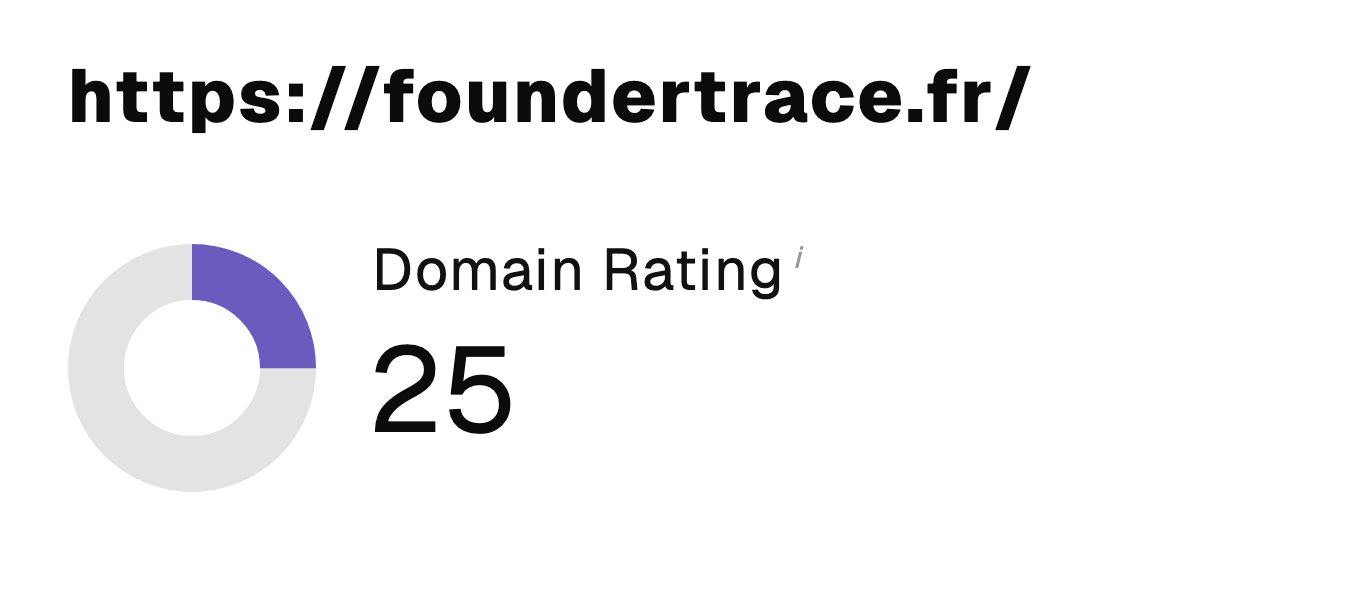 “I just let the Sorank software do its thing, and now my DR is 25 and my page is ranking higher.”
 Lucas Flandrefoundertrace.fr“I specialized in GEO thanks to Sorank. The GEO Leaderboard allows me to show my clients their position vs competitors on ChatGPT. It’s a real commercial differentiator.”
 MélanieSEO Freelance“Great service, works well for our website and helps us understand how to improve it to rank better on Google and elsewhere. Congrats, keep going, I recommend it.”
 Hugo T.E-commerce merchant