Preferences
Privacy is important to us, so you have the option of disabling certain types of storage that may not be necessary for the basic functioning of the website. Blocking categories may impact your experience on the website. More information

Privacy is important to us, so you have the option of disabling certain types of storage that may not be necessary for the basic functioning of the website. Blocking categories may impact your experience on the website. More information

A 301 redirect is a permanent HTTP redirect that sends users and search engines to a new URL while preserving rankings, links, and authority.







Tools


Summary
A 301 redirect is a permanent HTTP status code that forwards both users and search engines from an old URL to a new one. It passes ranking signals and link equity to the destination, making it the safe way to change URLs or migrate a site.
Want to go further? Ask
When you move a page, change a URL structure, or migrate a site, every old address breaks unless you point it somewhere new. A 301 Redirect (HTTP 301 Moved Permanently) is the instruction that does this. The server responds to a request for the old URL with a 301 status code and the address of the replacement page, so browsers, crawlers, and AI systems all land on the right destination instead of an error.
The reason 301 redirects matter for search is simple: they are permanent, and search engines treat them as such. Google indexes the redirect target as the canonical page and transfers nearly all of the original page's ranking power to it. Done correctly, a migration that uses 301 redirects keeps your traffic, your backlinks, and your authority intact. Done badly, it can wipe out years of work.
A 301 redirect operates at the HTTP level. When a browser or crawler requests a URL, the server can reply with a status code. A 200 OK means the page exists and here is its content. A 404 Not Found means nothing is there. A 301 Moved Permanently means the resource has a new home, and the response includes a Location header pointing to the new URL. The client then requests that new URL automatically. The MDN reference for the 301 status code documents this behavior in full.
From a user's perspective, the redirect is invisible: they click a link or type an old address and arrive at the new page. From a search engine's perspective, the 301 is a strong, durable signal. Google's redirect documentation explains that permanent redirects cause Google to index the target as canonical and display it in search results, while the old URL fades out of the index over time.
The most common mistake is confusing a 301 with a 302. A 301 is permanent. A 302 Found (and the similar 307 Temporary Redirect) signals that the move is temporary and the original URL will return. Google keeps the original URL in its index for a 302 and does not treat the target as canonical.
The rule of thumb is straightforward: if the change is permanent, use a 301. Use a 302 only when you genuinely intend to bring the old URL back, such as during a short A/B test or a brief promotional page swap. Sending a 302 for a permanent move can leave the wrong URL indexed and split ranking signals between two addresses. There is also a 308 Moved Permanently, which behaves like a 301 but preserves the original request method, useful for some technical scenarios.
For years, the worry was that redirects leaked authority. Older guidance suggested a small loss of PageRank through any redirect. That concern is largely outdated. Google has stated that 301 redirects pass close to all ranking signals to the destination, so you generally retain the value the original URL earned through its backlink profile.
This is why 301 redirects are central to site migrations, domain changes, and HTTPS moves. Google's site move guidance recommends 301s as the backbone of any URL change. When you consolidate two pages, a 301 from the weaker URL to the stronger one combines their signals. The relationship between a 301 and a canonical tag is worth understanding: a 301 physically moves users and is the strongest canonicalization signal, while a canonical tag is a softer hint used when both URLs must stay live. For a true move, the 301 wins.
Reach for a 301 whenever a URL changes for good. Common cases include: migrating from HTTP to HTTPS, switching domains after a rebrand, removing the www prefix (or adding it), restructuring URL paths, merging duplicate or thin pages into one stronger page, and retiring outdated content by pointing it to the closest relevant replacement.
The guiding principle is relevance. Redirect each old URL to the page that best matches what the user originally wanted. Redirecting every retired page to your homepage is a known anti-pattern: Google often treats irrelevant homepage redirects as soft 404s, and users get a confusing experience. A one-to-one map from old URL to closest equivalent preserves both rankings and trust.
Server-side redirects are the gold standard. Google ranks server-side 301s as the most reliable method because they are processed before any page renders. On Apache you configure them in an .htaccess file or virtual host; on NGINX you use a return 301 rule; in PHP or other backends you set the status code and Location header in code. Content management systems and platforms usually expose a redirect manager that writes these rules for you.
Other methods exist but are weaker. A meta refresh set to zero seconds is read by Google as a permanent signal, while a delayed meta refresh is treated as temporary. JavaScript redirects using location work only after the page renders, so Google advises using them only when no server-side option is available. Whenever you can, configure the redirect at the server.
A redirect chain happens when URL A redirects to B, which redirects to C. Each hop adds latency, wastes a portion of your crawl budget, and increases the risk that a crawler stops before reaching the final page. The fix is to flatten chains so every old URL points directly to the final destination in a single hop.
Redirect loops are worse. If A redirects to B and B redirects back to A, the browser gives up and shows an error, and the page becomes inaccessible to everyone. Audit your redirect rules regularly to catch chains and loops, especially after multiple migrations have stacked rules on top of each other.
A 301 redirect is a safety net, not a permanent substitute for clean links. Even when redirects work perfectly, you should update your internal linking so menus, in-content links, and buttons point straight to the new URL. This removes the extra hop, speeds up the user experience, and keeps your link graph tidy.
The same applies to your XML sitemap. After a migration, the sitemap should list only the final, live URLs (the 200-status destinations), never the old redirected addresses. Submitting redirected URLs in a sitemap sends mixed signals and slows down how quickly Google processes the move.
Redirects matter beyond classic Google rankings. AI assistants like ChatGPT, Perplexity, and Gemini crawl and cite web pages, and they need to resolve the canonical version of your content just as Google does. A clean 301 ensures that when an AI system follows an old link, it reaches your current page and attributes the citation to the correct, live URL.
Broken or chained redirects can cause AI crawlers to miss content entirely, which means lost citations. As part of a healthy technical SEO foundation, well-maintained 301s keep both search engines and the AIs pointed at the pages you want them to read and reference. A regular GEO SEO audit surfaces redirect chains, loops, and broken targets before they cost you visibility.
Verify every redirect after you deploy it. Use a crawler or an HTTP header checker to confirm each old URL returns a single 301 and lands on the intended page. Google Search Console's Page Indexing report reflects indexing changes and flags redirect issues, so watch it during and after a migration.
Keep 301 redirects in place for the long term. Google recommends leaving them active for at least a year so that all signals transfer and external links continue to resolve. Backlinks pointing at old URLs can persist for years, so a permanent redirect is exactly that: permanent.
A 301 redirect is the permanent, SEO-safe way to move a URL. It forwards users and search engines to a new address, passes nearly all ranking signals, and protects the authority your original page earned. Use 301s (not 302s) for permanent changes, implement them server-side, redirect each page to its closest equivalent, flatten chains, update internal links and sitemaps, and keep the rules live for the long haul. Handled this way, even a full site migration can preserve your traffic and your rankings. See how Sorank audits redirects and protects your visibility across search and the AIs.
Sources

Modern guidance from Google is that a 301 redirect passes close to all ranking signals to the destination URL, so you generally keep the authority the original page earned through backlinks. The old fear of losing roughly 15% of PageRank through a redirect is outdated. The bigger risks are redirecting to an irrelevant page (which can be treated as a soft 404) or building long redirect chains. Point each old URL to its closest equivalent and use a single hop to retain the full value.
A 301 redirect is permanent and a 302 redirect is temporary. With a 301, Google treats the destination as the canonical URL, transfers ranking signals, and eventually drops the old URL from its index. With a 302, Google keeps the original URL indexed because it expects the page to return. Use a 301 for permanent moves like domain changes or URL restructuring, and reserve a 302 for genuinely temporary situations such as a short test or a seasonal page swap.
Keep a 301 redirect live for the long term, ideally permanently. Google recommends leaving redirects active for at least a year so all ranking signals fully transfer to the new URL. Because external backlinks and bookmarks pointing to old URLs can survive for years, removing a redirect too early would break those links and create 404 errors. There is little cost to keeping a 301 in place, so treat it as a lasting part of your site configuration rather than a temporary fix.
THEY TRIED SORANK BEFORE YOU
 “I tested Sorank on a real client site and it's insane. It does everything an agency would bill you $1500 a month for. It's going into production on that client now.”
 Guillaume Guersanguersanguillaume.com“We are an Ads agency and we wanted to get our SEO back on track once and for all. Sorank gave us a clear view of our site, helped us prioritize optimizations, and properly structure our content. The tool is easy to use, well designed for a team, and very practical for centralizing tracking without having to juggle multiple platforms. A very solid foundation to start fresh with our SEO.”
 Gaspard MadouiAds Agency
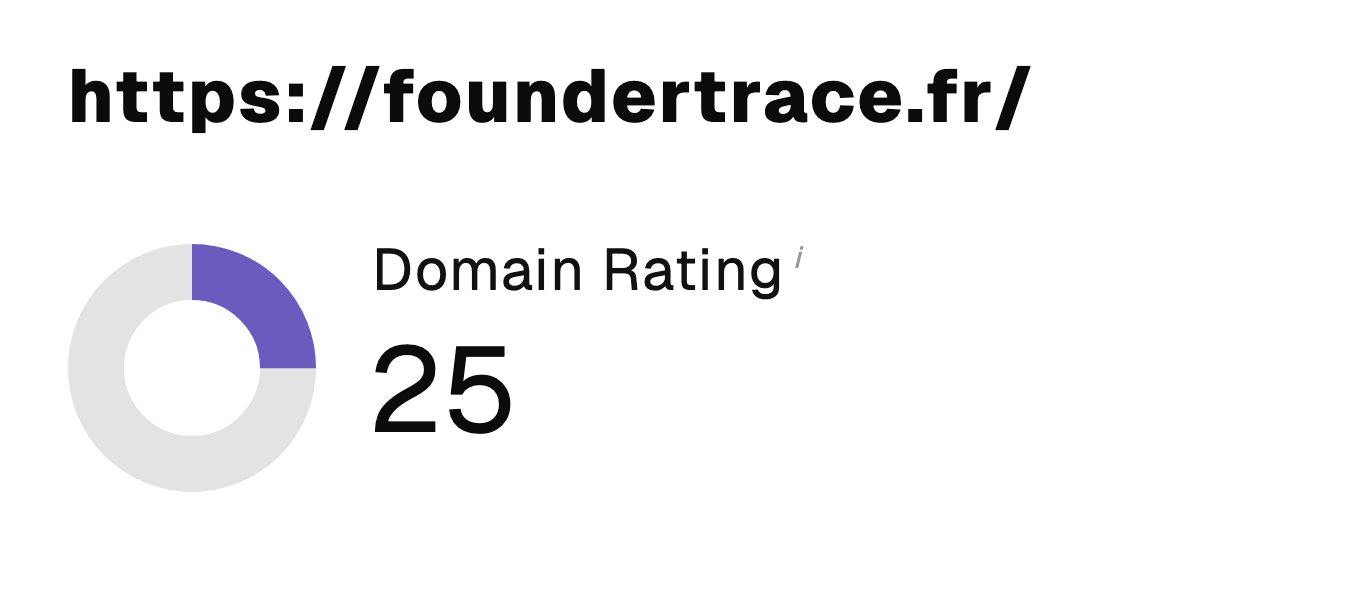 “I just let the Sorank software do its thing, and now my DR is 25 and my page is ranking higher.”
 Lucas Flandrefoundertrace.fr“I specialized in GEO thanks to Sorank. The GEO Leaderboard allows me to show my clients their position vs competitors on ChatGPT. It’s a real commercial differentiator.”
 MélanieSEO Freelance“Great service, works well for our website and helps us understand how to improve it to rank better on Google and elsewhere. Congrats, keep going, I recommend it.”
 Hugo T.E-commerce merchant