Preferences
Privacy is important to us, so you have the option of disabling certain types of storage that may not be necessary for the basic functioning of the website. Blocking categories may impact your experience on the website. More information

Privacy is important to us, so you have the option of disabling certain types of storage that may not be necessary for the basic functioning of the website. Blocking categories may impact your experience on the website. More information

Optimize your IONOS MyWebsite for Google and AI search. Configure metadata, JSON-LD, internal links, and GEO signals so ChatGPT, Perplexity, Claude, and Gemini cite your pages with confidence.











































IONOS MyWebsite gives small businesses a reliable, European-hosted web presence. With the right GEO setup, it becomes a credible source for AI-generated answers. Start with a geo seo audit to see where you stand today, then track every gain in a geo seo dashboard. This guide walks you through the specific configuration steps so that Google and assistants like ChatGPT, Perplexity, Claude, and Gemini trust and cite your IONOS MyWebsite pages.
Generative Engine Optimization is the practice of becoming one of the sources that AI assistants cite when answering user questions. IONOS MyWebsite is a hosted website builder with a focus on German-speaking and European markets, strong uptime guarantees, and included SSL. Its SEO toolkit covers per-page metadata, a built-in blog, and basic performance features. The built-in European server proximity means fast load times for European visitors, which is a positive signal for Core Web Vitals and indirectly for AI assistants that factor page quality into source selection.
Start by querying ChatGPT, Perplexity, Claude, and Gemini with the questions your customers ask. Record whether your domain appears, which pages are cited, and how competitors are described. Track brand mentions over time with ai mention tracking, review cited sources with ai cited backlinks, and compare your ranking with seo competitor spy.
AI users ask natural language questions, not just short keywords. Collect the exact wording your customers use, group by task (learn, compare, buy, troubleshoot), and assign one canonical page per cluster. Use the query fan-out tool to widen coverage and keyword research to prioritize what to write first.
IONOS MyWebsite includes an SEO settings panel per page. Set a unique title and meta description for every page and every blog post: not just the homepage. Titles should name the topic precisely, include your main keyword, and end with your brand name. Meta descriptions should open with a direct answer to the user's core question and stay between 145 and 160 characters. A clear, specific meta description increases the probability that AI models quote your page when paraphrasing search results.
IONOS MyWebsite generates page URLs from the page title. Keep titles short and keyword-focused so the resulting slug is clean and crawlable. Avoid special characters and excessively long paths. For the blog, ensure each post has a meaningful slug that names the topic, not a date-based or numeric identifier. Clean URLs help both Google and AI crawlers assign the right topical signal to each page.
Add alt text to every image via the IONOS page editor. Describe what the image shows and how it relates to the page topic. Use lowercase, hyphen-separated file names before uploading. Well-labeled images reinforce topical relevance for classic search engines and help AI models map your entity correctly to the content they serve.
IONOS MyWebsite populates Open Graph tags from your page title and meta description automatically. Confirm that the og:title and og:description accurately represent the page intent. Set a custom og:image for key pages: aim for a high-contrast, 1200x630 pixel image that communicates the page topic at a glance. Consistent social metadata raises the confidence level AI assistants assign to your brand across platforms.
IONOS MyWebsite supports custom HTML code injection in the page head. Use this to add JSON-LD structured data. At site level, add an Organization block with name, url, logo, foundingDate, sameAs (your LinkedIn, YouTube, and X URLs), and contactPoint. For blog posts, add Article with name, description, datePublished, and author. For FAQ sections, add FAQPage. For service pages, add Service or WebPage with relevant properties. These annotations tell AI models exactly what you offer and who you are.
AI assistants extract short, self-contained passages. Open every page with a two-sentence summary that answers the core question directly. Follow with well-organized sections, each starting with an answer before supporting detail. Keep paragraphs under 100 words. Add a dedicated FAQ block at the bottom of key pages: format each question as a clear prompt, and keep answers between 60 and 120 words. This is the content format that Perplexity, ChatGPT, and Gemini quote most reliably.
Build a topic cluster architecture: a hub page per core topic, supported by narrower blog posts and service pages. Use the topical cluster generator to plan the structure. Each link should carry a descriptive anchor that names the destination topic. If you also maintain content on other platforms, apply the same principles on godaddy website builder, wix, or squarespace.
IONOS MyWebsite auto-generates a sitemap.xml. Submit it to Google Search Console and verify that all important pages are included. Review robots.txt to confirm no key content is blocked. Add an llms.txt file at the root (upload via the IONOS file manager) to communicate preferred crawl scope and priority URLs to AI agents. An llms.txt is a lightweight, high-signal file that many AI crawler implementations check first.
GEO is built on authority. Earn citations from credible industry publications, directories, and partner sites. Add an About page describing your team's credentials, experience, and location. For local businesses, include name, address, phone (NAP) consistently across your IONOS site and external directories. Publish under a real author with a visible bio and credentials. Track your domain authority with a domain authority tracker and monitor your competitive standing on a geo leaderboard.
IONOS MyWebsite's public API covers domain and hosting management, not website builder content. There is no API endpoint to create or update blog posts. Sorank handles this through its self-hosted blog route: Sorank generates and hosts SEO articles on a Sorank-managed blog attached to your own subdomain or subfolder, which you link from your IONOS site with full internal linking. Use the blog article generator to produce optimized drafts continuously. Compare your GEO position against similar European-oriented builders like hostinger website builder, jimdo, and strikingly.
Set a monthly review cycle. Track which prompts surface your brand, which pages are cited, and where competitors gain ground. Use unique UTMs on landing pages to attribute conversions from assistants. Refresh blog content quarterly with updated data, new citations, and revised FAQ answers. AI models weight recency, so a living content library outperforms a static one over time.
IONOS MyWebsite provides a solid, European-hosted foundation. GEO adds the strategy: answer-first content, JSON-LD, a clean llms.txt, and a Sorank-powered blog create the authority and structure that AI assistants need to cite you ahead of competitors.

IONOS MyWebsite can perform well for GEO when you apply the right techniques. Its European server infrastructure delivers strong Core Web Vitals for regional audiences, which AI assistants factor into source quality. The built-in SEO panel lets you set precise per-page titles, meta descriptions, and slugs. You can inject JSON-LD through the custom HTML head to signal Organization, Article, and FAQPage schema to ChatGPT, Perplexity, Claude, and Gemini. The main gap is automation: the public API covers hosting, not content, so blog publishing at scale runs through the Sorank self-hosted blog. With correct schema and regular, answer-first content, IONOS sites earn citations consistently.
Write answer-first: open every page with a two-sentence direct answer to the main question, then add context and evidence. Use descriptive H2 headings that mirror real user prompts. Add an explicit FAQ block at the bottom of key pages with 60 to 120 word answers per question. Inject JSON-LD (Article, FAQPage, Organization) through the IONOS custom HTML head. Fill alt text on every image. Submit your sitemap to Google Search Console and upload an llms.txt to guide AI crawlers. Earn backlinks from credible European and industry sources to raise your E-E-A-T signals.
IONOS MyWebsite's public API covers domain and hosting management only, with no endpoint to create or publish blog posts. Sorank therefore uses its self-hosted blog route: Sorank generates and hosts SEO articles on a Sorank-managed blog on your subdomain or subfolder, which you link from your IONOS site with full internal linking. This delivers a continuously growing, indexable content engine with no manual copy-paste. Beyond publishing, Sorank runs GEO and SEO audits tailored to your site, tracks AI mentions across ChatGPT, Perplexity, and Gemini, monitors competitors, and surfaces all insights in one dashboard.
THEY TRIED SORANK BEFORE YOU
 “I tested Sorank on a real client site and it's insane. It does everything an agency would bill you $1500 a month for. It's going into production on that client now.”
 Guillaume Guersanguersanguillaume.com“We are an Ads agency and we wanted to get our SEO back on track once and for all. Sorank gave us a clear view of our site, helped us prioritize optimizations, and properly structure our content. The tool is easy to use, well designed for a team, and very practical for centralizing tracking without having to juggle multiple platforms. A very solid foundation to start fresh with our SEO.”
 Gaspard MadouiAds Agency
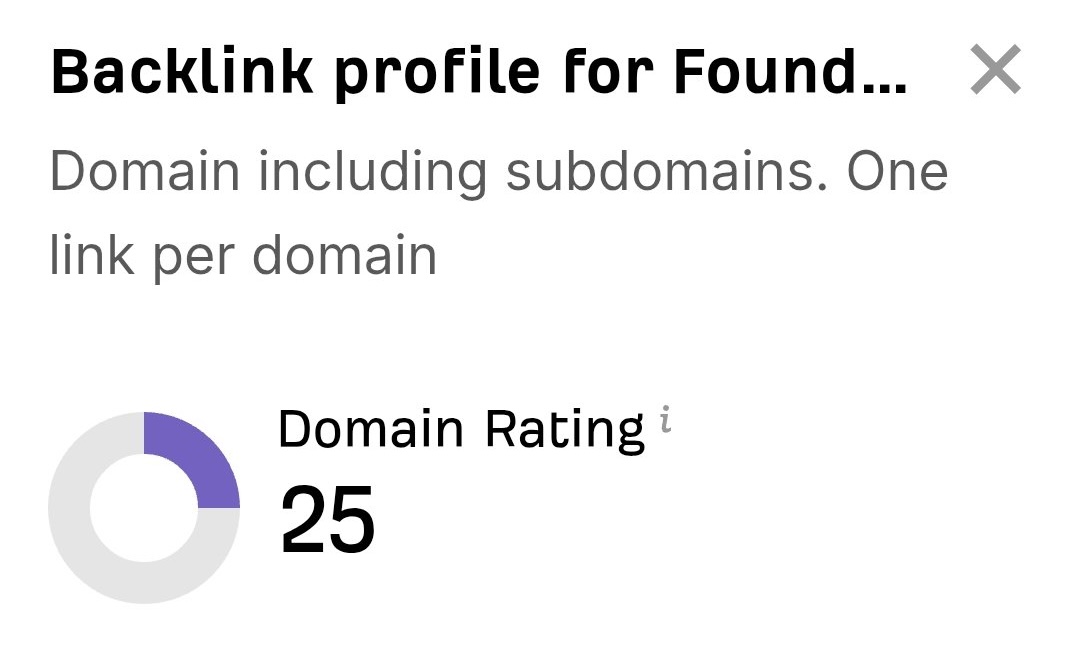 “I just let the Sorank software do its thing, and now my DR is 25 and my page is ranking higher.”
 Lucas FlandrePodcast Host“I specialized in GEO thanks to Sorank. The GEO Leaderboard allows me to show my clients their position vs competitors on ChatGPT. It’s a real commercial differentiator.”
 MélanieSEO Freelance“Great service, works well for our website and helps us understand how to improve it to rank better on Google and elsewhere. Congrats, keep going, I recommend it.”
 Hugo T.E-commerce merchant