
Preferences
Privacy is important to us, so you have the option of disabling certain types of storage that may not be necessary for the basic functioning of the website. Blocking categories may impact your experience on the website. More information

Privacy is important to us, so you have the option of disabling certain types of storage that may not be necessary for the basic functioning of the website. Blocking categories may impact your experience on the website. More information
A complete, hands-on guide to running your SEO and GEO with Claude Mythos 5: the exact prompts for technical, netlinking, content, GEO, and social.

In short: This is a complete, hands-on guide to running your entire SEO and GEO with Claude Mythos 5, the most powerful model Anthropic has released. You get the exact prompts to copy, front by front: technical SEO, netlinking, content, GEO, and social.
On 9 June 2026, Anthropic released Claude Mythos 5, the most powerful AI model in the world, a full tier above Opus. The version with its safety limits removed is reserved for cybersecurity, yet nothing about it is held back for SEO and GEO. I did not expect to write that sentence this year.
I have run search engine optimization for six years, and my job has changed for good. I got up at 5 am to test Mythos 5 properly, and by the end of the morning I was genuinely impressed, and a little worried. So I wrote down the whole workflow, the real prompts included, and turned it into the guide below.
One honest warning before you start. Mythos 5 is powerful enough to rewrite your pages, your redirects, and your structure in minutes. Used well, that is a superpower. Used carelessly, it can break a live site just as fast. Run these prompts on a staging copy first, review every change, and keep backups.
Here is the full playbook, across five fronts. Each one is a complete workflow you can run today:
Mythos 5 is the brain. To point it at SEO and GEO with real structure, you add skills. A skill is a package of instructions and tools that teaches Claude a precise job, so it follows a method instead of improvising.
There are already popular open-source kits for this, and they set the bar. A great starting point if you want something off the shelf.
I went further, and here is the honest reason. I have done SEO for six years, two of them running my own agency, distilled more than 800 one-to-one calls (115+ of them full site audits) into a working checklist, and I now build a search platform full time. So I wrote my own kit, claude-seo-geo, with Claude Mythos 5: 15 skills, GEO-first, free and open-source under the MIT license. It is the same methodology I use in production.
Here is the difference from the popular kit, stated plainly:
My honest recommendation: install my kit and run this whole guide on it. It is free and public.
Install in Claude Code
/plugin marketplace add Thibaultbm/claude-seo-geo
/plugin install claude-seo-geo@sorank
Or with the skills CLI:
npx skills add Thibaultbm/claude-seo-geo
Full source on GitHub: github.com/Thibaultbm/claude-seo-geo
The kit ships 15 skills. You do not memorize commands, you just describe the task and the right skill triggers. Here is the map, front by front:
obsidian-brain (feed Claude your company knowledge first, so it stops guessing) and seo-geo-audit (a full 14-category audit that hands each fix to the right skill).seo-technical and seo-schema-markup.seo-keyword-research, seo-content-blog, and seo-internal-linking, plus seo-content-product-page, seo-content-service-page, and seo-content-collection-page for other page types.seo-backlinks.seo-local.geo-visibility and geo-tracking.social-amplification.Each front below names the skill it leans on, with the exact prompt to run it. Give Claude your context once with obsidian-brain, then point it at any front.
Keep one rule in mind before any prompt, because it separates content that ranks from content that gets ignored. Mythos 5 always works in this order, and our seo-geo-audit skill runs it as a four-phase workflow:
The lazy way is one prompt with zero research, and search engines spot it instantly. Every prompt below is built the right way: study the evidence, cross it with your own site, then produce something more complete and better sourced than the current winners.
Technical SEO is the foundation everything else sits on. Before you write a single new article or chase a single backlink, you need to know that search engines (and AI answer engines) can reach your pages, crawl them, render them, understand them, and trust them. If that plumbing is broken, every piece of content you publish leaks value. This is why the technical audit comes first: you fix the foundation, then you build on top of it.
With Claude Mythos 5 driving the seo-geo-audit skill inside the Claude interface, a technical audit stops being a once-a-quarter agency invoice and becomes a command you run on demand. You paste a prompt, Claude crawls your site, runs the checks, reads the field data, and hands you a plan you can actually act on. No dashboards to interpret, no jargon you have to decode alone.
The engine behind all of this is the seo-technical skill from the free, open-source kit you installed earlier: it handles JavaScript rendering, indexation, INP, and site migrations, and it ships a canonical AI-crawlers reference covering 18 AI bots with paste-ready robots.txt blocks.
Start with the widest lens. Run /seo audit [your-domain.com] for a full crawl (up to 500 pages) that returns a 0 to 100 health score and a prioritized action plan. Then go deep with /seo technical [your-domain.com], which inspects nine categories:
Around these, specialized commands let you drill in: /seo schema [your-domain.com] for structured data (backed by the seo-schema-markup skill in the same free kit), /seo images [your-domain.com] for alt text and compression, /seo sitemap [your-domain.com] for XML sitemap health, and /seo hreflang [your-domain.com] if you run multiple languages. For field-grade data, /seo google [command] pulls PageSpeed Insights, real-user CrUX data, and Search Console so your fixes are grounded in what visitors actually experience, not a lab guess.
A few of these deserve a plain-language note. JavaScript rendering matters because many modern sites ship a near-empty HTML file and build the page in the browser. If a bot reads the raw response, it sees nothing. Claude renders the page the way a browser does, then compares: if your headline, copy, and links only appear after rendering, you have a risk, and Claude tells you how to add server-side or pre-rendered content. Redirects and broken links waste crawl budget and bleed link value: Claude maps redirect chains (A to B to C, fix to A to C), redirect loops, and 404s that still have internal links pointing at them. Internal linking is how authority flows through your site: Claude flags deep pages buried five clicks down and orphan pages with no inbound links, then suggests where to add links.
Core Web Vitals are three real-user speed and stability scores. LCP (Largest Contentful Paint) is how long until the biggest thing on screen (usually your hero image or headline) appears: aim for under 2.5 seconds. INP (Interaction to Next Paint) is how fast the page reacts when someone taps or clicks: aim for under 200 milliseconds. CLS (Cumulative Layout Shift) is how much the page jumps around as it loads (the annoyance of tapping a button that moves): aim for under 0.1. Claude reads these from CrUX field data when available and falls back to lab estimates, decomposing LCP into its parts (server response, load delay, render delay) so you know exactly which lever to pull.
The same audit means different fixes depending on where your site lives, because each platform has its own quirks. Tell Claude your CMS and it tailors the plan:
Because Claude knows the platform, the plan it returns uses words and settings you will actually find in your admin, not generic developer advice you cannot apply.
Copy this prompt into Claude
Run /seo audit [your-domain.com] and /seo technical [your-domain.com], then give me a complete technical SEO action plan.
My site runs on [CMS name]. I am not a developer, so write every fix in plain language and reference the actual settings, menus, or plugins I would use inside [CMS name].
Cover all nine technical categories: crawlability (robots.txt, crawl depth, orphan pages), indexability (canonicals, noindex, XML sitemap, pagination), security (HTTPS, mixed content, certificate), URL structure, mobile usability, Core Web Vitals, structured data, JavaScript rendering, and IndexNow.
Pull real-user data where possible via /seo google so the findings reflect what my visitors actually experience.
Return the output as a single prioritized table with these columns: Issue, Where it is (specific URLs or templates), Severity (critical / high / medium / low), Effort (quick / medium / large), Expected impact (what improves and roughly how much), and Exact steps to fix in [CMS name].
Sort the table by severity first, then by lowest effort, so I can knock out quick critical wins before anything else. At the end, give me a 5-step do-this-first checklist.
Copy this prompt into Claude
Run a Core Web Vitals deep dive on [your-domain.com] using /seo technical and /seo google (PageSpeed Insights and CrUX field data).
Diagnose LCP, INP, and CLS separately for mobile and desktop. For each metric, tell me the current value, whether it passes (LCP under 2.5s, INP under 200ms, CLS under 0.1), and decompose it into root causes (for LCP: server response time, render-blocking resources, image size, load delay; for INP: heavy JavaScript and long tasks; for CLS: images without dimensions, injected ads or banners, late-loading fonts).
My site runs on [CMS name]. For every fix, name the specific element on my page that is the problem (for example the hero image at [URL], the cookie banner, a particular font) and give the fix as a numbered, ordered list, starting with the single change that will move the metric the most.
Write it so a non-developer can apply it inside [CMS name]. Flag any fix that genuinely needs a developer and explain what to ask them for in one sentence.
Finish with a short before-and-after: which metrics should pass once I complete the list, and what is the realistic remaining gap.
Copy this prompt into Claude
Run /seo schema [your-domain.com] and audit my structured data.
First, detect what Schema.org markup already exists, validate it as JSON-LD, and list every error, warning, and deprecated type (for example the current restrictions on FAQ and HowTo).
Then detect the gaps: based on what each page actually is, tell me which schema types I am missing (for example Organization on the homepage, Article or BlogPosting on posts, Product and Review on product pages, BreadcrumbList sitewide, LocalBusiness if I have a physical location).
For every recommended type, generate complete, valid, ready-to-paste JSON-LD using my real information from the page (business name, URL, logo, author, dates, prices where relevant). Use placeholders only where you genuinely lack the data and label them clearly so I can fill them in.
My site runs on [CMS name]. Tell me exactly where to paste each block in [CMS name] (for example a custom code embed, a header injection field, or a per-page setting), and whether it goes sitewide or on specific page types.
Group the output by page type and put the most important missing schema first.
The plan is only worth the changes you ship, so move deliberately. Apply fixes on a staging or draft version first where your CMS supports it, and check the page renders correctly before publishing. Batch related fixes together (all the image and layout-shift work in one pass, all the schema in another) rather than changing one thing at a time, so you keep momentum without losing track. Before you start, run /seo drift baseline [your-domain.com] to snapshot the current state, then after your fixes are live run /seo drift compare [your-domain.com] to confirm the health score moved up and nothing else regressed. That loop, audit, fix, confirm, is what turns a one-time cleanup into a foundation you can keep building content and GEO work on with confidence.
Links are still one of the strongest signals on the open web, but the job they do has changed. In 2026 a backlink works on two fronts at once. First, it tells Google your page is trusted enough to rank. Second, it puts your page inside the corpus that answer engines like ChatGPT, Perplexity, Gemini and Google AI Overviews read when they decide who to cite. An AI engine that sees your brand mentioned and linked from relevant, credible sources is far more likely to pull you into an answer. That is why quality and topical relevance now beat raw volume by a wide margin. This is the exact opposite of buying cheap links in bulk, which inflates a number on a dashboard and earns you nothing where it counts.
The good news is that Claude Mythos 5, the newest and most capable Anthropic model, can do the heavy lifting. With the seo-backlinks skill installed, you point it at a domain and it maps the whole link landscape for you, then helps you separate the spots worth pursuing from the toxic noise. You drive all of this from the Claude interface by typing slash commands and pasting prompts.
Start by looking at what you already have. Run /seo backlinks [url] on your own domain. The skill builds the backlink profile through a three tier data cascade so you are never blocked behind a paywall:
The same command runs on any competitor, which is the foundation of competitor link gap analysis: pull their profile, pull yours, and the difference is your roadmap. Run /seo backlinks [competitor.com] for each rival and Mythos 5 can hold all of them in context at once.
Once it understands your niche and your existing profile, Claude can prospect across the entire web for the kinds of placements that actually move rankings and citations. Ask it to look for all of these:
Finding spots is easy. Knowing which ones to chase is the whole game, and getting it wrong can actively hurt you. Give Claude an explicit scoring rubric so it grades every prospect the same way instead of being dazzled by a big number. Score each spot on:
The seo-backlinks skill from the free, open-source kit you installed earlier already encodes this discipline: a follow and nofollow doctrine, a safe velocity of 2 to 5 links a day, the 95/5 quality rule, a signature ninja-linking method with a catalog of 107 vetted spots, digital PR, and the mentions-over-links pivot for AI visibility.
State the hard rules plainly so Claude never crosses them. Never buy private blog networks. Never chase irrelevant high rating links just because the number looks good. Relevance comes first, always.
Copy this prompt into Claude
Use the seo-backlinks skill. First run /seo backlinks [your-domain.com] to read my current backlink profile.
Then hunt across the entire web for the best thematized link building opportunities for [your-domain.com] in the [your niche] niche. Cover every opportunity type: resource and best of pages, niche forums and communities, curated quality directories, guest post targets on relevant blogs, digital PR and data study angles, broken link building targets, unlinked brand mentions, and podcast or interview placements.
Score every candidate with this exact rubric and weight relevance first: topical relevance to the target page, domain rating or authority, real organic traffic not just rating, spam and link scheme signals, outbound link hygiene, do follow versus no follow, editorial placement versus footer or sidebar, and attainability for a site my size.
Drop anything that looks like a private blog network, an irrelevant high rating page, or a link farm. Return a ranked table sorted by an overall opportunity score. Columns: site, target page on their site, opportunity type, each rubric score, overall score, contact path (email, form, social, or comment), and a one line suggested angle for why they would link to me. List at least 30 qualified spots.
Copy this prompt into Claude
Use the seo-backlinks skill. Run /seo backlinks for each of these domains and hold them all in context: [your-domain.com], [competitor-1.com], [competitor-2.com], [competitor-3.com].
Build a competitor backlink gap analysis. Find every domain that links to at least two of my three competitors but does not yet link to [your-domain.com]. These shared sources are the highest probability wins because they already link to sites like mine.
For each gap source, score it with my rubric: topical relevance, domain rating, real organic traffic, spam signals, outbound link hygiene, do follow versus no follow, editorial versus footer placement, and attainability. Exclude private blog networks and irrelevant high rating junk.
Return a ranked table sorted by attainability times relevance. Columns: linking domain, which competitors it links to and from which of their pages, link type, rubric scores, overall score, the page of mine it would best fit, contact path, and the angle I should use. Flag the ten easiest wins I can realistically earn in the next 30 days.
Copy this prompt into Claude
Use the seo-backlinks skill. Take my shortlist of qualified link spots from the previous steps (or the spots I paste below).
For each spot, write a personalized, non generic outreach message. Every message must name the exact page on their site I am referencing, mention one specific detail from that page to prove I actually read it, and give a real, honest reason their readers would benefit from my link. State clearly what I am offering: a resource, a broken link fix, a guest contribution, a data point, or a correction to an unlinked mention.
Keep each message short, warm, and human. No flattery padding, no mass mail templates, no fake urgency. Match the tone to the channel (email, contact form, forum reply, or social message). Give me three subject line options per email.
Return one ready to send message per spot, grouped by outreach type, with the recipient page and my target page listed above each message so I can track them.
Big digital PR wins are great, but they are unpredictable. The compounding strategy is ninja linking: low competition, highly thematized placements that you can secure quietly, one quality link a day, over a 90 day streak. Ninety relevant links from real sites in your niche, placed steadily and cleanly, build a profile that looks natural and earns trust from both Google and the answer engines. Ask Claude to keep a running queue of these small, attainable, on topic spots so you always have tomorrow's link ready.
Finally, treat your link profile as something you watch, not something you build once. Track every placement you earn, with the source, the target page, the link type, and the date. Re run /seo backlinks [your-domain.com] once a month and ask Claude to compare the new profile against last month so you can confirm the new links are indexed, spot anything toxic that appeared on its own, and watch your authority grow cleanly and on theme over time.
This is where most people lose. They open Claude, type write me a 1500 word article about X, paste the result into their site, and wonder why it never ranks and never gets quoted by an AI engine. The lazy one-prompt article fails on both fronts at once. Google looks at it and sees a thin restatement of what already exists, with no real sources, no internal links, no original structure, so it has no reason to rank you above the ten pages that came first. AI engines look at it and find nothing cleanly citable, no self-contained passage they can lift and attribute, so they quote someone else. You lose the click and you lose the citation.
The principle to internalize before you touch a single prompt: Google rewards rich content and AI engines reward citable structure, and the same article has to do both. Rich means real external sources, internal links that pass authority to the pages that convert, varied formats (paragraphs, lists, a comparison table, images with proper alt text). Citable means short, declarative, well-labeled passages that an engine like Mythos 5, ChatGPT or Perplexity can quote verbatim without reading the whole page. A wall of generic prose satisfies neither. The good news is that Claude Mythos 5 with the seo-content-blog skill can produce content that does both, but only if you give it the right brief. That brief is below.
Every article that ranks and gets cited follows the same recognizable model. Memorize it, because the flagship prompt forces Mythos 5 to build exactly this:
One clarification: that FAQ lives inside the article Mythos 5 generates for you, it is not part of this guide. The seo-content-blog skill from the free, open-source kit you installed earlier carries this full 12-element article skeleton, so the flagship prompt below has it on hand every time. Now the prompts.
Run /seo content [url] first on a page you already have, or on a top competitor, so the skill loads its E-E-A-T and AI-citation checks. Then paste the prompt below. It is long on purpose. It tells Mythos 5 to study the live competition, cross it against your own site to avoid cannibalization, build a superior outline, write the full piece to the skeleton, match your voice, and strip the AI tells. Swap the placeholders and reuse it forever.
Copy this prompt into Claude
You are my senior SEO and GEO content strategist running on Claude Mythos 5 with the seo-content-blog skill. We are writing one article that must outrank the entire first page of Google and become the passage that AI engines quote.
TARGET KEYWORD: [target keyword]
MY DOMAIN: [your-domain.com]
SEARCH INTENT: [informational / commercial / transactional]
AUDIENCE: [who reads this and what they want]
Work through these steps in order and show me the output of each before moving on.
1. COMPETITION SCAN. Read the current top 10 Google results for the target keyword. For each one give me: the working title, the word count, the H2 and H3 outline, the number and type of external sources, whether it has a table, images, a FAQ, and a TL;DR. Then write a GAPS list: questions none of them answer, angles all of them miss, data that is stale, formats that are absent.
2. CANNIBALIZATION AND INTERNAL LINKS. Crawl [your-domain.com] and list every existing page that targets this keyword or a close variant. Tell me plainly: should this be a new article or an update of an existing one, and why. Then pick the 3 to 5 internal pages this article should link to, prioritizing pages that convert, and give me the exact anchor text for each.
3. SUPERIOR OUTLINE. Build an outline that beats all 10 on three axes: depth (covers every gap), citability (each section opens with a short quotable answer), and freshness (uses the most recent angle). Mark which sections need a table, an image, or a statistic.
4. FULL DRAFT. Write the complete article following this exact skeleton: optimized title plus meta description with the keyword; H1; a cover image suggestion with alt text; author line and reading time; a table of contents; a TL;DR answer block at the very top of three to four sentences that fully answer the query; an introduction with the main keyword in bold and the first external source in the opening lines; a body with the semantic field in bold, several image suggestions each with alt text, and at least one comparison table; 3 to 5 external links to trusted sources only (government, major media, scientific studies, never a competitor); the 3 to 5 internal links from step 2; a conclusion that repeats the main keyword in bold; and a FAQ of 3 People Also Ask questions with concise answers.
5. VOICE MATCH. Before finalizing, study these sample pages of mine for tone, sentence rhythm and vocabulary: [paste 2 or 3 sample URLs or text]. Rewrite the draft so it sounds like the same author wrote it.
6. HUMANIZER PASS. Remove every AI tell. No em-dashes or en-dashes anywhere. No hollow phrasing (in todays digital landscape, it is important to note, unlock the power of). Vary sentence length, mix short punchy lines with longer ones. Cut filler adverbs. Keep every claim specific and concrete.
Deliver the finished article in clean HTML with the headings, the table, the bolded terms, the links as real anchors, and the image suggestions labeled with their alt text.
Read the competition scan it returns before you let it write. That step alone is worth the prompt: it tells you, in one screen, exactly what the page has to contain to win, and it stops Mythos 5 from producing another average article that simply averages the ten it read.
One brilliant article ranks for a while, then plateaus, because Google rewards topical authority, breadth across a subject, not a single lonely page. The fix is a hub and spoke cluster: one pillar page covering the whole topic, surrounded by supporting articles on each subtopic, all linked together so authority flows inward. For the upstream keyword map and the downstream link architecture, the kit also gives you the seo-keyword-research and seo-internal-linking skills. Run /seo cluster [seed-keyword] to pull the SERP-based semantic map, then paste this.
Copy this prompt into Claude
Using the seo-content-blog skill on Claude Mythos 5, turn one seed keyword into a complete hub and spoke content cluster for [your-domain.com].
SEED KEYWORD: [seed-keyword]
1. Run the SERP-based semantic analysis for the seed and map the full topic into subtopics that real searchers want.
2. Define ONE pillar article: its title, its target keyword, its angle, and the word count needed to fully cover the topic.
3. Define 6 to 10 supporting articles, one per subtopic. For each give the title, the exact target keyword, the search intent, and a one line summary of what it must answer.
4. Build the internal link map as a table: every supporting article links up to the pillar with a precise anchor text, the pillar links down to each supporter, and list the lateral links between closely related supporters.
5. Order the whole cluster into a publishing sequence, pillar first or last, and tell me which three articles to write first for the fastest ranking gains.
Return the pillar brief, the supporting briefs, and the link map as a clean table I can hand to a writer.
Pages decay. Rankings that were yours slip to page two as competitors update and freshness signals fade. Changing the publish date does nothing, search engines read the content, not the timestamp. A real refresh re-earns the position. Paste this to find decaying pages and rebuild them.
Copy this prompt into Claude
Act as my content refresh analyst on Claude Mythos 5 with the seo-content-blog skill, for [your-domain.com].
1. Identify pages that are decaying: rankings slipping, traffic trending down, thin or outdated against the current top 10. List them with the keyword each one targets and the symptom you see.
2. Pick the [number] highest-potential pages to refresh first, the ones closest to page one or with the most commercial value.
3. For each chosen page, compare it against todays top 10 results and produce a concrete rewrite plan: new sections to add, stale statistics to replace with sourced current ones, missing tables or images, weak internal links to fix, and the citable TL;DR block to add at the top.
4. Rewrite the first page in full following the winning skeleton, keeping its URL, improving depth and citability. Never just change the date.
Show me the decay list first, then the rewrite plan, then the finished rewrite.
Mythos 5 writes the draft, you own what goes live. Read every article end to end. Fact-check every statistic it cites and confirm the source actually says it: no source, no stat, delete the number rather than ship a claim you cannot stand behind. Verify each external link resolves and each internal link points where you intended. Then publish in batches rather than one piece at a time, a coherent cluster going up together signals topical depth far faster than a trickle of scattered posts. The prompts do the heavy lifting. The review is what protects your reputation and your rankings.
Everything above is for blog posts. For pages other than blog posts, the same free kit ships dedicated skills with their own templates: seo-content-product-page for product pages, seo-content-service-page for service pages, and seo-content-collection-page for category and collection pages.
Classic SEO gets you ranked on a results page. GEO, generative engine optimization, gets you quoted. It is the practice of becoming the brand that AI engines cite, name, and recommend inside the answer itself, when a buyer asks ChatGPT, Perplexity, Gemini, Claude, or Grok for the best tool, the best provider, or the best way to solve their problem. The buyer never sees a list of ten blue links anymore. They see one synthesized answer with a handful of sources. GEO is the work of being one of those sources. It is the next layer that sits on top of everything you built in the SEO sections, and you run all of it by pasting prompts into Claude Mythos 5 with the geo-visibility skill installed.
Start with one command. Point the skill at any page and it scores how citable that page is for an AI engine: /seo geo [url]. It reports a citability score, structural readability (can a model lift a clean answer out of the page without rewriting it), entity clarity (does the engine understand who you are and what you sell), authority signals (who links to you and vouches for you), and structured data support. Run it on your homepage, your money pages, and your top three articles. That gives you the baseline before you touch anything.
Before going engine by engine, fix the levers that move citations everywhere. They are the same five things under the hood, and Claude Mythos 5 can rewrite your pages to hit all of them. For the deep version of these levers, lean on the geo-visibility skill from our free, open-source kit you installed earlier: it lays out how each engine selects its sources, the passage-level citability rules behind every lever below, and a 5-pillar GEO score graded 0 to 100.
One honest note. You will read that an llms.txt file makes you citable. There is no evidence engines use it as a citation lever today. Do not spend time on it. Spend it on the five levers above, which are what actually move the needle.
ChatGPT answers from a blend of its training data, a live web search layer, and per-user memory. When it searches, it favors licensed content partners and high-authority domains, then synthesizes. Because memory persists, once a user has seen your brand in a good answer, it tends to resurface. The lever that moves ChatGPT: be the clean, authoritative, well-structured source on high-trust domains, and earn mentions on the sites OpenAI is most likely to retrieve. Question-style headings with tight citable passages are what get lifted into its answers.
Perplexity is the most retrieval-driven of the five. Almost every answer does a live web search and shows numbered citations, and it rewards pages that are crisp, factual, and recently updated. Freshness matters more here than anywhere else. The lever that moves Perplexity: publish direct, sourced, scannable answers, keep your money pages updated with visible dates, and make sure the single best answer to a buyer question is a passage on your page that Perplexity can quote and number. Thin or rambling pages get skipped for a competitor that gives the clean answer.
Gemini and the AI Overviews that appear at the top of Google are wired into the Google index. That means your classic ranking still drives your GEO outcome here more than on any other engine. If you already rank on page one, you are a candidate for the overview. Structured data and proven topical authority decide which ranked page gets pulled. The lever that moves Gemini and AI Overviews: win the underlying organic ranking first (everything in the SEO sections), then add FAQPage and HowTo schema and a clean answer passage near the top of the page so Google can extract it into the generated summary.
Claude, the family that Claude Mythos 5 belongs to, answers from training plus a web tool, and it rewards content that is clearly written, factually careful, and well structured. It is conservative about sourcing and gravitates to references it can trust. The lever that moves Claude: write plainly and accurately, structure the page so the logic is obvious, cite your own claims to reputable sources, and avoid hype the model has to discount. Clean factual prose with question-style headings is exactly what Claude pulls into an answer, and it dislikes pages that overstate.
Grok is built into X and pulls heavily from the live X conversation alongside the open web. Real-time chatter and the credibility of the accounts talking about a topic weigh more here than on any other engine. The lever that moves Grok: build an actual presence on X. Post under a consistent brand handle, get named and discussed by credible accounts in your niche, and make sure the claims circulating about you on X match the facts on your site. If your brand is invisible on X, it is largely invisible to Grok.
This is your baseline. It checks, engine by engine, whether you get cited for the prompts your buyers actually type, and tells you who is cited instead and why. Re-run it monthly with the same buyer prompts so the numbers are comparable. To put hard numbers behind this audit, pair it with the geo-tracking skill from the same free kit: it sets up a free GA4 AI-traffic report and runs a monthly panel of 50 to 100 buyer prompts to measure your citation share, all with no paid tools.
Copy this prompt into Claude
You are my GEO analyst. I want to know whether my brand gets cited inside AI answers for the questions my buyers ask.
My domain: [your-domain.com]
My brand name: [brand name]
What I sell: [one line on the product or service]
My main competitors: [3 to 5 competitor names and domains]
My buyer prompts: [list of 10 buyer prompts, the exact questions a buyer would type into an AI to find a tool or provider like mine]
For each of the 10 buyer prompts, work through all five engines one by one: 1. ChatGPT, 2. Perplexity, 3. Google Gemini and AI Overviews, 4. Claude, 5. Grok. For each engine and prompt, use your knowledge of how that engine retrieves and cites to assess: would my domain plausibly be cited or named in the answer today, yes, partial, or no. If no or partial, name the brands and pages that would be cited instead, and state the specific reason they win (stronger entity, better structured passage, presence on Wikipedia or Reddit or G2, fresher page, higher organic ranking, more X presence, and so on).
Then produce: 1. a table of all 10 prompts by 5 engines with yes, partial, or no in each cell. 2. a citation share estimate, the percent of the 50 cells where I am cited, plus the same percent for each competitor. 3. the single biggest reason I lose citations, summarized in two sentences. 4. the three buyer prompts where I am closest to breaking in and should attack first. Be concrete and name real competitor pages and sources wherever you can.
The audit tells you where you stand. This prompt turns it into a build list, because the move that wins ChatGPT is not the move that wins Grok. Run it right after the audit so the model has the findings in context.
Copy this prompt into Claude
Using the GEO audit you just produced for [your-domain.com] and brand [brand name], build me a separate action plan for each of the five engines. Do not give me one generic list. Each engine wins on a different lever, so tailor every plan.
For each engine, give me: 1. the specific lever that moves citations on that engine, in one sentence. 2. the three to five exact actions I should take, each tied to a real page or asset on my site, with the page URL or the new page to create. 3. for any page that needs a citable passage, draft the passage now, 130 to 170 words, answering one buyer prompt, with the question-style heading above it. 4. the structured data to add on that page, named by schema type.
Cover all five: 1. ChatGPT, write clean authoritative passages and earn mentions on high-trust retrieval sources. 2. Perplexity, ship crisp sourced answers and add or refresh visible dates on the money pages. 3. Google Gemini and AI Overviews, list the pages where I am close to a page-one ranking and the schema plus top-of-page answer passage to add to each. 4. Claude, rewrite my overstated copy into plain factual prose and add source citations to my claims. 5. Grok, give me a concrete X plan, the handle to use, the kind of posts to publish, and the credible accounts to get mentioned by in my niche.
End with a prioritized two-week task list across all five engines, ordered by effort against citation impact, so I know exactly what to do first.
Citations on your own pages are the easy half. The half that takes weeks is becoming a recognized entity that the trusted third-party sources discuss. This prompt builds that long game: the structured data that defines you, and the off-site mentions on Wikipedia, Reddit, YouTube, G2, and news that make engines treat you as real.
Copy this prompt into Claude
Build me an entity and digital-PR plan to make [brand name] at [your-domain.com] a brand that AI engines recognize and cite. Two parts.
Part one, entity definition. 1. Audit whether my brand name is used consistently across my site and tell me where it varies. 2. Draft the Organization schema for my homepage, including the legal name, logo, founding facts, and a complete sameAs array linking to my official profiles, list every profile I should hold (LinkedIn company page, X, Crunchbase, GitHub if relevant, YouTube, and a Wikipedia or Wikidata entry if I qualify). 3. Draft Person schema and a short author bio template for my content authors. 4. Spell out exactly what my About page must state so an engine can summarize who I am, what I do, who I serve, and why I am credible, then draft that About copy.
Part two, third-party presence. For each trusted source type, give me a concrete plan with specific actions, not generalities: 1. Wikipedia or Wikidata, whether I qualify and the notability path if I do. 2. Reddit, the exact subreddits where my buyers ask for recommendations and how to earn genuine mentions there without spamming. 3. YouTube, the video topics and formats that would get my brand named on the platform. 4. G2 and review sites, which ones matter for my category and how to build a credible review base. 5. reputable news and industry publications, the angles and outlets for digital PR in my niche.
Finish with a 90-day sequence that orders the entity fixes first (fast, on-site) and stages the off-site mentions after, with a rough effort estimate per item.
GEO is not a one-time pass, because the answers change every time the engines re-crawl and every time a competitor publishes. Re-run mega-prompt 1 on the first of each month with the exact same list of buyer prompts, log your citation share across the five engines, and watch the table move. When a cell flips from no to partial to yes, you can trace it back to the action that did it. That monthly loop, run entirely through Claude Mythos 5 with the geo-visibility skill, is how you turn GEO from a guess into a tracked number that climbs.
Most people treat social media as a separate world from search. That is a mistake, and it is costing them citations. When you ask an AI engine a question, it does not only read ranking pages. It reads Reddit threads, watches YouTube descriptions and transcripts, and scans LinkedIn posts. Those surfaces are now part of the answer layer. The model pulls a quote from a Reddit comment, names a creator it found on YouTube, and references a point of view it read on LinkedIn. If your brand is present and consistent across those places, you become a candidate for the citation. If you are absent, you are invisible to the part of the model that decides who to name.
There is a second, deeper mechanism. AI engines and search engines both reward entity authority. An entity is your brand understood as a known thing in the world, with a clear topic, a consistent description, and a web of mentions pointing at it. Every branded post, every time someone searches your name, every mention of your brand next to a topic you own, the model strengthens the link between your name and that topic. Branded search and brand mentions are the fuel. Social is the engine that produces them at scale. So social is not vanity. Done from your keywords, it directly feeds GEO and SEO by making your site citable. The social-amplification skill from the free, open-source kit you installed earlier turns one pillar asset into native posts per platform and prioritizes the third-party surfaces AI engines cite, YouTube, Reddit, and LinkedIn, so social directly feeds your GEO.
The right starting point is your own keyword and topic map, not a trend feed. The claude-seo-geo kit does not ship a social command, so this front is driven by Claude Mythos 5 directly through prompts. But you should mine the raw material first. Run /seo cluster [seed-keyword] on your site to extract the keyword universe and the topic map, then hand that map to Mythos 5 and ask it to translate the same ideas into each platform. The principle: one idea, reshaped per channel. A LinkedIn document, an Instagram carousel, a TikTok hook, and a YouTube title are four different costumes for the same underlying point from your cluster.
LinkedIn is the authority surface. It rewards text posts and native document carousels (uploaded as a PDF that scrolls in feed), in a professional and direct tone. The hook lives in the first two lines before the see more cut, so the opening must earn the click. Translate your money keywords and your expertise topics into opinions, frameworks, and teardowns. Post 3 to 5 times a week to stay in the algorithm and in your audiences memory. LinkedIn posts are increasingly read and quoted by AI engines for professional topics, so a clear stance here is a direct GEO asset. Mine your cluster for the questions a buyer asks, then answer each one as a short, opinionated post.
Instagram is a visual library. The two formats that compound are the carousel (educational slides people swipe and save) and the Reel (short vertical video that travels through the explore page). The hook is visual and lives on slide one or in the first frame: a bold claim, a number, a before and after. Optimize for saves and shares, because those signals push reach far more than likes. Take a how-to keyword from your cluster and turn it into a 7 to 10 slide carousel that teaches one thing well, then clip the same idea into a 15 to 30 second Reel. Saves mean people want to return to your name, which seeds branded search later.
TikTok rewards short vertical video where the first 3 seconds decide everything. If you do not stop the scroll in the opening frame with a pattern break, a bold statement, or a visible promise, nothing else matters. The winning blend is education plus trend: take a teaching point from your keyword map and wrap it in a current format or sound so the algorithm distributes it. Cadence is volume, so aim for several short videos a week and let the platform tell you which angles land. TikTok builds top of funnel awareness at a scale no other channel matches, and that awareness converts into the branded searches that strengthen your entity.
YouTube is the platform that doubles as a search engine, and it is owned by Google. Titles must be built like search queries, because people type questions into YouTube the same way they type them into Google. Long form videos answer high-intent keywords in depth and earn watch time, while Shorts capture the same idea in vertical bursts for discovery. Crucially, YouTube transcripts, titles, and descriptions are heavily mined by AI engines, and Google surfaces YouTube directly in results. So a video built around a keyword from your cluster works three times: it ranks on YouTube, it can surface in Google, and it becomes a citation source for AI answers. Take your highest-intent question keywords and build one long video plus two or three Shorts around each.
Run this once to convert your keyword and topic map into a full four-platform strategy. Run /seo cluster [seed-keyword] first, then paste the result where the prompt asks for it.
Copy this prompt into Claude
You are my social and GEO strategist. My website is [your-domain.com] and my business is about [one line on what you do and who you serve].
Here is my keyword and topic map, exported from /seo cluster:
[paste the full cluster output here, including pillar topics and supporting keywords]
Translate this map into a tailored content strategy for four platforms: LinkedIn, Instagram, TikTok, and YouTube. The same core ideas must be reshaped to fit each channel, never copy pasted across them.
For EACH platform, give me:
1. The angle: which of my topic clusters fit this platform best and the editorial point of view to take here.
2. The native formats to use (for example LinkedIn text posts and document carousels, Instagram carousels and Reels, TikTok short video, YouTube long form and Shorts) and why each fits.
3. The posting cadence per week, with a realistic number for a small team.
4. The hook style that works on this platform, described in one or two sentences.
5. Exactly 5 reusable hook templates, written as fill in the blank lines I can apply to any keyword from my map.
Then explain, in 4 or 5 bullets, how this whole plan feeds my GEO and SEO: which formats are most likely to be cited by AI engines, and how the posts will drive branded search and brand mentions that build my entity authority.
Format the output as four clearly titled sections, one per platform, followed by the GEO bullets. Keep it concrete and ready to execute.
Once a strategy exists, you should never produce content one platform at a time. Feed Mythos 5 a single strong idea, article, or keyword, and have it spin four native posts in one pass.
Copy this prompt into Claude
Take one core idea and repurpose it into native posts for LinkedIn, Instagram, TikTok, and YouTube in a single pass. Respect the format and the reading habits of each platform. Never reuse the same wording across two platforms.
Source idea: [paste the URL of an article at [url], or paste the raw idea or key points]
Target keyword this idea should reinforce: [keyword from my cluster]
My brand and audience: [one line]
Produce:
1. LinkedIn: a text post of 150 to 220 words with a two line hook before the see more cut, a clear point of view, short paragraphs, and a closing question. Then a 6 to 8 slide document carousel outline, one headline plus one supporting line per slide.
2. Instagram: a 7 to 10 slide carousel, slide by slide, with a bold visual hook on slide one and a save worthy takeaway on the last slide. Then a 20 to 30 second Reel script with an on screen text hook for the first frame and three fast beats.
3. TikTok: a 25 to 40 second script. Open with a 3 second pattern break hook written word for word, then deliver one teaching point, then a soft call to action. Suggest one trend or format angle to ride.
4. YouTube: one search optimized long form title plus three alternates, a 4 line description with the target keyword in the first sentence, a chapter outline for a 6 to 10 minute video, and two Shorts hooks pulled from the same idea.
For every platform, write captions and on screen text in my brand voice, and include the hashtags or keywords that match the topic. End with one line on how this set strengthens my brand entity for AI citations.
To turn the strategy into a habit, generate a month at a time, mapped day by day to your clusters so nothing is improvised.
Copy this prompt into Claude
Build me a 30 day, platform by platform content calendar based on my keyword clusters. The goal is steady output across LinkedIn, Instagram, TikTok, and YouTube that compounds into branded search and AI citations.
My keyword clusters and pillar topics:
[paste the /seo cluster output]
My cadence targets: LinkedIn 3 to 5 a week, Instagram 3 to 4 a week, TikTok 4 to 5 a week, YouTube 1 long form and 2 Shorts a week. Adjust if you see a better balance and say why.
Output a day by day table for 30 days. For each day give me:
1. The date or day number.
2. The platform and the native format for that slot.
3. The keyword cluster or pillar topic it serves.
4. A one line title or theme for the post.
5. A ready to use hook, written word for word.
Rotate across all my clusters so every pillar gets covered, and sequence the YouTube long form videos so each one can be sliced into that weeks Shorts and short video across the other platforms. After the table, add a short legend explaining which 5 posts in the month are most likely to earn AI citations and why.
Consistency is what makes this work, not any single post. Pick a cadence you can actually sustain and let it run for at least 60 to 90 days before judging it. Track which posts move the needle on the only signals that matter for GEO: a rise in branded search for your name, new mentions of your brand next to your topics, and direct traffic to your site. When a specific angle or format keeps producing those, feed the winners back into your GEO plan. Ask Mythos 5 to turn the best performing post into a pillar article, a glossary entry, or a documentation page on your site, so the authority you built on social settles into a page an AI engine can cite. That loop, from cluster to social to branded search to citable page, is how social stops being noise and starts compounding your visibility in AI answers.
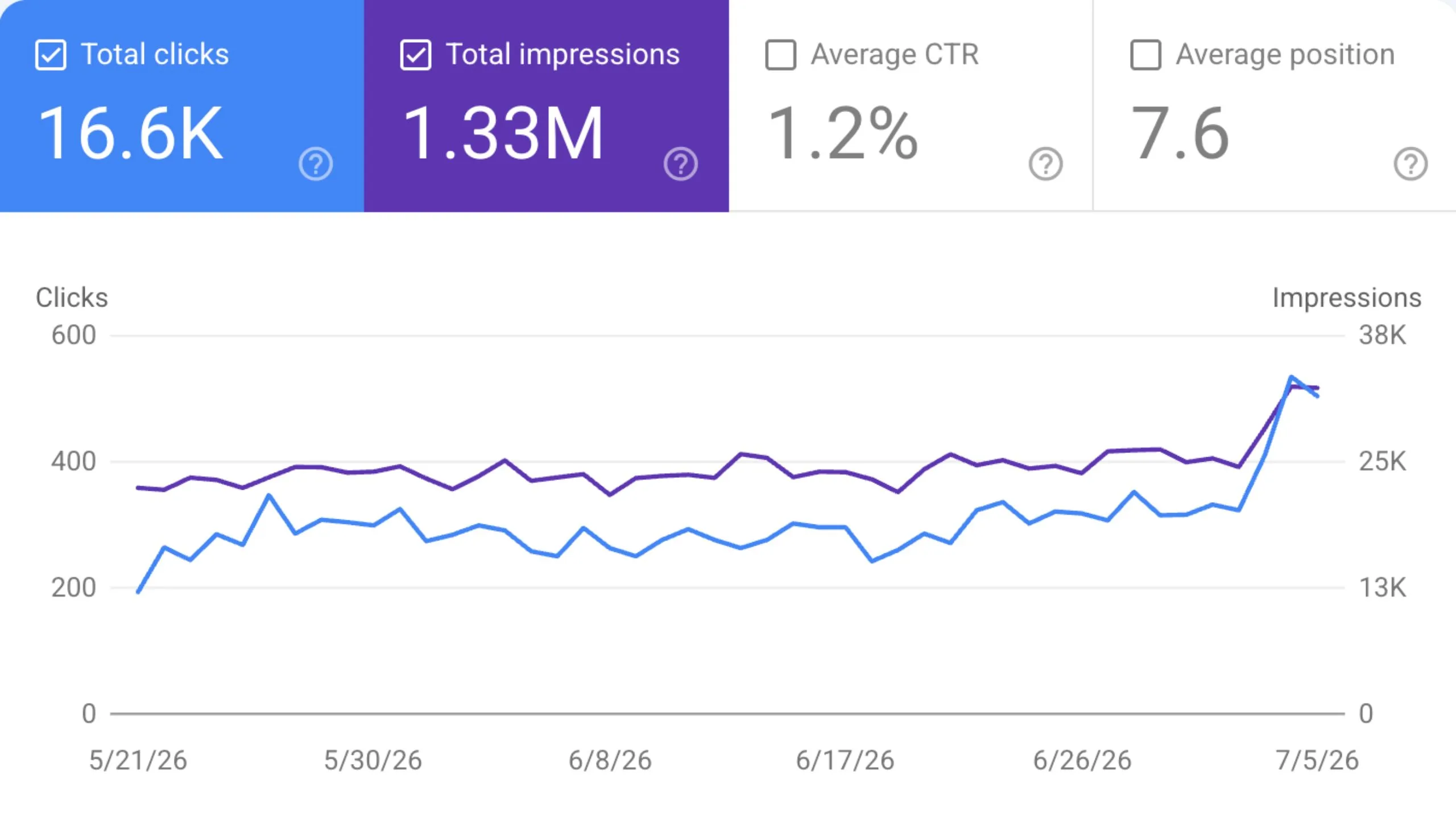
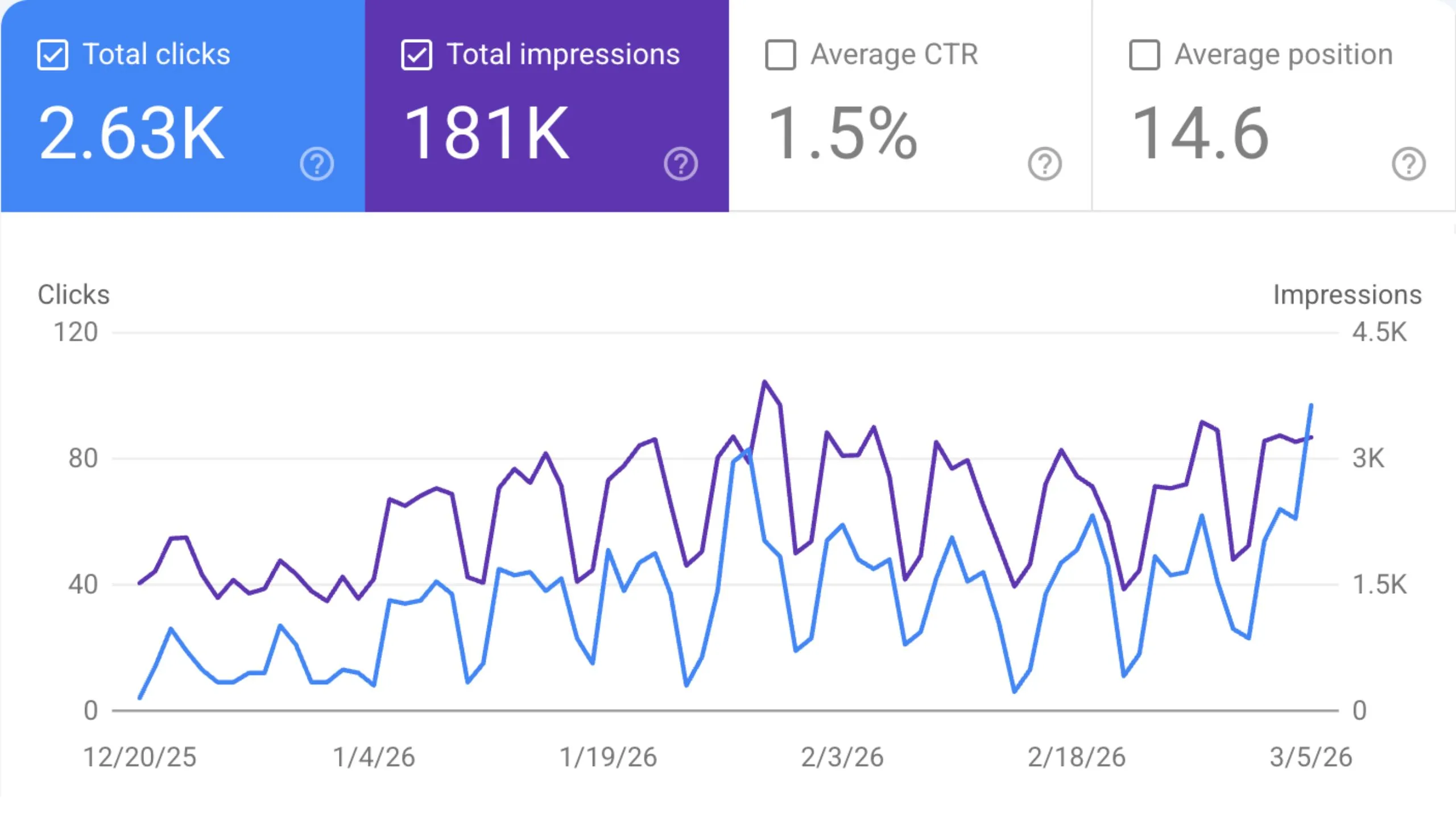
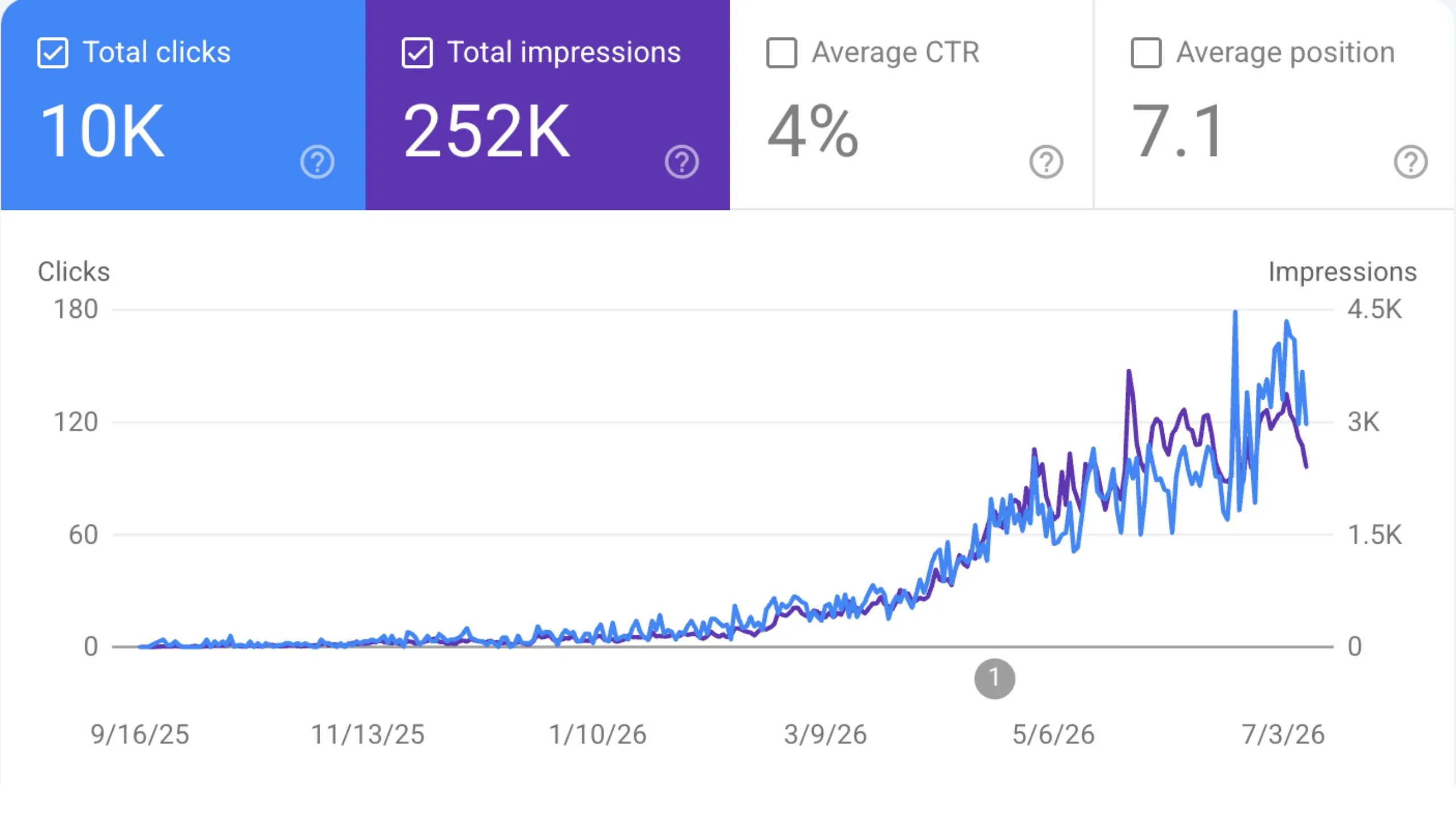
This is not theory. monrobotlavevitre.fr, a French store selling window-cleaning robots, ran this exact method starting at the end of February 2026. It was flat before, then climbed fast.
The numbers: 6.26K clicks and 162K impressions on Google Search Console at an average position of 7.4, almost all earned after the February start. The sales log shows 25 payments for 2042.80 EUR total, with orders from organic Google, direct, Google Shopping, and one sourced straight from ChatGPT. That ChatGPT sale is the point of pairing SEO with GEO: the same work that climbs Google now turns AI answers into revenue.
Everything above works, and it is genuinely powerful. That power is also the risk. Pointing an unrestricted model like Mythos 5 at your live site can go wrong fast: a bad bulk edit, a broken redirect map, a wave of thin pages, and your rankings drop before you notice.
If you do not have the time to run these prompts every day, or you would rather not hand a model this powerful the keys to your live site, let Sorank do it for you. Sorank embeds the best AI models, keeps them on a tight leash, and publishes quality, optimized articles to your site every single day, on autopilot. We contain the AI so it lifts your rankings instead of breaking them. You keep the results, we carry the risk.
Leave your SEO and GEO on autopilot and let us handle your rankings. Start a 3-day free trial, then €99 per month per site, which includes 30 optimized articles. Point it at one site and judge the output on your own pages.

Claude Mythos 5 is Anthropic's most powerful model, released on 9 June 2026, a tier above Opus. The version with safety limits removed is reserved for cybersecurity, and the same model is a remarkable engine for SEO and GEO.
SEO optimizes your pages for classic search engines like Google. GEO (Generative Engine Optimization) optimizes your content so AI assistants like ChatGPT, Perplexity, and Gemini cite and recommend your site in their answers. Mythos 5 covers both.
Yes, when it follows a real method. Content that studies the top results, crosses them with your site, and adds genuine sources, internal links, and images performs well. The lazy one-prompt approach is what search engines push aside.









.webp)
.webp)









.svg)
.svg)