



환경 설정

개인정보 보호는 저희에게 중요합니다. 웹사이트의 기본 기능에 반드시 필요하지 않은 특정 유형의 저장소는 사용자가 직접 비활성화할 수 있습니다. 카테고리를 차단하면 웹사이트 이용 경험에 영향을 줄 수 있습니다. 더 보기

모든 쿠키 허용

Reading Time Calculator: Estimate How Long Your Content Takes to Read

Find out how long your content takes to read. Enter word count and reading speed to get an instant estimate. Free reading time calculator.


Thibault Besson-Magdelain, Sorank 설립자

저자 소개

Thibault Besson-Magdelain

Sorank 설립자, 5년 이상의 SEO 경력 보유, GEO 전문가.

Learn everything to know on Reading Time Calculator !

생성일
4/9/26
최종 업데이트:
4/9/26
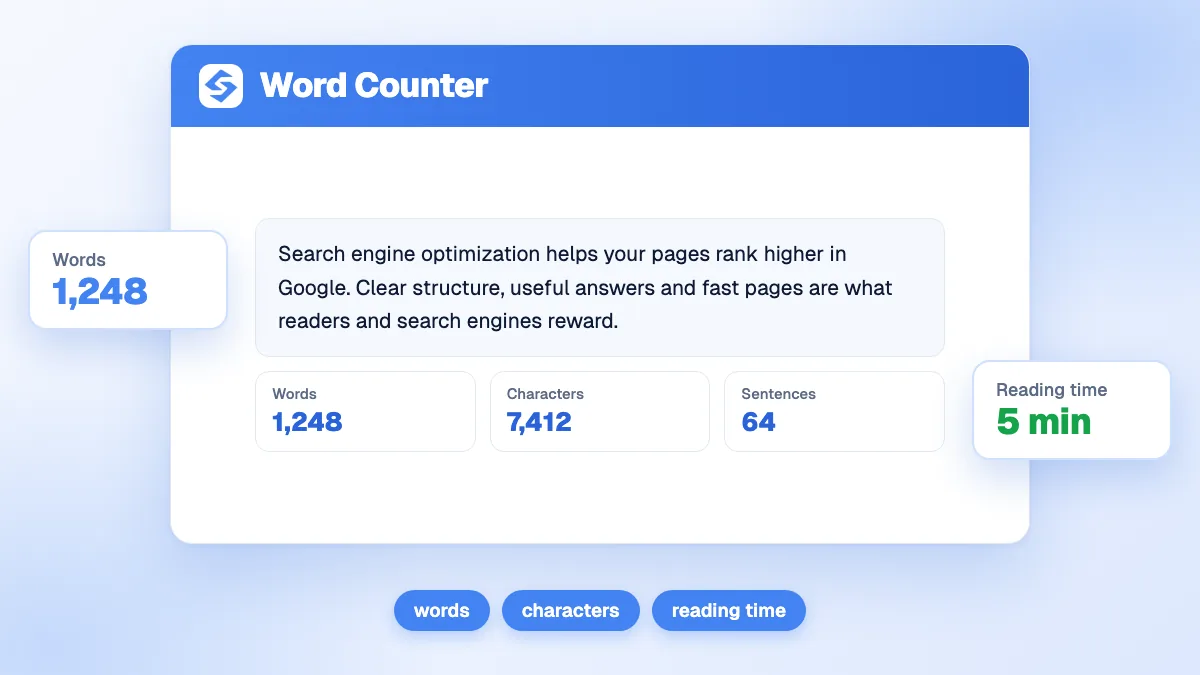
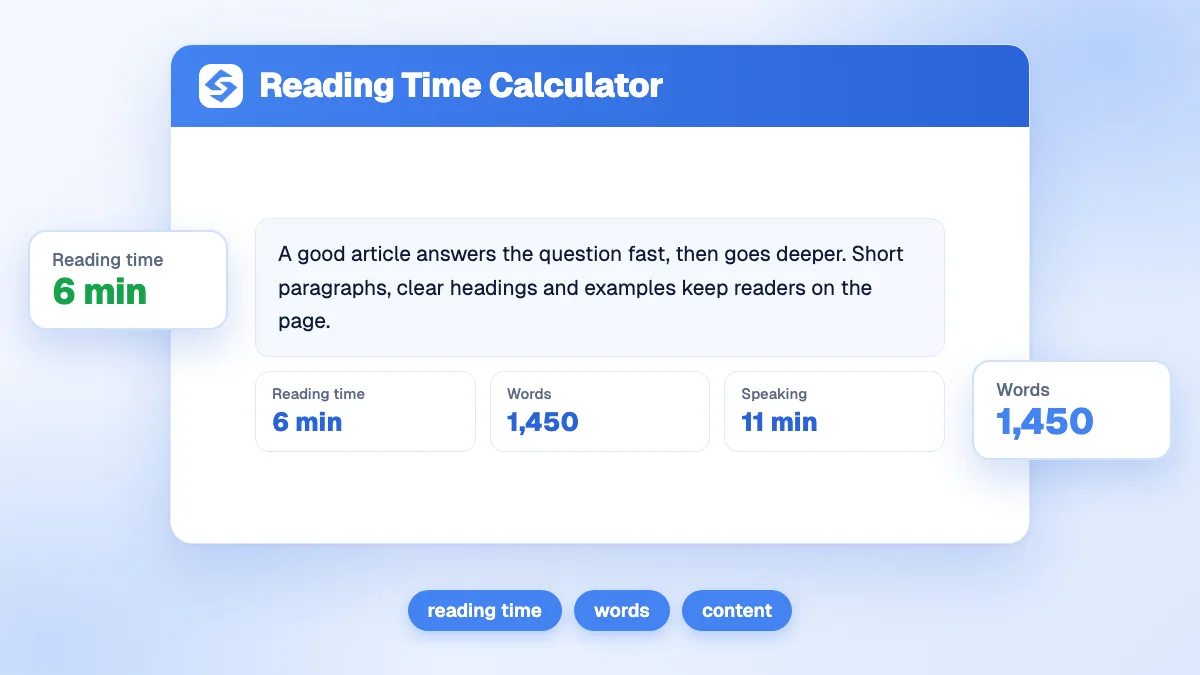
Reading time calculator showing word count input, reading speed field, and estimated minutes result

Knowing how long your content takes to read helps you calibrate article length, set reader expectations, and improve engagement. Paste your word count into the reading time calculator above to get an instant result.

How reading time is calculated

The formula is straightforward: Reading time (minutes) = Word count / Reading speed (words per minute). The default reading speed of 220 wpm reflects a widely cited average for adult online reading. You can adjust it upward for lighter content or downward for technical documentation.

Example: A 1,200-word blog post at 220 wpm takes 1200 / 220 = 5.5 minutes, displayed as approximately 5 to 6 minutes. A 3,000-word guide comes out at about 13 to 14 minutes.

How to use the reading time result

  • Display it in your articles. Showing a reading time (for example, "5 min read") at the top of a post reduces bounce rate by setting clear expectations before the reader commits.
  • Match length to search intent. Informational queries tend to reward content in the 1,500 to 2,500-word range. Transactional pages often perform better shorter. Use the calculator to check where you stand.
  • Plan content series. If you produce multiple articles per month, knowing their average reading time helps you plan a realistic editorial calendar and estimate production costs.
  • Optimize for AI summaries. Longer, well-structured content gives generative engines (ChatGPT, Perplexity, Gemini) more material to cite. A 1,500-word minimum is a reasonable starting point for GEO-optimized pages.
  • Audit existing content. Run each URL through a word-count tool, then use this calculator to identify pages that are too thin (under 500 words) or unreasonably long for their intent.

Benchmarks to keep in mind

There is no universal ideal reading time, but data from content platforms suggests that articles in the 7-minute range (roughly 1,500 words) tend to hold attention longest on editorial sites. For SEO landing pages, shorter is often better. These are indicative averages; your actual audience and topic will determine what works best.

If you want to track how your content length correlates with organic rankings and AI citations over time, Sorank monitors visibility across search engines and AI assistants in one dashboard.

자주 묻는 질문

What reading speed should I use?

220 wpm is the default for average adult online reading. Use 150-180 wpm for technical or dense content, and 250-280 wpm for simple listicle-style posts.

Does reading time include images or videos?

This calculator covers text only. Add roughly 10-15 seconds per image if you want a fuller estimate for media-heavy pages.

Is a longer reading time always better for SEO?

Not necessarily. Search intent matters most. Transactional pages often rank well at 300-600 words. Long-form content (1,500+ words) tends to perform better for informational keywords and for being cited by AI systems.

기타 무료 SEO 도구