Preferences
Privacy is important to us, so you have the option of disabling certain types of storage that may not be necessary for the basic functioning of the website. Blocking categories may impact your experience on the website. More information

Privacy is important to us, so you have the option of disabling certain types of storage that may not be necessary for the basic functioning of the website. Blocking categories may impact your experience on the website. More information

Learn how to optimize your Mozello website for GEO and SEO so AI assistants like ChatGPT and Perplexity discover and cite your content. Practical steps for small businesses and online stores.
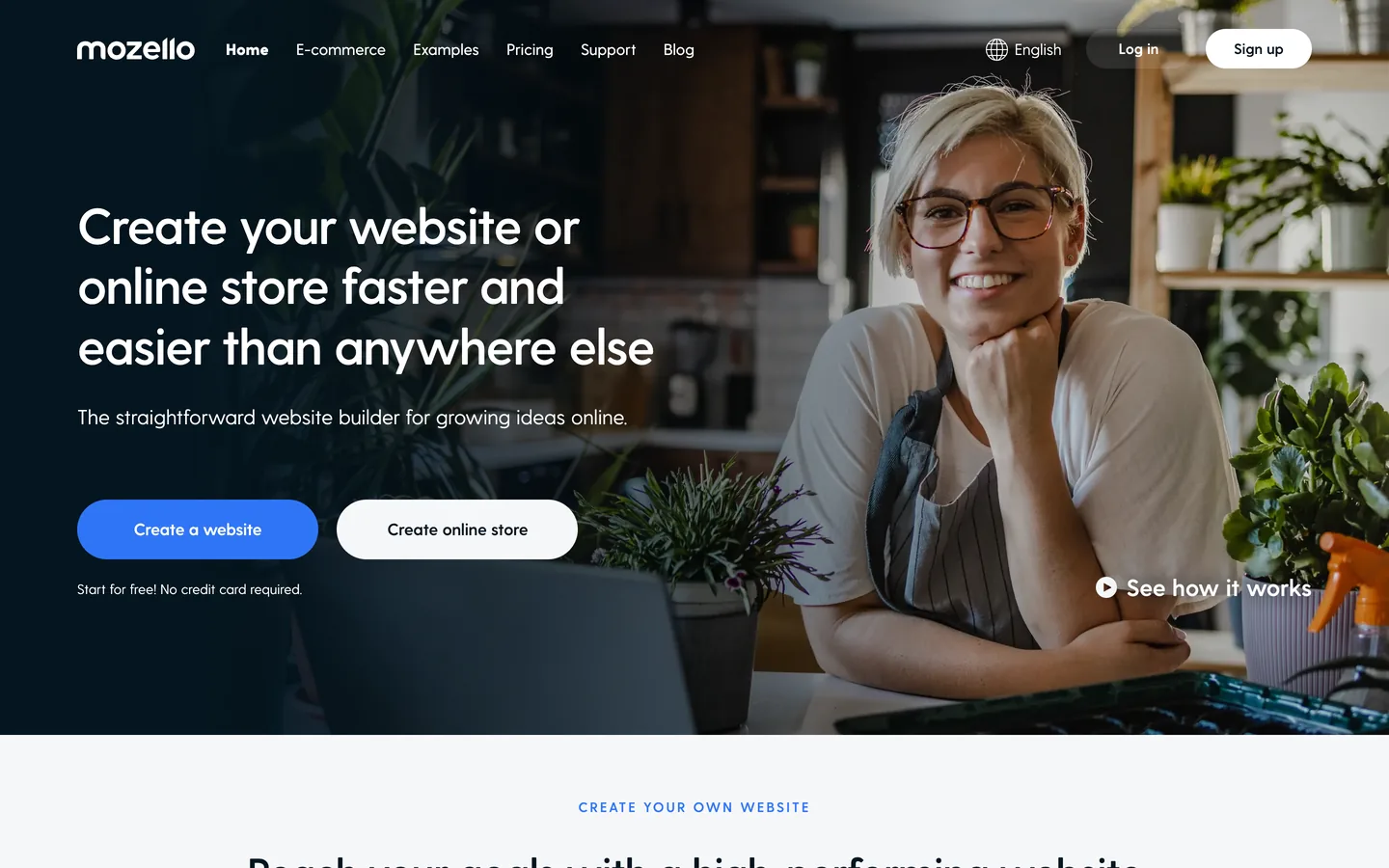










































Mozello is a website and online store builder aimed at small businesses, entrepreneurs and individuals who want a simple, affordable web presence without technical complexity. It combines a drag-and-drop website editor with basic e-commerce functionality, making it one of the most accessible entry-level platforms available. That accessibility, however, comes with real constraints when it comes to technical SEO and generative engine optimization (GEO). This guide explains how to get the most out of Mozello for AI visibility, and where its limitations lie.
Generative Engine Optimization is the practice of making your web content citable by AI assistants such as ChatGPT, Perplexity, Claude and Gemini. When a potential customer asks one of these tools to recommend a local bakery, a handmade jewellery shop or a small accounting firm, the AI synthesizes an answer from publicly indexed web content. Sites that appear in those answers gain direct referral traffic and brand recognition that traditional search rankings alone cannot deliver.
For small businesses on Mozello, this matters because your potential customers are increasingly using AI assistants as their first point of discovery. A local flower shop or a freelance translator whose website is not structured for AI citability is invisible to an entire generation of discovery behavior. The stakes are especially high for small businesses because each missed discovery opportunity has a direct impact on revenue.
Mozello includes a set of basic SEO tools that are sufficient for foundational optimization:
These features cover the foundational layer of both SEO and GEO. Where Mozello falls short is in advanced customization: there is no support for custom header code injection on individual pages, no native JSON-LD structured data generation, and no public API for automated content publishing.
The content structure that works best for AI citation on Mozello follows a simple pattern: declare the entity clearly, then answer the questions your customers ask. Here is how to apply it:
On your homepage, declare your business identity in the first paragraph: Elena Kuznetsova operates a handmade candle workshop in Prague, Czech Republic, specializing in soy-wax candles with botanical scents. Candles are made in small batches and shipped across Europe. This type of opening paragraph is exactly what AI assistants extract when asked to recommend artisan candle makers in Prague.
In your blog, create FAQ-style posts that answer the specific questions your customers ask most often. Each post should be 500 to 1000 words, with a clear H2 structure and one direct answer per section. AI assistants strongly prefer structured, clear, factual content over promotional language.
On your product and service pages, include the key facts: price range, delivery time, materials used, geographic coverage and any certifications. These concrete facts make your content far more citable than vague descriptions.
Mozello occupies the entry-level tier of website builders, competing primarily on price and simplicity. Compared to Wix and Squarespace, Mozello has fewer SEO automation features and less control over technical configuration, but is significantly cheaper. Compared to Pixpa, Mozello is more generalist and better suited for local businesses and simple online stores, while Pixpa is better for visual creatives. Compared to WordPress, Mozello is far simpler to set up but much more limited in technical SEO control.
For a small business owner who needs a functional, affordable website with basic e-commerce and does not have technical skills, Mozello is a reasonable choice. The GEO optimization steps described here can all be implemented without any developer involvement.
Mozello's main GEO limitation is the absence of JSON-LD structured data support and the inability to inject custom code into individual page headers. This means you cannot add the schema markup types (Article, LocalBusiness, FAQPage, Product) that AI assistants use as high-confidence signals for citability. Your optimization is limited to the text-based signals: page titles, meta descriptions, body content and URL structure.
For businesses that need full JSON-LD control and automated content publishing, platforms like Ghost, WordPress or Webflow offer significantly more capability. If your business grows to the point where AI citability becomes a strategic priority, migrating to a more capable platform is worth planning.
Mozello does not offer a public API for content management. Its API is limited to payment processing. There is no Make.com integration module for Mozello. This means Sorank connects to Mozello through the self-hosted blog method.
The process works as follows: Sorank analyzes your Mozello site and identifies GEO content gaps, the specific topics and questions in your niche that AI assistants are being asked but that your site does not currently address. Sorank generates optimized article drafts targeting those gaps. You then publish those articles manually through the Mozello blog editor.
While this is a manual process, it is the right approach for the publishing pace of most small businesses on Mozello. Sorank handles the analysis and content strategy; you handle the publishing. Over time, each published article expands the footprint of citable content on your site. Sorank also tracks which of your published pages are being cited by AI assistants, so you can measure the impact and prioritize the content that delivers the most AI-driven discovery traffic.

Mozello provides the basics needed for foundational GEO: custom page titles and meta descriptions, a blog for publishing text content, a clean URL structure and automatic sitemap generation. The main limitation is that Mozello does not support custom code injection or native JSON-LD structured data, which means AI assistants cannot read schema markup signals from your site. Mozello works well for small businesses that optimize through clear, factual content and consistent entity information across all pages.
Four practical steps have the most impact: first, set unique and specific page titles and meta descriptions for every page; second, activate the Mozello blog and publish FAQ-style articles that answer your customers' most common questions directly; third, write factual, specific content on your homepage and service pages that declares your business identity, location and services clearly; fourth, submit your sitemap to Google Search Console and verify that all important pages are indexed. AI assistants cite content that is specific, clearly attributed and publicly indexed.
Sorank connects to Mozello through the self-hosted blog method. Sorank analyzes your site, identifies GEO content gaps in your niche, and generates optimized article drafts. You publish those drafts manually through the Mozello blog editor. Sorank then tracks which pages earn citations from AI assistants like ChatGPT and Perplexity, so you can measure the return on each published article and focus your content effort on the topics that drive the most AI-powered discovery traffic to your Mozello site.
THEY TRIED SORANK BEFORE YOU
 “I tested Sorank on a real client site and it's insane. It does everything an agency would bill you $1500 a month for. It's going into production on that client now.”
 Guillaume Guersanguersanguillaume.com“We are an Ads agency and we wanted to get our SEO back on track once and for all. Sorank gave us a clear view of our site, helped us prioritize optimizations, and properly structure our content. The tool is easy to use, well designed for a team, and very practical for centralizing tracking without having to juggle multiple platforms. A very solid foundation to start fresh with our SEO.”
 Gaspard MadouiAds Agency
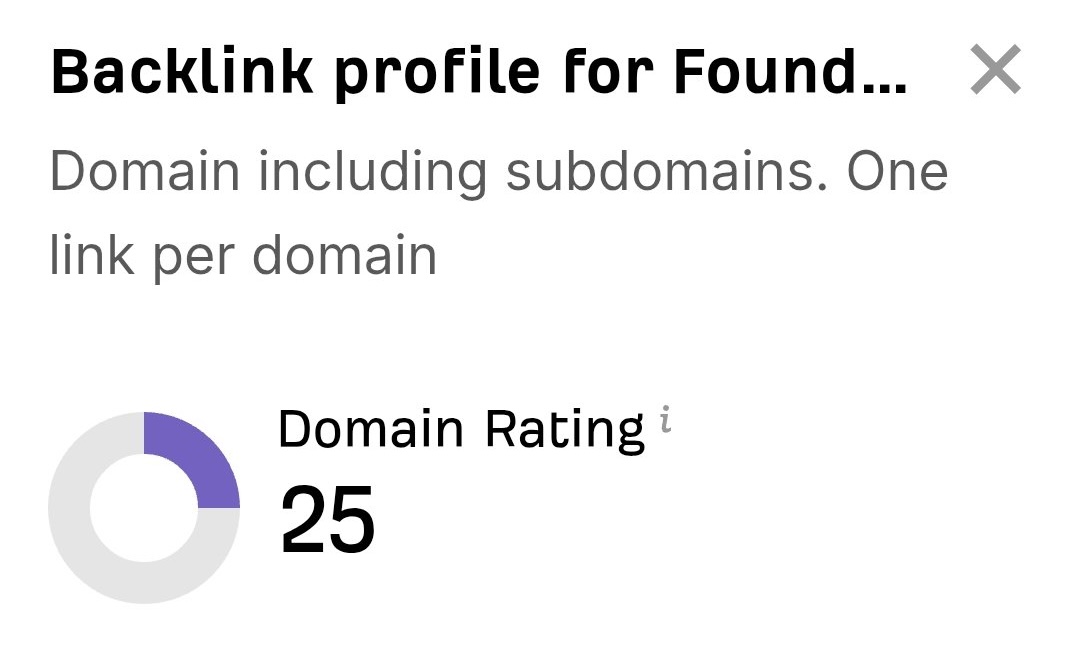 “I just let the Sorank software do its thing, and now my DR is 25 and my page is ranking higher.”
 Lucas FlandrePodcast Host“I specialized in GEO thanks to Sorank. The GEO Leaderboard allows me to show my clients their position vs competitors on ChatGPT. It’s a real commercial differentiator.”
 MélanieSEO Freelance“Great service, works well for our website and helps us understand how to improve it to rank better on Google and elsewhere. Congrats, keep going, I recommend it.”
 Hugo T.E-commerce merchant