
Preferences
Privacy is important to us, so you have the option of disabling certain types of storage that may not be necessary for the basic functioning of the website. Blocking categories may impact your experience on the website. More information

Privacy is important to us, so you have the option of disabling certain types of storage that may not be necessary for the basic functioning of the website. Blocking categories may impact your experience on the website. More information
Learn how to recover from google updates with a proven checklist covering diagnosis, content audits, E-E-A-T fixes, and long-term ranking protection.
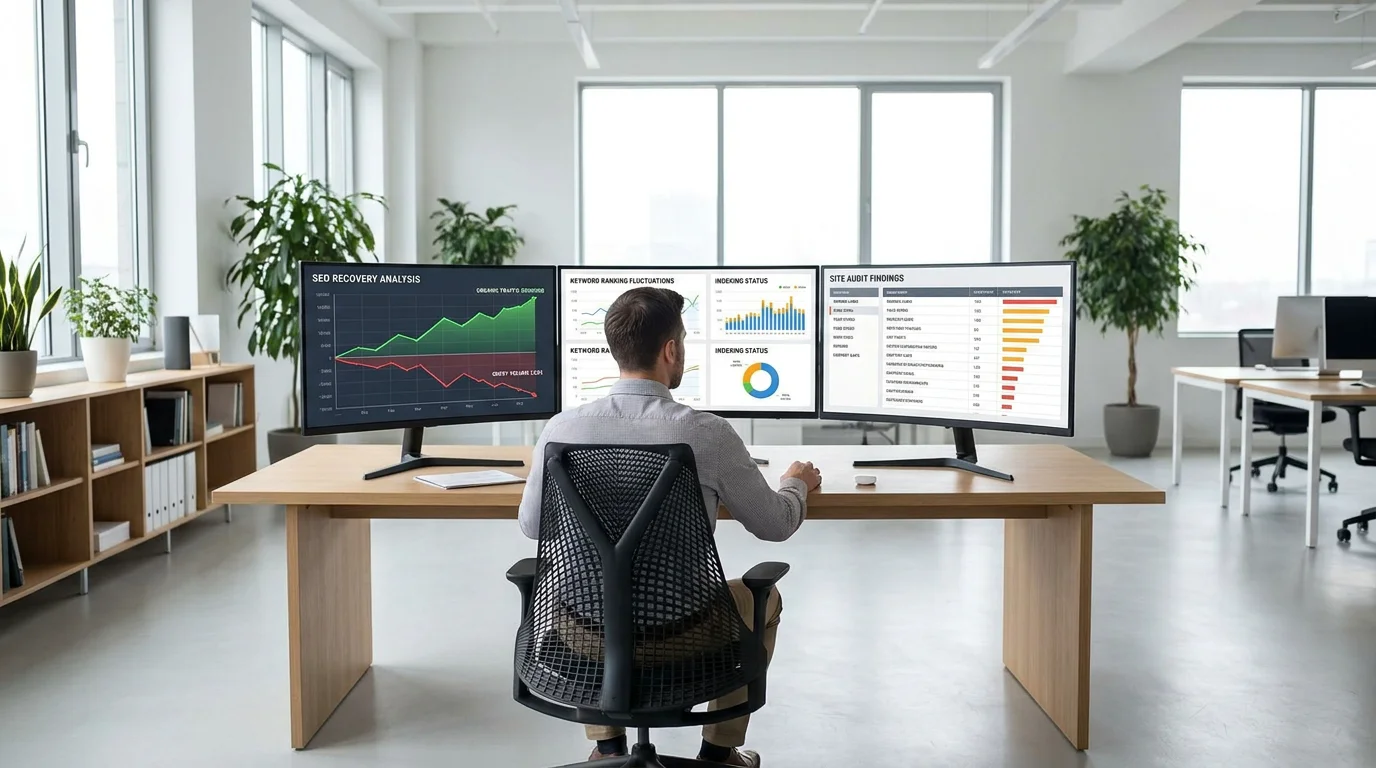

In 2025 alone, Google shipped seven confirmed algorithm updates, the highest annual count on record. The March 2026 core update then shifted roughly 80% of top-three results across tracked keywords, proving that no website is immune. Understanding how to recover from Google updates is no longer optional; it is an operational necessity for any business that relies on organic traffic.
Yet recovery does not happen by accident. Google has repeatedly stated that ranking drops during core updates are not penalties; they are re-evaluations of relative content quality. That distinction matters because it changes the entire recovery approach. Instead of fixing a violation, you must improve your overall value proposition. In this guide, we walk you through every phase of that process, from initial diagnosis to long-term resilience, so you can turn ranking volatility into a competitive advantage. Staying informed about Google algorithm updates is the first step toward protecting your visibility.
Google now releases core updates on a roughly quarterly cadence, a notable acceleration from the historical twice-per-year pattern. According to a 2026 analysis by Digital Applied, the pace of confirmed updates has increased and shows no signs of slowing. Each individual rollout also carries more weight because compounding updates mean a site that lost rankings in one cycle and did not recover faces steeper losses in the next.
The March 2026 core update illustrated this perfectly. SEMrush Sensor readings peaked at 9.5 out of 10, and nearly one in four top-ten pages fell out of the top 100 entirely. At the same time, Google introduced holistic Core Web Vitals scoring, aggregating LCP, INP, and CLS into a single composite performance signal rather than evaluating each metric independently.
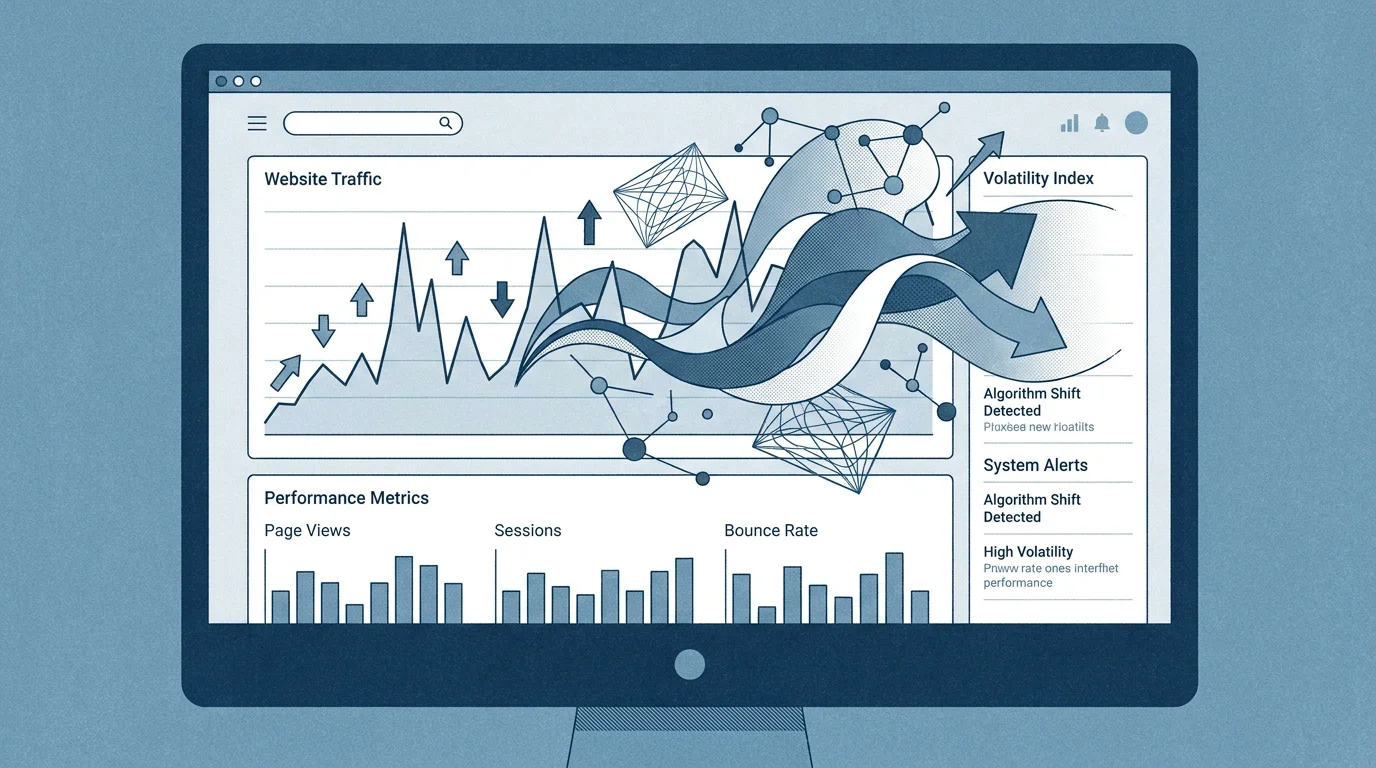
Understanding the scale of these changes is critical. A 2025 Ahrefs study found that AI Overviews now appear for approximately 16% of all queries and reduce organic click-through rates by an estimated 58%. Being ranked is no longer enough; being cited in AI Overviews has become equally important. This dual pressure, from both traditional core updates and AI-driven search features, is what makes recovery in 2026 more complex than in any prior year.
Before you change anything, you need to confirm that your traffic drop actually coincides with a confirmed update. Check the Google Search Status Dashboard to verify rollout dates, and cross-reference those dates with your own Google Search Console data. Compare clicks and impressions for the 28 days before the update against the 28 days after.
This step prevents a common and costly mistake: attributing a seasonal dip, a tracking glitch, or a competitor improvement to an algorithm change. In September 2025, for example, many site owners panicked over apparent traffic losses that turned out to be a Google Search Console reporting glitch, not an actual update effect.
Once confirmed, segment your data at the page and keyword level. Determine whether the impact is site-wide or concentrated on specific clusters. This distinction shapes your entire recovery strategy. A site-wide decline often points to systemic quality or technical issues, while a cluster-specific drop usually indicates a content relevance or intent mismatch problem. Our SERP volatility sensor can help you correlate ranking shifts with confirmed update windows in real time.
Once you know which pages and keyword clusters were affected, your next step is to study the pages that now outrank you. This is not about copying competitors. It is about understanding what signals Google has decided to reward more heavily.
Ask yourself these questions for every affected query:
Document the gaps between your content and the new top results. Focus on depth, recency, original data, and structural clarity. Pages that answer common and uncommon questions tend to build stronger user trust, a point emphasized consistently in Google's helpful content guidelines.
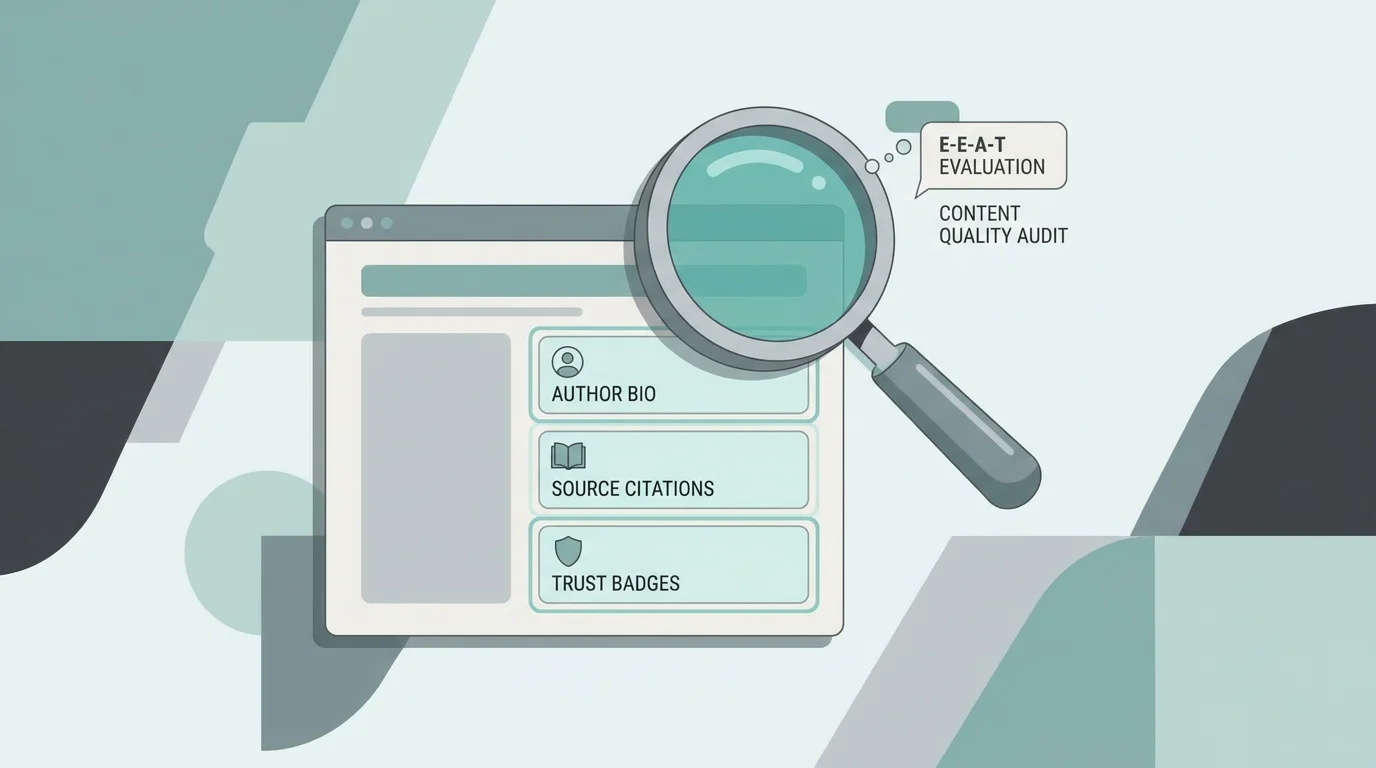
Experience, Expertise, Authoritativeness, and Trustworthiness remain among the most consequential ranking factors after every core update. Research from recovery case studies indicates a 78% recovery success rate for sites that systematically improved E-E-A-T signals following a core update.
Practical steps to reinforce E-E-A-T include:
For YMYL (Your Money or Your Life) topics such as health, finance, and legal content, recovery timelines are considerably longer. Independent analysis published in 2026 estimates 6 to 12 months for YMYL sites versus 2 to 6 months for standard e-commerce sites that address content quality issues. Patience and consistency are essential. You can evaluate how well your pages currently meet these criteria by running an E-E-A-T signals review before making content changes.
Content quality improvements alone will not recover your rankings if your site has unresolved technical issues. The March 2026 core update made this especially clear by shifting to holistic Core Web Vitals scoring, where failing even one metric compounds the negative effect across all three.
An analysis of sites affected by the December 2025 core update found that pages with LCP above 3 seconds experienced 23% more traffic loss than faster competitors with comparable content. Sites with INP above 300 milliseconds saw drops of approximately 31%.
Your technical audit should cover:
Rather than running manual checks across dozens of tools, you can streamline this process with our on-page SEO audit, which identifies technical issues and prioritizes fixes by impact.
Backlinks remain a foundational ranking signal, and algorithm updates often recalibrate how link quality is measured. After a core update, evaluate your link profile for two scenarios: loss of high-quality links that previously supported your rankings, or an influx of low-quality links that may be diluting your authority.
Effective link recovery strategies include:
Contextual, editorially placed backlinks from real websites carry far more weight than bulk-acquired links. A healthy link profile correlates with stronger traditional rankings and, increasingly, with higher citation likelihood in AI Overviews. Teams without dedicated outreach capacity often bring in specialists for this work; the 10 best netlinking agencies in France compares agencies built to rebuild a link profile methodically after a core update.
Recovery in 2026 is not limited to traditional blue-link rankings. AI Overviews now influence a significant share of search traffic, and being cited in those overviews delivers substantially more organic clicks than a standard listing alone. According to a 2026 analysis of AI citation patterns, 92.36% of AI citations come from page-one results, and ranking in the top ten is essentially the entry requirement for citation eligibility.
To improve your chances of being cited in AI-generated answers:
This dual approach, optimizing for both traditional search and AI citation, is what separates sites that merely recover from sites that gain ground after an update.
Recovery from a Google core update does not produce gradual results between updates. As Google's own documentation clarifies, improvements position your site for re-evaluation during the next core rollout, not before. That makes ongoing monitoring and iterative refinement essential.
Set up a structured review cycle:
The May 2026 core update, confirmed by Search Engine Land on May 21, 2026, is a reminder that this cycle is now relentless. Sites that treat recovery as a one-time project will inevitably lose ground to competitors who treat it as a continuous discipline. Sites without in-house resources to sustain that cadence typically outsource it; our roundup of the 10 best seo agencies in France profiles specialists equipped for ongoing post-update monitoring.
Recovery timelines vary significantly by industry. Standard e-commerce sites typically see improvements within 2 to 6 months after addressing content quality issues, while YMYL sites (health, finance, legal) often require 6 to 12 months. Most recovery materializes at the next core update, not between them.
Google does not penalize content simply because it was created by AI. What the algorithm targets is mass-produced content that lacks human expertise and editorial oversight. The focus is on quality and helpfulness, not the production method. Platforms like ours at Sorank use AI-first article generation combined with source attribution and expert review to maintain quality standards.
Google advises waiting until the rollout is complete before drawing conclusions. Ranking fluctuations during the rollout period are normal, and premature changes can make it harder to diagnose the actual cause of any traffic shifts. Once the update is fully deployed, compare your pre-update and post-update data before taking action.
Recovering from a Google algorithm update is neither quick nor simple, but it is achievable with disciplined execution. The most impactful data point from 2026 so far is clear: nearly 80% of top-three results shifted during the March core update, which means the competitive landscape resets more frequently than ever. The sites that recover fastest are those that treat quality, technical health, and E-E-A-T as ongoing investments rather than one-time fixes. Our platform consolidates audits, content optimization, and AI visibility tracking into a single workflow, so you can focus on improvement rather than tooling. To start diagnosing your site today, try our automated SEO audit and identify exactly where to focus your recovery efforts.
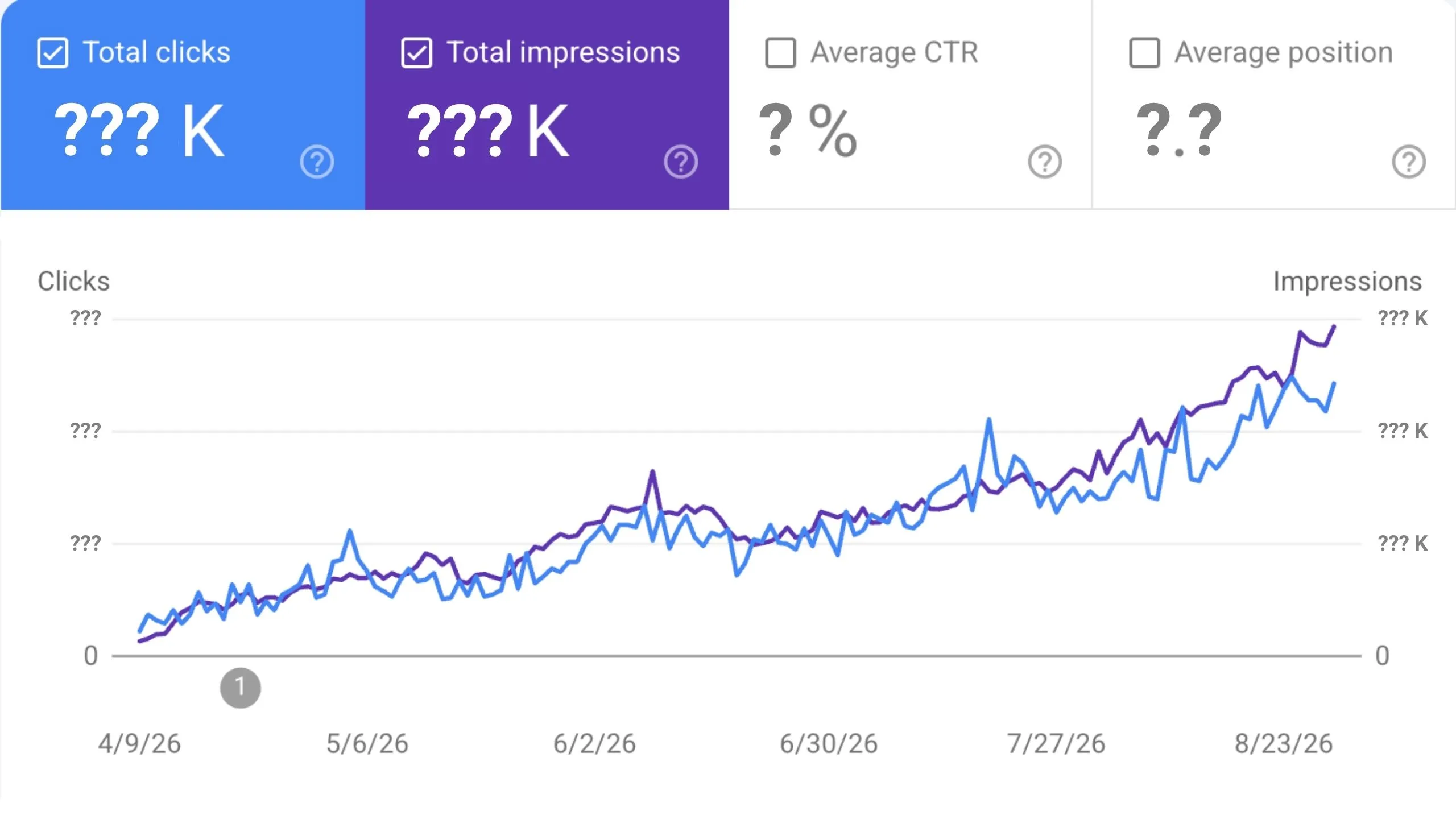
THEY WIN WITH SORANK







.webp)


.webp)
.webp)







.svg)
.svg)