












Preferences

Privacy is important to us, so you have the option of disabling certain types of storage that may not be necessary for the basic functioning of the website. Blocking categories may impact your experience on the website. More information

Accept all cookies

JungleUp: review, pricing and how this link building platform works

JungleUp in 2026: six languages, direct negotiation with site owners and full editorial control for publishers. What it covers and its limits.
review star trustpilot 5/5review star trustpilot 4/5review star trustpilot 3/5review star trustpilot 2/5review star trustpilot 1/5review star trustpilot 0/5
JungleUp link building platform

Tired of paying for burned backlinks? Get high authority backlinks for free with Sorank.

Company logoCompany logoCompany logoCompany logoCompany logo
Trusted by +20 Agencies.

Everything you need to know about this backlink platform!

agence immobilière

Company

Creation

2019
in
🇫🇷 France

Contact

Contact form

Linkedin Account

linkedin logo

Catalog Size

audit seo

Informations

Available site languages

FR; EN; DE; ES; NL; IT

Are sensitive niches accepted?

check yescheck no

Is content writing included ?

Gratuite

Site visibility before purchase ?

Accessibles
energie

Links

Price range

Payant
from
100
€

Type of links

Blogs, Media, Forums, Niche Sites, General Sites, PBN

Link placement

In-content and via the dashboard; direct exchange with partner site managers

For a business operating in several European markets, JungleUp covers six languages from one account, which removes the overhead of maintaining a separate supplier per country.

The direct negotiation is worth using rather than skipping. Talking to the person who runs the site lets you check the article actually fits their audience, agree where the link sits, and ask whether the page will be maintained. Those three things affect the value of a placement more than any metric in the catalogue.

Plan for it to take longer than clicking a buy button. If you need volume quickly, a fixed-price marketplace suits better. If you want a handful of placements that hold up, this model gets you there. If you would rather order at a fixed catalogue price than negotiate, PaperClub and Getfluence work that way.

For an agency, JungleUp fits the accounts where placement quality matters more than volume, and where you have time to negotiate. Direct contact with site owners lets you build relationships you can reuse across clients, which compounds in a way that catalogue buying never does.

The six-language catalogue consolidates a European roster into one account. Verify depth per market before you commit a client to it, because a platform listing six languages rarely holds equal inventory in all six.

Two limits. No API means everything is manual, and negotiation adds time on top, so price that into the retainer. And with no Trustpilot rating available, do your own reliability check on a small order before putting a client campaign through it.

JungleUp is built with publishers in mind more visibly than most platforms in this collection. Its own pitch to site owners is about earning from an audience you built, on your own terms, with full editorial control and the right to accept only the opportunities that suit you.

That framing is worth taking literally, because it is exactly the discipline that keeps a site worth buying from. Set your rules: the topics you cover, how many outbound links an article may carry, how many sponsored pieces you publish per month, and what you will not accept at any price.

Direct contact with advertisers is the practical advantage here. You can negotiate rather than accept a catalogue rate, explain what your audience is worth, and build repeat relationships with buyers who come back. That is a better business than filling every slot at the platform's default price.

Thibault Besson-Magdelain fondateur de Sorank

About Author

Thibault Besson-Magdelain

Founder of Sorank, 5+ years of experience in SEO, GEO enthusiast.

What JungleUp is

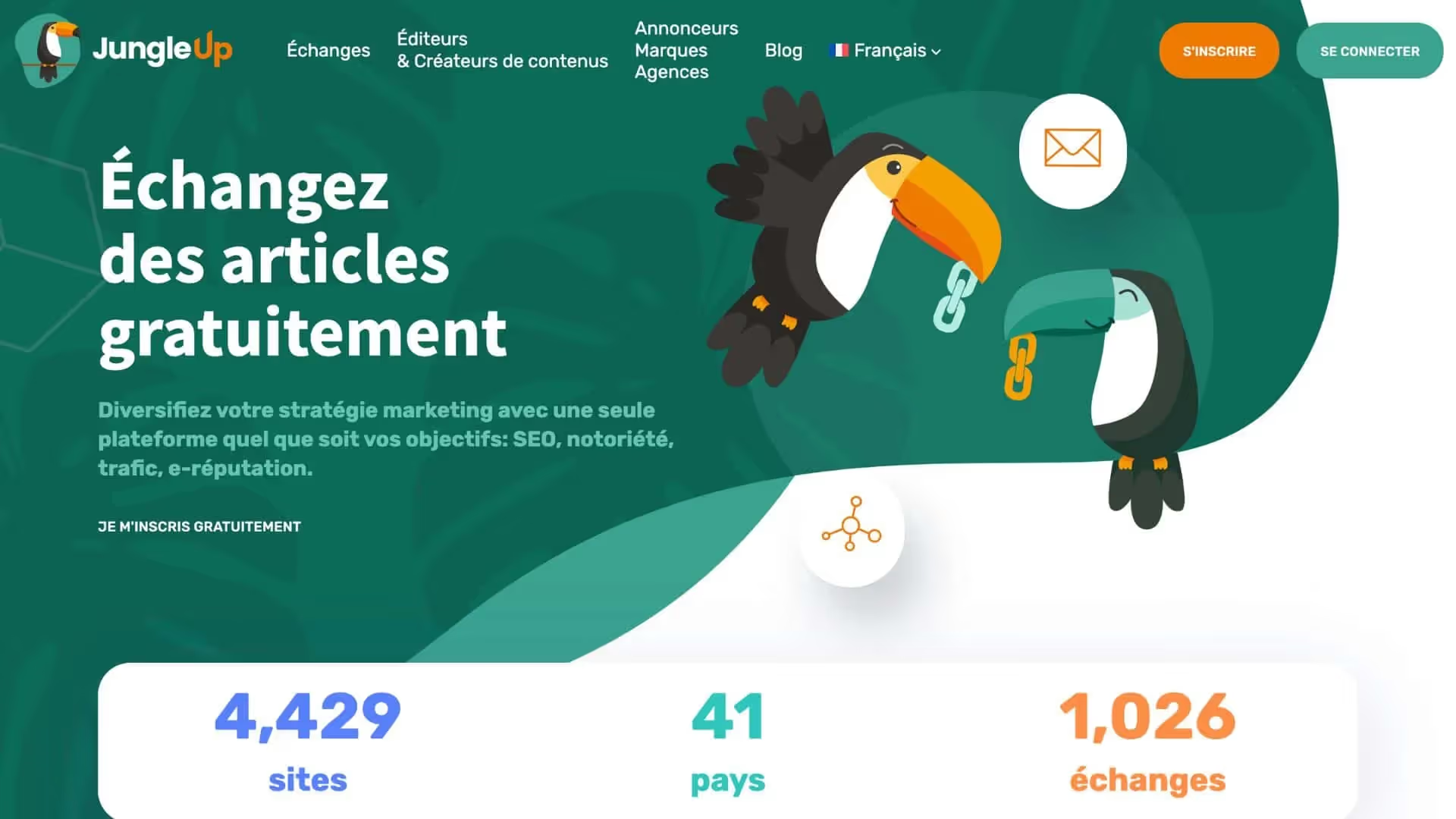
JungleUp is a link building platform launched in 2019 covering six languages: French, English, German, Spanish, Dutch and Italian. That range is among the widest in this collection and makes it a candidate for anyone running sites across several European markets.

Its distinguishing feature is how the transaction happens. Alongside ordering through the dashboard, JungleUp supports direct exchange with the people who run the partner sites. You are talking to the site owner rather than only to a platform.

Negotiation instead of a fixed price list

Direct contact changes the economics of a placement. A catalogue price is a take-it-or-leave-it number set to work across every buyer. A conversation lets you discuss what the article covers, where the link sits, whether the piece can be updated later, and what a repeat relationship is worth.

It costs time, which is the trade-off. If you want thirty placements this month with no discussion, a fixed-price marketplace is faster. If you want a smaller number of placements that actually fit, negotiating with the person responsible for the site usually produces a better result than filtering a catalogue.

The platform states its own position clearly: the aim is partnerships that make sense rather than accumulating links. That is the right framing, and it is also a reasonable description of how the model works in practice.

The offers and the pricing

Pricing is not published and is set per site, with room for direct negotiation. Placements are in-content, ordered through the dashboard or agreed directly with the partner site manager.

Inventory covers blogs, media, forums, niche sites, generalist sites and networks, across six languages.

How it works

You create an account, browse partner sites, and either order through the dashboard or open a direct exchange with the site owner. Sites are visible before purchase.

Guarantees, limits and what to watch

Three points. Sites are visible before purchase and negotiation is possible, both in your favour. There is no API and no affiliate programme. And the platform carries no Trustpilot rating, so there is no external signal on delivery reliability.

The six-language coverage is the reason to pick JungleUp over a domestic platform. Check the depth per language before planning around it, since breadth of listing and depth of inventory are not the same thing.


Have information or corrections to share about this description ?
Contact us, we're committed to building the best GEO resource online !

How much does a placement on JungleUp cost?

The platform does not publish rates. Prices are set per site and there is room to negotiate directly with the person who runs it, which is unusual on this market. That means the price you pay depends partly on what you agree rather than only on a catalogue figure. Register, browse the partner sites available in your market, and open a conversation on the ones that fit.

What does direct exchange with site owners change?

It replaces a take-it-or-leave-it catalogue price with a conversation. You can discuss what the article covers, where the link sits, whether the page will be maintained, and what a repeat relationship is worth. The cost is time, so it suits a small number of well-chosen placements rather than bulk ordering. For volume at speed, a fixed-price marketplace is the better tool.

Which languages does JungleUp cover?

Six: French, English, German, Spanish, Dutch and Italian. That is among the widest coverage in this collection and the main reason to choose it over a single-market platform if you run sites across Europe. Check the depth in each language before planning around it, since listing six languages and holding deep inventory in all six are different things. Filter for your target market and count what comes back.