Preferences
Privacy is important to us, so you have the option of disabling certain types of storage that may not be necessary for the basic functioning of the website. Blocking categories may impact your experience on the website. More information

Privacy is important to us, so you have the option of disabling certain types of storage that may not be necessary for the basic functioning of the website. Blocking categories may impact your experience on the website. More information

Page speed optimization: cut your load time. Image optimization, caching, CDN, and best practices.







Tools


Founder of Sorank, 7+ years of experience in SEO, GEO enthusiast.
Summary
Page speed is how fast your website loads, measured in seconds. Faster pages rank better, convert better, and keep users happy. Target under 2 seconds on mobile, under 1.5 on desktop.
Want to go further? Ask
Page speed is both an SEO ranking factor and a business metric. Fast pages rank higher on Google. Fast pages also convert more visitors into customers. Research shows that a 1-second delay in page load results in 7% fewer conversions. For ecommerce sites, slow pages cost thousands of dollars daily in lost sales. For publishers, slow pages mean fewer page views and lower ad revenue. For all sites, page speed is critical.
The benchmark for fast page load is under 2 seconds. Pages loading in 2 seconds or less are perceived as fast by users. Pages taking 3-5 seconds feel slow. Pages taking over 5 seconds are frequently abandoned. Your goal is simple: get your load time under 2 seconds, then under 1.5 seconds, then continue optimizing. Every 100ms of improvement matters.
Page load time consists of several components. Time to First Byte (TTFB) is how long the server takes to respond. Largest Contentful Paint (LCP) is when the main content becomes visible. Fully loaded is when all resources finish downloading. These metrics are not the same, and optimizing each requires different tactics.
TTFB is your server's response time. If TTFB is over 600ms, your server is slow. Common causes are inefficient backend code, database queries, or server overload. Fix TTFB by optimizing backend code, upgrading hosting, enabling caching, or using a Content Delivery Network (CDN).
Google's performance learning path explains each metric in detail. LCP and other Core Web Vitals are covered in depth. Understanding these metrics is prerequisite to optimizing page speed effectively.
Images are typically 50-80% of page weight. Unoptimized images are the fastest way to slow down your site. Optimize images by reducing file size without compromising quality. Three tactics:
Compression: Use image compression tools to reduce file size. JPEG images compress 10-40x. PNG images compress 2-5x. Use tools like TinyPNG, ImageOptim, or plugins in your CMS to automatically compress. Compress before uploading to your site.
Modern formats: Use WebP instead of JPEG or PNG. WebP compresses 25-35% better than JPEG while maintaining quality. Browsers support WebP natively now. Use JPEG as a fallback for older browsers using the `
Lazy loading: Load images only when users scroll near them. Use the native HTML `loading="lazy"` attribute on images below the fold. This defers loading images that users may never see, improving initial page load dramatically.
Google's optimization guide provides specific image optimization techniques. Properly optimized images alone often reduce page load time by 30-50%.
Render-blocking CSS and JavaScript slow down page load. Render-blocking resources prevent the browser from rendering the page until they are downloaded and processed. Defer non-critical CSS and JavaScript so critical content renders first.
Minimize and defer JavaScript: Large JavaScript files block rendering. Split your JavaScript into smaller chunks and defer loading non-critical scripts. Use `
Sources

Studies show a one-second delay leads to roughly a 7% drop in conversions. A page that loads in 2 seconds converts 2-3x better than one that loads in 5 seconds. Page speed directly impacts revenue.
Industry benchmarks suggest aiming for under 2 seconds on mobile and under 1.5 seconds on desktop. Pages loading in under 2 seconds are perceived as fast. Hitting under 2 seconds takes substantial optimization.
Yes. CDNs reduce TTFB by 50-80% by serving content from servers near your users. A user in Australia accessing content from a US server will load much more slowly. CDNs are essential for global audiences.
THEY TRIED SORANK BEFORE YOU
 “I tested Sorank on a real client site and it's insane. It does everything an agency would bill you $1500 a month for. It's going into production on that client now.”
 Guillaume Guersanguersanguillaume.com“We are an Ads agency and we wanted to get our SEO back on track once and for all. Sorank gave us a clear view of our site, helped us prioritize optimizations, and properly structure our content. The tool is easy to use, well designed for a team, and very practical for centralizing tracking without having to juggle multiple platforms. A very solid foundation to start fresh with our SEO.”
 Gaspard MadouiAds Agency
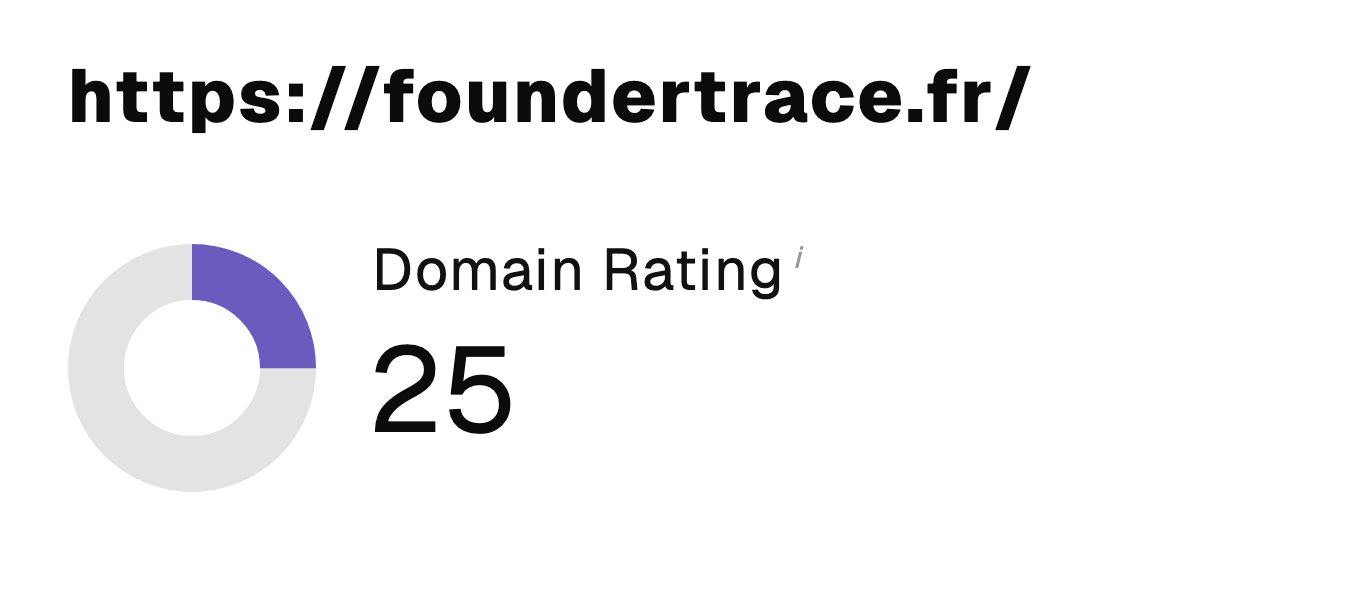 “I just let the Sorank software do its thing, and now my DR is 25 and my page is ranking higher.”
 Lucas Flandrefoundertrace.fr“I specialized in GEO thanks to Sorank. The GEO Leaderboard allows me to show my clients their position vs competitors on ChatGPT. It’s a real commercial differentiator.”
 MélanieSEO Freelance“Great service, works well for our website and helps us understand how to improve it to rank better on Google and elsewhere. Congrats, keep going, I recommend it.”
 Hugo T.E-commerce merchant