
Preferences
Privacy is important to us, so you have the option of disabling certain types of storage that may not be necessary for the basic functioning of the website. Blocking categories may impact your experience on the website. More information

Privacy is important to us, so you have the option of disabling certain types of storage that may not be necessary for the basic functioning of the website. Blocking categories may impact your experience on the website. More information
Compare the best software for seo optimization in 2026 and learn how to automate audits, content, and AI visibility for measurable organic growth.


Search has changed faster in the past eighteen months than in the previous decade. According to GoodFirms research, nearly 60% of Google searches now end without a click, and AI Overviews appear in the majority of brand searches. The blue links that once defined visibility are now sharing the page with generated answers. For teams that depend on organic traffic, the right SEO optimization software is no longer a convenience. It is the difference between being cited and being invisible.
This shift explains why so many marketers are rethinking their stack. The question is no longer which keyword tool ranks pages, but which platform can rank you on Google while also earning mentions inside ChatGPT, Gemini, and Perplexity. To centralize that work, you can manage both disciplines from our SEO optimization software dashboard, where audits, articles, and AI tracking sit side by side.
At its core, a piece of software for seo optimization helps you plan, execute, and measure visibility across search engines. Historically that meant Google and Bing. Today it also means answer engines and large language models. The category has widened from simple rank tracking into a set of connected functions that work together.
Most serious platforms now cover four pillars. The first is technical SEO, including crawl health, Core Web Vitals, schema, and indexation. The second is keyword and content research built around search intent rather than exact match. The third is content production, increasingly assisted by AI. The fourth, and newest, is AI visibility tracking, which monitors whether your brand is named in generated answers.
The market reflects this expansion. Business Research Insights estimates the global AI SEO software tools market at around USD 2.43 billion in 2026, advancing at a compound annual growth rate of 10.5% through 2035. Demand is being driven by businesses that want measurable organic growth without expanding headcount.
Consider how quickly user behavior has moved. Industry tracking shows that Google AI Mode reached roughly 75 million daily active users by early 2026, a fourfold increase since its launch in May 2025. Conversational search is no longer experimental. It is mainstream behavior.
This is why a tool built only for traditional ranking leaves a gap. If your platform cannot tell you whether an AI engine cites your content, you are measuring half of the picture. The same applies to technical work. When a generated answer pulls from structured, well-indexed pages, neglecting schema and Core Web Vitals quietly removes you from consideration.
Adoption is following the data. DemandSage reports that 56% of marketers already use generative AI for SEO, and that AI-driven campaigns can lift organic traffic by as much as 45% for ecommerce sites. The teams that win are not those with the most tools, but those whose tools talk to each other.

Not every feature deserves a line in your budget. When you evaluate a platform, focus on the functions that compound over time rather than one-off conveniences.
If you want to understand how these pieces fit a single workflow, our SEO software overview breaks down each function and how it connects to the next. The goal is to replace a tangle of disconnected subscriptions with one coherent system.
Most stacks force a choice. You buy one tool for content, another for backlinks, a third for rank tracking, and yet another for AI monitoring, then spend hours wiring them together. We built our platform to remove that friction entirely. It generates AI-first, optimized articles, acquires contextual high-authority backlinks, and tracks when AI engines cite your brand, all from the same place.
Two design choices set this apart. First, backlinks come from a private network of more than 2,000 real sites with genuine traffic, inserted contextually when other members publish, rather than from a private blog network. Second, AI visibility is tracked across 300 monitored prompts spanning ChatGPT, Perplexity, Gemini, Claude, and Grok, with a leaderboard that benchmarks you against competitors. Meanwhile, technical fixes such as Core Web Vitals, schema, indexation, and broken links are handled in the background. For the technical layer specifically, our on-page SEO audit tool surfaces and resolves issues without requiring you to read a crawl report line by line.
The table below contrasts common approaches by capability. Pricing for competing tools reflects publicly listed starting tiers from their own materials and may change.
| Platform | Scope | AI citation tracking | Backlink acquisition | Automated technical fixes |
|---|---|---|---|---|
| Sorank (our platform) | All-in-one SEO and GEO on autopilot | Yes, 300 prompts across 5 AI models | Yes, private network of 2,000+ real sites | Yes, handled in the background |
| Content optimizer (Surfer-style) | Content scoring and writing | Partial, newer feature | No | No |
| All-in-one suite (Semrush-style) | Broad research and reporting | Add-on or higher tier | Outreach focused | Partial |
| Free tools (Search Console) | First-party Google data | No | No | No |
Free tools remain valuable for first-party data and indexing requests, and you should keep using them. Their limitation is scope: they report on your own property only and offer no competitor analysis, content production, or AI visibility tracking. They are a baseline, not a complete system.

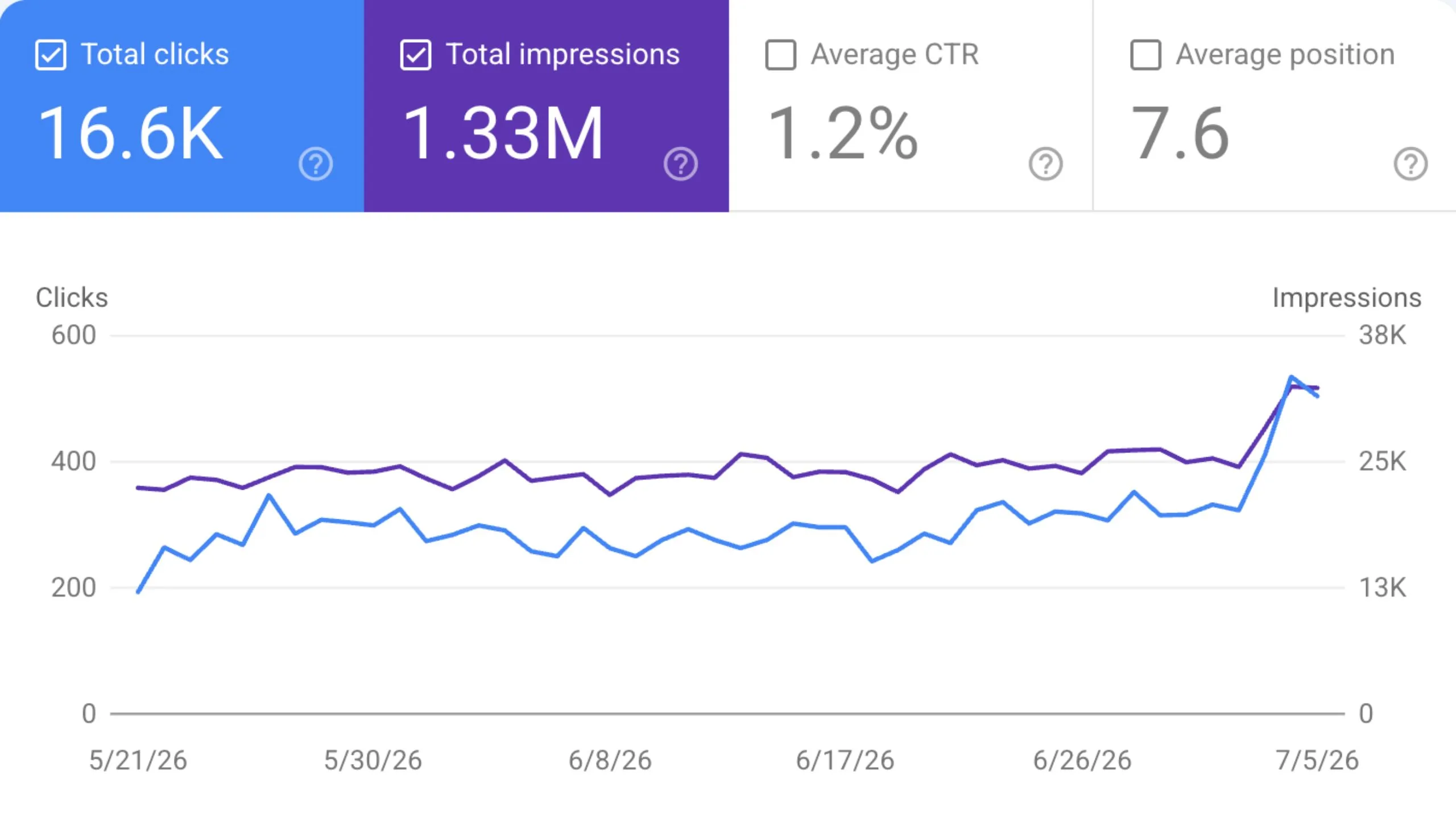
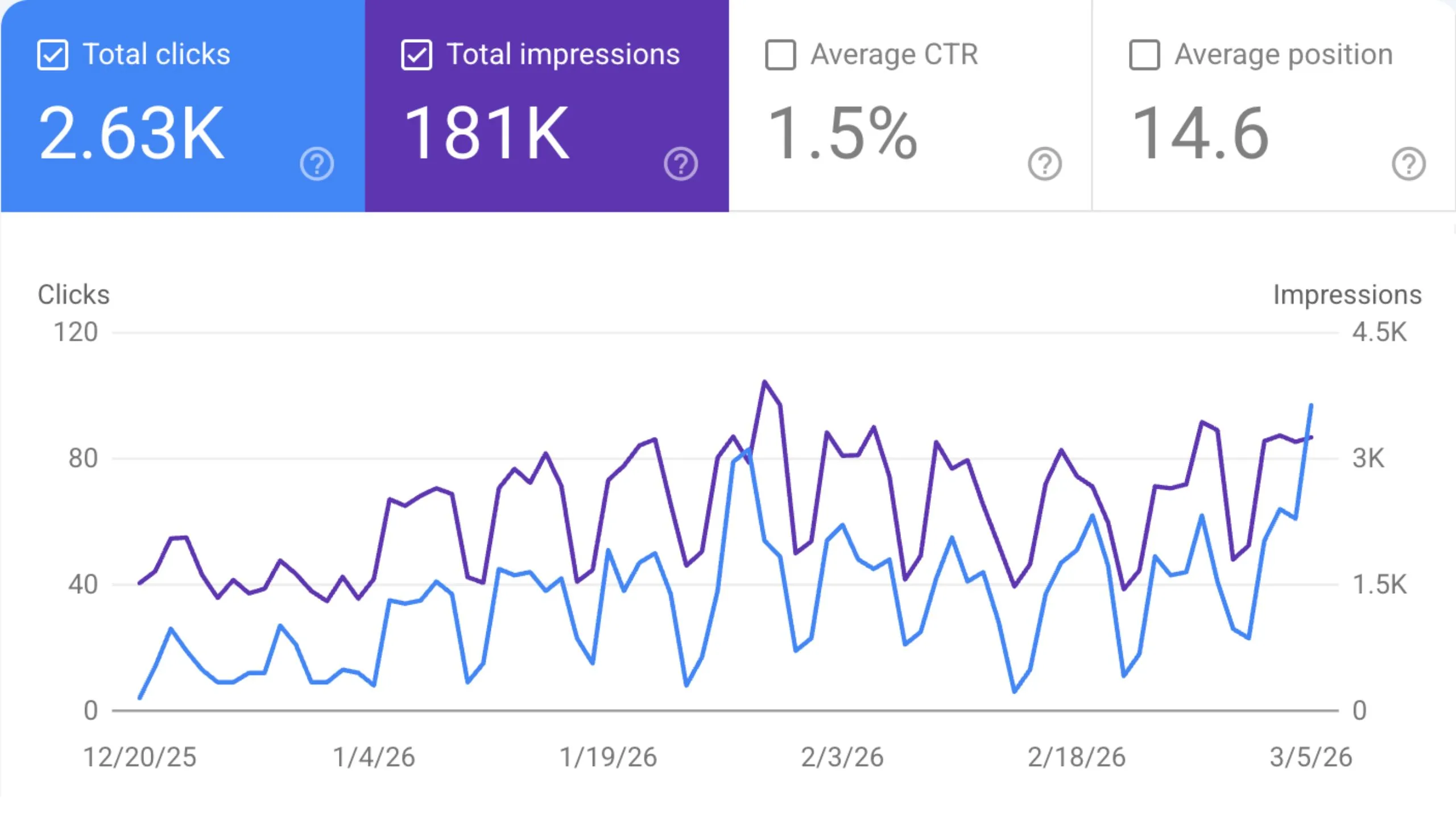
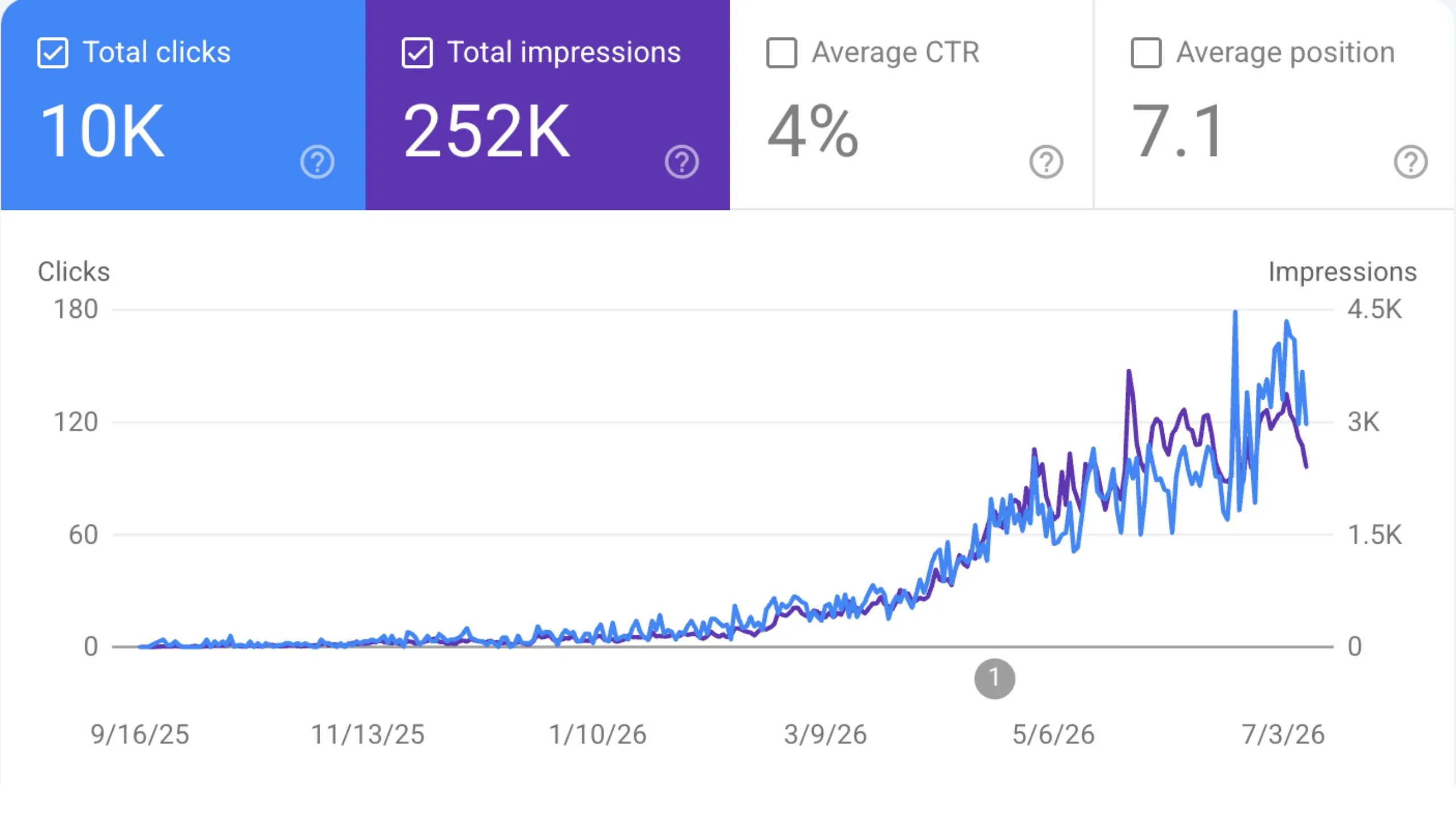
Realistic expectations matter more than promises. Content created with AI assistance typically begins appearing in search results within roughly two months, and momentum compounds afterward. In our own experience, first AI citations tend to appear around three weeks after publishing begins, Google traffic ramps over two to three months, and the compounding effect becomes powerful near month six. One client, Lacreme.ai, moved from 300 to 700 visitors per day in under four months.
Measurement is where many teams struggle. GoodFirms found that 51.4% of marketers cite proving return on investment as a top challenge, partly because traditional analytics do not capture the influence of a brand mention inside an AI answer. This is why visibility tracking and monthly reporting belong in the same platform as your publishing workflow, so the story from work to result stays connected.
Start from your constraint, not the feature list. If your bottleneck is time, prioritize automation and autopilot publishing. If it is technical skill, prioritize a tool that fixes issues without requiring you to interpret them. If it is fragmented reporting, choose a system that consolidates SEO and GEO metrics in one view. For a structured way to find weaknesses before you commit, our SEO diagnostic software guide explains how to read an audit and act on it.
Above all, favor a platform whose outputs you own. Articles, briefs, and assets you can edit, republish, and keep after cancellation protect the investment you make today.
The defining fact of 2026 is simple: nearly 60% of searches end without a click, so visibility now means being the cited source, not merely a ranked one. The strongest SEO optimization software reflects that reality by uniting technical health, content, backlinks, and AI citation tracking in a single workflow rather than a stack of disconnected tools. Choose a system that automates the repetitive work, reports clearly, and leaves you owning everything it produces. That combination is what turns scattered effort into compounding organic growth, and it is exactly what our autopilot platform was built to deliver. To put it to work, explore our SEO optimization software dashboard and start a free trial today.
Yes, and arguably more than before. Being named inside an AI answer requires structured, well-indexed, authoritative content, which is precisely what a modern platform helps you build and monitor.
Content typically begins surfacing within about two months, with compounding gains afterward. In our experience, first AI citations can appear near three weeks, while Google traffic ramps over two to three months.
No. Our platform handles technical fixes such as Core Web Vitals, schema, indexation, and broken links in the background, so you can focus on strategy rather than implementation.









.webp)
.webp)









.svg)
.svg)