Preferences
Privacy is important to us, so you have the option of disabling certain types of storage that may not be necessary for the basic functioning of the website. Blocking categories may impact your experience on the website. More information

Privacy is important to us, so you have the option of disabling certain types of storage that may not be necessary for the basic functioning of the website. Blocking categories may impact your experience on the website. More information

Improve your site structure, boost conversions, and build SEO-ready pages using a complete wireframe built for Shopify, Webflow, WordPress and marketplaces.

Tools

Summarize this article with AI
Quick quiz
Who should fix the technical side of your site?
Our advice for you
Foundation: header and footer structure is the right solution for you
Number 1 in this ranking, the best match for your answers.
Our advice for you
Marketing psychology: turning visitors into leads is the right solution for you
Number 2 in this ranking, the best match for your answers.
Our advice for you
Social proof is the right solution for you
Number 3 in this ranking, the best match for your answers.
Our advice for you
Liking is the right solution for you
Number 4 in this ranking, the best match for your answers.
If your website is on Shopify, Webflow, WordPress, or even built as a custom marketplace, chances are your SEO results depend on one thing: your structure.
Most businesses landing on their site don't know what to improve. Growth slows, rankings plateau, or organic traffic suddenly drops, but nothing seems clearly "broken".
To solve this problem, I created the Master Wireframe: a complete website blueprint tested across hundreds of audits and thousands of SEO A/B tests. It's exactly the framework I use for my agency and inside Sorank, the software I build, which measures AI visibility and helps brands appear in ChatGPT, Perplexity, and other AI assistants.
This guide describes every element of the Master Wireframe, header, footer, homepage, product pages, blog structure, marketplace layouts, and explains why each block matters.
If you want a website that ranks faster, converts better, and scales easily, here is your full roadmap.
The Master Wireframe is a Figma template containing everything needed to optimize any website, e-commerce store, SaaS, service business, or large marketplace.
It is free to use, and it fits Shopify, Webflow, WordPress and custom marketplaces.
The template is updated continuously. Every SEO audit I run leads to new improvements. That means the structure you get today is the result of years of live experiments on real businesses.
Every website, regardless of industry, needs a header and footer designed according to strict SEO rules.
Small technical mistakes in headers or footers can damage rankings significantly. Fixing them is one of the fastest SEO wins.
Ranking is not enough. You need to convert.
All my wireframes are built around Robert Cialdini's six principles of persuasion:
Offer something valuable, a guide, a discount, or a tool, to increase the chances that people give back (email, contact, purchase).
The data you mention on social media must be consistent with what's on your website. Contradictions kill trust.
Text reviews used to work. Then photo reviews. Today, video testimonials are the most credible proof online.
Users say yes more easily to people they like or identify with. Your imagery, tone, and founder section must reflect your audience.
Press logos, certifications, and expert badges significantly raise conversion rates. Even smaller media mentions matter.
Consultants, agencies, coaches, and service providers can't take an unlimited number of clients. This natural scarcity raises perceived value when communicated honestly.
SEO and CRO are no longer separate disciplines. In 2025, all communication channels influence each other: Google, AI assistants, TikTok, landing pages, emails.
A site with average SEO but a high conversion rate outperforms a high-traffic site that converts poorly. Teams that want a specialist audit of these psychological triggers rather than a do-it-yourself pass can consult the 10 best cro conversion agencies in France, a roundup of agencies focused specifically on turning traffic into revenue.
Whether you're using Shopify (with themes like Full Stack), Webflow, or WordPress, the homepage must follow a proven order.
Four obvious benefits proving safety, quality, or credibility.
Featured items or best-performing categories.
Three sections explaining:
Use:
Images or videos of happy customers.
Concretely explains what's included in the product, service, or package.
Perfect for boosting liking and trust.
Case studies or before/after metrics.
Extremely important for SEO.
Each page must be unique, no duplicated questions across the site.
If someone reads the entire page, they're interested.
Offer:
Blog articles are at the heart of long-term SEO.
Here is the structure inside the Master Wireframe:
Helps crawlers and users understand the hierarchy.
On my sites, every article includes:
This increases dwell time and user engagement.
Sticky on desktop so users always know where they are.
Optimized with:
High-conversion placement.
It could be:
Essential for semantic expansion.
Internal links to strengthen authority and increase session length.
For marketplaces with thousands of listings, every detail counts.
One poorly optimized page can drag down the entire domain.
Automation is necessary to manage more than 1,000 pages.
But automation only works if the structure is perfect.
If you build websites on Webflow, the best method is to start from a premium template.
It dramatically reduces development time and guarantees a clean, modern aesthetic. For teams who would rather hand off the entire build, the 10 best creation sites agencies in France compares specialists equipped for this kind of Webflow implementation.
As I always tell my clients:
"I can build a site that ranks, or a site that ranks and looks great. If you want both, we start from a template."
The Master Wireframe gives you the complete structure used by SEO agencies, e-commerce brands, coaches, and marketplaces to grow organic traffic.
It is continuously updated and based on real audits, real results, and real experiments.
If your business already drives traffic but you want a tailor-made strategy:
Book a free 30-minute SEO/AI audit call with me.
No pitch, just practical advice and a clear roadmap.
If you want to measure your presence in AI, try Sorank.
You'll see which AIs mention your brand, which keywords matter, and how to increase your visibility.

The structure encourages clean metadata, semantic blocks, FAQs and internal linking, elements AI systems rely on to understand relevance. This directly increases your chances of being cited by ChatGPT, Perplexity or Claude.
Yes. The wireframe is built for scalable architectures. Whether you use Webflow, Shopify or WordPress, you can duplicate the structure for each language and maintain a consistent hierarchy for better international indexing.
Absolutely. Even a five-page website benefits from strong header/footer rules, a clear homepage layout and page-specific FAQs. The earlier you apply a solid structure, the faster your SEO grows.
We analyse your competitors, your website and your AI visibility to create a tailored content plan for free.
 AI Content Brief Generator
 FAQ Schema Generator
 AI Blog Post Ideas Generator
 Structured Data Validator (Schema Validator)
 Alt Text Checker
 Internal Link Analyzer
 Backlink Challenge
 AI Meta Description Generator
 AI Blog Title Generator
 Google Indexability Checker
 AI Blog Outline Generator
 UTM Link Builder
 Keyword Clustering Tool
 Canonical Tag Checker
 XML Sitemap Generator
 Broken Link Checker
 AI SEO Title Generator
 Headline Analyzer
 SERP Preview Tool
 Redirect Checker
 Hreflang Tag Generator
 Heading Structure Analyzer
 HTTP Headers Checker
 Favicon Extractor
 SERP CTR Calculator
 SEO vs Paid Search Savings Calculator
 SEO Share of Voice Calculator
 SEO ROI Calculator
 SEO Traffic and Revenue Forecast Calculator
 SEO Budget Calculator
 SEO Break-Even Calculator
 SaaS SEO ROI Calculator
 ROAS Calculator
 Reading Time Calculator
 Ranking Gain Simulator
 Organic Traffic Value Calculator
 Organic Traffic Estimator and Website Traffic Checker
 LTV to CAC Ratio Calculator
 Local SEO ROI Calculator
 Link Building Cost Calculator
 Keyword Value Calculator
 Keyword Opportunity Score Calculator
 Keyword Density Calculator
 GEO ROI Calculator
 GEO Content Investment Calculator
 Ecommerce SEO ROI Calculator
 Customer Lifetime Value Calculator
 Customer Acquisition Cost Calculator
 CTR Calculator
 Cost Per Article Calculator
 Conversion Rate Calculator
 Content Marketing ROI Calculator
 ChatGPT Referral Traffic Estimator
 Bounce Rate Calculator
 Backlink ROI Calculator
 AI Visibility Score Calculator
 AI Traffic Value Calculator
 AI Share of Voice Calculator
 Cost of AI Invisibility Calculator
 AI Citation Rate Calculator
 llms.txt Validator
 AI Overview Checker and AI Overviews Rank Checker
 Robots.txt Checker
 AI SEO Audit
 LLM Readability Checker
 SearchGPT Readiness Checker
 Structured Data LLM Audit
 Website Crawlability AI Audit
 Why ChatGPT Is Not Recommending My Website
 Gemini Ranking Tool
 Perplexity Ranking Checker
 LLM Citation Checker
 Answer Engine Optimization Audit
 GEO Audit
 AI Search Visibility Test
 ChatGPT Visibility Checker
 llms.txt Generator
 URL Extractor
 Webpage to Markdown
 Sitemap Checker
 SERP Volatility Sensor
 Page Size Checker
 Word Counter
 Slug Generator
 Schema Generator
 Robots Generator
 OG Preview
 Meta Tags Generator
 Image Compressor
 Favicon Generator
 On-Page SEO Audit: SEO Checker and SEO Analyzer
 Backlink Analysis Tool
 Keyword Research Tool
 Domain Authority Checker
THEY TRIED SORANK BEFORE YOU
 “I tested Sorank on a real client site and it's insane. It does everything an agency would bill you $1500 a month for. It's going into production on that client now.”
 Guillaume Guersanguersanguillaume.com“We are an Ads agency and we wanted to get our SEO back on track once and for all. Sorank gave us a clear view of our site, helped us prioritize optimizations, and properly structure our content. The tool is easy to use, well designed for a team, and very practical for centralizing tracking without having to juggle multiple platforms. A very solid foundation to start fresh with our SEO.”
 Gaspard MadouiAds Agency
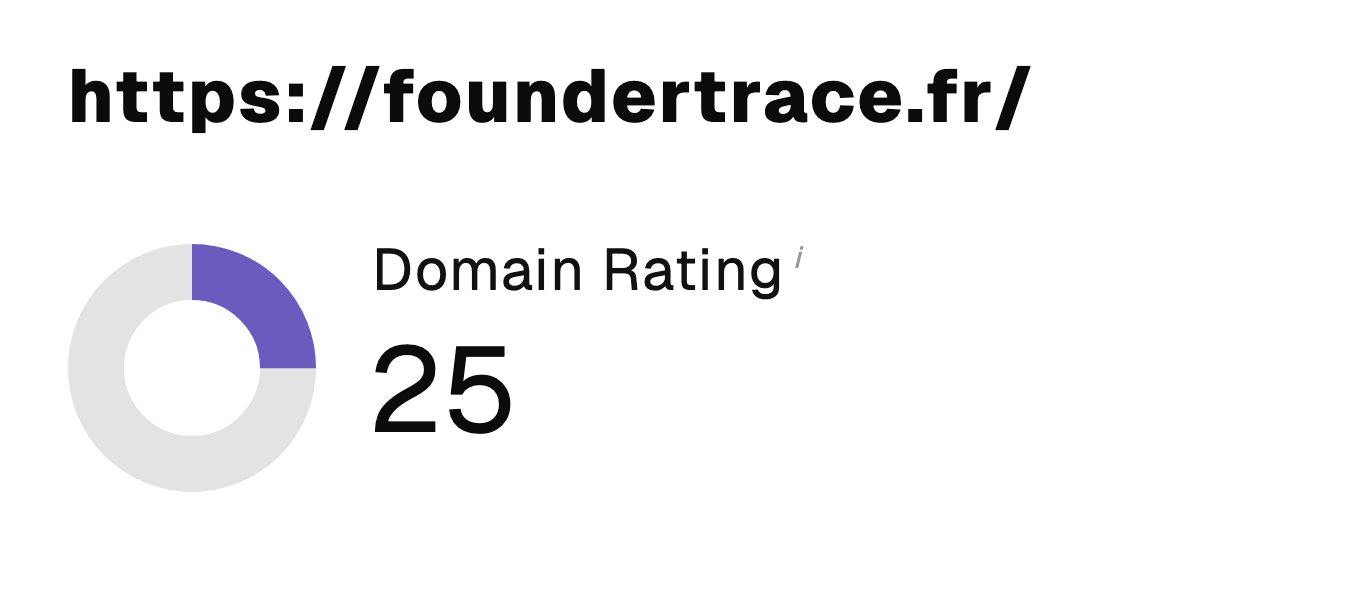 “I just let the Sorank software do its thing, and now my DR is 25 and my page is ranking higher.”
 Lucas Flandrefoundertrace.fr“I specialized in GEO thanks to Sorank. The GEO Leaderboard allows me to show my clients their position vs competitors on ChatGPT. It’s a real commercial differentiator.”
 MélanieSEO Freelance“Great service, works well for our website and helps us understand how to improve it to rank better on Google and elsewhere. Congrats, keep going, I recommend it.”
 Hugo T.E-commerce merchant