












What Link.builders is
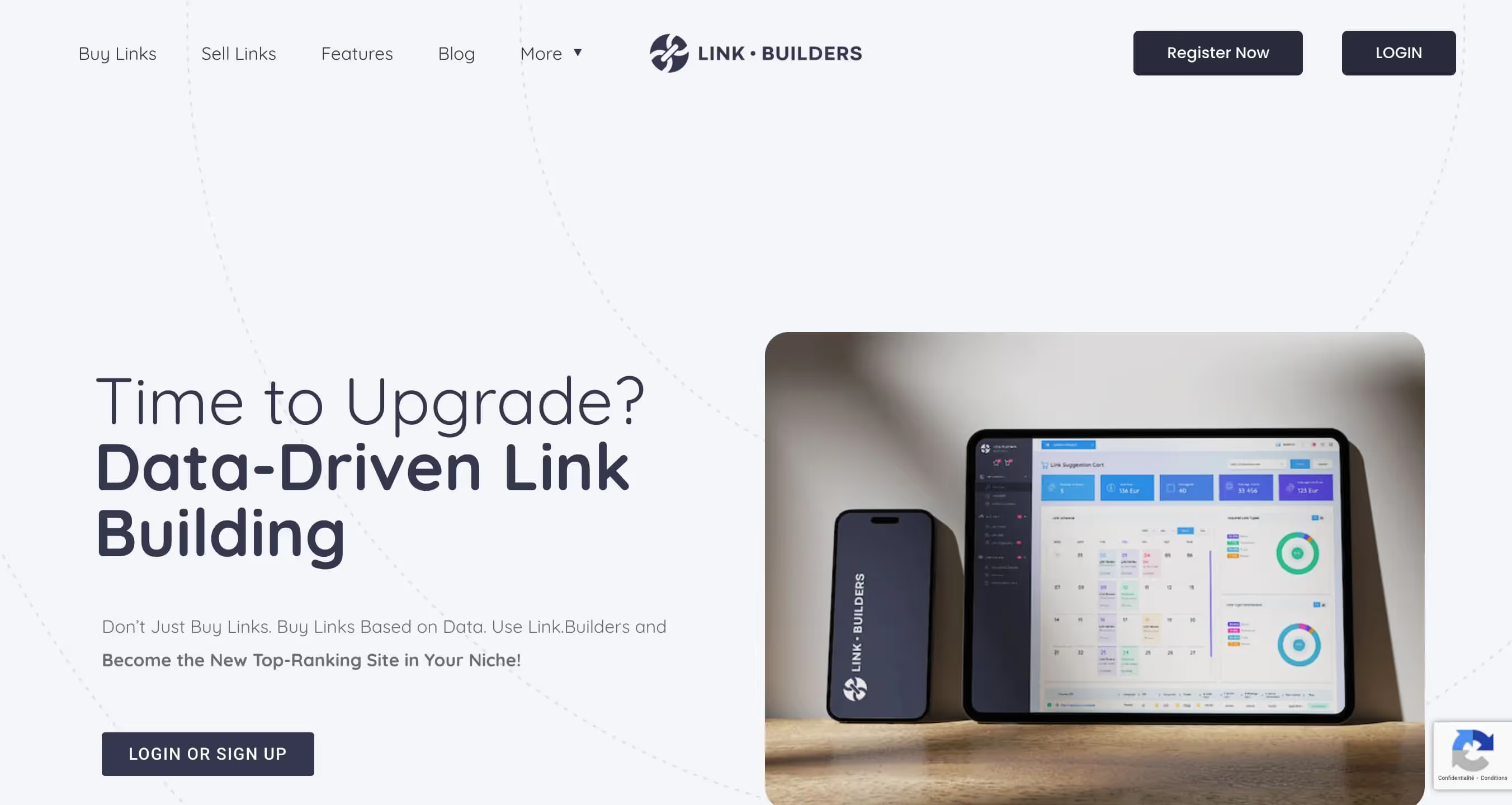
Link.builders is a link building platform launched in 2020, covering French and English inventory. The model is the classic marketplace: a catalogue of publisher sites, placement in a dedicated article, and inventory spanning blogs, media, forums, niche sites, generalist sites and networks.
Its practical appeal is the bilingual catalogue. Running one account for both French and English placements removes the overhead of a second supplier relationship, which matters if you operate on both sides of the Channel or serve clients who do.
Bilingual coverage, and the depth question
Every platform listing two languages faces the same question: is the second one real inventory or a thin extension of the first? On a French-founded platform the English catalogue is usually the smaller of the two, and on an English-founded one it works the other way round.
That is worth ten minutes of your time before you commit. Filter for your actual target market and count the sites that come back, then check a sample for real traffic and topical fit. A catalogue that returns forty relevant domains in your language is more useful than one that claims thousands across all of them.
For wider European coverage from a single account, JungleUp carries six languages and Getfluence five.
The offers and the pricing
Pricing is not published. Rates and the catalogue become visible after registration, and vary per site.
Sites are visible before purchase once you are inside, so you select domains rather than buying blind.
How it works
You register, browse and filter the catalogue, then order per placement with your target page and anchor. Writing is included.
Guarantees, limits and what to watch
Three points. Sites are visible before purchase, which is the guarantee that matters most. There is no API and no affiliate programme. And the platform carries no Trustpilot rating, so external signals on reliability are unavailable.
Five years of operation is a reasonable but not decisive track record. Start with a small order, check what gets published and where, then decide whether to scale. That advice applies to any platform without a public rating, and it costs very little to follow.