
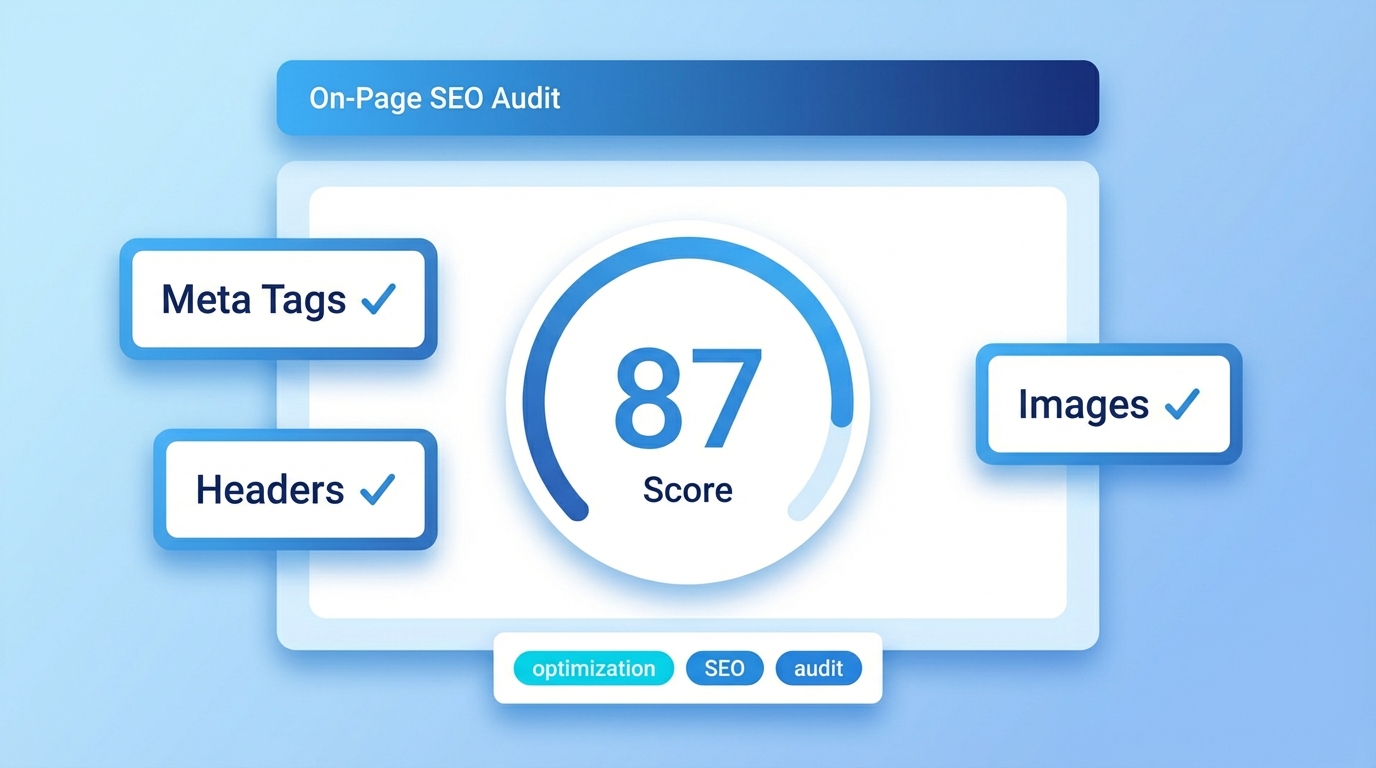
Summary: A free on-page SEO audit catches the hidden errors that silently kill your rankings. Sites that audit regularly see up to 61% more organic traffic.
Nearly 68% of all clicks go to the top three Google results, according to Backlinko's CTR study. If your pages carry unresolved on-page issues, those positions remain out of reach. The gap between page five and page one is rarely about content quality alone. It is almost always about technical mistakes hiding in plain sight.
A free on-page SEO audit tool scans your URL in seconds, flags the exact problems holding you back, and tells you what to fix first. No guesswork. No expensive subscriptions. Just a clear checklist between you and better rankings.
What an On-Page SEO Audit Actually Checks
An on-page audit evaluates everything a search engine reads when it crawls a single page. That includes your title tag, meta description, heading hierarchy, image alt attributes, internal links, and content structure. These elements may seem small individually. Together, they determine whether Google understands your page or ignores it.
The audit also inspects Core Web Vitals signals like Largest Contentful Paint and Cumulative Layout Shift. Since Google confirmed page experience as a ranking factor, performance metrics matter just as much as keyword placement. A single slow-loading image or a misconfigured canonical tag can push an otherwise strong page down the results.
Most professionals break the audit into three layers: metadata checks, content quality analysis, and technical validation. Each layer serves a specific purpose, and skipping one creates blind spots that compound over time.
Why Free Audit Tools Deliver Real Value
The assumption that free tools produce shallow results no longer holds. Modern free auditors scan 50 to 200 data points per page, covering metadata, headings, keyword usage, page speed, mobile responsiveness, and structured data. That is more than enough to uncover the issues responsible for 80% of ranking problems.
According to Search Engine Journal, the most common on-page issues across millions of sites are duplicate title tags, missing meta descriptions, and broken internal links. None of these require paid software to detect. A well-built free tool catches them instantly.
Paid tools add depth with site-wide crawls, historical tracking, and competitor benchmarking. But for a single-page diagnostic, a free audit provides everything you need to take action immediately. The real cost is not the tool. It is the time you lose by not auditing at all.
The 7 Critical Elements Every Audit Should Cover
Not all audit results carry the same weight. Prioritizing the right fixes separates productive optimization from busywork. Here are the seven elements that consistently move the needle.
Title Tag and Meta Description
Your title tag is the single most influential on-page ranking factor. It should contain your primary keyword, stay under 60 characters, and accurately describe the page content. The meta description does not directly affect rankings but controls your click-through rate in search results. Missing or duplicate descriptions reduce CTR by up to 30%.
Heading Structure
A clean H1-to-H6 hierarchy tells Google how your content is organized. Multiple H1 tags, skipped heading levels, or keyword-stuffed headings confuse crawlers and hurt accessibility. One H1 per page. Logical nesting below it.
Content Quality and Keyword Usage
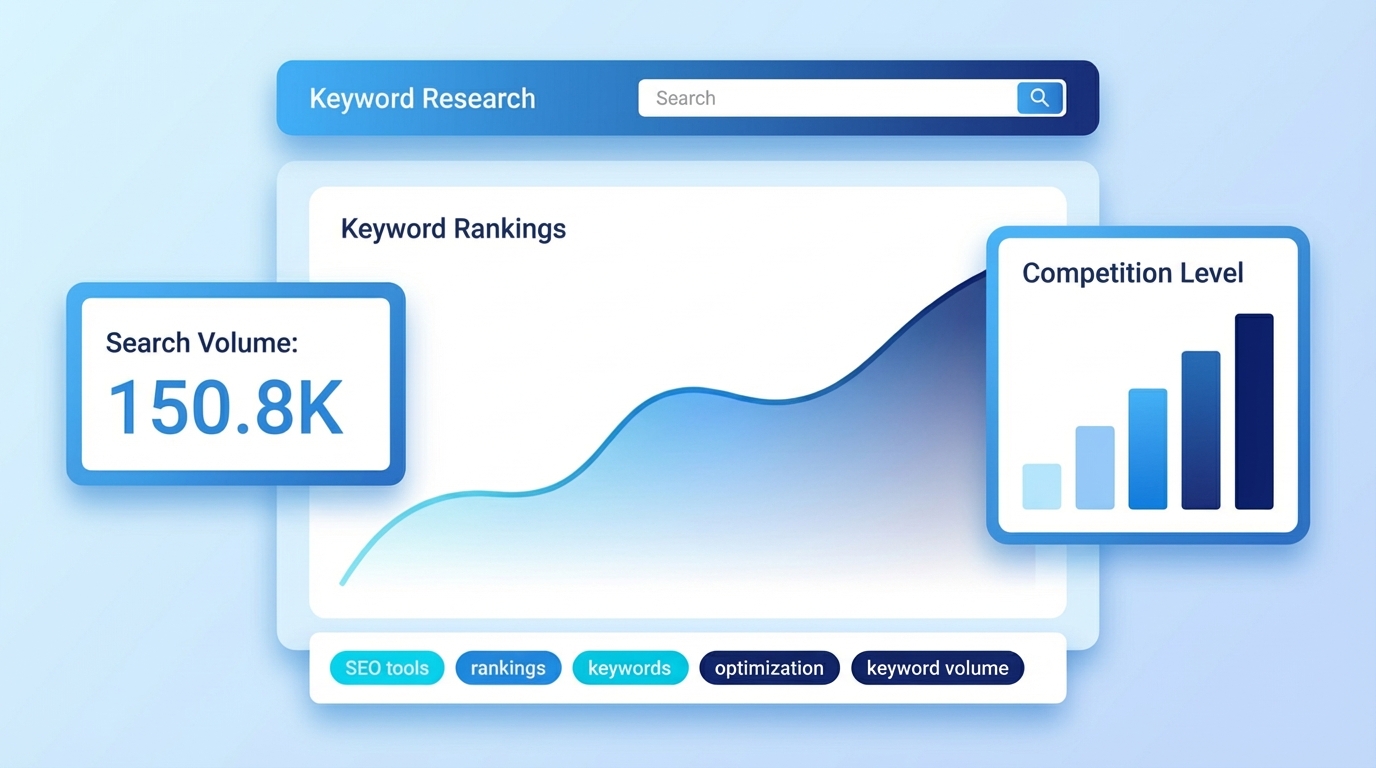
Thin content under 300 words rarely ranks. But length alone is not the goal. The audit checks whether your primary keyword appears naturally in the first 100 words, in at least one subheading, and in the conclusion. It also flags keyword stuffing, which can trigger algorithmic penalties. To identify the best keywords for your pages before optimizing, use our keyword research tool to find terms with the right balance of volume and difficulty.
Image Optimization
Uncompressed images are the most common cause of slow page speed. Every image should have descriptive alt text, be served in next-gen formats like WebP, and use lazy loading. According to Google's Web Vitals documentation, images directly impact Largest Contentful Paint scores.
Internal Linking
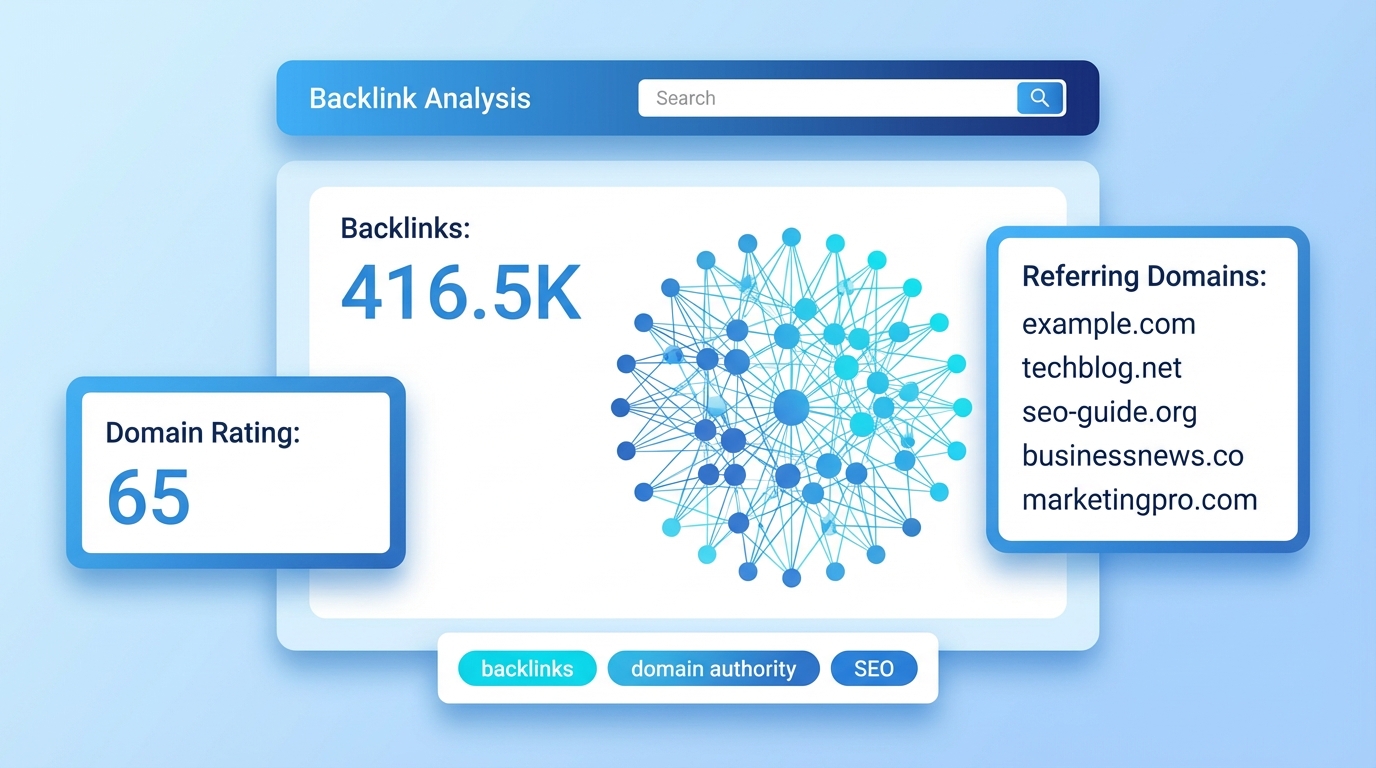
Orphaned pages receive no internal links and are effectively invisible to search engines. A good audit identifies pages with zero inbound internal links and suggests connections. Five or more relevant internal links per page is a solid baseline. Understanding your backlink profile also helps you identify which pages have external authority that can be distributed through internal links.
Mobile Responsiveness
Google uses mobile-first indexing, meaning it evaluates the mobile version of your page before the desktop version. A page that looks perfect on a laptop but breaks on a phone will lose rankings regardless of content quality.
Schema Markup and Structured Data
Structured data helps Google display rich results like FAQs, ratings, and breadcrumbs directly in the SERP. Pages with rich snippets earn significantly higher click-through rates. The audit checks whether your schema is present, valid, and relevant to the page type.
How to Run Your First Audit in Under 60 Seconds
The process is straightforward. Enter your URL into the audit tool, wait for the scan to complete, and review the prioritized list of issues. Most tools categorize findings into critical errors, warnings, and notices. Start with the critical errors. These are the problems actively suppressing your rankings.
After fixing the critical issues, re-run the audit to confirm they are resolved. Then move to warnings. This iterative approach prevents you from getting overwhelmed by a long list and ensures each round of fixes produces a measurable improvement.
For a broader view of your on-page health, consider pairing the audit with a browser extension that displays SEO metrics as you browse. This combination gives you both deep diagnostics and real-time awareness.
On-Page Audit vs. Full Site Audit: Which Do You Need?
A page-level audit examines one URL in detail. A site-level audit crawls your entire domain to find patterns across hundreds or thousands of pages. Both are valuable, but they serve different purposes at different stages.
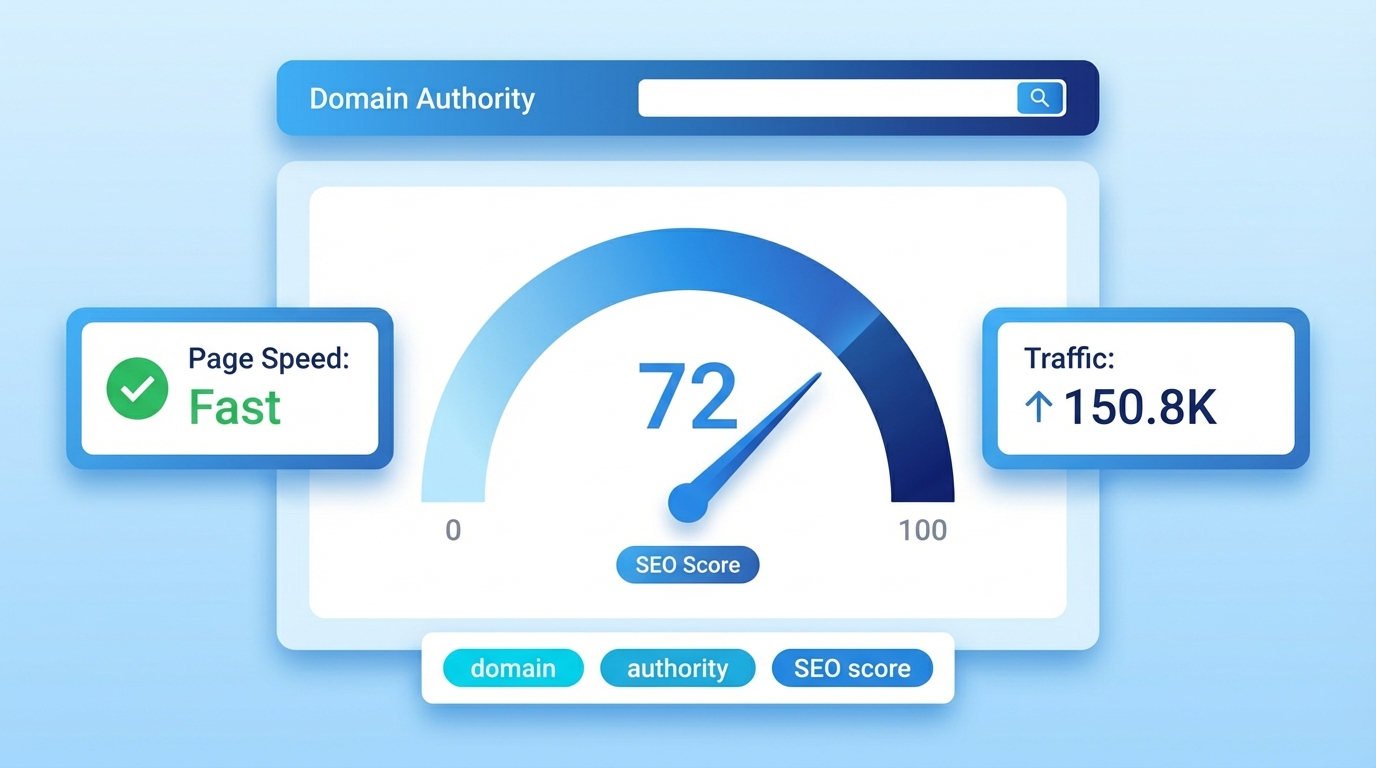
If you are optimizing a specific landing page or blog post for a target keyword, a page audit is the right starting point. It gives you focused, actionable feedback you can implement in minutes. If you suspect broader technical issues, duplicate content, or crawl errors across your site, a full site audit is necessary. Checking your domain authority score alongside the audit helps you gauge whether your site has enough overall strength to compete for your target keywords.
The smartest approach combines both. Run page-level audits on your highest-traffic URLs and key conversion pages. Then schedule a full site crawl quarterly to catch systemic issues before they spread. Our platform automates both levels of analysis, so nothing slips through the cracks.
Common Mistakes That Audits Reveal
After analyzing thousands of audit reports, certain patterns emerge repeatedly. The first is duplicate content. Many sites unintentionally create multiple URLs for the same content through pagination, URL parameters, or CMS settings. Without canonical tags, Google splits ranking signals across these duplicates, weakening all of them.
The second is missing or generic alt text on images. Alt attributes are not just an accessibility requirement. They are an SEO signal that helps Google understand page context. Writing "IMG_4532.jpg" as alt text wastes an opportunity.
The third is neglecting internal link anchor text. Linking with "click here" or "read more" provides zero context to search engines. Descriptive anchor text that includes relevant keywords strengthens both the linking page and the destination page.
A less obvious mistake is over-optimizing. Some sites stuff keywords into every heading, bold every mention, and repeat the same phrase unnaturally. Modern algorithms detect this pattern and may suppress the page. The balance between optimization and readability is where experienced SEOs excel.
How AI Is Changing On-Page Audits in 2026
Traditional audits check static rules: is the title tag under 60 characters? Does the page have an H1? These checks remain important. But AI-powered audit tools now go further by analyzing search intent alignment, content comprehensiveness, and entity coverage.
Instead of just counting keywords, AI auditors evaluate whether your content genuinely answers the questions behind a search query. They compare your page against the top-ranking results and identify topical gaps you need to fill. This shift from rule-checking to intent-matching represents the biggest evolution in audit technology since automated crawling.
The rise of AI search engines like ChatGPT and Perplexity adds another dimension. Pages that AI systems cite as sources tend to have clear structure, authoritative data, and comprehensive coverage of a topic. An AI-aware audit checks whether your content meets these new visibility criteria, not just Google's traditional ranking factors. If you want to track how AI platforms reference your content, our GEO tracking dashboard monitors AI citations across major platforms.
Turning Audit Results Into a Ranking Strategy
An audit is only as valuable as the action it triggers. The most effective approach is to rank every issue by potential impact and effort required. High-impact, low-effort fixes go first. These typically include updating title tags, adding missing meta descriptions, compressing images, and fixing broken links.
Medium-effort tasks like rewriting thin content, restructuring headings, or implementing schema markup come next. These require more time but deliver lasting improvements. Track your progress by re-auditing after each batch of fixes and monitoring your search positions over the following weeks.
The data confirms the value of this discipline. A Search Engine Journal report found that websites conducting regular audits saw up to 61% more organic traffic compared to those that never audited. Consistency matters more than perfection. A monthly audit habit outperforms a single exhaustive review every year.
Conclusion
Every ranking improvement starts with knowing what is broken. A free on-page SEO audit tool gives you that clarity in seconds, revealing the exact technical and content issues standing between your page and the top of search results. The sites that climb consistently are not the ones with the biggest budgets. They are the ones that audit, fix, and repeat.
The most impactful action you can take today is auditing your top five pages and fixing the critical errors before the week ends. With both traditional Google rankings and AI-driven search visibility at stake, on-page optimization has never carried more weight.
To audit your pages and get a complete SEO action plan in one place, start with our free tools and see what your site has been missing.













.svg)
.svg)