












What NextLevel is
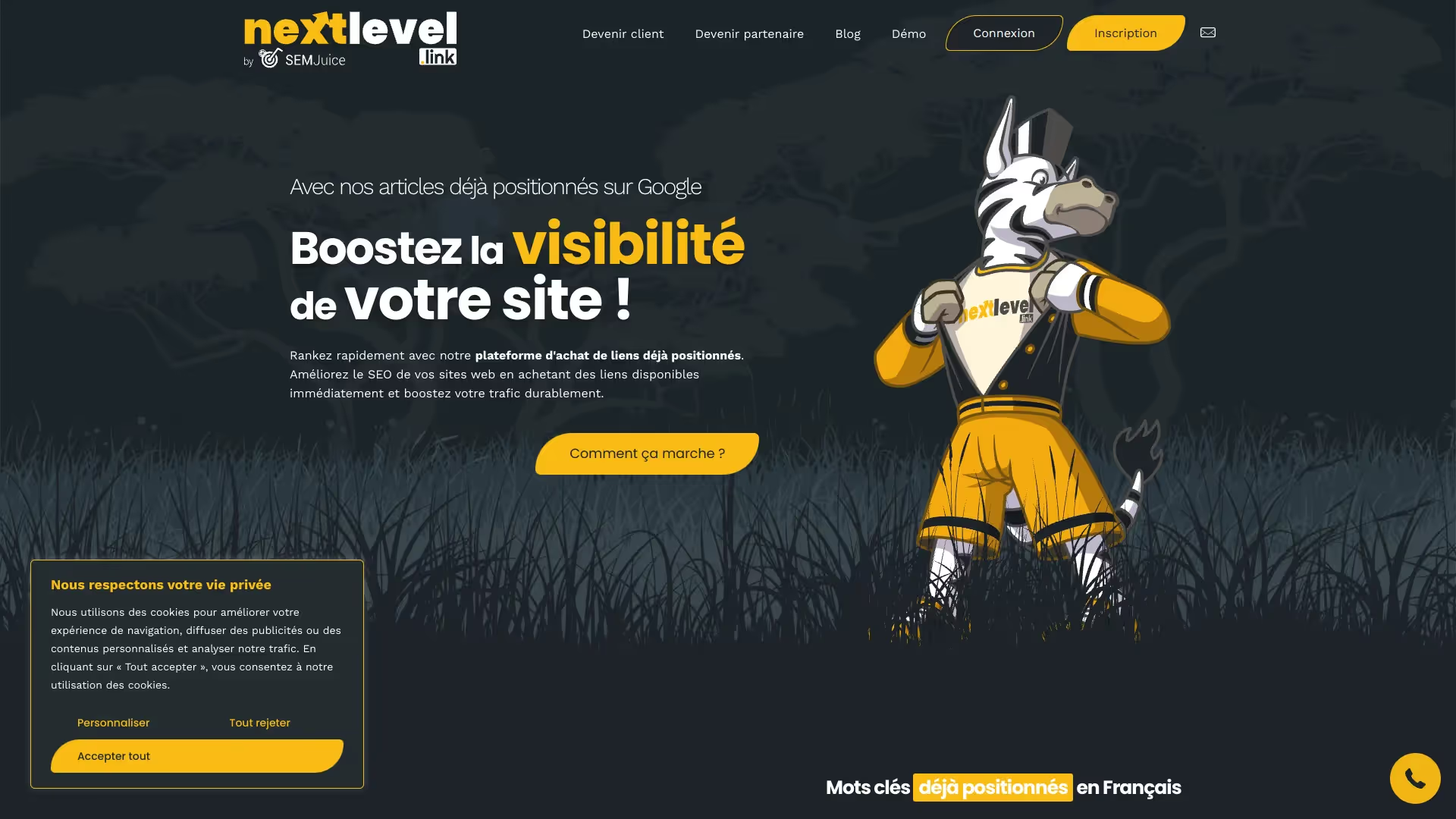
NextLevel is a French link building platform operating since 2017 under the domain nextlevel.link. It works on the classic model: a catalogue of publisher sites, placement in a dedicated article, and inventory spanning blogs, media, forums, niche sites, generalist sites and networks.
Eight years on a market that churns through platforms every few years is a real signal, and its client testimonials are unusually specific about outcomes, citing traffic multiples and position gains over defined periods.
Reading client results honestly
Those testimonials are worth addressing directly, because they are the most visible thing about the platform and they need context.
A site multiplying its traffic sixfold in a year, or gaining eleven positions in under a month, is a real event. What no testimonial can tell you is what else changed during the same period: the content published, the technical work done, the competitive landscape. Links are one input among several, and attributing the whole result to the supplier overstates their contribution.
Read them as evidence that the platform delivers what it sells, which is a reasonable conclusion, rather than as a forecast of what will happen to your site.
The offers and the pricing
Pricing is not published. Rates and the catalogue become visible after registration, which is standard practice on the French market and shared with BoosterLink and Develink.
Placement is in a dedicated article, with sites visible before purchase once you have access.
How it works
You register, browse the catalogue, and order per placement with your target page and anchor. Because sites are visible before purchase, you select domains rather than accepting a bracket.
Guarantees, limits and what to watch
Three points in its favour. Sites are visible before purchase. There is an affiliate programme. And eight years of operation is a reasonable stability record.
Three limits. The inventory is French, so it covers one market. There is no API. And the platform carries no Trustpilot rating, so external verification rests on peer reputation and its own published testimonials rather than on an independent score.
Since pricing is not published, opening an account is the only way to benchmark it. Do that, compare against what you pay elsewhere for equivalent domains, and decide on the numbers rather than on the case studies.