設定
当社はプライバシーを重視しており、ウェブサイトの基本機能に必要のない特定のストレージを無効にするオプションを提供しています。カテゴリーをブロックすると、ウェブサイトでの体験に影響が出る可能性があります。詳細はこちら

当社はプライバシーを重視しており、ウェブサイトの基本機能に必要のない特定のストレージを無効にするオプションを提供しています。カテゴリーをブロックすると、ウェブサイトでの体験に影響が出る可能性があります。詳細はこちら

音声検索の最適化は、アシスタントが確信を持って読み上げられるようコンテンツを形づくります。スニペット、地域、スキーマ、速度の施策を学びましょう。








Summary
Voice search optimization is the practice of structuring your website and content so voice assistants and AI tools confidently use it as the single spoken answer when someone asks a question out loud.
出典
Voice search optimization is the practice of optimizing your website so that voice assistants and AI tools can confidently use your content as the answer when someone speaks a question out loud instead of typing it. It covers the words on your page, how they are organized into headers and paragraphs, the structured-data code that explains the content to search engines, and how fast the page loads on mobile. The aim is to be the one source an assistant chooses to read aloud.
This matters because voice has become mainstream, with voice queries reaching roughly 27 percent of all searches in 2026 and over 8.4 billion voice assistants in use worldwide. When a device returns a single spoken answer, ordinary ranking is not enough: you have to be structured precisely so an assistant can lift your answer cleanly.
Voice search optimization is a specialization of search engine optimization focused on spoken, conversational queries. Where classic SEO often targets short typed keywords, voice optimization targets full questions phrased the way people actually speak. It treats the question-and-answer pair as the core unit of content, because that is what an assistant extracts.
It is closely tied to, but distinct from, the broader phenomenon of voice search. Voice search is how people use spoken queries; voice search optimization is the deliberate work you do to win them. In practice it overlaps heavily with optimizing for featured snippets and AI answers, since all three reward the same clear, answer-first structure.
The starting point is language. Voice queries function as complete questions, typically four to seven words and often longer, so optimization means targeting natural phrasing rather than fragments. Instead of Richmond branding, you optimize for what does a branding agency in Richmond actually do. The shift is from clipped keywords to the full sentences people say.
Finding that language takes more than keyword tools. Standard research tools help, but first-party sources, sales call recordings, support tickets, and customer emails, reveal the exact phrasing your audience uses. Targeting those long-tail, question-based phrases is the foundation, and it pairs naturally with optimizing for natural language queries across all of search.
Once you know the questions, structure the page around them. Lead with clear, conversational questions in H2 and H3 headers, then follow each with a direct 40 to 60 word answer before adding deeper context. This gives an assistant a clean block to read aloud and gives a search engine an easy passage to extract.
Formatting reinforces this. Ordered lists work for processes and unordered lists for general items, both of which are easy for engines to parse and assistants to read. Structuring content as question-answer blocks rather than dense paragraphs is also how you compete for featured snippets and answer engine optimization, since the same block serves voice and text answers.
Featured snippets are the engine of voice answers. Roughly 41 to 50 percent of voice search results come directly from the snippet box, so earning that slot is central to voice visibility. The content most likely to win it is a concise, self-contained answer placed immediately after a clearly worded question.
Because an assistant typically reads only one answer, this is close to winner-take-all per query. That raises the value of precision: an answer that is too long, hedged, or buried will lose to a competitor whose answer is tight and direct. Earning these SERP features is therefore the most direct lever in voice optimization.
Voice skews heavily local: around 76 percent of voice searches are near me or location-specific. That makes local optimization non-negotiable. A complete, verified Google Business Profile with photos, accurate hours, and a Q&A section, consistent name, address, and phone details across the web, and neighborhood-level language in your copy all help you surface for spoken local queries.
Reviews and structured data complete the picture. Regular customer reviews with public responses build the trust assistants favor, and LocalBusiness, Service, and FAQ schema make your details machine-readable. Strong, consistent local citations are the backbone of this, since assistants rely on consistent business data to answer where and which-business questions.
Structured data helps engines understand your content without inferring everything from the prose. Deploy FAQ, HowTo, Article, and LocalBusiness schema where relevant, and consider Speakable markup to flag the passages best suited to be read aloud. Clean markup increases the odds an assistant can identify and trust your answer.
Speed and mobile matter just as much. Voice queries happen predominantly on mobile, and pages that rank for voice load 52 percent faster on average than those that do not. Core Web Vitals compliance, responsive design, image compression, HTTPS, and a shallow site architecture are the technical baseline. Pairing this with disciplined keyword research and content planning ensures you optimize the right questions on a fast, crawlable site.
Answer engine optimization and generative engine optimization now complement traditional voice work, because they reward the same things. Assistants reading a snippet aloud and AI engines citing a passage both want one clear, trustworthy answer. Building topical depth, publishing original data and frameworks, using explicit entity language, and maintaining author credentials all strengthen your standing across voice and AI answers.
The practical implication is to track AI citation share alongside traditional rankings. A page engineered to be the spoken answer is usually also a page an AI model is comfortable citing, so the investment compounds across channels. This convergence is why voice optimization increasingly lives inside a broader AI content strategy rather than as a standalone tactic.
The hardest constraint is measurement. Assistants rarely report the spoken queries that triggered an answer, so it is difficult to attribute traffic or conversions directly to voice. You often have to infer impact from snippet ownership and question-keyword rankings rather than from clean voice analytics.
The single-answer format also makes the work unforgiving, since there is little reward for ranking second on a spoken query. And because each assistant selects sources differently, results vary by platform. The dependable strategy is to optimize fundamentals that travel everywhere, fast mobile pages, accurate local data, clear question-answer structure, and helpful depth, rather than over-fitting to one device.
Voice search optimization is the work of making your content the answer an assistant reads aloud: conversational question-and-answer structure, concise snippet-ready answers, strong local signals, clean schema, and fast mobile pages. Because voice, featured snippets, and AI answers all reward the same clarity, the effort pays off across multiple channels at once.
To go further, connect this with voice search and answer engine optimization, and use Sorank's research and content planning tools to target the spoken questions that matter. Reference sources: Circle S Studio and SEOmator.

音声検索は、人々が話し言葉のクエリで端末に質問する方法です。音声検索の最適化は、アシスタントが読み上げる答えとしてあなたのページを選ぶよう、ウェブサイトとコンテンツを意図的に構成する取り組みです。会話的なキーワード、質問と答えの書式、強調スニペットの狙い、地域のシグナル、スキーママークアップ、モバイルでの速いパフォーマンスが含まれます。
およそ 40〜60 語の直接的な答えが最もうまく機能します。H2 や H3 の見出しに明確に書いた質問のすぐ後に置き、その下により深い文脈を加えましょう。この長さはアシスタントがきれいに読み上げられるほど簡潔で、音声の答えが通常引き出される強調スニペットを勝ち取りやすい形式です。
音声検索の約 76% が「近くの」や地域に特化したもので、消費者の半数以上が地域のビジネスを探すのに音声を使っているからです。これを取り込むには、完全で確認済みの Google ビジネスプロフィールを保ち、名前、住所、電話番号の詳細をどこでも一貫させ、地区レベルの言葉を使い、レビューを集め、アシスタントが地域に基づく質問にあなたのビジネスで答えられるよう LocalBusiness と FAQ のスキーマを加えましょう。
先行導入企業のご紹介
 “2年間、クライアントの100%がLinkedIn経由でした。毎日の投稿、コメント、DMでのフォローアップ…完全にアルゴリズム頼みでした。SEOに取り組むべきだとわかっていても、時間がかかる、技術的すぎる、自分の仕事ではないと、いつも後回しにしていました。Sorankでようやく一歩を踏み出しました。4か月で、何も投稿しなくても毎月15件のオーガニックリードを獲得しています。まだLinkedInと半々ではありませんが、自動で育つ2つ目のリード源ができたことで安心して眠れるようになりました。”
 Valentin Thomyコールドメール専門エージェンシー“Sorankは、クライアントに提供する成果を大きく変えてくれました。AIが実際に使っているキーワードを特定し、特定の競合が引用される理由を理解し、以前は完全に見落としていたチャンスを見つけられるようになりました。クライアントは、より早い順位上昇、AIの回答での可視性向上、そしてすべての施策のROIがより明確になったことを実感しています。”

 Benjamin Rouxovirank.com
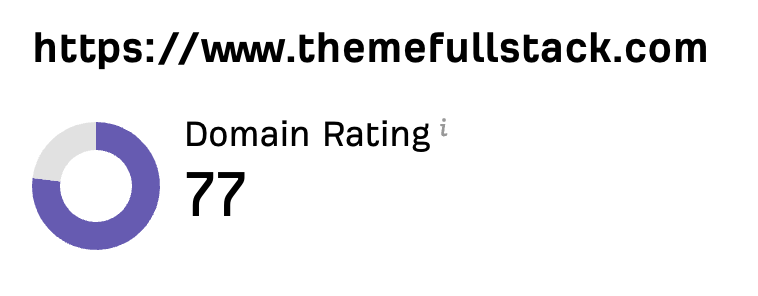 “私はマーケターではなく開発者です。私のShopifyテーマは口コミと広告だけで売れていました。Sorankのおかげで、SEOの組み立て方と上位表示される記事の書き方がようやくわかりました。監査で商品ページが遅すぎることも判明しました。2か月でオーガニックトラフィックは2倍になり、ShopifyテーマについてChatGPTで検索されたときの回答にも表示され始めています。しかも、週に約2時間の作業だけです。”

 Thème FullStackthemefullstack.com“Sorankのおかげで、私たちのSEOエージェンシーの働き方は大きく変わりました。すべてが一元化・自動化されたため、クライアント1社あたりにかける時間が大幅に減りました。以前は何時間もかかっていた作業が今では数分で終わり、ようやくビジネスの中で働くのではなく、ビジネスそのものに取り組めるようになりました。”

 Océane Bondismaison-leverage.com