Linkbuilding ist das Herzstück jeder erfolgreichen Strategie zur Suchmaschinenoptimierung.
Eingehende Links oder Backlinks spielen eine entscheidende Rolle bei der Verbesserung der Popularität, Sichtbarkeit und Glaubwürdigkeit einer Website. Im heutigen hart umkämpften Online-Umfeld ist der Aufbau einer effektiven Linkbuilding-Strategie und die Zusammenarbeit mit den richtigen Partnern unerlässlich geworden.
Linkbuilding-Plattformen, die immer häufiger werden, erleichtern diesen Prozess erheblich. Sie ermöglichen es Ihnen, Link-Möglichkeiten schnell zu identifizieren und gleichzeitig Ihren Zeit- und Arbeitsaufwand zu optimieren. Dieser Artikel erklärt ausführlich die Welt des Linkbuildings, die Bedeutung von Backlinks und warum die Verwendung einer Linkbuilding-Plattform Ihre SEO-Strategie erheblich verbessern kann.
1. Backlinks und ihre Rolle bei der Suchmaschinenoptimierung verstehen
1.1 Was ist ein Backlink?
Ein Backlink oder eingehender Link ist ein Hyperlink von einer Website eines Drittanbieters, der auf Ihre eigene Website verweist. Wenn beispielsweise ein Blog über Ihr Unternehmen oder Ihre Inhalte schreibt und einen Link enthält, der Leser zu Ihrer Seite leitet, wird dies als Backlink betrachtet. Diese Links sind für Google und andere Suchmaschinen unerlässlich, um die Beliebtheit Ihrer Website sowie die Relevanz und Qualität Ihrer Inhalte zu bewerten.
1.2 Warum sind sie wichtig?
Suchmaschinenalgorithmen, angefangen bei Google, stützen sich stark auf das Linkprofil einer Website, um deren Legitimität und Autorität zu beurteilen. Je mehr Links Sie von glaubwürdigen und relevanten Websites erhalten, desto mehr wird Ihre eigene Website als vertrauenswürdige Referenz in ihrem Bereich wahrgenommen. Infolgedessen erhöhen Sie Ihre Chancen, bei wettbewerbsfähigen Keywords ein höheres Ranking zu erzielen.
Umgekehrt kann ein Linkprofil von schlechter Qualität (Spam, Linkfarmen, Websites mit niedriger Qualität) den gegenteiligen Effekt haben und zu Strafen führen.
1.3 Was macht einen Backlink „hochwertig“?
Nicht alle Links sind gleich. Damit ein Backlink von Google als wertvoll eingestuft wird, muss er mehrere Kriterien erfüllen:
Domain-Autorität: Je bekannter und relevanter die verlinkende Website ist, desto stärker ist die positive Wirkung.
Aktuelle Relevanz: Ein Link von einer Website oder einem Artikel, der in direktem Zusammenhang mit Ihrer Nische steht, hat viel mehr Gewicht.
Redaktioneller Kontext: Der Backlink muss natürlich im Inhalt erscheinen, idealerweise in einem Absatz, der sich auf Ihr Thema bezieht.
Position des Links: Ein Link, der im Hauptteil eines Artikels platziert wird, ist weitaus wertvoller als ein Link, der am Ende einer Seite versteckt ist.
Diversität und Nachhaltigkeit: Wenn Sie im Laufe der Zeit Links von einer Vielzahl von Domains erwerben, entsteht in den Augen von Google ein ausgewogenes, sichereres Linkprofil.
2. Die Grundlagen einer effektiven Linkbuilding-Strategie
2.1 Erstellen Sie qualitativ hochwertige Inhalte
Bevor Sie überhaupt darüber nachdenken, Links zu erstellen, müssen Ihre Inhalte stark sein. Gut geschriebene Artikel, einzigartige Ressourcen (Fallstudien, Infografiken, Whitepapers, Tutorials) und eine technisch solide Website bilden die wesentliche Grundlage. Qualitativ hochwertige Inhalte ziehen natürliche Links leichter an.
2.2 Diversifizieren Sie Ihre Linkquellen
Um echte Autorität unter Beweis zu stellen, wird empfohlen, die Websites, die auf Sie verlinken, zu diversifizieren:
Blogs (Nische oder allgemein)
Online-Medien (Zeitschriften, Zeitungen)
Foren und Communities
Soziale Netzwerke
Partnerschaften und Gastbeiträge
2.3 Folgen Sie den Best Practices der Suchmaschinenoptimierung
Vermeiden Sie eine Überoptimierung von Ankertext: Verwenden Sie nicht immer dasselbe Keyword wie Ihren Ankertext.
Verlassen Sie sich nicht zu sehr auf wechselseitige Verbindungen: Diese werden oft entdeckt und bestraft.
Sorgen Sie für einen natürlichen Verlauf: Die Linkgewinnung muss organisch und ohne plötzliche Spitzen ablaufen.
3. Linkbuilding-Plattformen: Eine schlüsselfertige Lösung
3.1 Definition und wie sie funktionieren
Eine Linkbuilding-Plattform ist ein Onlinedienst, der Werbetreibende (die Backlinks wünschen) mit Publishern (Webseitenbesitzer, Blogger, Medien) verbindet, die bereit sind, Link-Platzierungen anzubieten. Diese Plattformen verwalten in der Regel:
Werbetreibende mit Publishern zusammenbringen
Verwaltung von Börsen und Transaktionen
Qualitätskontrolle von Websites und veröffentlichten Artikeln
Analyse der Auswirkungen akquirierter Links
3.2 Vorteile von Linkbuilding-Plattformen
Zeitsparend: Sie müssen die Verlage nicht einzeln kontaktieren.
Qualitätssicherung: Die meisten Plattformen filtern Websites und stellen sicher, dass die Inhalte den SEO-Standards entsprechen.
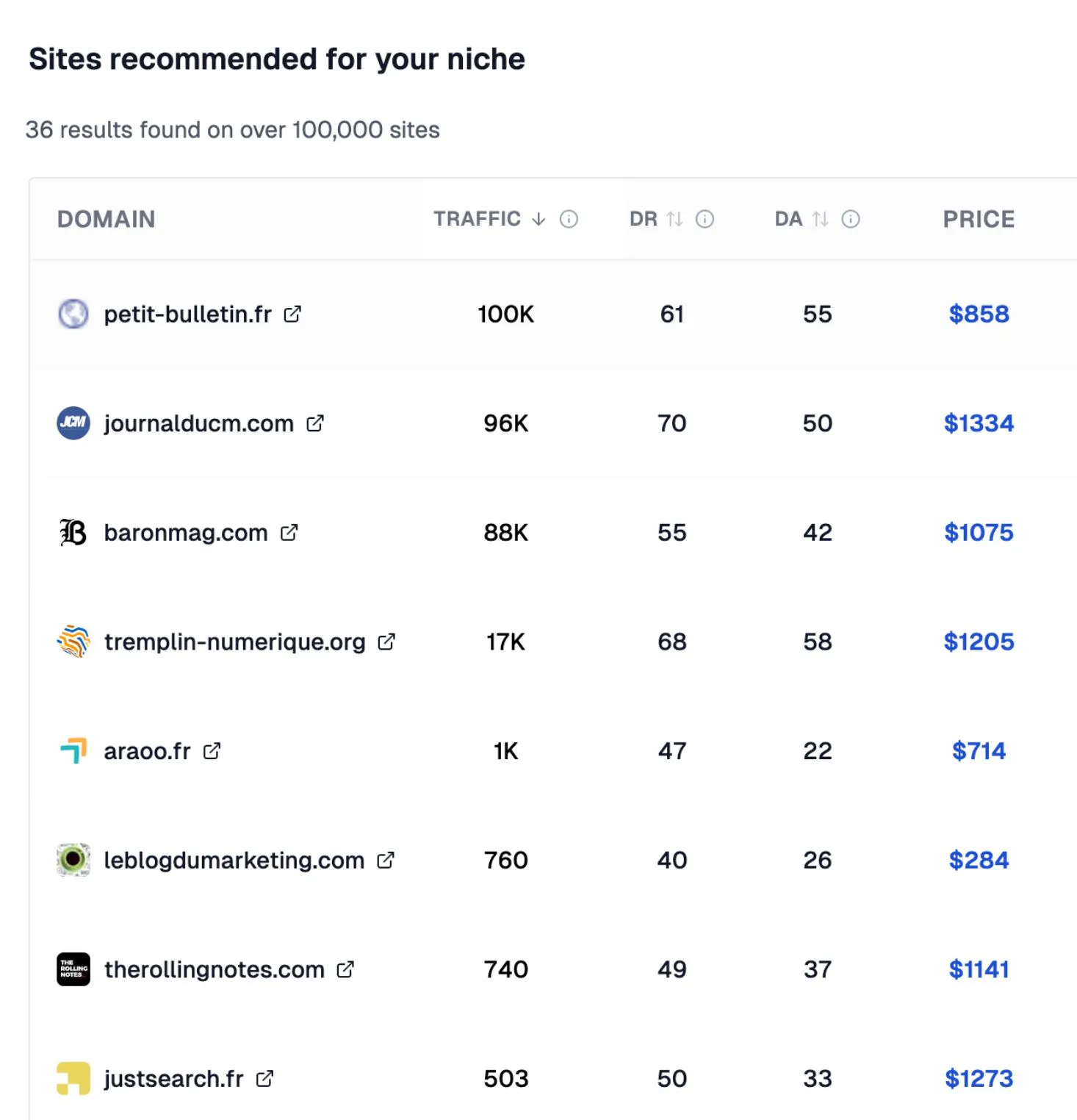
Vereinfachte Überwachung: Statistiken, Dashboards und SEO-Indikatoren (Domain Authority, Trust Flow) werden häufig bereitgestellt.
Reduziertes Risiko: Vertrauenswürdige Plattformen verringern die Wahrscheinlichkeit, mit qualitativ minderwertigen oder schädlichen Websites zu arbeiten.
3.3 Wichtige Funktionen, auf die Sie achten sollten
Ein großes Verzeichnis von Websites
Erweiterte Filter
Berichte und Leistungsverfolgung
Einfache Bedienung und zuverlässiger Kundensupport
4. Wie wähle ich die beste Linkbuilding-Plattform
4.1 Definieren Sie Ihre SEO-Ziele
Klären Sie, ob Sie Ihr Ranking bei einem wettbewerbsfähigen Keyword verbessern, Links von Websites mit hoher Autorität erhalten oder die Sichtbarkeit in einer bestimmten Nische erhöhen möchten.
4.2 Preise und Geschäftsmodelle vergleichen
Abonnementbasiert
Kommissionsbasiert
Kredit- oder Linkpakete
Wählen Sie die Option, die Ihrem Budget und Ihrer Häufigkeit beim Linkaufkauf entspricht.
4.3 Analysieren Sie die Qualität und Vielfalt der Websites
Überprüfe, ob die Websites echten Traffic und gute Inhalte haben und zu deiner Nische passen.
Verlassen Sie sich nicht nur auf die Domain-Autorität: Prüfen Sie die soziale Präsenz, den Ruf und die Aktualität der Inhalte.
4.4 Suchen Sie nach Bewertungen und Feedback
Lesen Sie nach Möglichkeit Testimonials oder wenden Sie sich an SEO-Experten, um echtes Nutzerfeedback zu erhalten.
5. Bewährte Methoden, um das Beste aus einer Linkbuilding-Plattform herauszuholen
5.1 Erstellen Sie relevante, maßgeschneiderte Artikel
Auch wenn die Plattform erfahrene Autoren anbietet, stellen Sie sicher, dass der Inhalt zu Ihrer redaktionellen Linie und zum Thema des Herausgebers passt.
5.2 Pflegen Sie ein ausgewogenes Linkprofil
Vermeiden Sie es, zu viele Links auf einmal zu kaufen.
Diversifizieren Sie Ihre Ankertexte und Zielseiten.
5.3 Überwachen und passen Sie Ihre Strategie an
SEO ist im Gange. Verwenden Sie Tools wie Google Analytics, Search Console, Semrush oder Ahrefs, um Ranking-Verbesserungen zu verfolgen und Ihre Strategie entsprechend anzupassen.
5.4 Respektieren Sie die Richtlinien von Google
Wählen Sie hochwertige Websites, transparente Partnerschaften und Originalinhalte.
6. Linkaufbau und ROI: Messung der Auswirkungen
Zu den wichtigsten Kennzahlen gehören:
Rankings in der Suche
Organischer Verkehr
Konversionsraten
Bleiqualität
Bekanntheit der Marke
Hochwertige Backlinks generieren oft hochqualifizierten Traffic, auch wenn das Volumen gering ist.
7. Trends und Entwicklungen im Linkbuilding
Mikro-Influencer gewinnen an Bedeutung
Multimediainhalte werden zu einer Chance für neue Links
Lokaler Linkaufbau wird für kleine Unternehmen zunehmend relevant
Langformatige, qualitativ hochwertige redaktionelle Inhalte sind jetzt unverzichtbar
8. Fazit: Ein Eckpfeiler Ihrer SEO-Strategie
Backlinks bleiben ein grundlegendes Element für eine erfolgreiche Suchmaschinenoptimierung. Sie bestätigen die Autorität und Beliebtheit Ihrer Website und verbessern gleichzeitig Ihre Suchmaschinen-Rankings erheblich.
Das Finden relevanter, qualitativ hochwertiger Links ist jedoch zeitaufwändig und komplex. Linkbuilding-Plattformen bieten eine effiziente, strukturierte Lösung.
Die wichtigsten Erkenntnisse:
Erstelle starke Inhalte
Definiere deine Ziele
Wählen Sie die richtigen Plattformen
Folgen Sie den SEO-Regeln
ROI messen
Mit diesem Ansatz können Sie ein robustes Linkprofil erstellen, Ihre Sichtbarkeit bei Google erheblich verbessern und Ihre Markenautorität stärken.
Alles, was übrig bleibt, ist, das Ranking der besten Linkbuilding-Plattformen oben zu erkunden, diejenigen zu testen, die Ihren Bedürfnissen am besten entsprechen, und Ihre optimierte Linkbuilding-Strategie zu starten.
Viel Spaß beim Optimieren!
































































.svg)
.svg)